Social & External
Different factions in WWII-era Holland race to find a stash of Nazi gold.
Year 1943. A group of soldiers, carrying an injured comrade, are trying to reach the hospital.
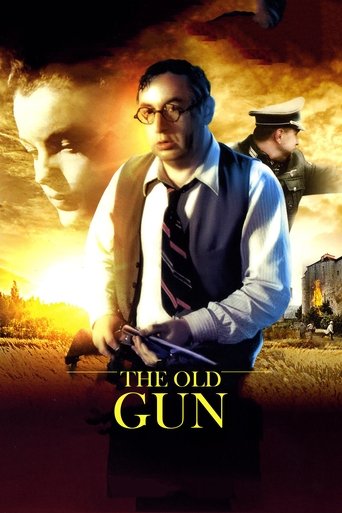
A driver is tasked with sending weapons illegally to the partisan soldiers.
World War II. The fascists kill a boy and invite his mother to identify the body, but she refuses.
A journey into the 1920s and 1930s featuring restored and edited home movies taken by Japanese American immigrant pioneers.
A couple sets up an African game preserve, only to have British and Italian armies fight over the waterholes.
Story depicting the national liberation struggle of the Albanian people against the Italian and German invaders during World War II.
A young Catholic priest from Boston confronts bigotry, Nazism, and his own personal conflicts as he rises to the office of cardinal.
Intercutting dramatic vignettes with newsreel footage, the story follows the characters from an infantry squad as they make their way from Sicily to Germany during the end of World War II.
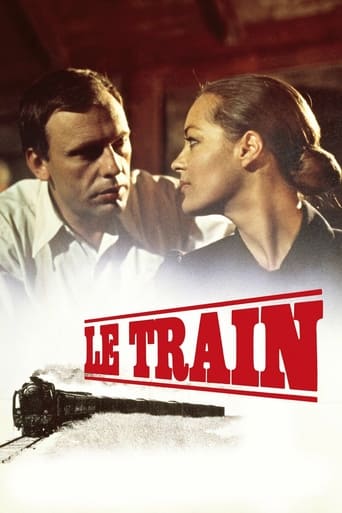
Two people, a Frenchman and a Jewish German woman, meet on a train while escaping the German army entering France.
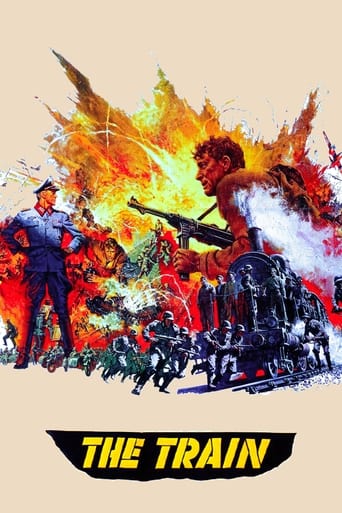
As the Allied forces approach Paris in August 1944, German Colonel Von Waldheim is desperate to take all of France's greatest paintings to Germany. He manages to secure a train to transport the valuable art works even as the chaos of retreat descends upon them. The French resistance however wants to stop them from stealing their national treasures but have received orders from London that they are not to be destroyed. The station master, Labiche, is tasked with scheduling the train and making it all happen smoothly but he is also part of a dwindling group of resistance fighters tasked with preventing the theft. He and others stage an elaborate ruse to keep the train from ever leaving French territory.
A comic, biting and revelatory documentary following a small group of prankster activists as they gain worldwide notoriety for impersonating the World Trade Organization (WTO) on television and at business conferences around the world.
World War II. Albania is under the Nazi occupation. The Germans capture two young girls and torture them to learn more about the communist movement.
At the end of WWII the Dutch resistance kills a German officer in front of the house of a Dutch family. Years after the war the young boy who witnessed the killing runs into the members of the resistance who committed the killing.
The story of black and mixed race people in Nazi Germany who were sterilised, experimented upon, tortured and exterminated in the Nazi concentration camps. It also explores the history of German racism and examines the treatment of Black prisoners-of-war. The film uses interviews with survivors and their families as well as archival material to document the Black German Holocaust experience.
As early as 1920, the journalists of the "Münchener Post" recognized the danger posed by Adolf Hitler. Consistently and boldly they wrote about National Socialism. The brave journalists and their newspaper are almost forgotten today. A single book has been published about them - in Brazil.
In 1924, Oskar Matzerath is born in the Free City of Danzig. At age three, he falls down a flight of stairs and stops growing. In 1939, World War II breaks out.
Danny La Rue stars in this 1970s drag comedy as Fred Wimbush, a Shakespearean actor who is drafted into WWII and is appearing in a camp show in France when the Nazis advance. Unless he continues in his female costume, Fred is certain to be shot as a spy. The risque gags and double entendres fly as he attempts to make his escape in the company of a troupe of Girl Guides.
A portrait of Rosa von Praunheim's neighbor, who worked for decades as a professional dominatrix in Berlin's Wilmersdorf district. While the real Lady MacLaine reflects authentically and wittily on her life and work, her life is retold in dramatized scenes.
“The Soviet Story” is a story of an Allied power, which helped the Nazis to fight Jews and which slaughtered its own people on an industrial scale. Assisted by the West, this power triumphed on May 9th, 1945. Its crimes were made taboo, and the complete story of Europe’s most murderous regime has never been told. Until now...
Meet the real-life airmen who inspired Masters of the Air as they share the harrowing and transformative events of the 100th Bomb Group.
Director Claude Lanzmann spent 11 years on this sprawling documentary about the Holocaust, conducting his own interviews and refusing to use a single frame of archival footage. Dividing Holocaust witnesses into three categories – survivors, bystanders, and perpetrators – Lanzmann presents testimonies from survivors of the Chelmno concentration camp, an Auschwitz escapee, and witnesses of the Warsaw Ghetto Uprising, as well as a chilling report of gas chambers from an SS officer at Treblinka.
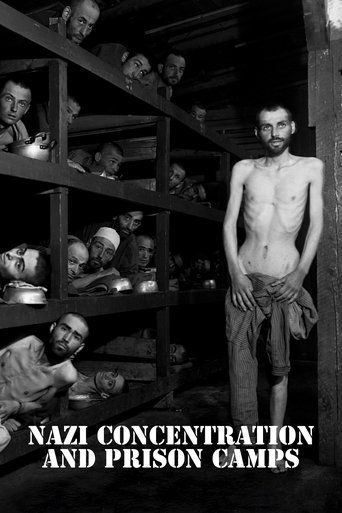
Produced and presented as evidence at the Nuremberg war crimes trial of Hermann Göring and twenty other Nazi leaders, this film consists primarily of dead and surviving prisoners and of facilities used to kill and torture during the World War II.
Prelude to War was the first film of Frank Capra's Why We Fight propaganda film series, commissioned by the Pentagon and George C. Marshall. It was made to convince American troops of the necessity of combating the Axis Powers during World War II. This film examines the differences between democratic and fascist states.
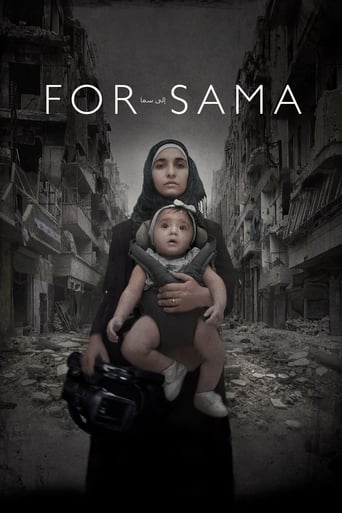
A love letter from a young mother to her daughter, the film tells the story of Waad al-Kateab’s life through five years of the uprising in Aleppo, Syria as she falls in love, gets married and gives birth to Sama, all while cataclysmic conflict rises around her. Her camera captures incredible stories of loss, laughter and survival as Waad wrestles with an impossible choice– whether or not to flee the city to protect her daughter’s life, when leaving means abandoning the struggle for freedom for which she has already sacrificed so much.
The extraordinary story of how Hollywood changed World War II – and how World War II changed Hollywood, through the interwoven experiences of five legendary filmmakers who went to war to serve their country and bring the truth to the American people: John Ford, William Wyler, John Huston, Frank Capra, and George Stevens. Based on Mark Harris’ best-selling book, “Five Came Back: A Story of Hollywood and the Second World War.”
Over a period of two years, Mark Cowen and his crew travelled to thirty U.S. states and ten European cities, to interview the veterans of Easy Company. The stories told by the veterans themselves, create a history of the Second World War from the point of view of this heroic company of men, made famous in the mini-series Band of Brothers.
Filmmaker Alain Resnais documents the atrocities behind the walls of Hitler's concentration camps.
A behind-the-scenes documentary about the Clinton for President campaign, focusing on the adventures of spin doctors James Carville and George Stephanopoulos.
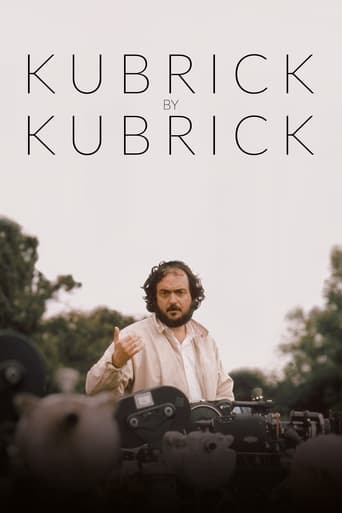
American filmmaker Stanley Kubrick (1928–1999), one of the greatest in history, but also one of the most reserved, gave few interviews throughout his long career, and none of them were filmed. A first-person journey through his life and work, based on a recorded conversation with French film critic Michel Climent.
Many times during his presidency, Lyndon B. Johnson said that ultimate victory in the Vietnam War depended upon the U.S. military winning the "hearts and minds" of the Vietnamese people. Filmmaker Peter Davis uses Johnson's phrase in an ironic context in this anti-war documentary, filmed and released while the Vietnam War was still under way, juxtaposing interviews with military figures like U.S. Army Chief of Staff William C. Westmoreland with shocking scenes of violence and brutality.
This documentary movie is about the battle of San Pietro, a small village in Italy. Over 1,100 US soldiers were killed while trying to take this location, that blocked the way for the Allied forces from the Germans. Preserved by the Academy Film Archive in 2005.
The history of cinematic sound, told by legendary sound designers and visionary filmmakers.
"Trinity and Beyond" is an unsettling yet visually fascinating documentary presenting the history of nuclear weapons development and testing between 1945-1963. Narrated by William Shatner and featuring an original score performed by the Moscow Symphony Orchestra, this award-winning documentary reveals previously unreleased and classified government footage from several countries.
With unprecedented access, this documentary follows the extraordinary journey of “Raqqa is Being Slaughtered Silently”—a group of anonymous citizen journalists who banded together after their homeland was overtaken by ISIS—as they risk their lives to stand up against one of the greatest evils in the world today.
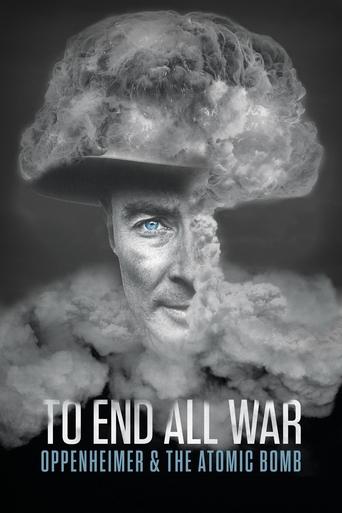
Explore how one man's relentless drive and invention of the atomic bomb changed the nature of war forever, led to the deaths of hundreds of thousands of people and unleashed mass hysteria.
A documentary about the legendary series of nationally televised debates in 1968 between two great public intellectuals, the liberal Gore Vidal and the conservative William F. Buckley Jr. Intended as commentary on the issues of their day, these vitriolic and explosive encounters came to define the modern era of public discourse in the media, marking the big bang moment of our contemporary media landscape when spectacle trumped content and argument replaced substance. Best of Enemies delves into the entangled biographies of these two great thinkers, and luxuriates in the language and the theater of their debates, begging the question, "What has television done to the way we discuss politics in our democracy today?"
A documentary about World War I with never-before-seen footage to commemorate the centennial of Armistice Day, and the end of the war.
A tribute to Italian filmmaker Sergio Corbucci (1926-90), presented by American filmmaker Quentin Tarantino.