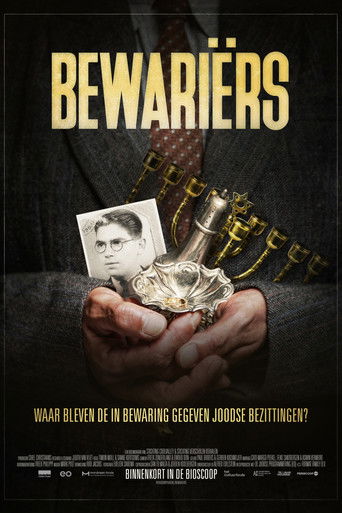
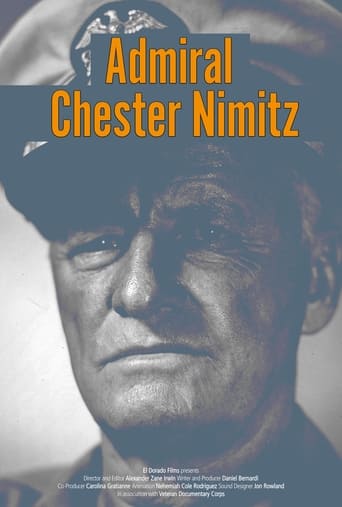
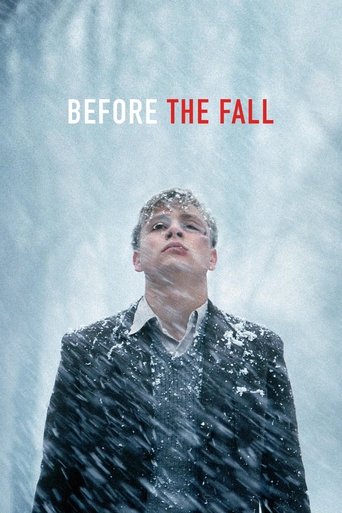
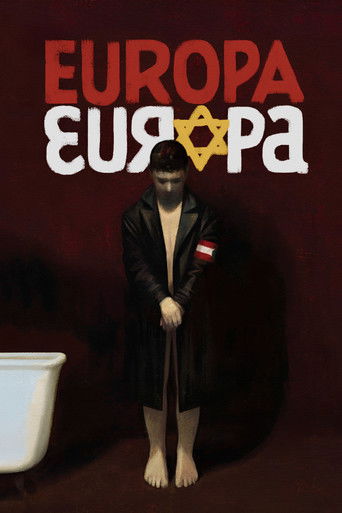
In the small town of Rechnitz a terrible crime against humanity was performed during the holocaust. Until now, no-one dares to talk about it.
Social & External
Unknown Role
The lives of Erik Lanshof and five of his closest friends take different paths when the German army invades the Netherlands in 1940: fight and resistance, fear and resignation, collaboration and high treason.
A dying man in his forties recalls his childhood, his mother, the war and personal moments that tell of and juxtapose pivotal moments in Soviet history with daily life.
Cinema version of the 5 part TV series. During World War II, Stan Vandewalle saves boxing trainer Max from the bombed German war prisoners camp, and shoots two German soldiers while escaping. After the war, Stan resolves to put all his frustration over the death of his slow-witted brother Aloïs, who dreamed of becoming an opera singer, with his side-car against a farmer's truck in making come true Aloïs other dream, to see Stan becoming 'king of the world' as boxer.
The story of the battle of Iwo Jima between the United States and Imperial Japan during World War II, as told from the perspective of the Japanese who fought it.
Budapest in the thirties. The restaurant owner Laszlo hires the pianist András to play in his restaurant. Both men fall in love with the beautiful waitress Ilona who inspires András to his only composition. His song of Gloomy Sunday is, at first, loved and then feared, for its melancholic melody triggers off a chain of suicides. The fragile balance of the erotic ménage à trois is sent off kilter when the German Hans goes and falls in love with Ilona as well.
Teodor Kovač, Ivan Ivanji and Marta Flato survived the 1942 pogrom known as the Novi Sad raid, when Hungarian fascists killed more than a thousand people from Novi Sad and dumped their bodies under the ice of the Danube river. Sociology professor Marija Vasić fights against forgetting and teaches students about the Novi Sad raid, while the local authorities erect a controversial monument to innocent victims, and on that list are the names of war criminals who participated in the Novi Sad raid.
Everyone knows the public archive footage of Hitler. But most of it is silent. What was he saying? Special computer technology enables us for the first time to lip-read the silent film.
October 28, 1940. Along with the Italian army's attack on the Greek-Albanian border, Greece comes under fire from the Italian air force. The submarine Papanikolis, commanded by Captain Milto Iatridis and First Officer Vasilis Aslanoglou, is ordered to patrol the Gulf of Patras. Following the army's victories, the war council decides that it is time for the navy to enter the war and orders the submarine Papanikolis to patrol the Strait of Otranto. There, the crew captures the crew of an Italian ship and their engineer reveals the minefields of the Adriatic. Thus, the Papanikolis begins its mission. After completing its mission, it returns to its base, where it is honored.
In a small farming valley in Austria in the beginning of the 20th century a tyrannical farmer is found dead, and all the farmhands are relieved to be free of their tyrant. But the farmer was childless, so suddenly they all inherit the farm together. Now conflicts begin, as nobody is the boss and nobody has to obey.
Canada: A People's History - Episode 14: 1940 to 1946 CE. Canada comes of age in the anguish of World War II, with soldiers on the beaches at Dieppe and women in the industrial work force back home. The country's military role, and the domestic, social and political consequences of the war are traced through poignant stories of Canadians on both sides of the Atlantic. The horrific global conflict steals the innocence of a generation... but brings hope for a new future.
The Roth family leads a quiet life in a small village in the German Alps during the early 1930s. After the Nazis come to power, the family is divided and Martin Breitner, a family friend, is caught up in the turmoil.
The retelling of June 6, 1944, from the perspectives of the Germans, US, British, Canadians, and the Free French. Marshall Erwin Rommel, touring the defenses being established as part of the Reich's Atlantic Wall, notes to his officers that when the Allied invasion comes they must be stopped on the beach. "For the Allies as well as the Germans, it will be the longest day"
When allied troops liberate a small battle-scarred Belgium town in 1944 the American and British commanders do all they can to help the war-weary people back on their feet. There are mental and physical wounds to heal, fields to plough, the church to rebuild. But a top Nazi, knowing the War is lost, has infiltrated the town and is fostering dissent and disunity.
Without lights and in a driving rain, a bus is lumbering along the muddy Assam Road en route from Chunking to the Indian border. Passengers include a European of unknown nationality, a missionary a French officer, and a White Russian. There is also an ancient Chinese lady on an important diplomatic mission to Indian and her traveling companion. The trip is halted when Japanese planes bomb the road and hit a munitions truck and kill many Chinese soldiers. The Chinese commander puts the wounded soldiers on the bus and directs it to a nearby secret airport where the officer in charge is an American attached to the Chinese Air Force.
Kurt Gerstein—a member of the Institute for Hygiene of the Waffen-SS—is appalled to discover that a poison gas he helped discover is being used to kill Jews. Driven by his conscience to alert the rest of the world, Gerstein teams up with a young Jesuit priest, Riccardo Fontana, but their protestations fall on deaf ears in the Vatican.
The two enemies from war, Slovenian partisan Berk and German soldier Bitter, meet each other during holidays in Spain. Recalling the war through conversation, Berk remembers Anton, his fellow comrade he had spend the most time with.
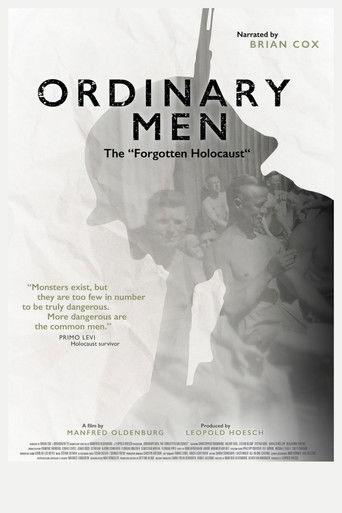
Das radikal Böse is a German-Austrian documentary that attempted to explore psychological processes and individual decision latitude "normal young men" in the German Einsatzgruppen of the Security Police and SD, which in 1941 during the Second World War as part of the Holocaust two million Jewish civilians shot dead in Eastern Europe.
Hundreds of frozen and starved people floating on boats in the middle of the Mediterranean Sea fleeing from the war... Familiar scenes that we are used to seeing in recent times. But the year is 1944, and the refugees are travelling from Europe to Africa. After Italian capitulation,and before the arrival of German army, 28 000 Dalmatian Croats left their home villages and towns to live for two years under the tents in the middle of Egyptian desert, in a kind of a communist model village that was formed to show the Allies how the new Yugoslavia will look like when the war ends. This is a story about them.
Israel, 1956: Jewish teacher Rachel Stein rather unexpectedly meets an old friend at the kibbutz. It brings back memories of her experiences in the Netherlands during the war, memories of betrayal. In September 1944, Rachel's hiding place is bombed by Allied troops; she makes contact with a resistance member and joins a group of Jews to be smuggled across the Biesbosch to the freed South Netherlands. Only Rachel escapes a massacre by patrol Germans, and is rescued by a resistance group under the leadership of Gerben Kuipers, whose son is captured trying to smuggle weapons. Kuipers asks Rachel to seduce SS-hauptsturmführer Ludwig Müntze, a mission that she will soon learn that the boat attack wasn't a coincidence.
The fate of a Hungarian Jewish family throughout the 20th century.
At the Wannsee Conference on January 20, 1942, senior Nazi officials meet to determine the manner in which the so-called "Final Solution to the Jewish Question" can be best implemented.
On January 20, 1942, the Wannsee Conference takes place in Berlin, a meeting that had only one item on the agenda: The Final Solution, the organization of the systematic mass murder of eleven million European Jews.
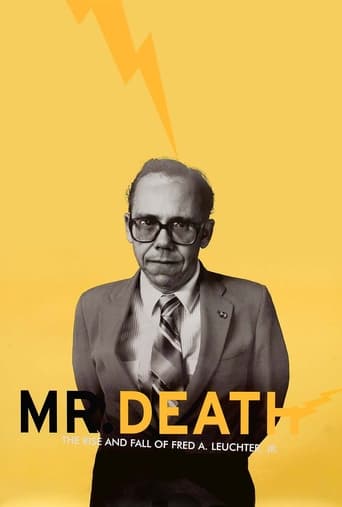
A portrait of the life and career of the infamous American execution device designer Fred A. Leuchter, Jr. Mr. Leuchter was an engineer who became an expert on execution devices and was later hired by holocaust revisionist historian Ernst Zundel to "prove" that there were no gas chambers at Auschwitz. Leuchter published a controversial report confirming Zundel's position, which ultimately ruined his own career. Most of the footage is of Leuchter, working in and around execution facilities or chipping away at the walls of Auschwitz, but Morris also interviews various historians, associates, and neighbors.
The true story of WWII's notorious Sobibor Nazi death camp, where a courageous inmate orchestrates and leads the escape of over 300 prisoners.
Fictional account of what might have happened if Hitler had won the war. It is now the 1960s and Germany's war crimes have so far been kept a secret. Hitler wants to talk peace with the US president. An American journalist and a German homicide cop stumble into a plot to destroy all evidence of the genocide.
In this genre-bending tale, Errol Morris explores the mysterious death of a U.S. scientist entangled in a secret Cold War program known as MK-Ultra.
A lawyer puts his family in jeopardy when he captures the last member of a violent clan and tries to forcibly tame her.
Austrian farmer Franz Jägerstätter faces the threat of execution for refusing to fight for the Nazis during World War II.
A 5-year-old girl embarks on a harrowing quest for survival amid the sudden rise and terrifying reign of the Khmer Rouge in Cambodia.
In 1986 Iran, Sahebjam, whose car breaks down in a remote village, enters into a conversation with Zahra, who relays to him the story about her niece, Soraya, whose arranged marriage to an abusive tyrant ended in tragedy.
A group of people are imprisoned in a rail car bound from Berlin to a concentration camp in 1945.
In the Jewish tradition of arguing with God, Jewish prisoners in Auschwitz decide to put God on Trial.
When John Halder's latest novel is enlisted by powerful political figures in the Nazi party to push their agenda, his career and social standing instantly advance. But after learning of the Reich's horrific plans for the future and the devastating effects they will have on people close to him, John must decide whether or not to take a stand and risk losing everything.
The incredible, untold true story of how a group of prisoners attempt a seemingly impossible escape from the first Nazi death camp in order to provide the first eyewitness account of the Holocaust.
A pseudo documentary study of an archetypal German who tries to model his world according to his ideas of law and (sexual) order.
The film follows Kaspar Hauser, who lived the first seventeen years of his life chained in a tiny cellar with only a toy horse to occupy his time, devoid of all human contact except for a man who wears a black overcoat and top hat who feeds him.
Six million Jews died during World War II, both in the extermination camps and murdered by the mobile commandos of the Einsatzgruppen and police battalions, whose members shot men, women and children, day after day, obediently, as if it were a normal job, a fact that is hardly known today. Who were these men and how could they commit such crimes?
Ilsa, a warden at a Nazi death camp that conducts experiments on prisoners, strives to prove that women can withstand more pain and suffering than men, and therefore should be allowed to fight on the frontlines.
Penetrating the insular world of New York's Hasidic community, focusing on three individuals driven to break away despite threats of retaliation.