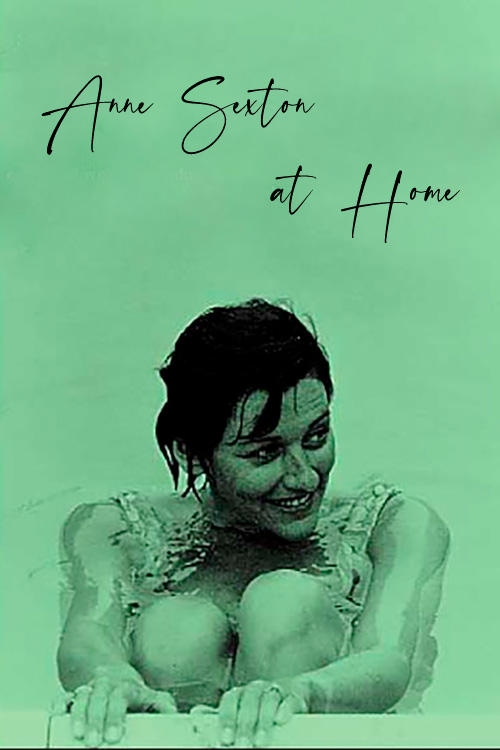
A fourteen-minute documentary splitted in two parts where we can see Anne Sexton at her home reading, talking about poetry and about her family.
Social & External
Unknown Role
Interviewer
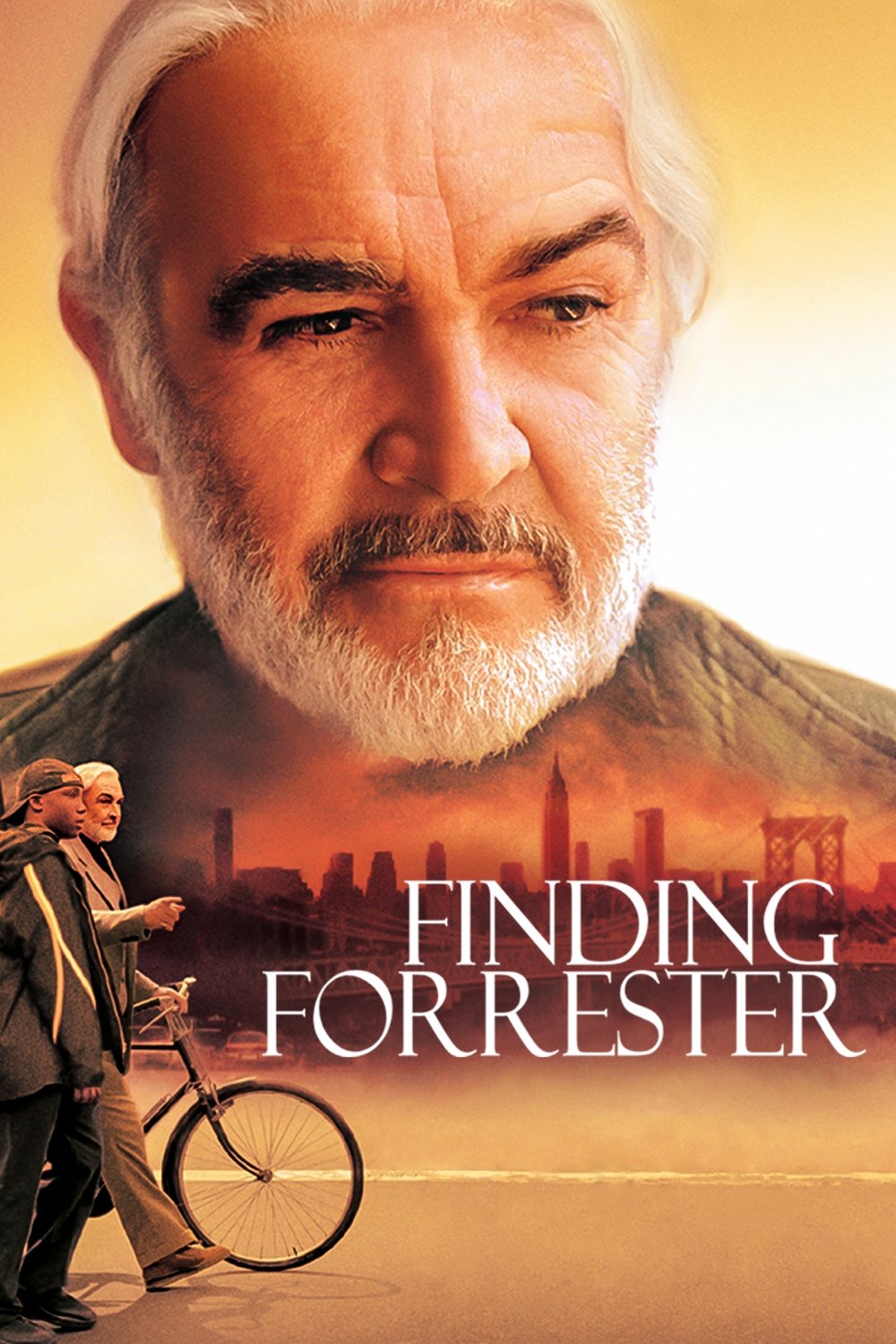
Gus Van Sant tells the story of a young African American man named Jamal who confronts his talents while living on the streets of the Bronx. He accidentally runs into an old writer named Forrester who discovers his passion for writing. With help from his new mentor Jamal receives a scholarship to a private school.
Jean Sénac, born in Béni Saf in Algeria in 1926 and died in Algiers in 1973, is today considered one of the great French writers and poets and the only one of his reputation to have accompanied the Algerian revolution before November 1954. part of all the debates and got involved, very early and with immense enthusiasm, in a work of commitment which ended badly. His poetry, his sexual preferences and his political lyricism work against him: rejected as much by the Pieds Noirs as by the FLN activists then by the power in place in Algiers, Jean Sénac was assassinated in 1973 at his home in Algiers, in circumstances never clarified.
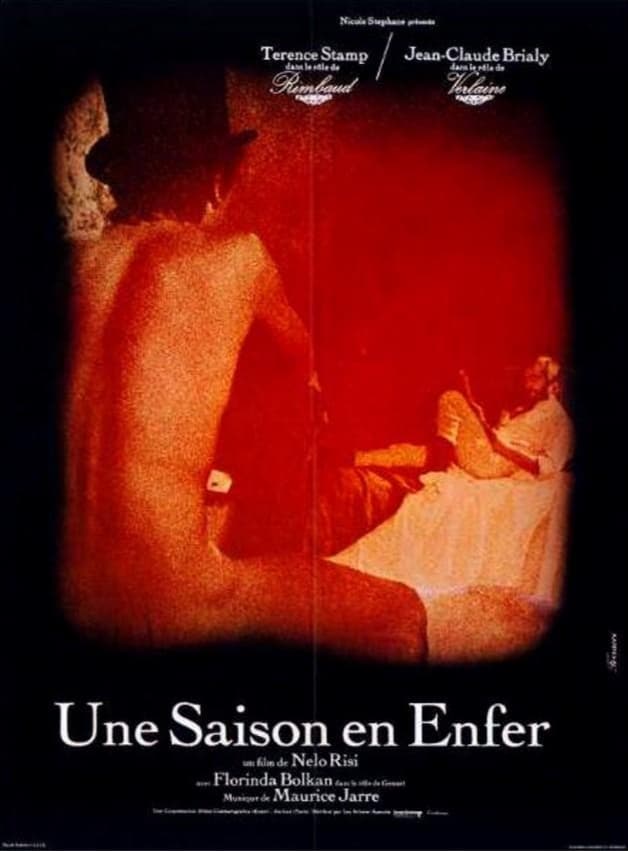
The tumultuous life of Arthur Rimbaud, the cursed poet, who completed his masterwork at the age of twenty, became an arms dealer and died at thirty-seven; and his passionate relationship with Paul Verlaine, full of wanderings, storms and falling out.
Cacaso, a Brazilian poet, lived in Rio de Janeiro. Born Antonio Carlos de Brito (1944-1987) he was one of the leaders of the marginal poetry movement. Cacaso filled notebooks not only with poems but reflections, drawings and collages. He also became a lyricist and partner of celebrated songwriters such as Tom Jobim, Edu Lobo, Toninho Horta, João Donato and Sivuca.
Combining the authenticity of Indigenous writer Rebecca Thomas' narrative, the power of poetry, and stunning animation, "I Place You into the Fire" invites viewers to consider their roles in fostering understanding, compassion and justice.
The documentary is titled after Arkadaş Z. Özger’s poem “Hello My Dear” which had caused much controversy in the period it was first published. Considered to be in defiance of heteronormativity, the said poem includes references to the poet’s personality, his family, his relationship to the society, and his “unexpected” death, which came three years after its publication. Today, 50 years after it was written, the documentary follows these same lines in the poem utilising cinematic elements. The documentary also rediscovers the poetics; reaches out to the family, the comrades, the friendships, departing from the official historical accounts, cognizant of his experience of otherness, in pursuit of the “lost” portrait of Arkadaş Z. Özger.
A dying man in his forties recalls his childhood, his mother, the war and personal moments that tell of and juxtapose pivotal moments in Soviet history with daily life.

1936. Giovanni Comini, the youngest Federal in Fascist Italy, is summoned to Rome for a delicate mission: to surveil aging national poet Gabriele D'Annunzio, whose increasingly restless behavior Mussolini fears could damage his alliance with Nazi Germany. However, after spending time with D'Annunzio, Comini finds himself torn between loyalty to the Party and his fascination with the poet, who will put his burgeoning career at risk.
In 19th-century Italy, Giacomo Leopardi channels his debilitating illness and isolation into poetry.
Intimate portrait of poet, playwright, painter and filmmaker Derek Walcott, set in his beloved native island, St Lucia.
About Jösta Hagelbäck (1945-2009), Swedish film director, writer, poet, musician, actor etc. A human bipolar mixture of genius and madman. Invited to Hollywood, had an artistic hit with the film "Kejsaren/The Emperor" (1979) at the Berlin Film Festival.
After World War II a group of young writers, outsiders and friends who were disillusioned by the pursuit of the American dream met in New York City. Associated through mutual friendships, these cultural dissidents looked for new ways and means to express themselves. Soon their writings found an audience and the American media took notice, dubbing them the Beat Generation. Members of this group included writers Jack Kerouac, William Burroughs, Allen Ginsberg. a trinity that would ultimately influence the works of others during that era, including the "hippie" movement of the '60s. In this 55-minute video narrated by Allen Ginsberg, members of the Beat Generation (including the aforementioned Burroughs, Anne Waldman, Peter Orlovsky, Amiri Baraka, Diane Di Prima, and Timothy Leary) are reunited at Naropa University in Boulder, CO during the late 1970's to share their works and influence a new generation of young American bohemians.
An account of the life and work of the Spanish poet Luis García Montero; a journey through his experiences, his mentors, his influences and his contact with other artists, both from the literary world and from other disciplines.

This film is dedicated to Mas-Félipe Delavouët, the poet discovered by Lawrence Durrell, who wrote 14,000 verses in Provençal over a period of thirty years, and who died on November 18, 1990. "The sky, history and Mediterranean and Provençal myths are the inexhaustable wellspring of this man rooted down there, near Salon-de-Provence" (J.-D. Pollet). "Mas-Félipe Delavouët wrote five books in Provençal, 14,000 verses. A sort of "Odyssey". Of myths. What is stunning in him is that he always talks of disappearances. Cities, works, men, writings, television, etc., everything has to disappear. In order to be reborn. No pain. A sort of hand-to-hand of man and nature. During the filming, I would simply throw out some words... For example, one time I said "creation" and he said: "creation doesn't exist..., creation is before me..., I can only read creation"; this sentence describes Delavouët perfectly (J.-D. Pollet, 1989 and 1993).
"The Lady in the Book" is Sylvia Plath, a major author of 20th-century American poetry and a feminist icon following her sudden death at the age of thirty. This film offers a glimpse into her world and work, through encounters with women who live today in the places where she grew up.
About the Swedish writer Stig Dagerman (1923-1954). More than a style, there is a Dagerman voice. This simple voice speaks softly, without emphasis, of simple people, of children, of old men, of his native Sweden. She is friendly to the humble, the solitary, the victims.
Smoky little clubs, late nights, late nights of conversation over a glass of beer and a guitar. The lyricist Géza Bereményi and the composer-performer Tamás Cseh are the creators of the most topical and accurate songs of the 70s and 80s, expressing the mood of the "30s and 40s" of that time - a mood that was their own destiny. This stunning recording from 1980 includes songs like Tangó, Álomfejtés, Szabó Kálmán tegnap este..., A 100. éjszaka, A legjobb viccek, Születtem Magyarországon, A dédapa dala, Egy bogár, Krakkói vonat, Az ócska cipő, Filmdal.