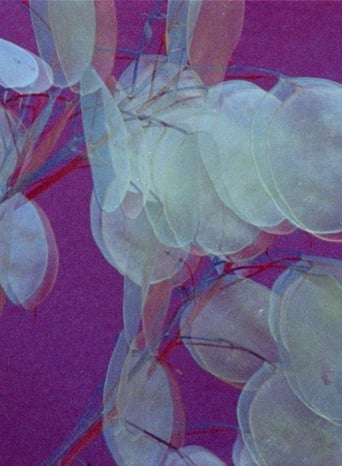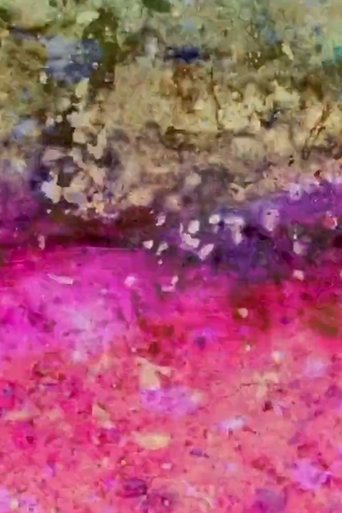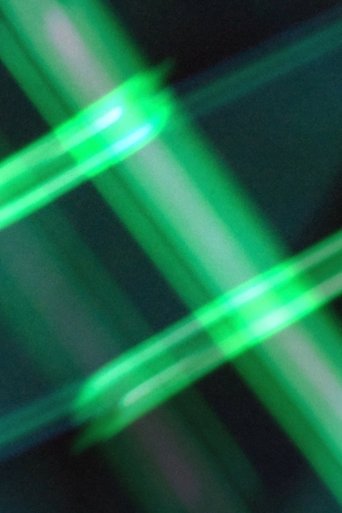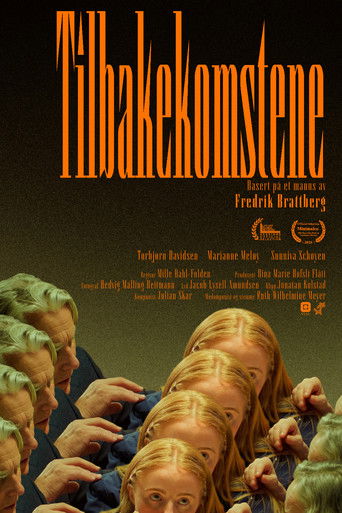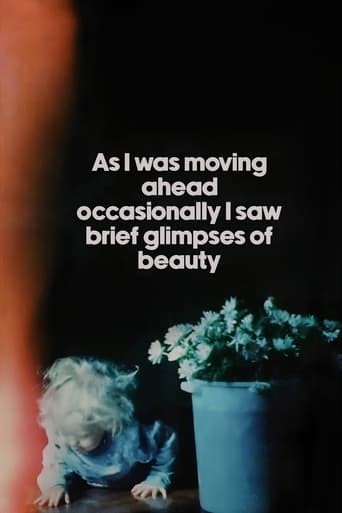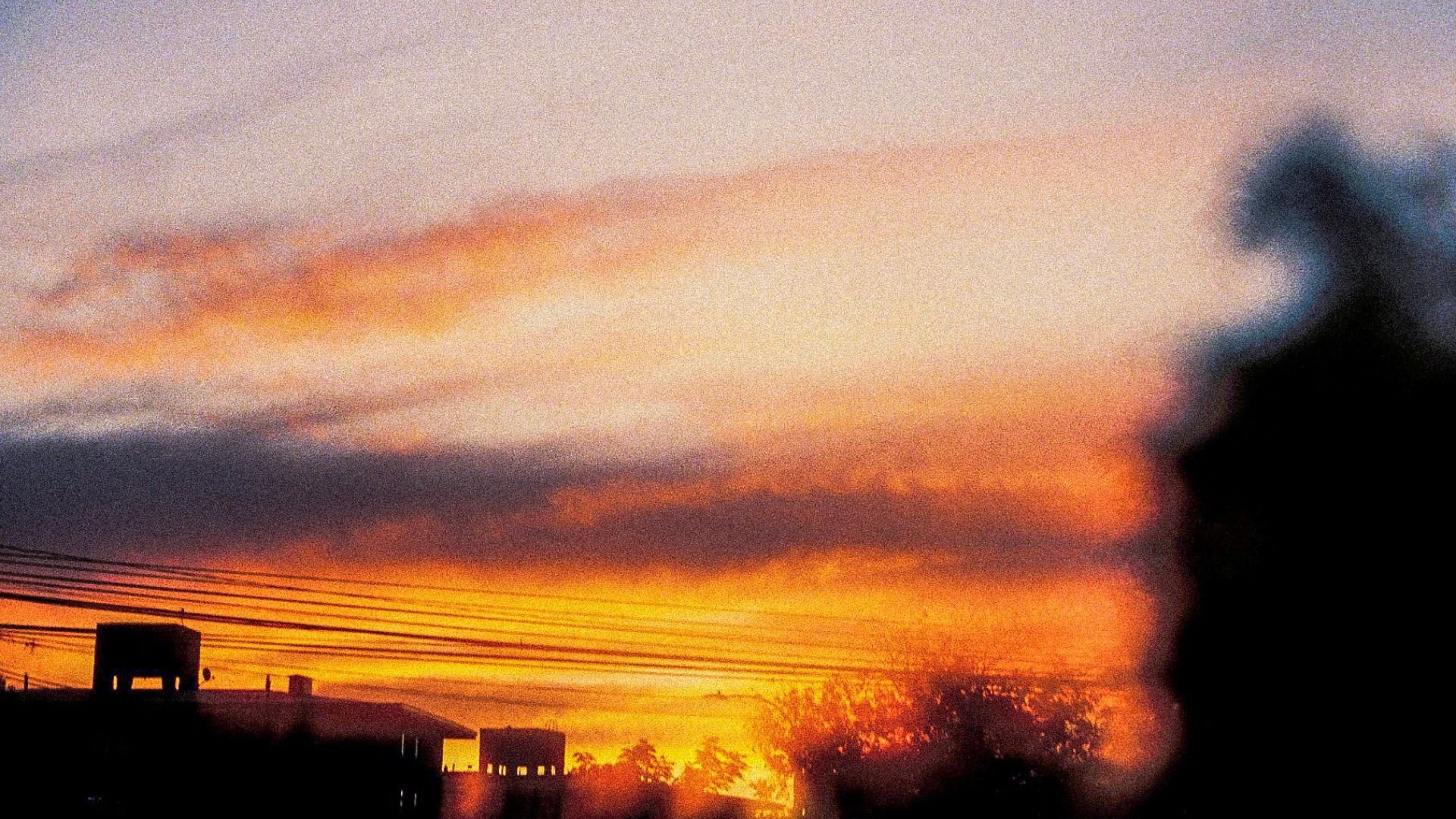
An experimental short film about fleeting moments that capture the everyday in different forms and emotions. A sensory exploration of ordinary time. 35mm. Silent.
Social & External
The people behind it
The mind of a prisoner, expressed through various poetic stanzas, corrodes at the same rate as the house they are trapped in.
an experimental short shot completely in black and white and attempts a new technique.
Colors and snowfall surround a street lamp with a loose fixture on time and space in this abstract ambient vid.
The end of the world isn’t a global catastrophe, but an inner sense of total collapse, like for a man who’s lost his job and doubts his wife’s loyalty. In despair, he goes fishing and finds a wounded angel. He takes the angel home on his bicycle and introduces him to his family. But soon after, during a party at a local bar, the angel is accidentally shot by a neighborhood policeman. Based on Gabriel García Márquez’s short story 'A Very Old Man with Enormous Wings'.
Today, film is no longer used to take photos, but to capture memories. On the day of the "Black-out", the pictorial traces left by digital technology disappear...
Experimental short film
Viet Flakes was composed from an obsessive collection of Vietnam atrocity images, compiled over five years, from foreign magazines and newspapers. Schneemann uses the 8mm camera to “travel” within the photographs, producing a volatile animation.
A naturalistic snapshot of the southern countryside.
This movie marks the understanding of cinema as an extra-human effort and finds cinema beyond the human, somewhere on the territory of its non-existence.
An experimental avant-garde film where the character battles with herself, struggling to understand and embrace her true identity. Blending dream-like and reality sequences together, the film connotes inside the character’s mind. Escaping to different parts of her subconscious, she is met with confrontation, fear & desire. This piece of work highlights themes of identity, surrealism & subjectivity, where the instability of the self is at the forefront of the film. The film uses elements of mixed media montage to portray the character’s inner thoughts.
Dr. Atsuko Chiba is a research psychologist who uses a device called the DC Mini to enter her patients' dreams, wherein she adopts the alter-ego "Paprika". When the device is stolen, she must stop rogue elements from merging the dream and waking worlds.
News broadcast interlaced with footage of people doing bizarre, senseless acts.
Extended nature and landscape shots. Shot on 16mm film.
A quick view of three remarkable organic gardens: Le Tomple, Le jardin du Mas d’Abri in the department of Gard and Le jardin des Sambucs in the department of Hérault. The film goes over their general layout along pathways amongst the vegetation, ponds and people or animals that happen to be there at the time.
A man, alone and contemplative, sits in his room until a woman enters.
The story takes place in the landscapes of La Spezia, where urban and rural environments intertwine. Water plays a primary role as a form, alongside the circle (e.g., bicycle wheels, pizzas, clocks…), which sets the rhythm of the character’s life, dynamically accelerating until it becomes very fast. The overlapping forms invite the viewer into the cyclical rhythm of the short film, moving from the spinning bicycle wheel to the washing machine drum in the character’s bathroom, from a freshly tossed pizza to the delivery mailbox, and finally to a dead-end wall. Savana is a race against oneself and against others; it’s a matter of decision and unpredictability — it’s black or white.
Energy cannot be created or destroyed. When we die, where does our energy go? Inspired by Vauhini Vara's essay "Ghosts", in which she prompted Al to help her write about her sister's passing, "GHOSTS" takes us on the emotional journey of grief. We see a ghost figure trying to get through to her sister, who is still alive, and let her know she's still around somehow. There are two poems in this piece, one is a poem written by GPT 3, and the next is the director's (Oriana Mejer) response to it. This film uses spoken word poetry, TouchDesigner motion graphics, and is originally scored by French musician Taime.
Experimental short-film made by brazilian students about the trópicalia and cinema novo movement. The narrative revolves around the song Géleia Geral from the album Tropicália ou Panis Et Circensis and also around the political, artistical and social time from that period.
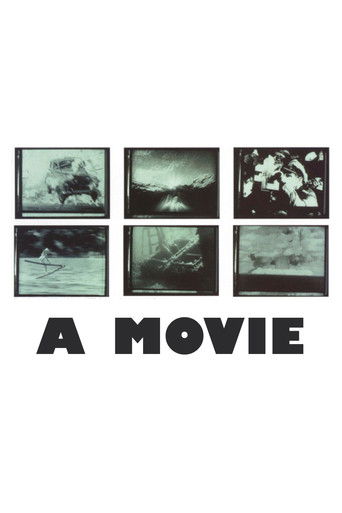
Bruce Conner's landmark experimental film consisting entirely of found footage edited to a new score.
NUDE explores perceptions of nudity in art by chronicling the creative process of photographer David Bellemere as he's commissioned by NU Muses founder Steve Shaw to shoot a fine art calendar of nude photographs.
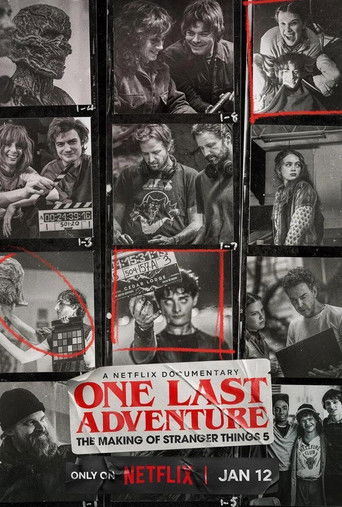
An inside look at the years of effort and craft that went into the final installment of the Duffer Brothers' generation-defining series.
The Making-of James Cameron's Avatar. It shows interesting parts of the work on the set.
Experimental short uses Ray Charles' “What'd I Say” as accompaniment to constantly shifting collage of female nude, cartoons, and newsreels of atomic bomb explosions.
A compilation of over 30 years of private home movie footage shot by Lithuanian-American avant-garde director Jonas Mekas, assembled by Mekas "purely by chance", without concern for chronological order.
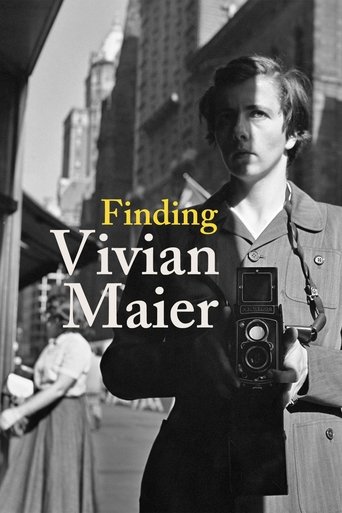
Vivian Maier's photos were seemingly destined for obscurity, lost among the clutter of the countless objects she'd collected throughout her life. Instead these images have shaken the world of street photography and irrevocably changed the life of the man who brought them to the public eye. This film brings to life the interesting turns and travails of the improbable saga of John Maloof's discovery of Vivian Maier, unravelling this mysterious tale through her documentary films, photographs, odd collections and personal accounts from the people that knew her. What started as a blog to show her work quickly became a viral sensation in the photography world. Photos destined for the trash heap now line gallery exhibitions, a forthcoming book and this documentary film.
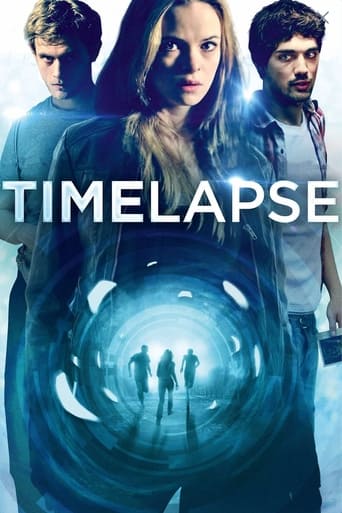
Three friends discover a mysterious machine that takes pictures 24 hours into the future and conspire to use it for personal gain, until disturbing and dangerous images begin to develop.
Capturing Avatar is a feature length behind-the-scenes documentary about the making of Avatar. It uses footage from the film's development, as well as stock footage from as far back as the production of Titanic in 1995. Also included are numerous interviews with cast, artists, and other crew members. The documentary was released as a bonus feature on the extended collector's edition of Avatar.
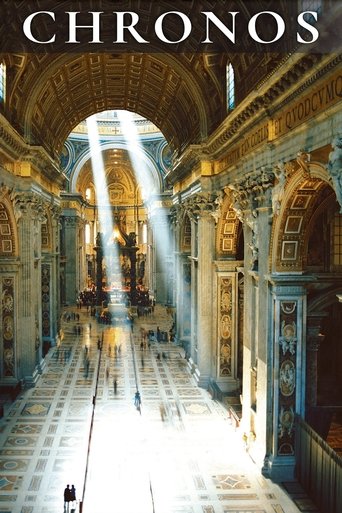
Carefully picked scenes of nature and civilization are viewed at high speed using time-lapse cinematography in an effort to demonstrate the history of various regions.
Told through performances, TV interviews, home movies, family photographs, private letters and unpublished memoirs, the film reveals the essence of an extraordinary woman who rose from humble beginnings in New York City to become a glamorous international superstar and one of the greatest artists of all time.
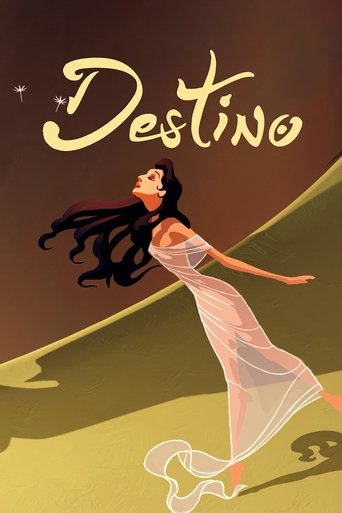
Clinging to a smooth, curved surface high above a sentient abyss, a woman tries to cover the few feet back to safety without losing purchase and falling to her death.
A look behind the lens of Christopher Nolan's space epic.
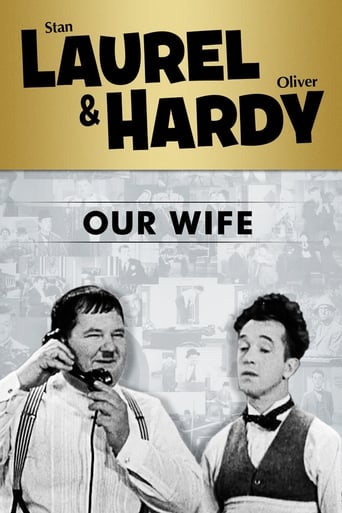
Oliver is making plans to marry his sweetheart Dulcy with Stan as his best man, but the plans are thwarted when Dulcy's father sees a picture of Ollie and forbids the marriage. The couple plan to elope, and run away to a Justice of the Peace. After typical Laurel and Hardy blundering, they manage to sneak the girl away from her father's house.
A visual representation, in four parts, of one man's internalization of "The Divine Comedy." Hell is a series of multicolored brush strokes against a white background; the speed of the changing images varies. "Hell Spit Flexion," or springing out of Hell, is on smaller film stock, taking the center of the frame. Montages of color move rapidly with a star and the edge of a lighted moon briefly visible. Purgation is back to full frame; blurs of color occasionally slow down then freeze. From time to time, an image, such as a window or a face, is distinguishable for a moment. In "existence is song," colors swirl then flash in and out of view. Behind the vivid colors are momentary glimpses of volcanic activity.
A documentary filmmaker interviews the now-famous Trevor Slattery from behind bars.
In 1958 New York Diane Arbus is a housewife and mother who works as an assistant to her husband, a photographer employed by her wealthy parents. Respectable though her life is, she cannot help but feel uncomfortable in her privileged world. One night, a new neighbor catches Diane's eye, and the enigmatic man inspires her to set forth on the path to discovering her own artistry.
As a visually radical memoir, CAMERAPERSON draws on the remarkable footage that filmmaker Kirsten Johnson has shot and reframes it in ways that illuminate moments and situations that have personally affected her. What emerges is an elegant meditation on the relationship between truth and the camera frame, as Johnson transforms scenes that have been presented on Festival screens as one kind of truth into another kind of story—one about personal journey, craft, and direct human connection.
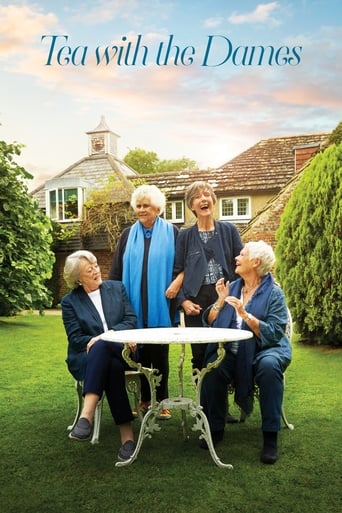
BBC Arena's documentary on the Dames of British Theatre and film featuring Maggie Smith, Eileen Atkins, Judi Dench and Joan Plowright on screen together for the first time as they reminisce over a long summer weekend in a house Joan once shared with Sir Laurence Olivier.
A computer hacker's goal to discover the reason for human existence continually finds his work interrupted thanks to the Management; this time, they send a teenager and lusty love interest to distract him.