Tracing their origins to the region around the Tigris and Euphrates River basin in western Asia, the head-hunting Konyak tribe of Nagaland, which embraced Christianity, is now trying to rediscover itself and its fading culture.
Social & External
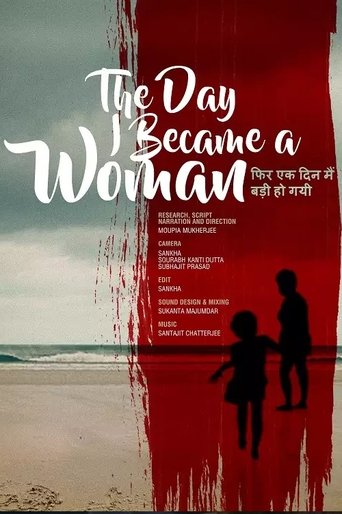
The film is a journey of the director to find an answer behind the trauma that shook her one fine morning at the age of twelve, when she had her first periods. Away from home and her mother on that particular day, she feared for her life, as she didn’t have the slightest clue about what was going on in her body. Her journey within the film extends to the experiences of several women around menstruation, through interactions with her daughter and a few friends. Finally, after thirty years, she confronts her mother.
Uttam Das, a folk singer of Bengal, built an Ashram for music in his native village, on the riverbank of Ajay. This Ashram is a unique example, in the modern world where an artist lacks free space to practice art. The artists gather here to celebrate music and the silence of nature uninterruptedly. In ashram rain arrives, seasons change, and stillness of the time persists. But today man's greed tries to destroy the river and the surroundings, pains the land and the artist.
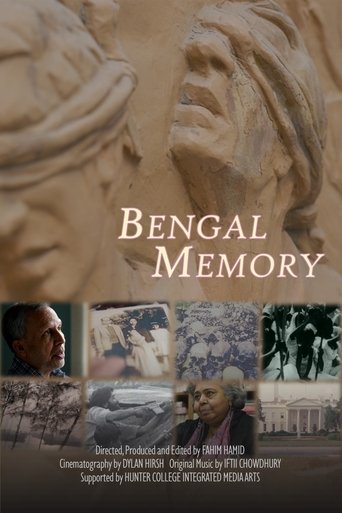
A Bangladeshi American undertakes a journey to learn about the liberation war in his native country, traveling there for the first time in nearly two decades, and uncovering the controversial role the U.S. played in a forgotten genocide that occurred there over 50 years ago. From 1971 to the present day, this is a story of Bangladesh’s independence, a family’s journey immigrating to America, and the cognitive dissonance of a person belonging to both homelands. Driven by interviews with his father and other family members, along with experts and witnesses, archival videos, declassified recordings, and animations, BENGAL MEMORY is a unique and untold oral history through a personal lens.
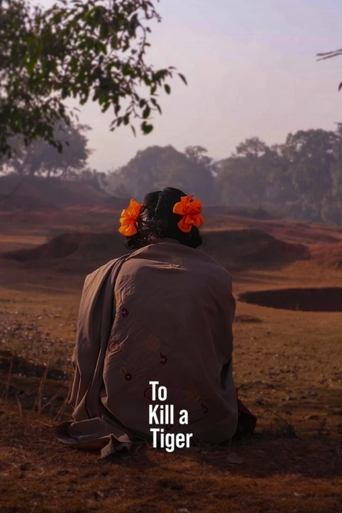
Sunderbans (Forest of Beauty) is in West Bengal, India, and is the only place on Earth that is the natural habitat of Royal Bengal Tigers that have never known to be fearful of humans. One tiger has been known to kill three fully grown men, leaving behind orphans and widows who belong to poor tribes, dependent on harvesting wild honey and fishing, in a swampy mangrove region. About 80 people are killed annually by these ferocious beasts with razor-sharp jaws, whose forepaws can shatter bones, and sharp teeth can pierce a skull in one bite. Amidst religious superstitions, the narrator attempts to explain the cause behind their taste for human meat in a region devoid of electricity, roadways, firearms and safe drinking water, and why the villagers continue to live there despite of being stalked and mauled on land and water alike.
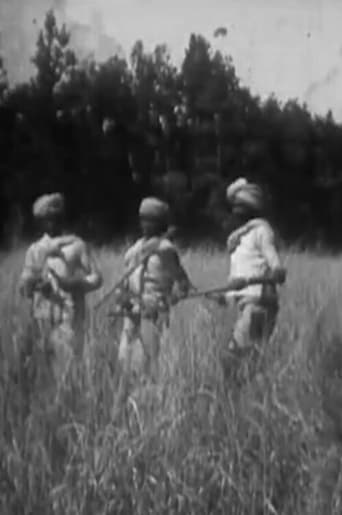
The Duke rides an elephant as he ventures on safari in Bengal.
A modest tradition of making clay images existed in Bengal in pre-British times. These craftsmen originally “Potters” by caste became the core settlers of Kumartuli, which means “Potters Quarter”. “Documentation of Clay Image Makers of Kumartuli”s an attempt to understand their plight and Kumartuli’s contribution to one of the biggest festivals in the world.
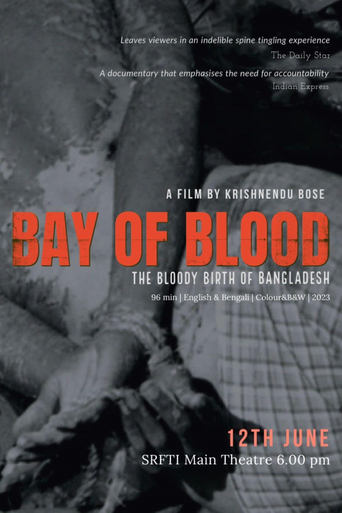
March 25th 1971, a horrific 'Genocide' was unleashed on the unarmed civilians of East Pakistan. This was done by their own Pakistani Army. An estimated 3 million people were killed, 10 million people were displaced to India as refugees and 400,000 women and girls were raped by the Pakistani soldiers. But Pakistan was not alone in perpetrating this violence. The then-American president and the National Security Advisor were supporting the Pakistani dictator. The cold war triggered this geopolitical escalation. Finally, India pressurized by the 10 million refugees within its borders, went to war with Pakistan. and joining forces with the local rebels, the Mukti Bahini, helped liberate Bangladesh. Cradled in the blood of innocents, a new nation was born in the closing days of 1971. "Bay of Blood", brings this 50-odd-year-old story to life.
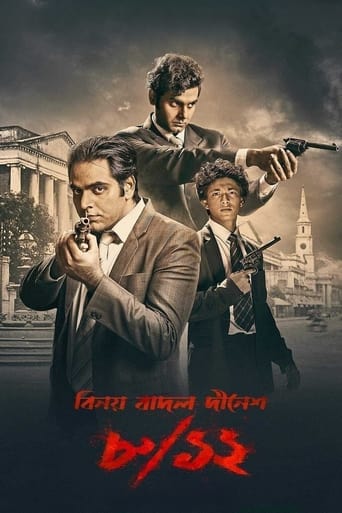
Dwitiyo Purush is a sequel of Baishe Srabon were Prosenjit Chatterjee dies at the end. In this film we will see Parambrata chattopadhyay as a police inspector who follows the path that Prasenjit Chatterjee showed him in Baishe Srabon to fight with criminals in various regions of kolkata.
Set in 1948, the historic story of India's first Olympic medal post their independence.
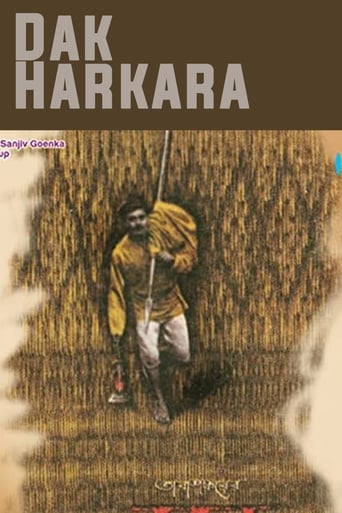
The plot revolves with Raicharan's tragic life. He is the obedient servant of local zamindar and takes care of zamindar's son whom he addresses as Khokababu. One day the little son dies in an accident in river flood and he is blamed for the same. In a delusional state, Raicharan starts believing his own infant to be his much loved khokababu and brought him up only to return him to his master.
Shankar was a young lawyer in pursuit of making it big in the professional world. However, his world is turned upside down when he comes to know that his father, who he knew went missing, was in real life spending his lifetime in jail as he was incorrectly accused of murdering a lady named Hemangini. His mother urges him to reinvestigate the case and save his father. He goes to Krishnanagar in search of the people and the pieces of evidence that would help him to prove his father’s innocence. He meets Rita, a young and charming lady who assists him. They fall in love. Shankar faces a lot of roadblocks while trying to collect clues, most of them which were imposed by the actual murderer. However, he solves the mystery in the end and his father is thus released from prison.
How friendship is meaningful in our life? Does it has any barrier by thought? Age, Color, race or religion? Let's make friendship universal -a circle free for better humanity.
Mishti, a housewife, is constantly ignored by her husband and children. And Cheeni is full of life and has big dreams. When the path between Mishti and Cheeni collides, they embark on a journey of self-discovery together.
Jayanti is a woman full of life but unfortunately, she loses her husband in a war within a year of their marriage. In immense pain and completely shattered, she forgets how to live life the way she did before.
This is the journey of Sarmista, an upright and honest investigative journalist through the web of media politics and her fight for the truth. She braves various situations to capture news at great personal risk only to realize, to her horror and disbelief, that the channel won't telecast her report.
When a car accident lands her husband, Kaushik, in the hospital, Kaberi's life takes a dramatic turn -- in more ways than one. Anguish over Kaushik's dire condition gives way to anger when Kaberi learns he was having an affair with his co-worker. Torn between sympathy for her bedridden husband and the sting of his betrayal, Kaberi weighs her options.
In the tranquil yet enigmatic village of Kaliachak, resides Asik, a bright student, who dreams of living a life as vast as the open sky. However, beneath the seemingly straightforward life lies a dark world of deceit and despair.
It is the story of a boxer names shibaji. Who was a hero and inspiration for every indian but suddenly he falls down and everyone forgets him. The film is about how he rises up again.
The film documents one of the largest Indian religious fairs, the Kumbh Mela, which is held at the confluence of the rivers Ganges, Yamuna and Saraswati. The action is seen through the eyes of Shubhendu Chatterjee who has come to the Mela not out of any religious sentiment but to see and understand people and seek the reason why “….multitudes upon multitudes of the old and weak and the young and frail enter without hesitation or complaint upon such incredible journeys and endure the resultant miseries without repining.” (Mark Twain after visiting the 1895 Mela)
The story revolves around Pratima who pledges to destroy the relationship between Neera and Binu, as she loves Binu.