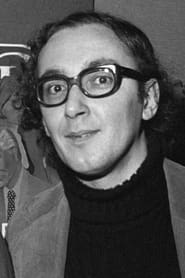
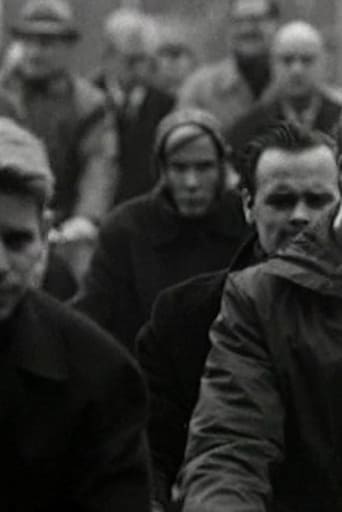
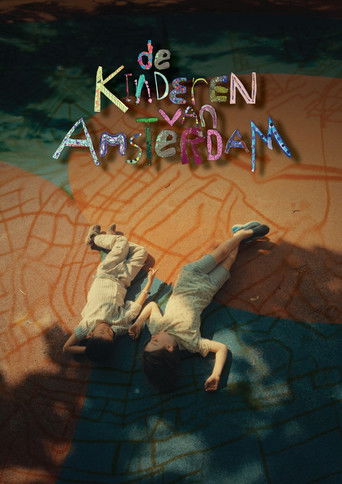
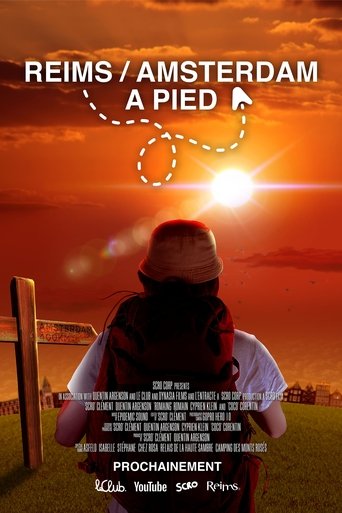
First film by Pim de la Parra, about a young Surinamese man in Amsterdam who delivers a “monologue interior” about his dissatisfaction with society and his position as an outsider.
Social & External
Himself
Herself
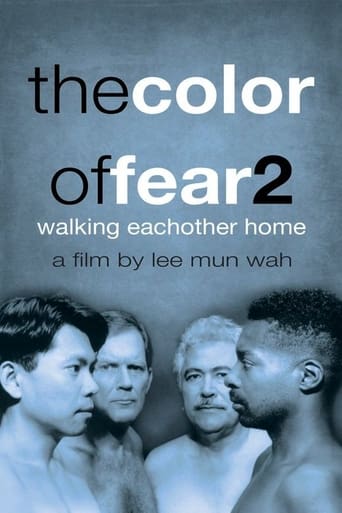
In THE COLOR OF FEAR, eight American men participated in emotionally charged discussions of racism. In this sequel, we hear and see more from those discussions, in which the men talk about about how racism has affected their lives in the United States. We also learn more about the relationships between them, and about their reactions during some of the most intense moments of that discussion.
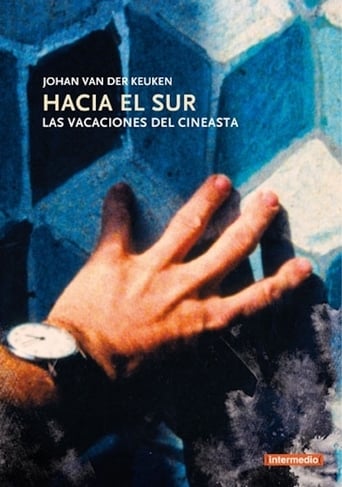
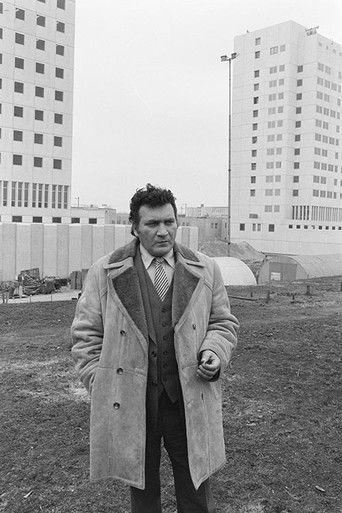
Johan van der Keuken went against the grain in 1980: from Amsterdam (on April 30 with the coronation riots and squatting actions) via Paris, southern France and Italy to Egypt. He made his personal travelogue in three parts for VPRO television. Later, he fused the three parts into one long movie.
An experience of a camera swinging in different gestures facing the optical distortion of the Sun. The last appearance of the smudge.
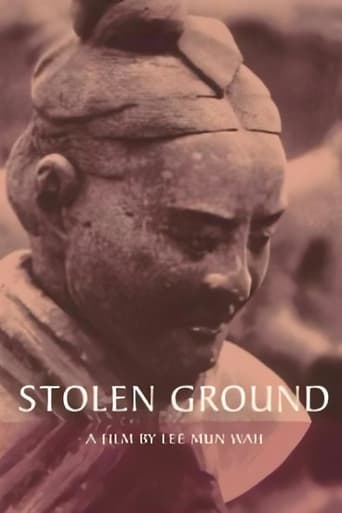
In US society, people of East Asian heritage are often perceived through an obscuring lens of ethnic and cultural stereotypes. In STOLEN GROUND, six Asian-American men talk about their experience of the highly racialized United States, and consider how racism has affected their lives and those of their family members.
A backstage and on-stage look at Nicki Minaj's career during the Pink Friday Tour, festivals, and more.
The dutchified Hungarian Joszef Katús returns, after a months-long absence, to Amsterdam on 29 April 1966. The arrival of the Provos changed a great deal in the Dutch capital. The film follows Katús, mostly roaming the streets, in a loose documentary style. The events are set against the backdrop of four national occasions - The Queen's Birthday, Labour Day, Liberation Day and Remembrance Day.
Since the fall of the Iron Curtain an estimated four million children have found themselves living on the streets in the former countries of the Soviet Union. In the streets of Moscow alone there are over 30,000 surviving in this manner at the present time. The makers of the documentary film concentrated on a community of homeless children living hand to mouth in the Moscow train station Leningradsky. Eight-year-old Sasha, eleven-year-old Kristina, thirteen-year-old Misha and ten-year-old Andrej all dream of living in a communal home. They spend winter nights trying to stay warm by huddling together on hot water pipes and most of their days are spent begging. Andrej has found himself here because of disagreements with his family. Kristina was driven into this way of life by the hatred of her stepmother and twelve-year-old Roma by the regular beatings he received from his constantly drunk father. "When it is worst, we try to make money for food by prostitution," admits ...
Kim and Bob have been inseparable since childhood. Does puberty end their friendship?
Amsterdam's world-famous red-light district is the fascinating backdrop to the story of plucky prostitute Lina as she searches for Mr Right. Lina thinks she has found true love with American punter Sean, but she may be treading a fine line between fantasy and reality. Could Sean be her Prince Charming or will she end up heartbroken? With hard-won access to this notoriously secretive, hidden world, Sexwork, Love & Mr Right will be a revealing and thought-provoking documentary with multiple supporting narratives from experienced punters to wise madams. As streetwise sexworker Lina navigates the highs and lows of her precarious new relationship, the film asks can sexworkers ever really find true love?
The city from the unique perspective of the many wild animals and plants that inhabit it. Seen through the eyes of the adventurous urban cat, Abatutu.
Under the pretext of fighting terrorism or crime, the major powers have embarked on a dangerous race for surveillance technologies. Facial recognition cameras, emotion detectors, citizen rating systems, autonomous drones… A security obsession that in some countries is giving rise to a new form of political regime: numerical totalitarianism. Orwell's nightmare.
A study of observation, perceptions and sensations of nature and human interactions from the eye of a digital camera
It’s the 2014 midterms and residents of a South Florida retirement community feel the weight of democracy on their shoulders. In one of the most influential counties of America’s largest swing state, these political kingmakers trade their golf clubs for clipboards and hit the pavement to get out the vote. A GREATER SOCIETY is a feature documentary to inspire voter turnout. Inside the gates of Wynmoor Village are three miles of manicured lawns lined with palm trees, a golf course, and carefully maintained condominiums. At first glance, it’s just another retirement community where elders go to enjoy their golden years relaxing by the pool and taking ceramics classes; but look further and you’ll see that the people who live in this community share something unique: the power to have a real impact on national politics.
Five fragments of observation and sensations during a journey with Gorneton's trail in Seyssuel, Isère. A work-in-progress with sounds, the interest of light and the solitude of a digital camera.
This Traveltalks entry looks at the sights, sounds, people, and art masterpieces in the capital of the Netherlands.
The Ta'ang or Palaung people, an ethnic minority living in the mountainous area between Myanmar's Kokang region and China's Yunnan province, have historically suffered many forced migrations due to war. When their survival is threatened again in 2015, thousands of them flee across the border. Filmmaker Wang Bing accompanies them and becomes a privileged witness to a human story that is both a modern reportage and a mythical epic.
A relentless chronicle of the tragedy of the Uighurs, an ethnic minority of some eleven million people who live in the Xinjiang region of northwest China, speak a Turkic language and practice the Muslim religion. The Uighurs suffer brutal cultural and political oppression by Xin Jinping's tyrannical government: torture, disappearances, forced labor, re-education of children and adults, mass sterilizations, extensive surveillance and destruction of historical heritage.
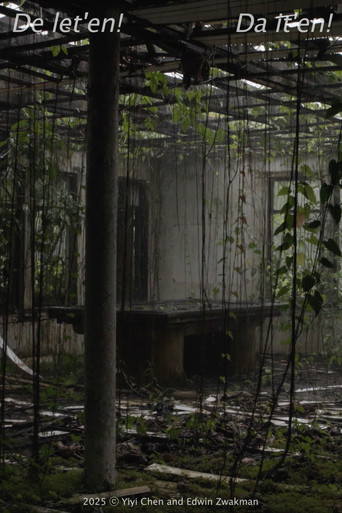
A study of ruins of a fortified castle placed in the village of Seyssuel during two days of shooting and understanding of the moving light
Furniture and clutter of one small apartment room become the subject of a moving still life—with Akerman herself staring back. This breakthrough formal experiment is Akerman's first film made in New York.
BEPPIE is a moving and disarming portrait of an Amsterdam street urchin. Van der Keuken once described her as follows: 'She was ten years old and the joy of the Achtergracht, where I was living at the time. An Amsterdam child, sweet and crooked as a corkscrew.' He films her while she skims the city with some friends and knocks at strangers' doors. Her family has nine children and is not well off. In those days, a visit to the De Miranda swimming pool cost a quarter, but only ten cents if the weather was bad. At school, Beppie gets a poor mark because she is too boisterous, but when the whole class rattles off the multiplication tables, she joins in at the top of her voice. All of TV-watching Holland was wildly enthusiastic about this portrait, with which Van der Keuken even made the front page of the national newspaper De Telegraaf.