Rare wartime featurette introduced by General Heinz Guderian covering the German breakthrough at Sedan during World War 2
Social & External
Self
During the Nazi occupation of 1944 Rome, Resistance leader Giorgio Manfredi is pursued by the Nazis as he seeks refuge and a means of escape.
The true story of pianist Władysław Szpilman's experiences in Warsaw during the Nazi occupation. When the Jews of the city find themselves forced into a ghetto, Szpilman finds work playing in a café; and when his family is deported in 1942, he stays behind, works for a while as a laborer, and eventually goes into hiding in the ruins of the war-torn city.
The true story of how businessman Oskar Schindler saved over a thousand Jewish lives from the Nazis while they worked as slaves in his factory during World War II.
Wadi Rum, known as the Valley of the Moon, is a vast landscape of sandstone walls in the desert of Jordan. Hoping to lure international climbers, two Israelis team up with a local Bedouin guide to establish a 1,800-foot route, eventually recruiting American climber Madaleine Sorkin to help achieve their dream. Valley of the Moon explores the importance of climbing as a way to cross cultural barriers, build friendships, and chase adventure in one of the most breathtaking regions on earth.
A fascinating new look at the biblical, historical, and scientific evidence for Creation and the Flood. Learn from more than a dozen scientists and scholars as they explore the world around us in light of Genesis. Dr. Del Tackett, creator of The Truth Project, hikes through canyons, climbs up mountains, and dives below the sea in an exploration of two competing views... one compelling truth.
Ben Fogle spends a week living inside the Chernobyl Exclusion Zone, gaining privileged access to the doomed Control Room 4 where the disaster first began to unfold.
A story about 6 kids who grew up together and stayed together, once strangers, then friends, now family. Both a video diary and a travelogue, this coming-of-age film explores the fleeting moments of youth, reflecting on nostalgia, connection, and the bonds that endure as we grow older. A chapter in the story we've been writing since we were kids, these are the days we'll look back on.
A documentary of the making of Yellowcard's fifth studio album "Lights and Sounds".
Drama set in the Second World War, focused on Jean Moulin, hero, martyr and symbol of the French resistance and the patriotism during the dark years of Nazi occupation.
A German submarine hunts allied ships during the Second World War, but it soon becomes the hunted. The crew tries to survive below the surface, while stretching both the boat and themselves to their limits.
Sonja Wigert, Scandinavia's most acclaimed female movie star, enlists as a spy for Swedish intelligence but ends up becoming entangled with the German Reichskommissar Terboven.
A portrait of Pope Pius XII (1876-1958), head of the Catholic Church from 1939 until his death, who, during World War II, and while European Jews were being exterminated by the Nazis, was accused of keeping a disconcerting and shameful silence.
In 1995, former KGB Major General Oleg Kalugin and ex-CIA Director William Colby collaborated in an unexpected way. They made a video game. The Great Game traces how both men rose to the tops of their fields following World War II, before falling out of favor with their respectives agencies — on opposite sides of the Iron Curtain. For Kalugin, a growing discontent with the KGB’s treatment of Russians radicalized him against the institution. Meanwhile William Colby, an OSS operative and the CIA’s man on the ground in Vietnam, was fired by President Ford after testifying before Congress about controversial CIA programs like MKULTRA and CoIntelPro. After the fall of the Berlin Wall, both living on American soil, Colby and Kalugin played themselves in Spycraft, a multi-million dollar game that was among the most advanced of its time — and is now almost entirely forgotten.
A fiction piece centered around the Czech resistance to the Nazis.
“The Soviet Story” is a story of an Allied power, which helped the Nazis to fight Jews and which slaughtered its own people on an industrial scale. Assisted by the West, this power triumphed on May 9th, 1945. Its crimes were made taboo, and the complete story of Europe’s most murderous regime has never been told. Until now...
Meet the real-life airmen who inspired Masters of the Air as they share the harrowing and transformative events of the 100th Bomb Group.
A keen chronicle of the unlikely rise to power of Adolf Hitler (1889-1945) and a dissection of the Third Reich (1933-1945), but also an analysis of mass psychology and how the desperate crowd can be deceived and shepherded to the slaughterhouse.
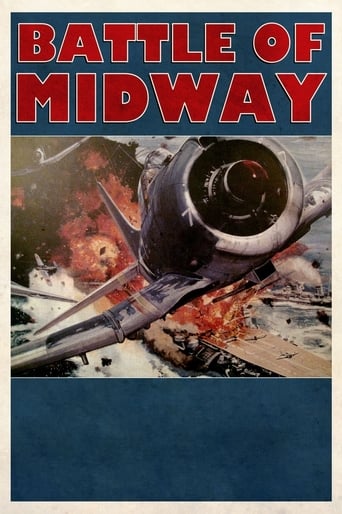
The Japanese attack on Midway in June 1942, filmed as it happened. Preserved by the Academy Film Archive, in partnership with Twentieth Century Fox Film Corporation, in 2006.
This documentary movie is about the battle of San Pietro, a small village in Italy. Over 1,100 US soldiers were killed while trying to take this location, that blocked the way for the Allied forces from the Germans. Preserved by the Academy Film Archive in 2005.
Prelude to War was the first film of Frank Capra's Why We Fight propaganda film series, commissioned by the Pentagon and George C. Marshall. It was made to convince American troops of the necessity of combating the Axis Powers during World War II. This film examines the differences between democratic and fascist states.
WWII from Space delivers World War II in a way you've never experienced it before. This HISTORY special uses an all-seeing CGI eye that offers a satellite view of the conflict, allowing you to experience it in a way that puts key events and tipping points in a global perspective. By re-creating groundbreaking moments that could never have been captured on camera, and by illustrating the importance of simultaneity and the hidden effects of crucial incidents, HISTORY presents the war's monumental moments in a never-before-seen context. And with new information brought to the forefront, you'll better understand how a nation ranked 19th in the world's militaries in 1939 emerged six years later as the planet's only atomic superpower.
Produced and presented as evidence at the Nuremberg war crimes trial of Hermann Göring and twenty other Nazi leaders, this film consists primarily of dead and surviving prisoners and of facilities used to kill and torture during the World War II.
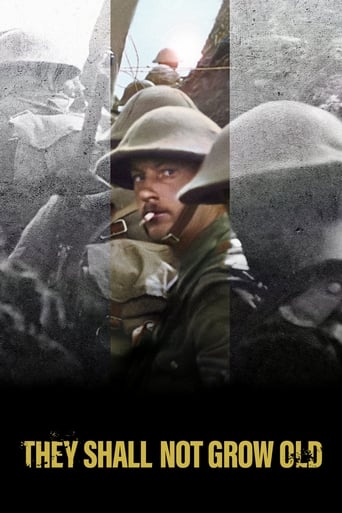
A documentary about World War I with never-before-seen footage to commemorate the centennial of Armistice Day, and the end of the war.
Amid the failing counteroffensive, a journalist follows a Ukrainian platoon on their mission to traverse one mile of heavily fortified forest and liberate a strategic village from Russian occupation. But the farther they advance through their destroyed homeland, the more they realize that this war may never end.
Korengal picks up where Restrepo left off; the same men, the same valley, the same commanders, but a very different look at the experience of war.
A disturbing collection of 1940s and 1950s United States government-issued propaganda films designed to reassure Americans that the atomic bomb was not a threat to their safety.
Pete Postlethwaite stars as a man living alone in the devastated future world of 2055, looking at old footage from 2008 and asking: why didn’t we stop climate change when we had the chance?
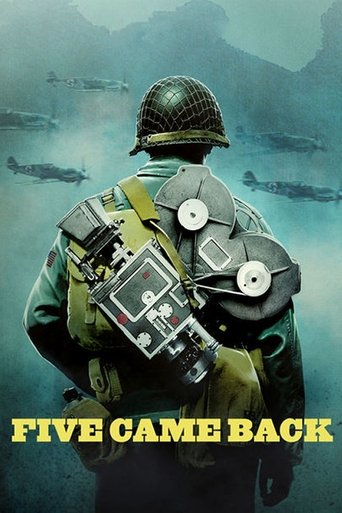
The extraordinary story of how Hollywood changed World War II – and how World War II changed Hollywood, through the interwoven experiences of five legendary filmmakers who went to war to serve their country and bring the truth to the American people: John Ford, William Wyler, John Huston, Frank Capra, and George Stevens. Based on Mark Harris’ best-selling book, “Five Came Back: A Story of Hollywood and the Second World War.”
The history of cinematic sound, told by legendary sound designers and visionary filmmakers.
This WW2 documentary centers on the crew of the American B-17 Flying Fortress Memphis Belle as it prepares to execute a strategic bombing raid on Nazi submarine pens in Wilhelmshaven, Germany.
The final entry in a trilogy of films produced for the U.S. government by John Huston. Some returning combat veterans suffer scars that are more psychological than physical. This film follows patients and staff during their treatment. It deals with what would now be called PTSD, but at the time was categorised as psychoneurosis or shell-shock. Government officials deemed this 1946 film counterproductive to postwar efforts; it was not shown publicly until 1981.
Set both in Latin America and the United States, the film explores the historic and current relationship of Washington with countries such as Venezuela, Bolivia and Chile. Pilger says that the film "...tells a universal story... analysing and revealing, through vivid testimony, the story of great power behind its venerable myths. It allows us to understand the true nature of the so-called "war on terror". According to Pilger, the film’s message is that the greed and power of empire is not invincible and that people power is always the "seed beneath the snow".
"Trinity and Beyond" is an unsettling yet visually fascinating documentary presenting the history of nuclear weapons development and testing between 1945-1963. Narrated by William Shatner and featuring an original score performed by the Moscow Symphony Orchestra, this award-winning documentary reveals previously unreleased and classified government footage from several countries.
A love letter from a young mother to her daughter, the film tells the story of Waad al-Kateab’s life through five years of the uprising in Aleppo, Syria as she falls in love, gets married and gives birth to Sama, all while cataclysmic conflict rises around her. Her camera captures incredible stories of loss, laughter and survival as Waad wrestles with an impossible choice– whether or not to flee the city to protect her daughter’s life, when leaving means abandoning the struggle for freedom for which she has already sacrificed so much.