"Lesbians and gay men tell history"
Stories of 12 gay and lesbian survivors of Nazism and the Holocaust.
Social & External
The Untold Tales of Armistead Maupin celebrates one of the world’s most beloved storytellers, following his evolution from a conservative son of the Old South into a gay rights pioneer whose novels inspired millions to reclaim their lives.
A young Catholic priest from Boston confronts bigotry, Nazism, and his own personal conflicts as he rises to the office of cardinal.
Intercutting dramatic vignettes with newsreel footage, the story follows the characters from an infantry squad as they make their way from Sicily to Germany during the end of World War II.
Former classmates at a school in the Southern Germany city of Ulm, Jewish and non-Jewish, recall their childhood in Nazi Germany.
At the end of WWII the Dutch resistance kills a German officer in front of the house of a Dutch family. Years after the war the young boy who witnessed the killing runs into the members of the resistance who committed the killing.
A tribute to the important work of female nurses during World War II.
It’s the resilience and love that keeps this community marching to the beat of its own drum; each generation redefining what it means to be queer and to be seen.
After his father is murdered by the Nazis in 1938, a young Viennese Jew named Ferry Tobler flees to Prague, where he joins forces with another expatriate and a sympathetic Czech relief worker. Together with other Jewish refugees, the three make their way to Paris, and, after spending time in a French prison camp, eventually escape to Marseille, from where they hope to sail to a safe port.
When in 1941 Nazi Germany invaded the Soviet Union, their troops quickly besieged Leningrad. Foreign journalists are evacuated but one of them, Kate Davies, is presumed dead and misses the plane. Alone in the city she is helped by Nina Tsvetnova a young and idealist police officer and together they will fight for their own survival and the survival of the people in the besieged Leningrad.
Different factions in WWII-era Holland race to find a stash of Nazi gold.
This black-and-white archival film outlines the importance of Canada's forests in the national war effort during the Second World War.
On the morning of June 6, 1944, thousands of ships reached the French coast of Normandy as part of an Allied operation to take back France from the Germans. For the next 85 days, U.S., British, and Canadian soldiers engaged in conflicts of unimaginable violence, conquering and liberating the region's cities, but at the cost of hundreds of thousands of lives. From the D-Day invasion to the final Nazi surrender in Argentan, this is the definitive story of the three-month Battle of Normandy as it's never been seen before.
At a village railway station in occupied Czechoslovakia, a bumbling dispatcher’s apprentice longs to liberate himself from his virginity. Oblivious to the war and the resistance that surrounds him, this young man embarks on a journey of sexual awakening and self-discovery, encountering a universe of frustration, eroticism, and adventure within his sleepy backwater depot.
Until 1982, when homosexuality was decriminalized, homosexuals were caricatured, insulted and even condemned. They had to live hidden from the gaze of others and create their own spaces of freedom: balls, the night and especially art. Artists have contributed to making homosexuals visible, first through words, then through images, and finally by investing popular culture.
When the lights dim and the stage is revealed, Meschke channels life through the strings of his puppets, triggering the spiritual connection between the creator and his alter-egos: the charismatic Don Quixote, the loving Penelope, the inquisitive Baptiste, or the mysterious Antigone. THE MAN WHO MADE ANGELS FLY is a poetic story about a master of his craft that has inspired audiences to reflect upon common issues of suffering and the mortal coil. Visionary and un-biographic, imaginary tribute to the puppeteer.
It's the hope that sustains the spirit of every GI: the dream of the day when he will finally return home. For three WWII veterans, the day has arrived. But for each man, the dream is about to become a nightmare.
Filmmaker Alain Resnais documents the atrocities behind the walls of Hitler's concentration camps.
Alexander, the King of Macedonia, leads his legions against the giant Persian Empire. After defeating the Persians, he leads his army across the then known world, venturing farther than any westerner had ever gone, all the way to India.
1943. They have never stepped foot on French soil but because France was at war, Said, Abdelkader, Messaoud and Yassir enlist in the French Army, along with 130,000 other “indigenous” soldiers, to liberate the “fatherland” from the Nazi enemy. Heroes that history has forgotten…
Produced and presented as evidence at the Nuremberg war crimes trial of Hermann Göring and twenty other Nazi leaders, this film consists primarily of dead and surviving prisoners and of facilities used to kill and torture during the World War II.
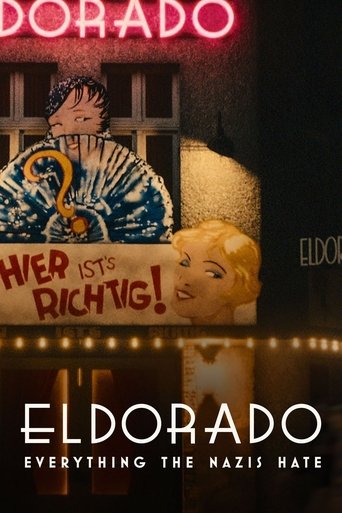
A glittery nightclub in 1920s Berlin becomes a haven for the queer community in this documentary exploring the freedoms lost amid Hitler’s rise to power.
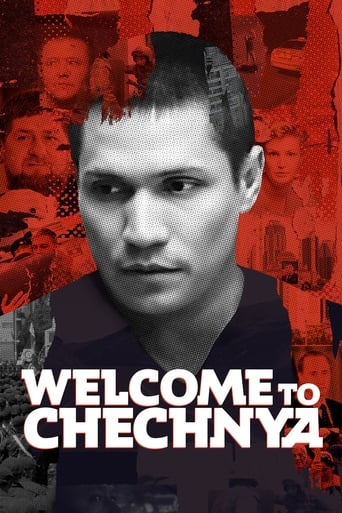
This searing investigative work shadows a group of activists risking unimaginable peril to confront the ongoing anti-LGBTQ program raging in the repressive and closed Russian republic. Unfettered access and a remarkable approach to protecting anonymity exposes this under-reported atrocity–and an extraordinary group of people confronting evil.
Prelude to War was the first film of Frank Capra's Why We Fight propaganda film series, commissioned by the Pentagon and George C. Marshall. It was made to convince American troops of the necessity of combating the Axis Powers during World War II. This film examines the differences between democratic and fascist states.
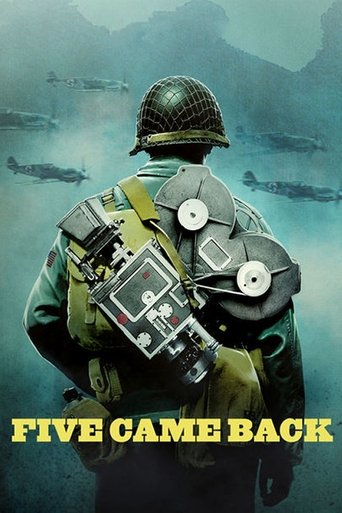
The extraordinary story of how Hollywood changed World War II – and how World War II changed Hollywood, through the interwoven experiences of five legendary filmmakers who went to war to serve their country and bring the truth to the American people: John Ford, William Wyler, John Huston, Frank Capra, and George Stevens. Based on Mark Harris’ best-selling book, “Five Came Back: A Story of Hollywood and the Second World War.”
When Allied forces liberated the Nazi concentration camps in 1944-45, their terrible discoveries were recorded by army and newsreel cameramen, revealing for the first time the full horror of what had happened. Making use of British, Soviet and American footage, the Ministry of Information’s Sidney Bernstein (later founder of Granada Television) aimed to create a documentary that would provide lasting, undeniable evidence of the Nazis’ unspeakable crimes. He commissioned a wealth of British talent, including editor Stewart McAllister, writer and future cabinet minister Richard Crossman – and, as treatment advisor, his friend Alfred Hitchcock. Yet, despite initial support from the British and US Governments, the film was shelved, and only now, 70 years on, has it been restored and completed by Imperial War Museums under its original title "German Concentration Camps Factual Survey".
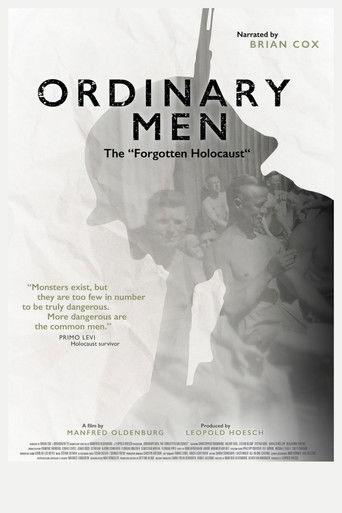
Six million Jews died during World War II, both in the extermination camps and murdered by the mobile commandos of the Einsatzgruppen and police battalions, whose members shot men, women and children, day after day, obediently, as if it were a normal job, a fact that is hardly known today. Who were these men and how could they commit such crimes?
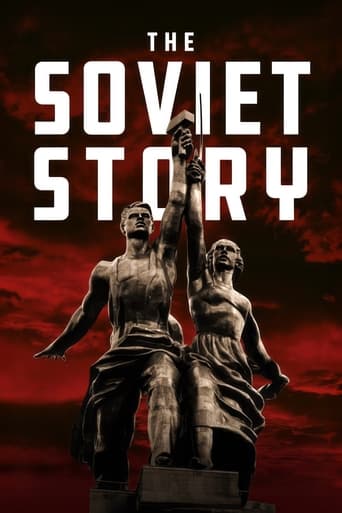
“The Soviet Story” is a story of an Allied power, which helped the Nazis to fight Jews and which slaughtered its own people on an industrial scale. Assisted by the West, this power triumphed on May 9th, 1945. Its crimes were made taboo, and the complete story of Europe’s most murderous regime has never been told. Until now...
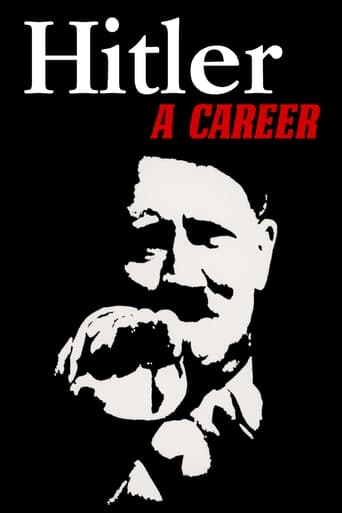
A keen chronicle of the unlikely rise to power of Adolf Hitler (1889-1945) and a dissection of the Third Reich (1933-1945), but also an analysis of mass psychology and how the desperate crowd can be deceived and shepherded to the slaughterhouse.
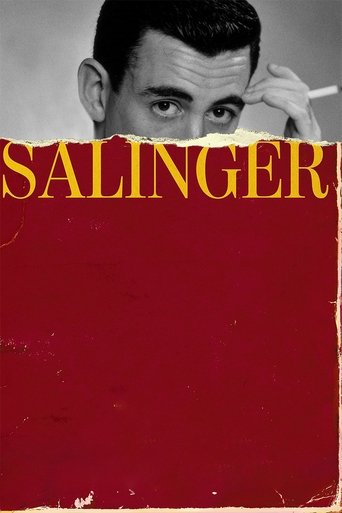
An in-depth investigation into the private world of the American writer J. D. Salinger (1919-2010), who lived most of his life behind the impenetrable wall of a self-imposed seclusion: how his dramatic experiences during World War II influenced his life and work, his relationships with very young women, his obsessive writing methods, his many literary secrets.
A woman’s Holocaust memoir takes the world by storm, but a fallout with her publisher-turned-detective reveals her story as an audacious deception created to hide a darker truth.
When Sgt. First Class Brian Eisch is critically wounded in Afghanistan, it sets him and his sons on a journey of love, loss, redemption and legacy.
With unprecedented access, this documentary follows the extraordinary journey of “Raqqa is Being Slaughtered Silently”—a group of anonymous citizen journalists who banded together after their homeland was overtaken by ISIS—as they risk their lives to stand up against one of the greatest evils in the world today.
WWII from Space delivers World War II in a way you've never experienced it before. This HISTORY special uses an all-seeing CGI eye that offers a satellite view of the conflict, allowing you to experience it in a way that puts key events and tipping points in a global perspective. By re-creating groundbreaking moments that could never have been captured on camera, and by illustrating the importance of simultaneity and the hidden effects of crucial incidents, HISTORY presents the war's monumental moments in a never-before-seen context. And with new information brought to the forefront, you'll better understand how a nation ranked 19th in the world's militaries in 1939 emerged six years later as the planet's only atomic superpower.
Set both in Latin America and the United States, the film explores the historic and current relationship of Washington with countries such as Venezuela, Bolivia and Chile. Pilger says that the film "...tells a universal story... analysing and revealing, through vivid testimony, the story of great power behind its venerable myths. It allows us to understand the true nature of the so-called "war on terror". According to Pilger, the film’s message is that the greed and power of empire is not invincible and that people power is always the "seed beneath the snow".
This documentary movie is about the battle of San Pietro, a small village in Italy. Over 1,100 US soldiers were killed while trying to take this location, that blocked the way for the Allied forces from the Germans. Preserved by the Academy Film Archive in 2005.
Diaries, audiotapes, videotapes and testimonials from friends and colleagues offer insight into the life and career of Gilda Radner -- the beloved comic and actress who became an icon on Saturday Night Live.
A showcase of German chancellor and Nazi Party leader Adolf Hitler at the 1934 Nuremberg Rally.
The life and career of one of comedy's most inimitable modern voices, Mr. Gilbert Gottfried.
A documentary about World War I with never-before-seen footage to commemorate the centennial of Armistice Day, and the end of the war.