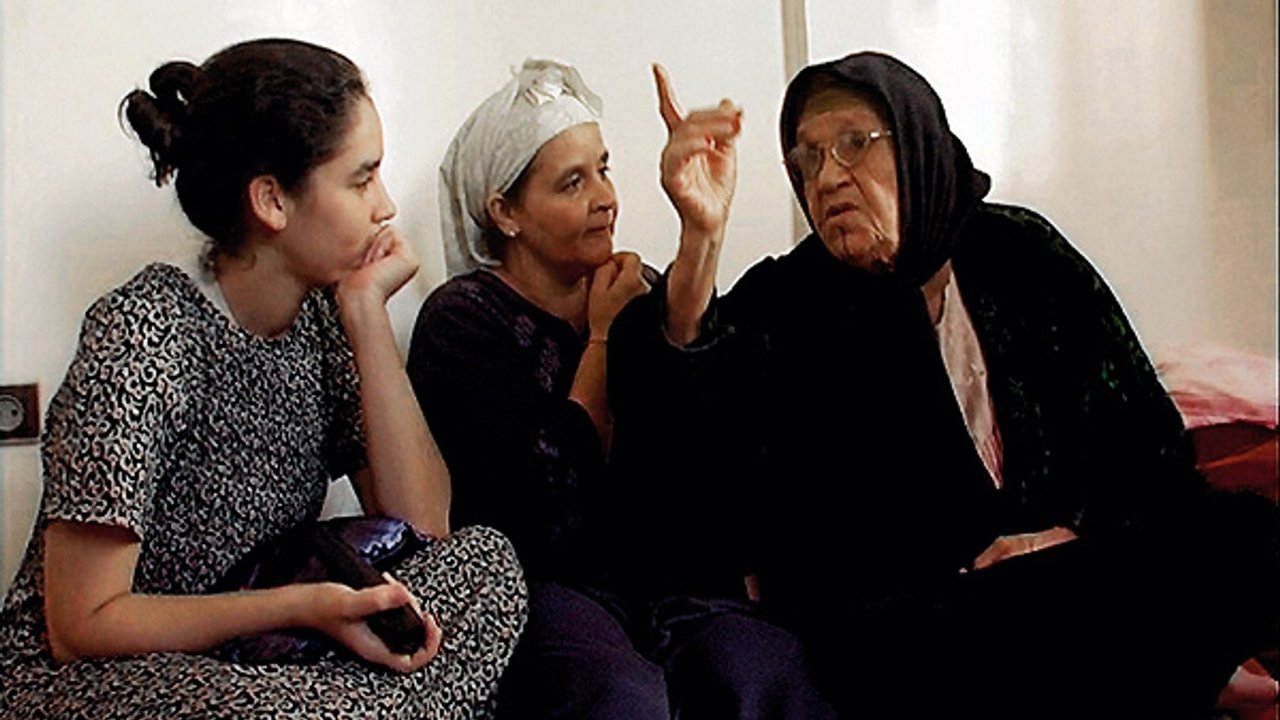
During the oppressive reign of Moroccan King Hassan II in the 70s and 80s (Years of Lead), many dissidents went missing. After the throning of a new king, a truth commission was formed in the 2000's. Families of the missing speak.
Social & External
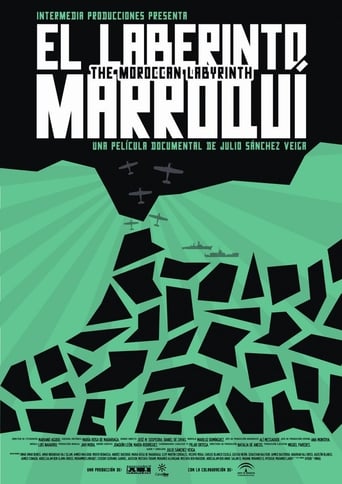
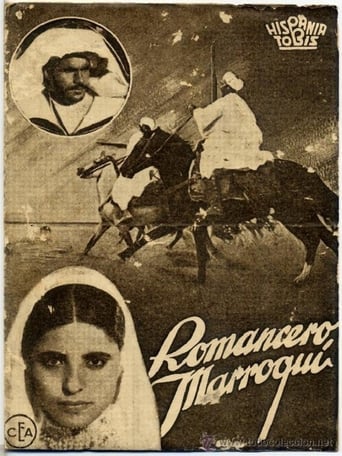
The young farmer Aalami leaves his family to find work elsewhere. He gets to know the country and its people, customs and traditions at Küste in North Africa: Market life in Tetuan, the art of craftsmanship, the life of the Moors, dances and festivities in honour of the caliph, white mosques, the call of the muezzin of the minaret and the music of the shepherd flutes. Aalami also follows Franco's call and flies from Morocco to Spain to fight at Bürgerkrieg. In the end Aalami comes back to his wife and children.
A small village high up in the mountains of Ketama, Northern Morocco. The life of the people here has been shaped by the drug hashish for centuries. Hashish as daily work, hash as exchange currency, hashish as business, hashish as basis and philosophy of a social system, hashish as medium for dreams and hashish as reason for stagnation.
This video research is based on a trip to Morocco in July 2005, during which the director documented irregular migration transiting through Morocco, as well as their control. This geographical project focuses on the main migratory axes: Oujda, entry point for migrants in Morocco; Tangier, from where migrants can try to cross the strait or the fences of Ceuta; Rabat, organization space; and Laayoune, the closest point to the Canaries. The video questions the nature and meaning of these extraterritorial enclaves that structure the Moroccan territory.
Twenty-third sovereign of the Alawite dynasty established in Morocco since the seventeenth century, Mohammed VI took over from his father Hassan II in 1999, and from the moment of his coronation, he positioned himself as a "king of the poor", close to the people. Naturally shy, he prefers to act rather than speak, defining a modern style of governance that has earned him great popularity from the start. Married to a young computer engineer, he asserted a policy of liberalization of morals and even made a critical review of the period of repression led by his father during the years of lead. However, he faces opposition from conservatives, which leads to the election of the Islamist PJD (Party of Justice and Development) as head of government, following the Arab Spring of 2011.
An intimate portrait of Matthew Shepard, the gay young man murdered in one of the most notorious hate crimes in U.S. history. Framed through a personal lens, it's the story of loss, love, and courage in the face of unspeakable tragedy.
Piazza Fontana bombing in December 12, 1969.
On July 30, 2024, Mohamed VI celebrates the 25th anniversary of his reign in style. Who is this so-called secret monarch? How did he gradually impose his vision and projects?
Much-censored documentary encompassing thirty years of Italian politics under the governance of the Christian Democracy (DC), entirely composed of — occasionally dubbed — archival footage.
Made in the sunset years of Paul Bowles’ life, the film sees the eccentric author and composer reminisce on how he ended up in Morocco.
A documentary in three screens about the bottom-up magnetic revolution that made possible the broadcasting of the Bologna massacre on 2 August 1980.
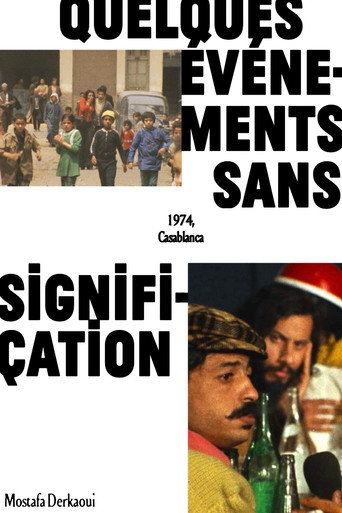
In Casablanca, a group of filmmakers conduct discussions with people about their expectations of, and aspirations for, the emerging Moroccan national cinema. When a disgruntled worker kills his superior accidentally, their inquest shifts focus, and they begin to probe the motives of the killing.
It's moving day for the Via Marsili 19th apartment in Bologna, Italy, a former hotbed of the Movement of 1977. While waiting for the movers to finish their job, cultural agitator Franco Bifo Berardi leads us through a decade-long trip down memory lane.
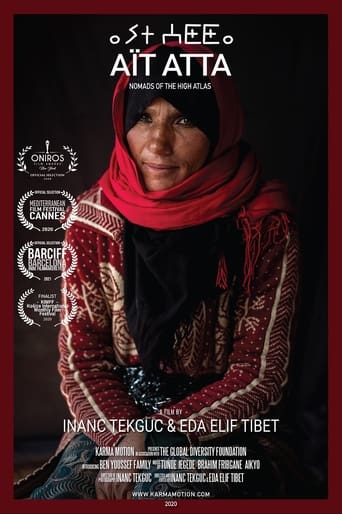
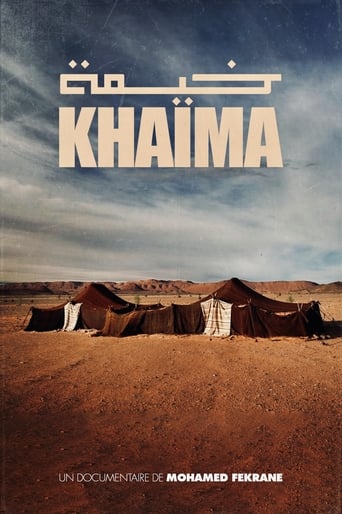
The Aït Atta tribe of the High Atlas mountain range in Morocco preserves their ancestral right of access to the agdal, a communal land management system that dates back hundreds of years. The film follows Ben Youssef family’s arduous transhumance journey from the desert-like landscape of Nkob to the green pastures of Agdal Igourdane, throughout uneven terrain of steep climbs and descents of these High Atlas mountains. They migrate each summer with their 800 goats, donkeys, mules, camels and dogs, as they embark on this formidable journey on foot.
A portrait of the groundbreaking Moroccan band Nass El Ghiwane, documenting a series of electrifying live performances in Tunisia, Morocco, and France; on the streets of Casablanca; and in intimate conversations. Storytellers through song and traditional instruments, and with connections to political theatre, the band became a local phenomenon and an international sensation, thanks to their rebellious lyrics and sublime, fully acoustic sound, which draws on Berber rhythms, Malhun sung poetry, and Gnawa dances.
In the vast expanse of desert East of Atlas Mountains in Morocco, seasonal rain and snow once supported livestock, but now the drought seems to never end. Hardly a blade of grass can be seen, and families travel miles on foot to get water from a muddy hole in the ground. Yet the children willingly ride donkeys and bicycles or walk for miles across rocks to a "school of hope" built of clay. Following both the students and the teachers in the Oulad Boukais Tribe's community school for over three years, SCHOOL OF HOPE shows students Mohamed, Miloud, Fatima, and their classmates, responding with childish glee to the school's altruistic young teacher, Mohamed. Each child faces individual obstacles - supporting their aging parents; avoiding restrictions from relatives based on traditional gender roles - while their young teacher makes do in a house with no electricity or water.
When Lena and Ulli start the engine of their old Land Rover, Lady Terés, they have a plan: to drive from Hamburg to South Africa in six months. What they don't know yet is that they won't ever get there. Two totally different characters, jammed together in two square meters of space for almost two years, they experience what it really means to travel: leaving your comfort zone for good.
Once a Punk, always a Punk? This is the story of Stof whom we followed for 8 years through the popular districts of Casablanca. He pays his independence at a high price when he finds himself arrested.
In Casablanca, Morocco in December 1941, a cynical American expatriate meets a former lover, with unforeseen complications.
An American doctor and his wife, a former singing star, witness a murder while vacationing in Morocco, and are drawn into a twisting plot of international intrigue when their young son is kidnapped.
When seventeen-year-old Hannah stumbles upon a website about Thinspiration--an online community devoted to anorexia as a life choice--she becomes an obsessive follower of the site founder, ButterflyAna. By the time Hannah's family realizes what is happening and get Hannah the help she needs, the disease has fully taken hold and Hannah is refusing to eat. Will this family be able to exorcise the demon of anorexia from their lives?
This sports documentary tells the story of the Williams Formula 1 team founded by the legendary Sir Frank Williams
At the beginning of the 20th century an American woman is abducted in Morocco by Berbers, and the attempts to free her range from diplomatic pressure to military intervention.
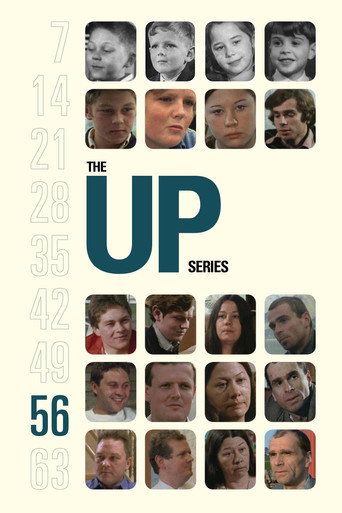
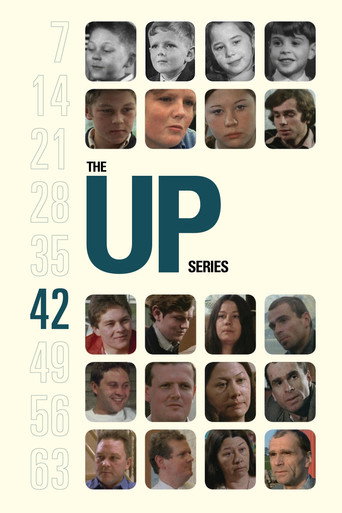
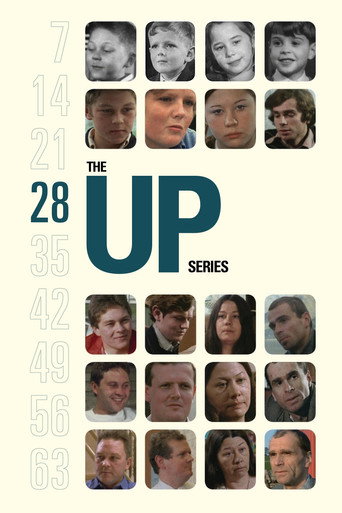
When a cross-section of seven-year-olds were interviewed for 7 Up in 1964 it was immediately evident that their social backgrounds influenced their attitudes towards life. While the upper class children were confident and self-assured, those from middle and working class backgrounds were resigned to a challenging life of hard work. This premise was put to the test every seven years when the same group were interviewed about the progression of their lives. 49 years in the making, the changes that occurred to the original 14 make for fascinating television and are in many ways the stories of all our lives. From success and disappointment, marriage and childbirth, to poverty and illness, nearly every facet of life has been captured on film. Now, at the age of 56, the group are once more brought together and, with the benefit of hindsight, assess whether their lives have been ruled by circumstance or self-determination.
2023 marked the thirtieth anniversary of Maroun Baghdadi’s sudden and tragic death. Maroun was a Lebanese filmmaker who wrote and directed films during the Lebanese civil war and contributed to documentary and fiction filmmaking from 1973 up until his death in 1993. In this film, Feyrouz Serhal embarks on a day trip in Beirut and navigates the city that profoundly shaped Maroun’s journey in life and cinema. Here she encounters individuals who were close to him and who shared his experiences. And as she traverses Maroun’s life and career, the social and political backdrop moves to the foreground. The film reflects on the last fifty years of the history of the country from a present standpoint. Through Maroun’s story, we perceive how cinema can, beautifully and dramatically, portray our stories and discourse our life events..
The film follows two brothers over the course of a decade. While they begin as kids in search of thrills in the sprawling slums of Morocco’s Sidi Moumen, we witness their gradual, and ultimately shocking, radicalisation.
Martijn, an idealistic Dutch pianist, travels to Morocco to help start a food program for malnourished children. Within moments of his arrival, however, Martijn is abducted by a group of terrorists, injected with a debilitating drug, and imprisoned. Under threat of death, the young man engages in a mental chess match with Ahmat, trying to learn his captor's true objective and avoid a horrible fate
Days before the general election, after a girl from a rich family is murdered in an attempted rape, the editor-in-chief of a conservative tabloid tries to derail the police investigation in order to help the right-wing candidates supported by his bosses.
At an idyllic writers retreat in Morocco, a newly single novelist finds an unexpected connection with a younger man who's reevaluating his life choices.
City of God – 10 Years Later investigates what happened to the actors who took part in the award-winning film directed by Fernando Meirelles and Katia Lund. This documentary shows what City of God’s worldwide success meant to their lives. Were the actors prepared for the film’s success? Did the social background of some of them prove stronger than the opportunity that came their way?
After another 7 year wait, director Michael Apted revisits the same group of British-born children from Seven Up! and 7 Plus Seven. The subjects are interviewed as to the changes that have occurred in their lives during the last seven years.
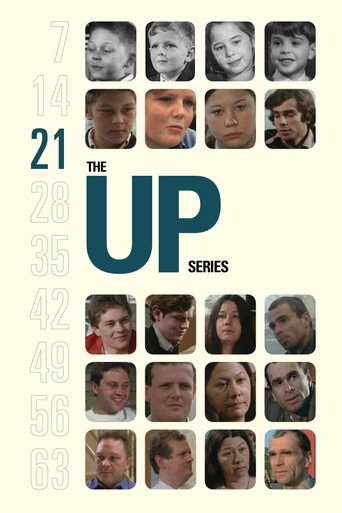
After a 7 year wait, director Michael Apted revisits the same group of British-born children from Seven Up! The subjects are interviewed as to the changes that have occurred in their lives during the last seven years.
Mogador, Morocco. Late 1920s. A complex romance develops between a womanizing Legionnaire and a disillusioned Parisian cabaret singer.
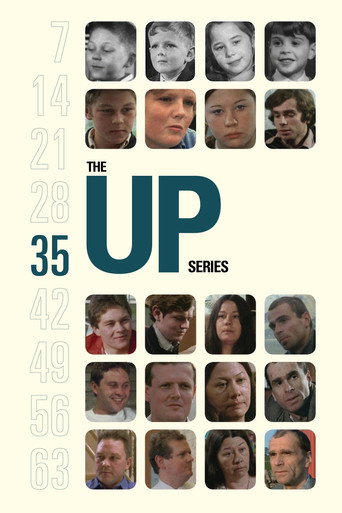
Director Michael Apted revisits the same group of British-born adults after a 7 year wait. The subjects are interviewed as to the changes that have occurred in their lives during the last seven years.
On December 12, 1969, a bomb kills 17 people at the Piazza Fontana national bank in Milan, Italy, marking the beginning of the Years of Lead. Local anarchists are scapegoated for the massacre by police and the media, but a lone prosecutor uncovers a conspiracy of far-right groups, corrupt secret services, and other interests that seek to undermine democracy.
Filmed over 3 years in Homs, accompanying 2 outstanding young men from the time they were only dreaming of freedom to the time when they are forced to change course. Basset, the 19yo national football team goalkeeper, who became an outspoken demonstration leader in the city, then an icon revolution singer, till he becomes a fighter... a militia leader. Ossama, his 24yo friend, renowned citizen journalist, cynical pacifist... as his views are forced to change, until he is detained by army secret service. It is the story of a city, of which the world have heard a lot, but never really got closer than news, never really had the chance to experience how a war erupted. a modern times epic of youth in war time.
In 1972, disenchanted about the dreary conventions of English life, 25-year-old Julia heads for Morocco with her daughters, six-year-old Lucy and precocious eight-year-old Bea.
Lasting for roughly 50 seconds, it shows the goodbyes of many passersby - first Europeans, then Palestinian Arabs, then Palestinian Jews - as a train leaves Jerusalem.