An experimental ethnographic documentary that criticizes the colonizer view of anthropology.
Social & External
Narrator
Thanks to his myriad film roles, Lon Chaney is known as “the man of a thousand faces,” and you could say that the early horror era never beheld a figure more intriguing. Yet because of his numerous transformations, his face never became as iconic as that of, say, Boris Karloff. Accompanied by a soundtrack from Bernhard Lang, this “re-imagination of shots” taken from Chaney´s forty-six surviving films offers a beguiling excursion into the history of film. The director reveals surprising associations, while highlighting the enduring magic of works which are now more or less forgotten.
An anthology of one-minute films created by 51 international filmmakers on the theme of the death of cinema. Intended as an ode to 35mm, the film was screened one time only on a purpose-built 20x12 meter public cinema screen in the Port of Tallinn, Estonia, on 22 December 2011. A special projector was constructed for the event which allowed the actual filmstrip to be burnt at the same time as the film was shown.
This film is a portrait of unique cultural space for Spirits, Gods and People. While permanent theatres are commonly built in most cosmopolitan modern cities, Hong Kong preserves a unique theatrical architecture, a Chinese tradition that has lasted more than a century - Bamboo Theatre.
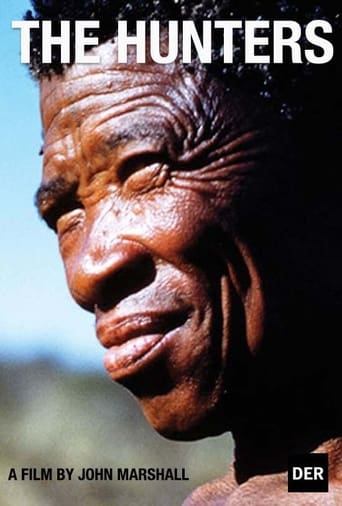
An ethnographic documentary following four Ju/’hoansi (!Kung) men during a multi-day giraffe hunt in the Kalahari Desert, filmed during the Smithsonian–Harvard Peabody expedition of 1952–53.
"Papua New Guinea: Anthropology on Trial" was a 1983 episode of the PBS science documentary series NOVA. It explored the field of anthropology, particularly in the context of Papua New Guinea, from the perspective of the people being studied.
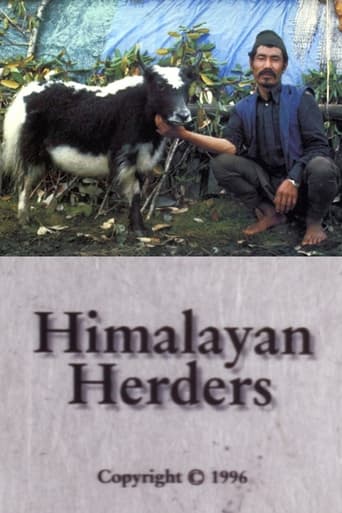
John Bishop and Naomi Bishop present a portrait a peculiar life style of the Himalayan indigenous Sherpa people in their documentary , the Himalayan Herders. The 76 minutes long film is about the diverse culture and life style of herders community near Mt. Everest region of Nepal.The film was made in 1997 as a part of Case Studies in Cultural Anthropology Series.
In 1967, experimental filmmaker Jorgen Leth created a striking short film, The Perfect Human, starring a man and women sitting in a box while a narrator poses questions about their relationship and humanity. Years later, Danish director Lars von Trier made a deal with Leth to remake his film five times, each under a different set of circumstances and with von Trier's strictly prescribed rules. As Leth completes each challenge, von Trier creates increasingly further elaborate stipulations.
HECKLER is a comedic feature documentary exploring the increasingly critical world we live in. After starring in a film that was critically bashed, Jamie Kennedy takes on hecklers and critics and ask some interesting questions of people such as George Lucas, Bill Maher, Mike Ditka, Rob Zombie, Howie Mandel and many more. This fast moving, hilarious documentary pulls no punches as you see an uncensored look at just how nasty and mean the fight is between those in the spotlight and those in the dark.
This experimental nature documentary by Minna Rainio and Mark Roberts depicts climate change and the wave of extinction from the point of view of our near future. Actually, it depicts the age we live in now, or rather its fateful consequences.
Made on a wind-up Bolex camera, The Sound of Seeing announced the arrival of 21-year-old filmmaker Tony Williams. Based around a painter and a composer wandering the city (and beyond), the film meshes music and imagery to show the duo taking inspiration from their surroundings.
"Sweet Osmanthus Flowering Late" is a feature-length ethnographic film that envisions social rejuvenation and collective convalescence in the aftermath of the pandemic. Filmed in Wuhan, the film follows the everyday lives of three middle-class households. It postulates the existence of a mass dreaming phenomenon that facilitated fatigued Chinese inhabitants to rejuvenate themselves following the secluded episode of lived experience and to coexist with the enduring imprints of "the event" on their social lives.
This film describes a psychological state "kin to moonstruck, its images emblems (not quite symbols) of suspension-of-self within consciousness and then that feeling of falling away from conscious thought. The film can only be said to describe or be emblematic of this state because I cannot imagine symbolizing or otherwise representing an equivalent of thoughtlessness itself. Thus the actors in the film, Jane Brakhage, Tom and Gloria Bartek, Williams Burroughs, Allen Ginsberg, Peter Olovsky and Phillip Whalen are figments of this 'Thought-Fallen Process', as are their images in the film to find themselves being photographed."
After consolidating itself as a tourist destination in the mid-1960s, this small coastal village has become the dormitory town for the workers of a Nuclear Power Plant. With the liberal promise of prosperity and socioeconomic wellfare, many workers left their homes to move to the small city and started working at the new Nuclear Power Plant. The collective unrest and the silence, cut off by the great gusts of wind, articulate the landscape of the village that is now under the aid of the Nuclear Power Plant.
The film discusses the traits and originators of some of metal's many subgenres, including the New Wave of British Heavy Metal, power metal, Nu metal, glam metal, thrash metal, black metal, and death metal. Dunn uses a family-tree-type flowchart to document some of the most popular metal subgenres. The film also explores various aspects of heavy metal culture.
A small portrait of the volatility of intimacy and of breaking free from abusive cycles: made in response to a year of collapsing relationships and violent accidents that left me broken, dislocated and stuck in my apartment.
In GLOBAL METAL, directors Scot McFadyen and Sam Dunn set out to discover how the West's most maligned musical genre - heavy metal - has impacted the world's cultures beyond Europe and North America. The film follows metal fan and anthropologist Sam Dunn on a whirlwind journey through Asia, South America and the Middle East as he explores the underbelly of the world's emerging extreme music scenes; from Indonesian death metal to Chinese black metal to Iranian thrash metal. GLOBAL METAL reveals a worldwide community of metalheads who aren't just absorbing metal from the West - they're transforming it - creating a new form of cultural expression in societies dominated by conflict, corruption and mass-consumerism.
A meditation on the human quest to transcend physicality, constructed from decaying archival footage and set to an original symphonic score.
The Amazon rain forest, 1979. The crew of Fitzcarraldo (1982), a film directed by German director Werner Herzog, soon finds itself with problems related to casting, tribal struggles and accidents, among many other setbacks; but nothing compared to dragging a huge steamboat up a mountain, while Herzog embraces the path of a certain madness to make his vision come true.
Bomb Hunters is an engrossing examination of the micro-economy that has emerged in Cambodia from untrained civilians harvesting unexploded bombs as scrap metal. The film explores the long-term consequences of war and genocide in an attempt to understand the social, cultural, and historical context and experiences of rural villagers who seek out and dismantle UXO (unexploded ordnance) for profit. Part of a global economy, these individuals clear UXO from their land in order to protect their families from harm and to earn enough money to survive. Bomb Hunters is an eye-opening account investigating the on-going residual, persistent effects of war experienced by post-conflict nations around the globe, and the complex realities of achieving "peace".
The story of Charlotte Brown,a waitress and young single mother who will do anything for her daughter Jenny, and when push comes to shove, she does. With a menacing figure on the other end of the phone and a time limit of two hours,she must raise enough money to ensure that she sees the smiling face of her child again. Charlotte's customers are her only hope. The clock is ticking as we see the desperate young mother dealing with one eccentric customer after the next, displaying her charming vulnerability and inspiring strength through all the chaos. With her feet firmly planted on the ground, Charlotte maintains her focus and attempts to beat the clock and save the day.
A woman living in main street goes to school in a rich environment, but she is full of loneliness. One day she saw a cloud and decided to go to Sinchon Station, so she met a new man. Her little lie started the meeting between the two.
A documentary film depicting five intimate portraits of migrants who fled their country of origin to seek refuge in France and find a space of freedom where they can fully experience their sexuality and their sexual identity: Giovanna, woman transgender of Colombian origin, Roman, Russian transgender man, Cate, Ugandan lesbian mother, Yi Chen, young Chinese gay man…
Ermus Daglek, retired Empathtek engineer, commandeers a defunct factory where he creates androids based on persons from his past and recreates a dinner party where he lost the love of his life - until they malfunction and escape.
At the end of September 1941, Soviet artillery troops in besieged Leningrad realize that pretty soon they will fire their last shot, and after that the defense of the city will be doomed. The film is based on a true event: a small group of fearless soldiers transported a large supply of gunpowder through enemy lines to Leningrad.
Once known for his intellectual prowess, a retired professor (Anupam Kher) begins experiencing memory gaps and periods of forgetfulness. But while he tries to laugh it off, it soon becomes clear that the symptoms are a sign of a more serious illness, prompting his grown daughter (Urmila Matondkar) to move in as his caretaker. Meanwhile, as his mind regresses, he recalls a traumatic childhood memory involving the death of Mahatma Gandhi.
Young art student Hideo paints an unnerving portrait of Tomie, who whispers that she loves him. Inexplicably, he reacts by stabbing her to death with a painting trowel. Two friends, Takumi and Shunichi, arrive on the scene and help him dispose of the body. To cheer him up, the boys take the unwitting murderer to the nearest bar for a party... but a mysterious girl named Tomie shows up, bearing a few odd physical resemblances to the dead girl in the ground.
As she leaves for art school in New York, Skye gets a phone call from Alex. Skye hasn't heard from Alex in two years, but before she can move on with her life she needs to tie up some loose ends. Unfortunately, someone else has the same idea, and they're stalking and slashing their way through Alex's Sweet 16 party at her grandparents' isolated estate.
A rugged city editor poses as a journalism student and flirts with the professor.
Jack is caught with the wife of his employer, a Vegas thug. The thug sends goons after Jack, who convinces his best friend, Pilot, to flee with him. Pilot insists that they head for Seattle, but doesn't tell Jack why. The goons learn from Pilot's drug source where the youths are headed, and they follow, hell bent on breaking Jack's feet. On the road, Jack and Pilot give a ride to Cassie, a distressed young woman. She and Jack hit it off. They pick up an aging stoner headed to Seattle for Kurt Cobain's memorial, and they help a circus sideshow family. Why is Pilot so set on Seattle, will the goons catch Jack, and is there any way the friends' competing needs can be resolved?
Short film built from photographs, sped up like a traditional stop motion and is meant to be an evocation of the English Eerie and Folk Horror.
A Japanese fairy tale meets commedia dell'Arte. All in white, the naïf Pierrot lies in a wood. Doo-wop music plays as he rises, stares about, and reaches for the moon. Although music abounds and the children of the wood are there at play, Pierrot is melancholy and alone. Harlequin appears, brimming with confidence and energy. He conjures the lovely Colombina. Pierrot is dazzled. But can the course of true love run smooth?
Teenagers Rose and Bennett were in love, and then a car crash claimed Bennett's life. He left behind a grieving mother, father and younger brother, and Rose was left all alone. She has no family to turn to for support, so when she finds out she's pregnant, she winds up at the Brewer's door. She needs their help, and although they can't quite admit it, they each need her so they can begin to heal.
An actor who is considering the role of a supermarket manager arrives at a grocery store on the outskirts of Los Angeles to do some field research. He subsequently becomes stranded, without a car or cell phone, and accepts a ride home with Scarlet, a cashier who is about to interview for a new job. The actor rediscovers the essence of his craft while helping Scarlet gain the confidence she needs to change her life.
In Buenos Aires, 17-year-old Bennie seeks out his estranged brother Tetro, a once-promising writer haunted by their family’s past. As Bennie uncovers Tetro’s hidden manuscript, old secrets and rivalries resurface, forcing both men to confront the truth about their father and the tangled legacy that tore their family apart.
With input from actor and writer Jan Hlobil, director and cinematographer Rene Smaal presents a film in the true surrealist tradition, in the sense that only 'found' elements were used, and that it defies interpretation based on ordinary cause-and-effect time sequence.
Mater finds a small UFO called Mator and they have a night out. Later, when Mator is captured by military forces, Mater sneaks up and saves him with the help of Lightning McQueen and the UFO's mother.
Packard Schmidt is a burnt-out, middle-aged college English professor. In a desperate attempt to restore some sense of vitality to his lonely existence he embarks on a series of impulsive romantic exploits resulting in a cavalcade of disaster both personally and professionally. These disasters change and educate Pack and serve eventually as a meditation on the meaning and power of desire, loss, and love.
The Marx Brothers take on high society and the opera world to bring two lovers together. A sly business manager and two wacky friends of two opera singers help them achieve success while humiliating their stuffy and snobbish enemies.