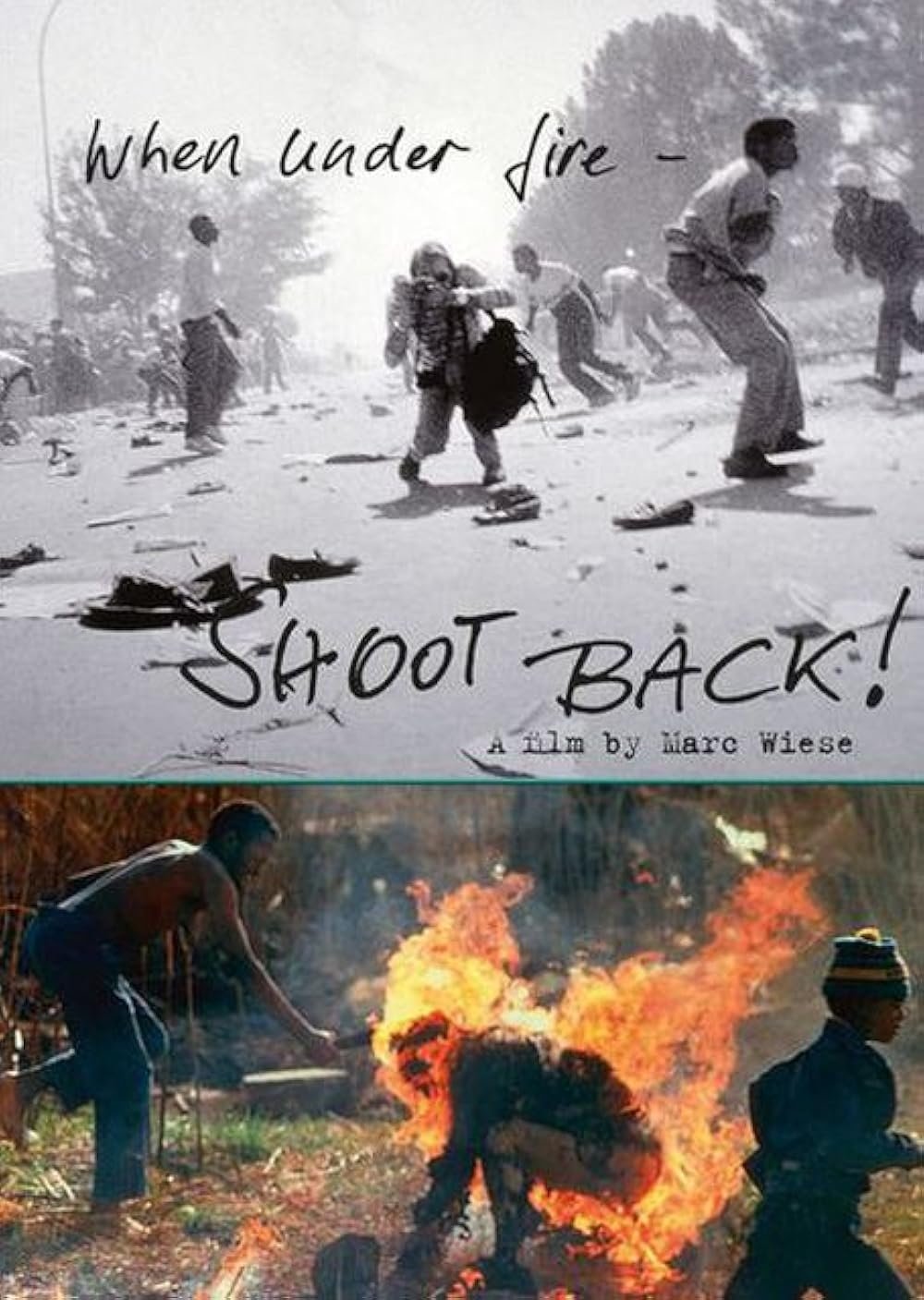
The Bang Bang Club were four fearless young photographers who set out to expose the reality of Apartheid in South Africa - a battle that changed a nation but wound up almost destroying them.
Social & External
Documentary about the Lyon sex workers who occupied the church of St. Nizier on June 3, 1975.
Amid the civil-military dictatorship implanted with the 1964 coup, Sergio Muniz had the idea of making a documentary about the action of the Death Squad. At the time, the press still had some freedom to disseminate the work of these death squads formed by police officers of various ranks, and that he acted on the outskirts of cities like Sao Paulo and Rio de Janeiro. The victims of police repression (as today) were men, poor and black, and this condition is supposed criminals.
For over 30 years a man termed as a mad man, comes to light as his passionate work of collecting artifacts gathers momentum and gains the title of a museum. The film trails through the struggles of Victor Hugo Gomes, a Collector from India-Goa, and how he perceives to leave behind his collection.
Diagnosed with multiple sclerosis, documentarian Matt Embry takes viewers on a transnational journey — from Italy to Canada, and from the lab to the home — in order to examine the politics of the condition.
This episode from the Czech Journal series examines how a military spirit is slowly returning to our society. Attempts to renew military training or compulsory military service and in general to prepare the nation for the next big war go hand in hand with society’s fear of the Russians, the Muslims, or whatever other “enemies”. This observational flight over the machine gun nest of Czech militarism becomes a grotesque, unsettling military parade. It can be considered not only to be a message about how easily people allow themselves to be manipulated into a state of paranoia by the media, but also a warning against the possibility that extremism will become a part of the regular school curriculum.
All Access to Rossa: 25 Shining Years tells the story of the life and career of Rossa, a prominent Indonesian pop diva. This documentary film offers a multifaceted overview of Rossa's journey, covering her musical achievements, personal challenges, family dynamics, and the ups and downs of her efforts in building her career over 25 years. The inclusion of a grand concert celebrating Rossa's 25 years of success adds grandeur and joy, making it informative and entertaining. Overall, this is a cinematic experience that touches the heart, celebrating the timeless legacy of one of Indonesia's most beloved music icons.
The film exposes the links between Agrifood and politics. With a pool of international experts it analyses the many problems related to factory farming: water pollution, migrants exploitation, biodiversity loss and antibiotic resistance.
Jean Sénac, born in Béni Saf in Algeria in 1926 and died in Algiers in 1973, is today considered one of the great French writers and poets and the only one of his reputation to have accompanied the Algerian revolution before November 1954. part of all the debates and got involved, very early and with immense enthusiasm, in a work of commitment which ended badly. His poetry, his sexual preferences and his political lyricism work against him: rejected as much by the Pieds Noirs as by the FLN activists then by the power in place in Algiers, Jean Sénac was assassinated in 1973 at his home in Algiers, in circumstances never clarified.
Two daughters of North African immigrants, born in Marseilles, who are barely over thirty years old, take part in the political battles and local elections: Nadia Brya in the cantonal elections, and Samia Ghali in the municipal ones.
In June 1999, Jean-Claude Gaudin organized a great popular festival, "La Massalia", to celebrate all the communities that make up Marseilles and to show the desire of thousands of people from elsewhere to be Marseillais. A radiant rainbow. Less than a year later, in March 2000, the municipal campaign began: what about this new state of mind that seemed to be blowing over Marseilles' political life? Does it find a translation in the political sphere? How many children of recent immigration would be in an eligible position and would eventually be elected among the 101 municipal councilors?
By ending the life of Jean Senac on August 30, 1973 in Algiers, his assassins believed they would silence him forever. They were wrong since his voice is a little louder every day. Witnesses to these craze: the publication of the complete works of this great poet, the countless conferences and radio broadcasts devoted to him and finally the production of films such as "Jean Sénac, the blacksmith of the sun". The moving and overwhelming testimonies of those who knew him, the unpublished film archives, the generous voice of the poet on the radio, the discovery of his travels in the territories of poetry and politics make this film a precious document on the life of Jean Senac.
An odyssey through Beethoven’s lasting presence and influence in our modern world – viewed through the eyes of the composer himself.
Documentarian Jeffrey Morgan set out to the track one woman's search for the truth about her great-great-aunt's 1908 murder. But his film quickly became a fascinating study of racism, revenge and family secrets. In the process of uncovering information about her ancestor's violent death at the hands of an African-American suspect, the woman learns that her family tree might have also produced a few murderers.
Following the Prophet Muhammad’s (PBUH) recommendation to journey to three mosques - (in Makkah, Madinah and Jerusalem), this film sets out in the company of British bass player Danny ‘Hamza’ Thompson to discover the reasons why the last of these three holds such an important place in the hearts of Muslims everywhere.
For 23 years, Helena Třeštíková followed the story of actor and stage director Jakub Špalek. The first piece of footage was shot in Autumn 1989 when Jakub, then a theatre academy student, was actively involved in the Velvet Revolution. Back then, Jakub dreamed of running his own theatre company which soon came true - he is still in charge of Kašpar Theatre in Prague. The film documents the difficult life of an independent theatre manager, as well as his many personal struggles and joys.