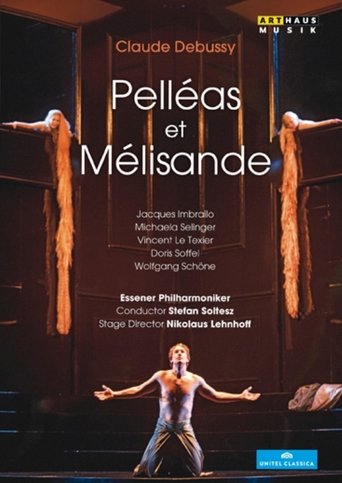
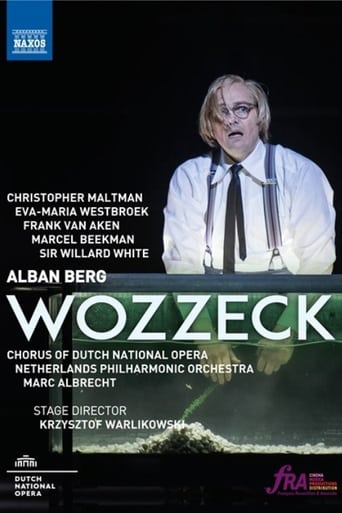
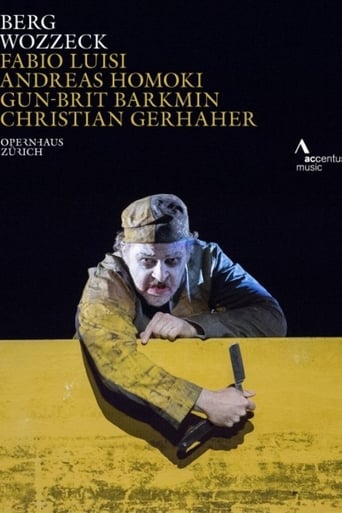
Franz Woyzeck, a lowly soldier stationed in a mid-nineteenth century provincial German town, is the father of an illegitimate child by his mistress Marie.
Social & External
Wozzeck
Marie
Unknown Role
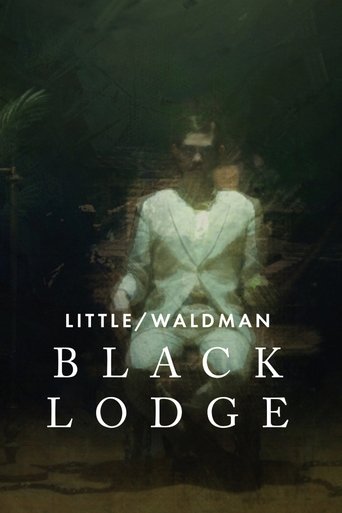
Two mystical beings emerge from the scenery, embarking on a journey through Gallup— Na'nízhoozhí in the Navajo language— before melting back into the desert at nightfall.
"Die tote Stadt" is a psychologically layered drama with Hitchcock-like features, about Paul who, after the loss of his beloved Marie, slowly but surely becomes entangled in a dream world of obsessions and delusions. This impressive opera is a passionate as well as a surrealistic plea for mourning. "He who cannot live with death has no life."
Johann Strauss, Jr., a would-be composer of waltzes in mid-19th Century Vienna, attempts to thwart his father's efforts to prevent his success when the older man becomes jealous of his melodic skill.
Handel's 1724 opera Tamerlano followed the success of his previous year's Giulio Cesare with another colourful historical costume drama. This time the setting is the court of "Timur the Tartar", who has just defeated the Turkish Sultan Bajazet at the battle of Angora. There are, naturally enough, romantic complications when both Tamerlano and his ally, the Greek Prince Andronico, fall in love with Bajazet's daughter Asteria. She, however, has plans to revenge her father's defeat. This production was directed by Jonathan Miller and staged in the intimate surroundings of the Goethe Theatre of Bad Lauchstadt as part of the 2001 Halle Handel Festival.
Live performance from Cologne Opera. Conlon conducts a skittishly dynamic performance of Don Giovanni. He relies on Thomas Allen’s tough Don to give the work much of its dark menace and on Holle’s terrifying Commendatore to provide the moral outrage – his job is to keep things moving, and he does. The exteriors – blank city spaces reminiscent of the paintings of Giorgio De Chirico – and moodily claustrophobic interiors mirror effectively the anguish of the orphaned Anna and the abandoned Elvira; this is a performance in which the two women victims of the Don function effectively as correctives to his libertine charm. Andrea Rost as Zerlina brings real delicacy to her role, reminding us that “La ci darem la mano” is a duet about her flirtation with Don Giovanni and not just a famous stand-alone moment. This is an admirable presentation of a fine performance.
Performed live at the Royal Opera House, Covent Garden, Gluck's opera in three acts is conducted by Hartmut Haenchen. Performers include Jochen Kowalski, Gillian Webster and Jeremy Budd, alongside the Royal Opera Chorus and Orchestra. When Orpheus mourns for his late wife Eurydice, the god Cupid offers him the chance to descend into the underworld and lead her back to the land of the living, on the condition that he does not look at her face. He sets out on his journey, but his path to the Elysian Fields is blocked by the fierce Furies.
A man who accused a catholic bishop of abusing him when he was a child dies in the Austrian city Salzburg. Everyone except his widow and the eccentrical detective Simon Brenner keeps silent and believes that the man killed himself.
The celebrated mezzo-soprano Cecilia Bartoli joins Bryn Terfel for a recital of arias and duets recorded at Glyndebourne Opera House in 1999. The programme features favourite pieces from Mozart, Rossini and Donizetti, with the London Philharmonic Orchestra conducted by Myung-Whun Chung.
John Eliot Gardiner conducts Gluck’s 1776 French version of “Alceste” at the Théâtre du Châtelet in Paris. Soprano Anne Sofie von Otter takes the title role of Alceste, Queen of Thessaly, who offers to die at the hands of the gods in place of her husband, Admète (Paul Groves), so that the people will not lose their king. Alceste is then saved from the underworld by Hercule (Dietrich Henschel).
John Adams’s groundbreaking work vividly brings to life US President Nixon’s 1972 visit to the People’s Republic of China. Peter Sellars’s Metropolitan Opera production, based on his 1987 world-premiere staging, features choreography by Mark Morris and stars James Maddalena as Nixon, Robert Brubaker as Chairman Mao, Janis Kelly as First Lady Pat Nixon, Russell Braun as Chinese Premier Chou En-lai, and Kathleen Kim as Chiang Ch’ing, Mao’s wife. From the pomp of the public displays to the intimacy of the protagonists most private moments, Adams, Sellars and librettist Alice Goodman reveal the real characters behind the headlines in this landmark American opera.
Passion, jealousy and betrayal take center stage at Londons Royal Opera House in a spectacular production of the worlds most popular opera. Bizets Carmen is packed with some of the best-loved and memorable music in all of opera. In this characteristically vivid and vibrant stage production by Francesca Zambello, beautifully filmed in 3D by Julian Napier, Seville is brought to life with ranks of soldiers, crowds of peasants, gypsies and bullfighters as well as a magnificent horse, a donkey and even some chickens! This spectacular RealD and Royal Opera House production features a supremely talented cast, gripping drama and Bizets energetic and passionate score. It is truly a musical event to remember!
This is a performance of Wagner's three-act opera Der fliegende Holländer ("The flying Dutchman"), performed by Bayreuther Festpiele, directed by Dmitri Tcherniakov. The staging was notable for two other milestones, as Oksana Lyniv became the first woman to conduct at Richard Wagner’s legendary Festspielhaus since its opening in 1876, and the sensational Lithuanian soprano Asmik Grigorian made her house debut with a standout performance as the opera’s heroine, Senta. The exceptional cast also included John Lundgren (The Dutchman), Georg Zeppenfeld (Daland), Eric Cutler (Erik) and Marina Prudenskaya (Mary).
Disciplined Italian composer Antonio Salieri becomes consumed by jealousy and resentment towards the hedonistic and remarkably talented young Salzburger composer Wolfgang Amadeus Mozart.
Axel Kohler, the internationally renowned countertenor has brought Admeto into the modern era in timeless style by the skillful application of imaginative theatrical digressions. Köhler's production at the Halle Opernhaus revisits a work that encompasses comedy, tragedy and almost absurd grotesqueness, couching it in the convincing metaphor of a modern hospital.
Opera in one act, libretto by G. Forzano based on Dante's Divine Comedy. Third part of his opera Triptych. The plot is based on canto XXX of "Inferno" from "The Divine Comedy", which are dedicated to the rogue and deceiver Gianni Schicchi, who was punished for his sins: he impersonated a dying rich man in order to make a forged will on his behalf. Gianni Schicchi is Puccini's only comic opera, a brilliant example of a modern opera buffa based on the tradition of Verdi's Falstaff. The most expressive recitative, bubbling melody, sharp character, impetuous tempo distinguish her music. Recorded live at Glyndebourne Opera House, Sussex, UK on 11 July 2004.
The writer Dario Fo applies his inventive genius to Rossini's comic opera in its premiere DVD release. Recorded in 2005 under the musical direction of Maurizio Barbacini, Fo's production brings fresh vitality and colour to the story of Lisetta, and of her father Don Pomponio's increasingly ridiculous attempts to find a husband for her through an advertisement in the newspaper LA GAZZETTA. Filmed using high definition cameras with multitrack sound.
Richard Wagner called Die Walküre the “first evening” of the Ring of the Nibelung; he called Das Rheingold the prologue or Vorabend. Musically and dramatically, we are introduced to a radically new and different world when the opening bars of Die Walküre resound. A fully developed orchestral palette of Leitmotivs paints a wild storm scene, and the curtain rises on a modest dwelling: a fully human scene that has nothing to do with the gods, dwarves and nymphs of Das Rheingold. At the same time, however, the way Die Walküre portrays radical beginnings reveals some telling reminiscences of the unfolding of Das Rheingold. Die Walküre is exciting and deeply feeling drama.
Lovely but lethal, the evil Princess Turandot comes to life through the performance of Luana De Vol in this visually stunning production of Giacomo Puccini's Peking-set opera directed by Nuria Espert and conducted by Giuliano Carella. In this 2004 performance at the Gran Teatre del Liceu in Barcelona, Spain, all the subtleties of Puccini's unique tonality and unconventional instrumentation are in ample evidence.