For 63 years, Tom Rose and his wife, Mary, built a life together on his family farm on Canaanville Road. Then last year Mary passed away, leaving Rose to face the future alone, surrounded by a lifetime of memories.
Social & External
Beyond her historic role in the Montgomery Bus Boycott, this comprehensive dive into Civil Rights icon Rosa Parks sheds light on her extensive organizing, radical politics, and lifelong dedication to activism.
“Sardar Gurcharan Singh was the father of studio pottery in India. "Daddyji" as most called him lovingly was very close to my father. I often tagged along to visit his home studio where pottery wheels were lined up under the big neem trees in his old brick house. My father wanted me to make a film on Daddyji, who was then 95. He was afraid that Daddyji's wonderful story would be left untold. He not only introduced studio pottery in India but due to his longevity, mentored many potters. So despite not knowing anything about films, I made the documentary, Imprint in Clay with a classmate of mine, which was mostly funded by my father.”
Inês Etienne Romeu was an opponent to the Brazilian's dictatorship. She was kidnapped, tortured and raped in jail, where she stayed for almost 100 days. She was later sentenced to life imprisonment. She stayed ten years in prison, from 1971 to 1979. Delphine Seyrig directed this film in 1974, when Inês was still in prison, protesting against this imprisonment and in support to Inês.
A photographer and a filmmaker challenge each other to shoot—one to photograph the other to film—two young actresses, one from Tokyo, the other from the countryside. The photographer seeks naturalism in his compositions, and Kawase observes and comments on his work. The competition between the photographer, the filmmaker, and the actresses creates a charged atmosphere.
In the macho world of Mariachi music, very few women can hold their own. Just like the songs they play, this film is a snapshot of life, death and the things in between - seen from a bird's-eye perspective.
The image of a mysterious, solitary filmmaker - a cineaste maudit - who flees from both the media and the public, is unrelentingly bound to the figure of Leos Carax, in France. Elsewhere, the real focus is on his films and he is considered to be an icon of world cinema. Mr.X dives into the poetic and visionary world of an artist who was already a cult figure from his very first film. Punctuated by interviews and unseen footage, this documentary is most of all a fine-tuned exploration of the poetic and visionary world of Leos Carax, alias "Mr.X".
The free-spirited denizens of Sunset Hall, a Los Angeles retirement home, haven't let advanced age stand in the way of their voicing their concerns about the social and political topics of the day. Documentary filmmaker Laura Gabbert focuses on two of the facility's more outspoken residents — irascible cynic Irja Lloyd and upbeat, wheelchair-bound Lucille Alpert — as they attend political rallies and discuss their often opposing viewpoints on hot-button issues.
Follows the behind-the-scenes work of Studio Ghibli, focusing on the notable figures Hayao Miyazaki, Isao Takahata, and Toshio Suzuki.
Six girls coming of age, ready to become something extraordinary.
Tarachime is a documentary film which observes 'life' through childbirth. Kawase Naomi, a film director working under the theme of family, life and death, presents the bond of life through her own childbirth experience. "First, I was planning to film from the day I conceived a child and to the moment I gave birth. But I realized, while filming, that this is not the story of "one life." In the end, the film sublimed to a higher stage on which we can witness the knot tying one life with another."
Two bodies and one mind, this is the extraordinary story of one pair of conjoined twins in today's world.
In early 1970s, the graphic designer Tuulikki Pietilä had seen enough of stative visual art and purchased a film camera from Japan. Her film immortalized her trips with Tove Jansson.
Of all the great ballerinas, Tanaquil Le Clercq may have been the most transcendent. With a body unlike any before hers, she mesmerized viewers and choreographers alike. With her elongated, race-horse physique, she became the new prototype for the great George Balanchine. Because of her extraordinary movement and unique personality on stage, she became a muse to two of the greatest choreographers in dance, George Balanchine and Jerome Robbins. She eventually married Balanchine, and Robbins created his famous version of Afternoon of a Faun for her. She had love, fame, adoration, and was the foremost dancer of her day until it suddenly all stopped. At the age of 27, she was struck down by polio and paralyzed. She never danced again. The ballet world has been haunted by her story ever since.
The film describes the microcosmos of the small village Wacken and shows the clash of the cultures, before and during the biggest heavy metal festival in Europe.
Documentary depicting the lives of child prostitutes in the red light district of Songachi, Calcutta. Director Zana Briski went to photograph the prostitutes when she met and became friends with their children. Briski began giving photography lessons to the children and became aware that their photography might be a way for them to lead better lives.
It’s a central premise of the American dream: If you’re willing to work hard, you’ll be able to make a living and build a better life for your children. But what if working hard isn’t enough to get ahead — or even to ensure your family’s basic financial stability? Two American Families: 1991-2024, a special, two-hour documentary filmed over more than 30 years, is a portrait of perseverance from FRONTLINE, Bill Moyers, and filmmakers Tom Casciato and Kathleen Hughes that raises unsettling questions about the changing nature of the American economy and the impact on people struggling to make a living. This is the saga of two families in Milwaukee, Wisconsin — one Black, the Stanleys, and one white, the Neumanns — who have spent the past 34 years battling to keep from sliding into poverty, and who refuse to give up despite the economic challenges that their stories reveal.
"My Own Breathing" is the final documentary of the trilogy, The Murmuring about comfort women during the World War II directed by BYUN Young-joo. This is the completion of her seven years work. BYUN's first and second documentaries spoke of grandmothers' everyday life through the origin of their torment, while My Own Breathing goes back to their past from their everyday life. Deleting any device of narration or music, the camera lets grandmothers talk about themselves. Finally, the film revives their deep voices trampled by harsh history.
Spies of Mississippi tells the story of a secret spy agency formed by the state of Mississippi to preserve segregation and maintain white supremacy. The anti-civil rights organization was hidden in plain sight in an unassuming office in the Mississippi State Capitol. Funded with taxpayer dollars and granted extraordinary latitude to carry out its mission, the Commission evolved from a propaganda machine into a full blown spy operation. How do we know this is true? The Commission itself tells us in more than 146,000 pages of files preserved by the State. This wealth of first person primary historical material guides us through one of the most fascinating and yet little known stories of America's quest for Civil Rights.
Vienna’s Prater is an amusement park and a desire machine. No mechanical invention, no novel idea or sensational innovation could escape incorporation into the Prater. The diverse story-telling in Ulrike Ottinger’s film “Prater” transforms this place of sensations into a modern cinema of attractions. The Prater’s history from the beginning to the present is told by its protagonists and those who have documented it, including contemporary cinematic images of the Prater, interviews with carnies, commentary by Austrians and visitors from abroad, film quotes, and photographic and written documentary materials. The meaning of the Prater, its status as a place of technological innovation, and its role as a cultural medium are reflected in texts by Elfriede Jelinek, Josef von Sternberg, Erich Kästner and Elias Canetti, as well as in music devoted to this amusement venue throughout the course of its history.
The drought in the American West is predicted to be the worst in 1,000 years. Join five Academy Award-winning filmmakers as they explore the environmental crisis of our time and how to fix it before it's too late.
Lyrical and powerfully personal essay film that reflects on the deaths of her husband Lou Reed, her mother, her beloved dog, and such diverse subjects as family memories, surveillance, and Buddhist teachings.
Literary icon Joan Didion reflects on her remarkable career and personal struggles in this intimate documentary directed by her nephew, Griffin Dunne.
A compilation of over 30 years of private home movie footage shot by Lithuanian-American avant-garde director Jonas Mekas, assembled by Mekas "purely by chance", without concern for chronological order.
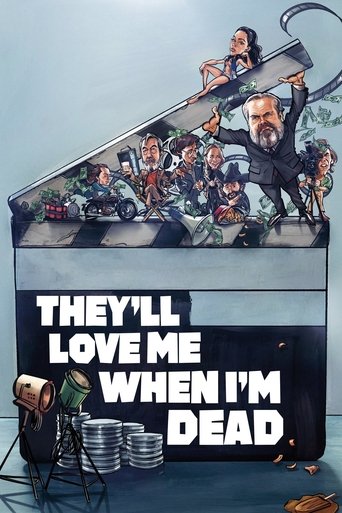
As his life comes to its end, famous Hollywood director Orson Welles puts it all on the line at the chance for renewed success with the film The Other Side of the Wind.
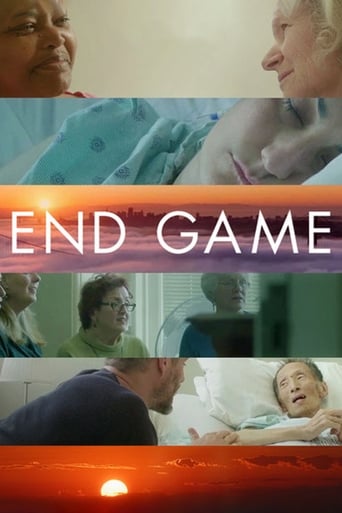
Filmed and edited in intimate vérité style, this movie follows visionary medical practitioners who are working on the cutting edge of life and death and are dedicated to changing our thinking about both.
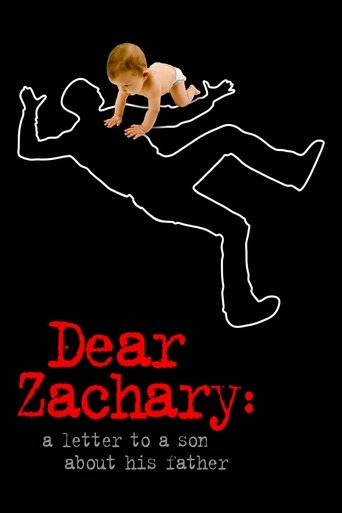
In 2001, Andrew Bagby, a medical resident, is murdered not long after breaking up with his girlfriend. Soon after, when she announces she's pregnant, one of Andrew's many close friends, Kurt Kuenne, begins this film, a gift to the child.
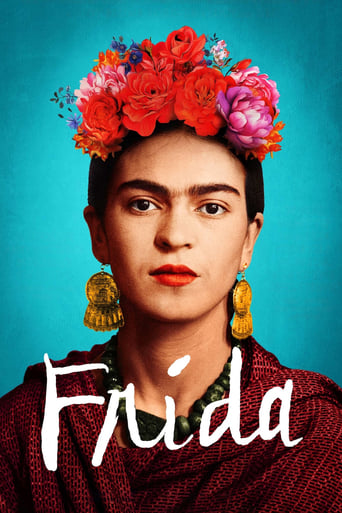
An intimately raw and magical journey through the life, mind, and heart of iconic artist Frida Kahlo. Told through her own words for the very first time — drawn from her diary, revealing letters, essays, and print interviews — and brought vividly to life by lyrical animation inspired by her unforgettable artwork.
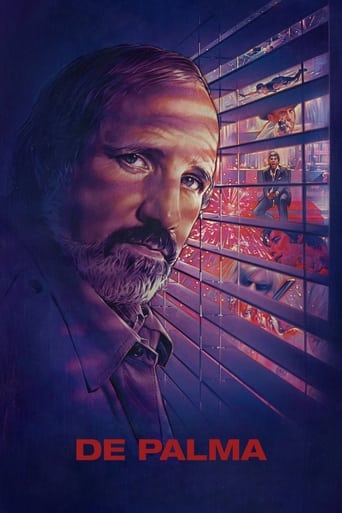
An intimate conversation between filmmakers, chronicling De Palma’s 55-year career, his life, and his filmmaking process, with revealing anecdotes and, of course, a wealth of film clips.
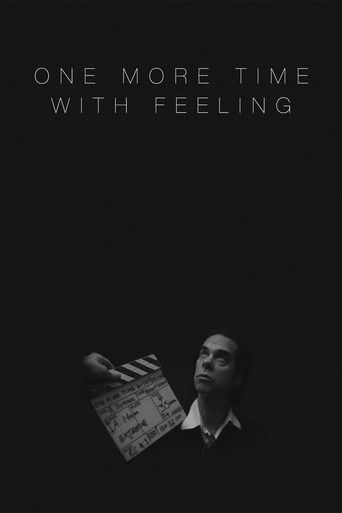
Andrew Dominik's One More Time With Feeling is a remarkable black and white documentary which chronicles the creation of Nick Cave & The Bad Seeds' album Skeleton Tree. Originally a performance based concept, the film evolved into something much more significant as Dominik delved into the tragic backdrop of the writing and recording of the album. The result is stark, fragile and raw, and a true testament to an artist trying to find his way through the darkness. It documents the writing, recording and performing of Nick Cave & the Bad Seeds’ sixteenth studio album, Skeleton Tree.
An impressionistic portrait of the iconic actor Harry Dean Stanton comprised of intimate moments, film clips from some of his 250 films and his renditions of American folk songs.
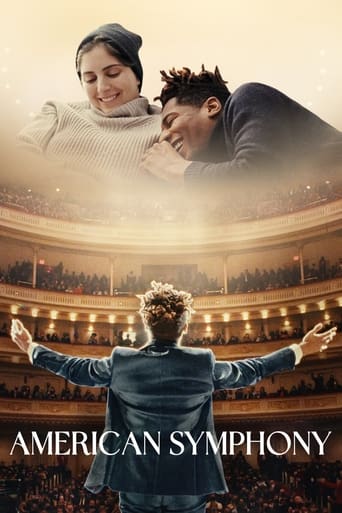
Musician Jon Batiste attempts to compose a symphony as his wife, writer Suleika Jaouad, undergoes cancer treatment.
From the heights of her modeling fame to her tragic death, this documentary reveals Anna Nicole Smith through the eyes of the people closest to her.
With the epic dimensions of a Shakespearean tragedy, The Queen of Versailles follows billionaires Jackie and David’s rags-to-riches story to uncover the innate virtues and flaws of their American dream. We open on the triumphant construction of the biggest house in America, a sprawling, 90,000-square-foot mansion inspired by Versailles. Since a booming time-share business built on the real-estate bubble is financing it, the economic crisis brings progress to a halt and seals the fate of its owners. We witness the impact of this turn of fortune over the next two years in a riveting film fraught with delusion, denial, and self-effacing humor.
As a visually radical memoir, CAMERAPERSON draws on the remarkable footage that filmmaker Kirsten Johnson has shot and reframes it in ways that illuminate moments and situations that have personally affected her. What emerges is an elegant meditation on the relationship between truth and the camera frame, as Johnson transforms scenes that have been presented on Festival screens as one kind of truth into another kind of story—one about personal journey, craft, and direct human connection.
Diaries, audiotapes, videotapes and testimonials from friends and colleagues offer insight into the life and career of Gilda Radner -- the beloved comic and actress who became an icon on Saturday Night Live.
The surprising and entertaining life of renowned film critic and social commentator Roger Ebert (1942-2013): his early days as a freewheeling bachelor and Pulitzer Prize winner, his famously contentious partnership with Gene Siskel, his life-altering marriage, and his brave and transcendent battle with cancer.
Martin Scorsese’s portrait of writer and social commentator Fran Lebowitz, celebrated for her sharp wit and observations on modern life. Filmed at New York’s Waverly Inn and intercut with archival footage and interviews, the documentary captures Lebowitz’s distinctive worldview through her spontaneous monologues and public appearances.
With this inventive portrait, director Kirsten Johnson seeks a way to keep her 86-year-old father alive forever. Utilizing moviemaking magic and her family’s dark humor, she celebrates Dr. Dick Johnson’s last years by staging fantasies of death and beyond. Together, dad and daughter confront the great inevitability awaiting us all.
The life and tragic death of Whitney Houston.
Amber Heard and Nicole Kidman discuss their characters Mera and Atlanna.