Social & External
After a wave of arrests in 1969, Italian anarchist Giuseppe Pinelli allegedly falls out of a police building window while being interrogated. The circumstances leading to his death are re-enacted in three hypothetical versions in this attempt at counter-investigation. Released together with Nelo Risi's 'Giuseppe Pinelli', as 'Documenti su Giuseppe Pinelli'.
How to Fix the World? is a comprehensive and informative documentary about direct action in the 1990s and 2000s, directed by Jouko Aaltonen. In the documentary, anarchists, climate activists, and squatters openly describe their experiences and link them to mainstream phenomena in society. A wide range of archive material sheds a light on the history of direct action and activism in the Finnish society.
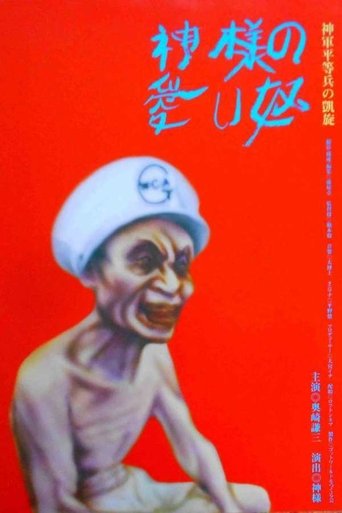
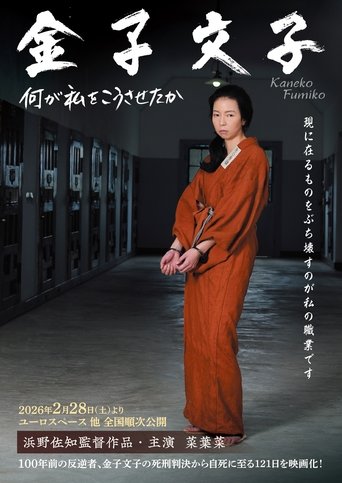
Why did she die? The Supreme Court first sentenced her to death, but then commuted her sentence to life imprisonment and sent her to Tochigi Women's Prison. What happened before she took her own life there? Based on her tanka poems, which convey her raw voice, the film explores her lone fight during the 121 days between her death sentence and suicide, a period that has remained obscure to date.
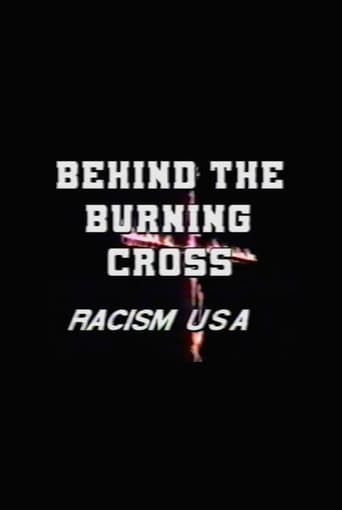
A key overview of twentieth-century American fascism and antifascism produced in 1991 by the John Brown Anti-Klan Committee.
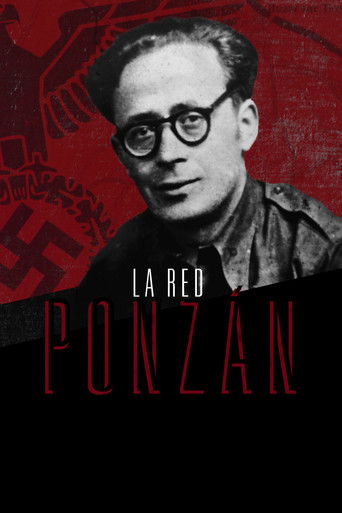
It’s a model story, an extraordinary adventure, a tale of revolutionary practice and tension, among anarchy and irony, simplicity, curiosity and vitality throughout the whole of Europe, its wars and the social struggles of the 1900s. A tale on how to live all in one breath, responsibly, diving into contradictions, "getting one's hands dirty", and still keeping one's balance between theory and practice.˝
On September 16, 1920, as hundreds of Wall Street workers headed out for lunch, a horse-drawn cart packed with dynamite exploded in front of Morgan Bank — the world’s most powerful banking institution. The blast turned the nation’s financial center into a bloody war zone and left 38 dead and hundreds more seriously injured. As financial institutions around the country went on high alert, many wondered if this was the strike against American capitalism that radical agitators had threatened for so long.
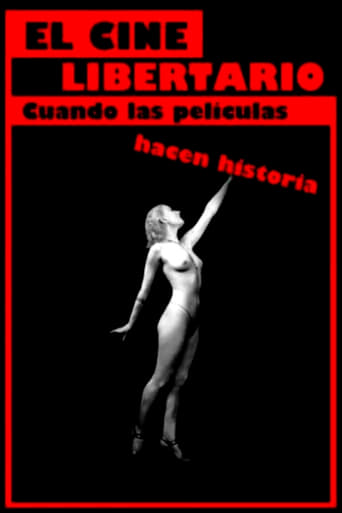
Upon the outbreak of the Spanish Civil War in July 1936, the anarchist union CNT socialized the film industry in Spain, so in Madrid and Barcelona film workers took over the production assets and, between 1936 and 1938, numerous films on a wide variety of topics were released, composing a varied mosaic that gives rise to one of the most unusual and original moments of Spanish cinematography.
In 1920, workers from Patagonia, in Southern Argentina, gather around an anarcho-syndicalist society and go on strike, demanding better working conditions. When the situation turns unsustainable, President Yrigoyen sends Lieutenant Colonel Zavala to impose order.
With breathless pace, Hélène Chatelain ("the woman" in "La Jetée") reconstructs the life of Nestor Makhno from his writings, Soviet propaganda films, reactions of workers today and the memory he has left in the hearts & minds of his people in Gouliaïpolié, in the east of the Ukraine.
Boston, 1920. Italian immigrants Nicola Sacco and Bartolomeo Vanzetti are charged and unfairly tried for murder on the basis of their anarchist political beliefs.
In March 2023, despite a flush of police raids and arrests in the struggle against Cop City in Atlanta, the Weelaunee Food Autonomy Festival gathered people for four days of learning and working in the forest. The observational film follows along as participants in the festival plant hundreds of fig, pawpaw, and persimmon saplings, give away fruit trees to neighbors of the forest, graft edible pears onto invasive trees, learn to mix herbal medicines, and restore an area of forest that had been recently disturbed by illegal demolition work.
We are in the year 1871. A journalist for Versailles Television broadcasts a soothing and official view of events while a Commune television is set up to provide the perspectives of the Paris rebels. On a stage-like set, more than 200 actors interpret characters of the Commune, especially the Popincourt neighborhood in the XIth arrondissement. They voice their thoughts and feelings concerning the social and political reforms.
Stories of maniac sailors, anarchist castaways, and the voyage of the S/V Pestilence: a video zine three friends and I made about finding a derelict sailboat, fixing it up, and sailing from Florida to Haiti.
The Vietnam War during the JFK years and beyond. Made in 1972 in the filmmaker's apartment, without documentary footage of the war, metaphors are created through the animation of images and objects, and through guerrilla skits. By rejecting the authority of traditional documentary footage, the anarchist spirit of individual responsibility is established. This is history from one person's point of view, rather than a definitive proclamation.
In 1877, in a watch factory in a valley in north-western Switzerland, Josephine produces balance spindles, tiny parts that ensure the agitation movement (“unrueh") of the mechanical watches. She soon grows uneasy with the organisation of work and possession in the village and its factory and joins the anarchist worker movement of the local watchmakers. There she meets Piotr Kropotkin, a moony Russian traveller. The two of them meet at a time when new technologies such as time measurement, photography, and the telegraph are transforming the social order, and anarchist discourse is addressing emerging nationalism. During a walk in the woods, Josephine and Piotr ask themselves whether time, money, and the government are not all but fictions.
The sarcastic account of the assassination of five Spanish politicians between 1870 and 1973 is mixed with the narration of five short stories by Edgar Allan Poe illustrated by five skillful pencil artists. A documentary, a video essay, a collage, a provocative experiment where various pop culture figures and icons perform unexpected cameos. The macabre joke of a jester. Never more.
In the winter of 1988, in the depths of the Iraq/Iran war, the border town of Halabja was attacked by chemical weapons with all its people and their different stories.
In the summer of 1959, as a magazine correspondent, writer and filmmaker Pier Paolo Pasolini (1922-75) traveled along the Italian coast. In 1963, he documented the sexual behavior of the Italians. In the winter of 1970-71, he witnessed the hardships of the most impoverished Italian population suffering from the boot of state power. After these three trips, he came to the conclusion that Italian society had changed drastically for the worse over the years.
PROJEKT A is a documentary that resists the common clichés about anarchism to instead show anarchist ideas of a society in which no one shall have the power to control knowledge, natural resources, land, soil or other people. After inspiring over 25,000 German cinema-goers, this award-winning documentary about anarchism and anarchist projects in Europe is now available on VoD! “Projekt A stirs up the audience and is grippingly shot, getting close to the kinds of tenacious people who are so vital to change in our society.” (kinokino) “…a cinematic portrait, not of anarchy, but of anarchists. A story, not of possibilities, necessities or even failure, but a depiction of achievements, initiative, action, ideas, as well as success.” (kino-zeit.de) Audience Award Filmfest Munich
Embark on an epic journey through time and faith with 'The Apocalypse of Saint John.' Join the Apostle John in a stunning visual narrative that unravels the visions of the End Times. Experience each vision like never before, with striking visual effects and epic scenes that immerse you in the apocalyptic narrative.
The history of cinematic sound, told by legendary sound designers and visionary filmmakers.
A documentary about the making of season five of the acclaimed AMC series Breaking Bad.
With the departure of the Bush Administration and the arrival of an “era of transparency,” opportunities are arising for the disclosure of new information that may shed more light on the events that took place before and after 9/11/2001. Loaded with powerful, new footage and in-depth interviews this documentary presents a wide array of evidence both known and unknown…until now.
JB Smoove and Martin Starr host a celebration of 20 years of "Spider-Man" movies, from the Sam Raimi trilogy to Marc Webb's movies and the trio from Jon Watts.
Oliver Stone charts the history of the United States from the Second World War to the present.
This documentary brings to life the stories of four people believed by their family and friends to be “DB Cooper,” a man who hijacked a 727 flying out of Seattle and jumped from the plane over the wilds of Washington State with a parachute and $200,000, never to be heard from again.
Set both in Latin America and the United States, the film explores the historic and current relationship of Washington with countries such as Venezuela, Bolivia and Chile. Pilger says that the film "...tells a universal story... analysing and revealing, through vivid testimony, the story of great power behind its venerable myths. It allows us to understand the true nature of the so-called "war on terror". According to Pilger, the film’s message is that the greed and power of empire is not invincible and that people power is always the "seed beneath the snow".
Documentary about the art of film editing. Clips are shown from many groundbreaking films with innovative editing styles.
A compilation of over 30 years of private home movie footage shot by Lithuanian-American avant-garde director Jonas Mekas, assembled by Mekas "purely by chance", without concern for chronological order.
A documentary on the expletive's origin, why it offends some people so deeply, and what can be gained from its use.
From a prolific career in film and television, Anton Yelchin left an indelible legacy as an actor. Through his journals and other writings, his photography, the original music he wrote, and interviews with his family, friends, and colleagues, this film looks not just at Anton's impressive career, but at a broader portrait of the man.
Not since the invention of the Internet has there been such a disruptive technology as Bitcoin. Bitcoin's early pioneers sought to blur the lines of sovereignty and the financial status quo. After years of underground development Bitcoin grabbed the attention of a curious public, and the ire of the regulators the technology had subverted. After landmark arrests of prominent cyber criminals Bitcoin faces its most severe adversary yet, the very banks it was built to destroy.
Delving into a century of genre films that by turns utilized, caricatured, exploited, sidelined, and finally embraced them, this is the untold history of black Americans in Hollywood through their connection to the horror genre.
Alex Gibney explores the charged issue of pedophilia in the Catholic Church, following a trail from the first known protest against clerical sexual abuse in the United States and all way to the Vatican.
A documentary about the closure of General Motors' plant at Flint, Michigan, which resulted in the loss of 30,000 jobs. Details the attempts of filmmaker Michael Moore to get an interview with GM CEO Roger Smith.
A look behind the curtain of Washington politics following three "renegade" Republican Congressmen as they bring libertarian and conservative zeal to champion the President’s call to “drain the swamp.”
A comedic, brutally honest documentary following self-destructive TV writer Dan Harmon as he takes his live podcast on a national tour.
A musical study of Los Angeles in the late 90s, where homeless teens roam the streets and profess to live a punk lifestyle of music, drugs, and flouting authority.
A documentary chronicling Queen and Lambert's incredible journey since they first shared the stage together on "American Idol" in 2009.