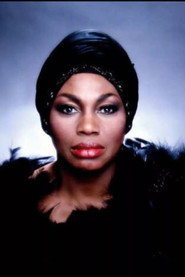
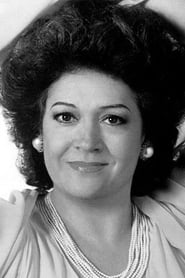
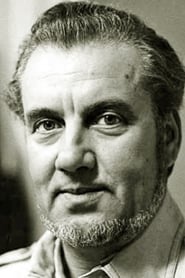
Herbert von Karajan conducts La Scala Orchestra and Chorus with soloists Leontyne Price, Fiorenza Cossotto, Luciano Pavarotti, and Nicolai Ghiaurov.
Social & External
Self - Tenor
Self - Soprano
Self - Mezzo-soprano
Self - Bass
Self - Conductor
Unknown Role
For Mahlerites, his symphonies are much more than musical performances--they can be an emotional or spiritual journey through the struggles, fears, and triumphs of life. This Sixth Symphony is a 1976 performance in the Vienna Musikvereinssaal with PCM stereo and DTS 5.1. The 2 dvd set also includes the 4th and 5th symphonies, which are performed as magnificently as the Sixth.
Beginning with the First Symphony, Bernstein reveals Mahler's position at the hinge of modernism, while emphasizing his emotional extremism. The uplifting Second "Resurrection" Symphony, with which Bernstein had an especially long and close association, is recorded here in a historic performance from 1973, set in the Romanesque splendor of Ely Cathedral. In the Third, Bernstein encompasses the symphony's spiritual panorama like no other conductor, with the Vienna Philharmonic players alive to every nuance.
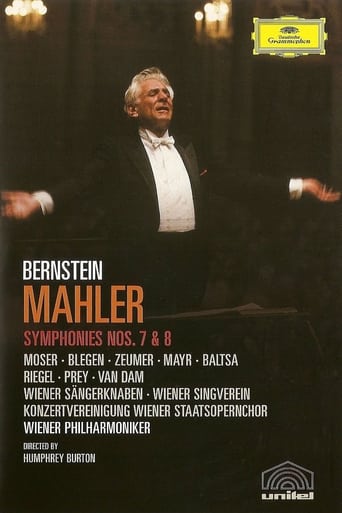
Leonard Bernstein made these recordings during his wonderfully productive collaboration with the Wiener Philharmoniker in the mid-1970s when he was at the peak of his career. Humphrey Burton's direction is, as always, very fine, giving the viewer/listener both the larger picture and highlighting individual soloists, players or groups of musicians and, of course, the maestro. The video and audio tracks show their age, but are quite acceptable even for today's standards. Bernstein's Seventh is everything one could desire: dark and spooky, highly sensual, but also structurally strong and assertive where needed. Bernstein's reading does not gloss over breakdowns in tonality and the foreshadowing of later musical developments.
Karajan conducts these symphonies with eyes closed, often intently enraptured by the music, smiling occasionally when a passage or solo sounds just right to his ear. He conducts Brahms with a greater sense of urgency than does Bernstein: the First symphony is 11 minutes shorter as conducted by Karajan! Nothing is rushed but there is what can only be described as emotional compression, an intensity of expression that sounds quicker than Bernstein's performances.
In celebration of its 100th anniversary in 1983, the Metropolitan Opera hosts a four-hour performance uniting some of the world's most spellbinding opera singers and conductors. The event includes a ballet from Samson et Dalila and boasts incredible classical performances from Kathleen Battle, Plácido Domingo, Jose Carerras, Leonard Bernstein, Marilyn Horne, Leona Mitchell, Luciano Pavarotti and many more.
From the very first bars of the Coriolan Overture, it is apparent that this is Beethoven at his very best. Vladimir Jurowski and his absolutely brilliant Orchestra of the Age of Enlightenment give us a new reading of old favorites that may well blow you out of your chair. There is plenty to discover: sounds and textures never heard before, an orchestral timbre as the composer himself may have envisaged and heard, incredible strength and cohesion and, on the other hand, sensitive nuances that often disappear under a blanket of massed strings in more traditional interpretations.
"Four Ways to Say Farewell" is a personal introduction to Mahler and his Ninth Symphony, during which Leonard Bernstein is seen and heard rehearsing the Vienna Philharmonic Orchestra. Filmed in 1971, this rehearsal was directed by Humphrey Burton,
Released as a memorial for the great Russian cellist Mstislav Rostropovich, who passed away on 27 April 2007, this DVD contains one bonafide cello concerto, the Schumann Cello Concerto in A minor, and two tone poems with prominent cello parts, Ernest Bloch's Schelomo and Richard Strauss' Don Quixote. Rostropovich mastered the Schumann in several famous recordings. Here, conducted by Leonard Bernstein, he provides a splendid performance. Featuring his trademark powerful technique, smooth legato and crisp vibrato, the Romantic roots of the concerto are never hidden for long, despite the relatively cool playing of the Orchestre National de France.
This unique document from the 1978 Salzburg Festival has fortunately been released on DVD and is a magical interpretation, prodigiously realized with a sublime fusion of timbres, a cohesion and ultimately, a simplicity that are truly unequalled. Listen as this great conductor produces musical nuisances that are unique to his art and how he accompanies the soloists with understanding and rapport. I have no hesitation in claiming this is one of the great recordings of the century.
Carlin returns to the stage in his 13th live comedy stand-up special, performed at the Beacon Theatre in New York City for HBO®. His spot-on observations on the deterioration of human behavior include Americans’ obsession with their two favorite addictions - shopping and eating; his creative idea for The All-Suicide Channel, a new reality TV network; and the glorious rebirth of the planet to its original pristine condition - once the fires and floods destroy life as we know it.
The Berliner Philharmoniker’s European Concert, held each year on 1 May, is invariably an international highlight. Performing in 2008 in Moscow's renowned Tchaikovsky Conservatory, the orchestra under Sir Simon Rattle presented outstanding performances of works by Beethoven, Stravinsky and Bruch, whose Violin Concerto featured one of today’s most fascinating artists, the Russian violinist Vadim Repin. Stravinsky: Symphony in Three Movements Bruch: Concerto for Violin No.1, op.26 Beethoven: Symphony No.7 in A major, op. 92
Daniel Barenboim is an expert in exploiting the impact of cyclical performances of composers works: This time he focuses his sharp intellect on all six of Anton Bruckners mature symphonies. Der Tagesspiegel described Barenboim's performance of the works with the Staatskapelle Berlin on six nearly consecutive evenings in June 2010 as a superhuman accomplishment and went on to praise how: His Bruckner is conceived and performed very theatrically, like an opera without words. Bruckners famous Romantic Symphony No. 4 forms the prelude to a spectacular DVD series from Accentus Music and Unitel Classica, exploring Bruckners symphonic cosmos.
Between 1981 and 1984 Leonard Bernstein recorded nearly all of Brahmss orchestral works with the Wiener Philharmoniker to honor the 150th anniversary of the composer's birth in 1983. For the concertos, Bernstein enlisted the services of some of the finest Brahms interpreters of the time: the violoninst Gidon Kremer, the cellist Mischa Maisky and the pianist Krystian Zimerman. Leonard Bernstein, Krystian Zimerman, and the Wiener Philharmoniker, it's very hard to get a better group of musicians for these masterpieces. Mr. Zimerman and Mr. Wolfgang Herzer's piano cello duets in the third movement of Brahms' second is simply tearful.
This large-scale live recording (Gardiner's second) was made in Venice's St Mark's Basilica. It captures the drama as well as the ceremonial aspect of the work, despite sometimes cloudy recorded sound.” Gramophone Classical Music Guide. “Gardiner's second [recording of the Vespers], spectacularly recorded live in St Mark's, has a punchy choral sound, near-operatic solo singing (Bryn Terfel and Alistair Miles are among the basses), emphatic enunciation, big contrasts and deliberate exploitation of the building's spaces. Its outright theatricality sets it apart from other performances.
Surely Bach’s French Suites, which he composed during his years at Cöthen (1717–1723), are among the finest inducements to practise that any teacher has ever made to a pupil. In this case Bach wrote them for his young wife, Anna Magdalena. The over-riding impression left by these suites is one of endearing tunefulness. Clavier-Übung II is a later collection of didactic keyboard pieces. It comprises two greatly contrasted works: the Italian Concerto and the Overture in the French Style. These performances admirably demonstrate the thoughtful and persuasive approach that András Schiff adopts when performing Bach. Recorded live at the Bachfest 2010, Protestant Reformed Church of Leipzig, 11 June 2010 Repertoire J.S. Bach: French Suites Nos. 1–6, Overture in the French Style in B minor, Italian Concerto in F major, BWV 971
In this variety special, Olivia shares the evening with Andy Gibb, Elton John, Ted Knight, Gene Kelly and Toni Tennille. The special included songs from Grease and the Totally Hot album as well as some other artists' covers : the Eagles, Bob Seger, Elton John and Buddy Holly. Olivia also performed a parody of the jazz/blues classic Makin' Whoopee with Gene Kelly, changing the lyrics to Makin' Movies and dealing with Olivia's dream of producing a musical. The show was aired internationally and did very well in the ratings, as did her two previous US television specials on the same network. It is to be noted that Tina Turner's appearance on Olivia's special helped her sign a contract with then Olivia's manager Roger Davies, who ultimately helped her to go back into the spotlight.
There is hardly a better way to approach Ludwig van Beethoven than through his piano concertos. Beethoven’s own instrument was the piano, and in his improvisations – which made him the darling of the Viennese salons – he merged virtuosity and unbridled expression. The piano concertos give a clear idea of these performances. At the same time, they are prime examples of Beethoven’s ability to create large orchestral works with seemingly endless arcs of tension. The complete recording of all five works with Mitsuko Uchida and Sir Simon Rattle was one of the most spectacular projects of the Berliner Philharmoniker during the Rattle era – and at the same time the highlight of the collaboration between the orchestra and the pianist, which began in 1984.
Both Florez and Diana Damrau brought their bel canto expertise and superb vocalism to the service of Verdi's music. The Rigoletto, Zeljko Lucic, ran the gamut from tenderness with his Gilda to thundering fury with everyone else. I also liked the production. At first, when Rigoletto was putting on his grease paint during the overture, I was afraid that it might be a typical "Euro-trash" production, with a bit of warmed over I Pagliacci. But the sets and dramatic action really served the music and libretto. I would have to say that I came to a deeper understanding and appreciation of the story and characters as a result of seeing this performance.
Roughly chronological, from 3/96 to 11/96, with a coda in spring of 1997: inside compounds of Aum Shinrikyo, a Buddhist sect led by Shoko Asahara. (Members confessed to a murderous sarin attack in the Tokyo subway in 1995.) We see what they eat, where they sleep, and how they respond to media scrutiny, on-going trials, the shrinking of their fortunes, and the criticism of society. Central focus is placed on Hiroshi Araki, a young man who finds himself elevated to chief spokesman for Aum after its leaders are arrested. Araki faces extreme hostility from the Japanese public, who find it hard to believe that most followers of the cult had no idea of the attacks and even harder to understand why these followers remain devoted to the religion, if not the violence.
When Jason Dyson refuses to make his prized fighter throw an MMA match, a notorious gangster collects his debt by killing the fighter and kidnapping Jason's daughter. Now he must train a prisoner to endure five consecutive underground fights to save her.
An expert hacker is targeted by a sentient AI after she realizes the threat it poses, and she must try to stay off its radar long enough to stop it.
Feeling unhappy with his gun, Jigen is looking for the world’s best gunsmith. He finally finds out that Chiharu, who runs a watch shop, is the person he’s been seeking. Then, Jigen meets Oto, who comes to Chiharu’s shop looking for a gun. Jigen finds out about Oto's secrets and the mysterious organization that’s after her. After Oto is kidnapped, Jigen gets into a desperate battle to save her.
Gilles, who operates a money losing garage, teams up with his friends Max, who operates a scrap yard, and lawyer Xavier to open a brothel catering to women. They get the idea from Gilles' secretary Irma, a former prostitute. They are assisted in the implementation by Max's wife Juliette and Sabine who is mad for Gilles. Unfortunately Gilles has fallen for Florence the daughter of the conservative Prime Minister and his wife. When the Prime Minister tries to shut down the brothel Gilles decides to stand against him in the election.
Story of trailblazing American rock singer-songwriter Suzi Quatro, who helped redefine the role of women in rock 'n' roll when she broke out in 1973.
A young lonely lion crosses an arid and desert Savannah. He discovers that the only source of water is kept by a tyrannical buffalo.
Rich and powerful Simon Qing has been schooled in the ways of sex by his virile father, but is still a virgin. That is, until he meets his first love Violetta who has fun with him all over his father’s estate. Their love does not last, so Simon embarks on a journey. Along the way he meets the comely nun Moon whom Simon deflowers and then marries. He then becomes enamored of Golden Lotus but she is married to dwarf Wu Da-Lang.
A young paramedic is paired with a seasoned partner on the night shift in New York revealing a city in crisis. Discovering the chaos firsthand, he is tested with the ethical ambiguity that can be the difference between life and death.
An attorney with a military past hunts down the gang who killed his wife and took his daughter.
The lion has to become more physically fit. The gazelle does not think he is capable of doing so.
Before the three feature films, Mario Schifano directs the camera towards the people around him to create real film diaries. His friends, his time partner and the artists he frequented are portrayed in their everyday life or object of the mechanical gaze of the camera, a filter through which to look at the outside world.
An eccentric family portrait set during the May 1968 protests in Paris. A nine-year-old boy stays with his grandparents and uncles while his parents protest. When an illustrious guest seeks refuge in the apartment, the family’s dynamics change.
An experimental film through the eyes of a man
Morbius Jr, now an OId Man, is nearing the end of life, when he finds the last hope for all Morbkind. However, as he fights to protect the future of Morbheads, he finds himself facing off against an unlikely of enemy... HIMSELF.
Mincheol and Suhee go to greet Minchul father (grandmother) before marriage. Dae - sik welcomes her daughter - in - law, Su - hee. But before marriage, Minchol and Suhee are separated by the difference in personality. Soon-hee, who was only preparing for marriage, is soon to live.
A dystopian coming-of-age movie focused on three kids who find themselves in an abandoned amusement park, aiming to unite whoever remains. With dangers lurking around every corner, they will do whatever it takes to survive their hellish Neverland.
"This piece, with the generic title Film, is a series of short videos built around one protocol: a snippet of news from a newspaper of the day, is rolled up and then placed on a black-inked surface. On making contact with the liquid, the roll opens and of Its own accord frees itself of the gesture that fashioned it. As it comes alive in this way, the sliver of paper reveals Its hitherto unexposed content; this unpredictable kinematics is evidence of the constant impermanence of news. As well as exploring a certain archaeology of cinema, the mechanism references the passage of time: the ink, whether it is poured or printed, is the ink of ongoing human history." –Ismaïl Bahri
Ex-con Russell Gaines is attempting to rebuild his life with the help of his father, Mitchell. However, the arrival of Maben sends his new life into chaos, leading the pair to go on the run - as their violent pasts catch up to them, the pair must learn to trust each other if they hope to live out the rest of their days.