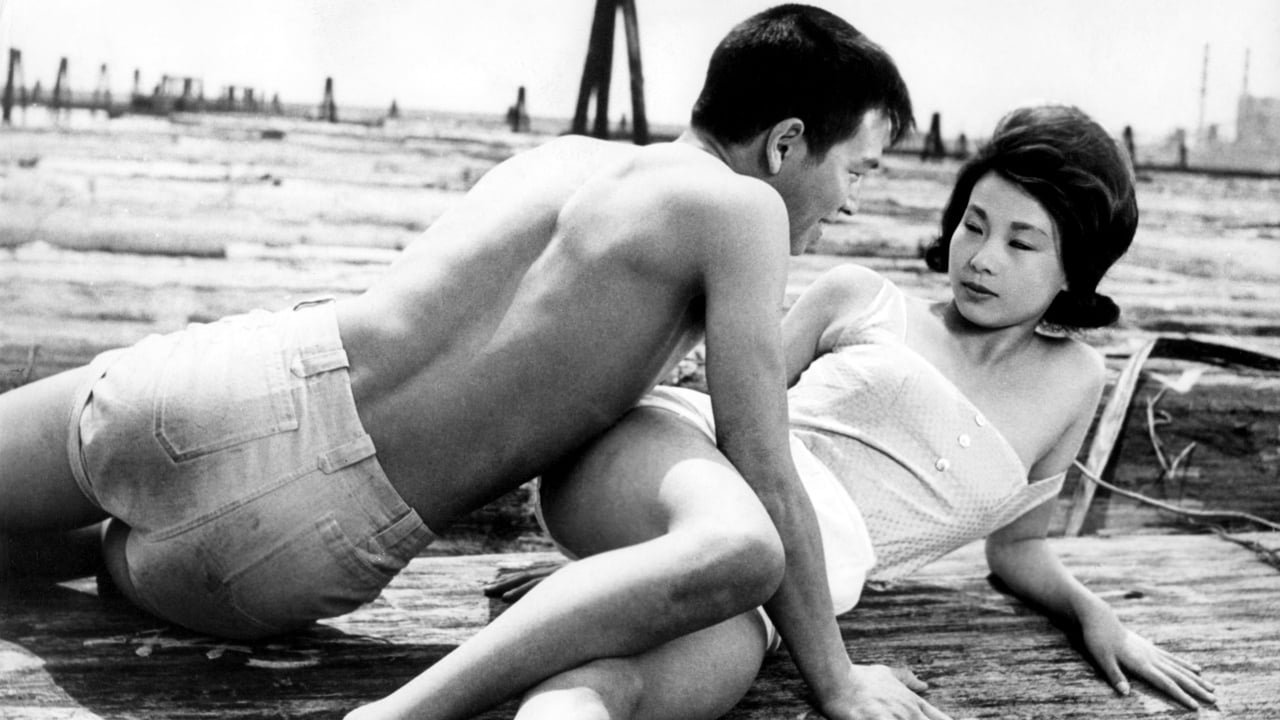
The story of the first century of Japanese cinema from the point of view of the controversial Japanese filmmaker Nagisa Ōshima.
Social & External
Self - Narrator (voice)
Depression-era bank robber John Dillinger's charm and audacity endear him to much of America's downtrodden public, but he's also a thorn in the side of J. Edgar Hoover and the fledgling FBI. Desperate to capture the elusive outlaw, Hoover makes Dillinger his first Public Enemy Number One and assigns his top agent, Melvin Purvis, the task of bringing him in dead or alive.
Composed of numerous archives and film clips, this documentary is the story of a transgressive actor, a pirate who came to crack America's too perfect mask to reveal its most infantile and moronic face, right in the heart of the Hollywood system.
In just ten films, Maurice Pialat painfully rose to the top of the cinema, draining into his legend a mad demand for truth as much as memorable fury to achieve it. With "L'Enfance nue", his first feature film at the age of 43, the filmmaker immediately made his mark, this "art of making things authentic", according to Chabrol. But throughout an unclassifiable filmography in the form of an autobiography, from a break-up to his fatherhood in wonder, through the agony of his mother, the filmmaker does not get rid of the feeling of being misunderstood, despite international recognition.
Heavy metal band Iron Maiden's 2008 Somewhere Back in Time World Tour. This concert recording accompanies the documentary film "Iron Maiden: Flight 666". The 16 songs performed were filmed live in 16 different cities giving you the full experience of the live power of Maiden and their fans all around the globe.
“As I child, I always had music in my head. I thought everybody did,” the legendary conductor Sir Simon Rattle recalls. His charming and humorous reflections on the unifying magic of conducting are complemented by interviews with well-known contemporaries and accompanied by thrilling concert footage. His music is a joy to all those who listen to it!
One of the 20th century Belgian artists who was the most idolized, exhibited, published, sold... Yet the artist himself, Jean-Michel Folon (1934-2005), whose work became controversial because deemed insipid, with its mannerisms, pastel tones and colors, remains little-known. Through previously unseen archive footage, Gaëtan de Saint-Rémy offers him a voice.
Follows the story of "Grizzly Man" Timothy Treadwell and what the thirteen summers in a National Park in Alaska were like in his attempt to protect the grizzly bears. The film is full of unique images and a look into the spirit of a man who sacrificed himself for nature.
With more than 70 films and 160 million cumulative tickets in France, Jean-Paul Belmondo is one of the essential stars of French cinema.
The intricate history of UFA, a film production company founded in 1917 that has survived the Weimar Republic, the Nazi regime, the Adenauer era and the many and tumultuous events of contemporary Germany, and has always been the epicenter of the German film industry.
This collection consists of four of the most cherished shows in television history. On February 9, 1964, The Beatles made their debut TV appearance in the U.S. on the Ed Sullivan Show. 73 million Americans watched and Beatlemania is born! Other shows included were February 16, 1964, February 23, 1964, and September 12, 1965. Includes 20 song performances, as well as the rest of the four Ed Sullivan shows. Also included in some special editions is the show rehearsal (Deauville Hotel, Miami - Feb.16, 1964)
Several high-budget epic films became Omar Sharif (1932-2015) a film star. He was an actor, but also a bridge player, a womanizer, a bon vivant; he was a man full of contradictions, who enjoyed card games more than movies; he was an eternal nomad who spent half his life in a hotel.
In 1964, Henri-Georges Clouzot's production of L'Enfer came to a halt. Despite huge expectations, major studio backing and an unlimited budget, after three weeks the production collapsed. This documentary presents Inferno's incredible expressionistic original rushes, screen tests, and on-location footage, whilst also reconstructing Clouzot's original vision, and shedding light on the ill-fated endeavor through interviews, dramatizations of unfilmed scenes, and Clouzot's own notes.
A group of people are standing along the platform of a railway station in La Ciotat, waiting for a train. One is seen coming, at some distance, and eventually stops at the platform. Doors of the railway-cars open and attendants help passengers off and on. Popular legend has it that, when this film was shown, the first-night audience fled the café in terror, fearing being run over by the "approaching" train. This legend has since been identified as promotional embellishment, though there is evidence to suggest that people were astounded at the capabilities of the Lumières' cinématographe.
Filmmaker Roman Polanski spends a weekend with world champion driver Jackie Stewart as he attempts to win the 1971 Monaco Grand Prix, offering an extraordinarily rare glimpse into the life of a gifted athlete at the height of his powers. "Re-cut and restored" version of the original "Weekend Of A Champion (1972)", with a 2011 post-film discussion between Jackie Stewart and Roman Polanski (begins at approx 71:15 minutes).
The individual journeys of the four members of the band, as they move through the music scene of the 1960s, playing small clubs throughout Britain and performing some of the biggest hits of the era, until their meeting in the summer of 1968 for a rehearsal that changes their lives forever.
Documentary about filmmakers of the New German Cinema who were members of the legendary Filmverlag für Autoren (Film Publishing House for Authors). Among them are Werner Herzog, Rainer Werner Fassbinder, and Wim Wenders.
Jackie Chan is a true icon of Asian and Chinese culture. Over a 45-year-long career, he has carved a niche for himself as an actor, stuntman, director, and screenwriter, but also singer and formidable businessman. After starring in almost 200 films, Jackie Chan has reconciled fans of genre film and Hollywood blockbusters, whilst bridging the gap between Asian and Western cinema. Through film excerpts, archive footage and images, and an offbeat approach inspired by the visual codes of the golden age of kung fu films, this documentary will take a look back at the creation of a popular hero who has come to be an icon for China, and for the entire Asian continent.
John Lennon, Yoko Ono, Little Richard, The Doors, Chuck Berry, Alice Cooper, and other legendary musicians performed at the 1969 Toronto Rock and Roll Revival music festival. This behind-the-scenes look at “the second most important event in rock and roll history” culminates in John Lennon’s first public performance with The Plastic Ono Band, triggering his decision to leave the Beatles.
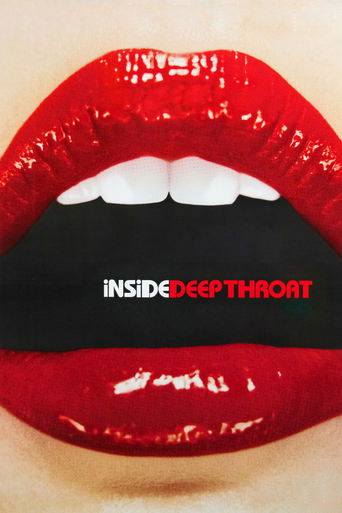
Deep Throat, a pornographic film directed by Gerard Damiano, a film-loving hairdresser, and starring Linda Lovelace, a shy girl manipulated by a controlling husband, was released in 1972 and divided audiences, who began to talk openly about sex, desire and female pleasure; but also about violence and abuse; and about pornography, until then an almost clandestine industry, as a revolutionary cultural phenomenon.
A highly experimental film presenting a story out of chronological order taking place 15 years after a near-apocalyptic catastrophe, about four traumatized 14 year olds who are tasked with piloting massive humanoid decisive weapons called Evangelion, the psychologically maladjusted adults who handle and command them, and the events and forces that affect them or which they take part in as they engage massive hostile invaders known as "Angels."
Filmmaker Alain Resnais documents the atrocities behind the walls of Hitler's concentration camps.
Working men and women leave through the main gate of the Lumière factory in Lyon, France. Filmed on 22 March 1895, it is often referred to as the first real motion picture ever made, although Louis Le Prince's 1888 Roundhay Garden Scene pre-dated it by seven years. Three separate versions of this film exist, which differ from one another in numerous ways. The first version features a carriage drawn by one horse, while in the second version the carriage is drawn by two horses, and there is no carriage at all in the third version. The clothing style is also different between the three versions, demonstrating the different seasons in which each was filmed. This film was made in the 35 mm format with an aspect ratio of 1.33:1, and at a speed of 16 frames per second. At that rate, the 17 meters of film length provided a duration of 46 seconds, holding a total of 800 frames.
The history of cinematic sound, told by legendary sound designers and visionary filmmakers.
Director Michael Apted revisits the same group of British-born adults after a 7 year wait. The subjects are interviewed as to the changes that have occurred in their lives during the last seven years.
A compilation of over 30 years of private home movie footage shot by Lithuanian-American avant-garde director Jonas Mekas, assembled by Mekas "purely by chance", without concern for chronological order.
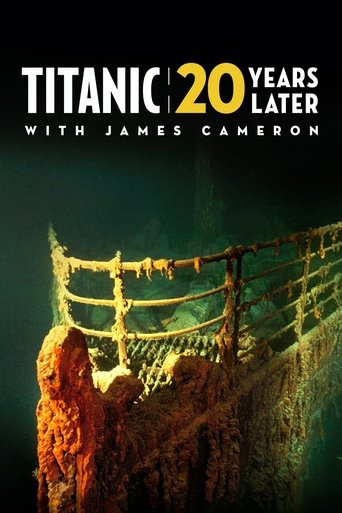
For the 20th anniversary of "Titanic," James Cameron reopens the file on the disaster.
A chronicle of the violence that occurred in much of the African continent throughout the 1960s. As many African countries were transitioning from colonial rule to other forms of government, violent political upheavals were frequent. Revolutions in Zanzibar and Kenya in which thousands were killed are shown, the violence not only political; there is also extensive footage of hunters and poachers slaughtering different types of wild animals.
A collection of restored prints from the Lumière Brothers.
A look at the making of the film Troll 2 (1990) and its journey from being crowned the "worst film of all time" to a cherished cult classic.
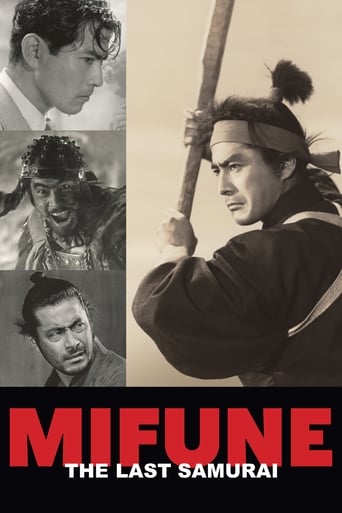
An account of the life and work of legendary Japanese actor Toshirō Mifune (1920-97), the most prominent actor of the Golden Age of Japanese cinema.
The documentary recounts the world's first nuclear attack and examines the alarming repercussions. Covering a three-week period from the Trinity test to the atomic bombing of Hiroshima, the program chronicles America's political gamble and the planning for the momentous event. Archival film, dramatizations, and special effects feature what occurred aboard the Enola Gay (the aircraft that dropped the bomb) and inside the exploding bomb.
This film tells the story of three defeats: Berlusconi’s political and human defeat in his “twilight”, the one of Ciccio Mirra, Berlusconi’s unconditional supporter, deeply rooted in an ancient culture that dies hard, and the director’s artistic defeat in an Italy that recognised itself in this “Berlusconian culture” for a long time, and probably still does.
At the end of 1918 while civil war is raging on in Russia, antagonism is slowly spreading to the East, between the Oral mountains and Shanghai. Stuck between a desire to save what's left of the great Imperial Russia, and starting from a clean slate, old generals, secret organizations, and mercenaries attracted by gold, struggle to take advantage of the events. As Corto Maltese returns to Shanghai, he barely gets time to cross paths with his old friend/nemesis Rasputin, and escape a murder attempt before being contacted by members of a Chinese secret organization called "The Red Lanterns". In the heart of violent Manchurian horizons, Corto and Rasputin launch themselves into a fabulous treasure hunt, following the tracks of the mysterious armor-plated train of Kolchak. A steel monster spiked with canons and machine guns, this trains protects the counter-revolutionaries gold...
What happened after Einstein fled Nazi Germany? Using archival footage and his own words, this docudrama dives into the mind of a tortured genius.
A look at the history of the American comedy publication and production company, National Lampoon, from its beginning in the 1970s to 2010, featuring rare and never before seen footage, this is the mind boggling story of The National Lampoon from its subversive and electrifying beginnings, to rebirth as an unlikely Hollywood heavyweight, and beyond. A humour empire like no other, the impact of the magazines irreverent, often shocking, sensibility was nothing short of seismic: this is an institution whose (drunk stoned brilliant) alumni left their fingerprints all over popular culture. Both insanely great and breathtakingly innovative, The National Lampoon created the foundation of modern comic sensibility by setting the bar in comedy impossibly high.
A look at legendary Japanese animator Hayao Miyazaki following his retirement in 2013.
Documentary about the art of film editing. Clips are shown from many groundbreaking films with innovative editing styles.