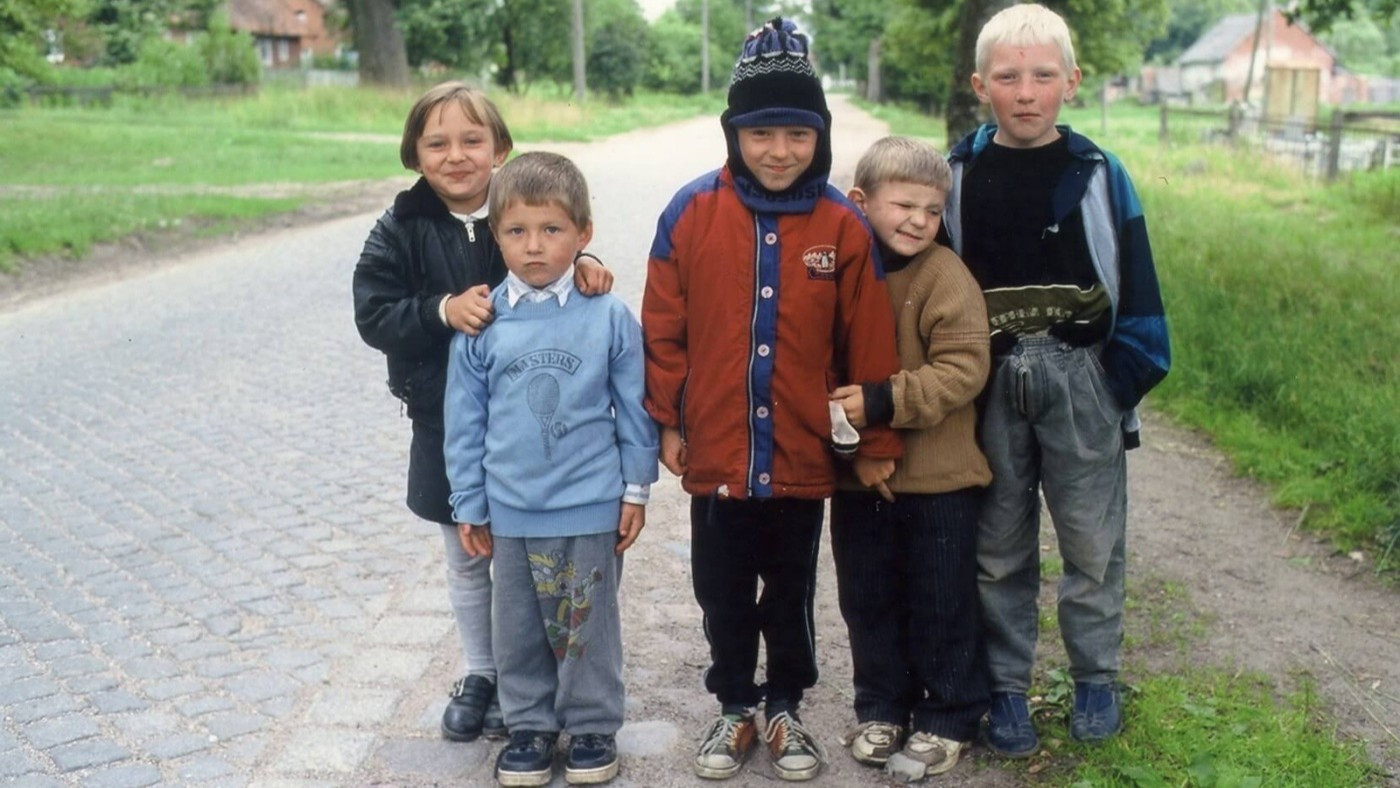
Portrait of a Russian village near Kaliningrad and its multiethnic inhabitants.
Social & External
Herself
Himself
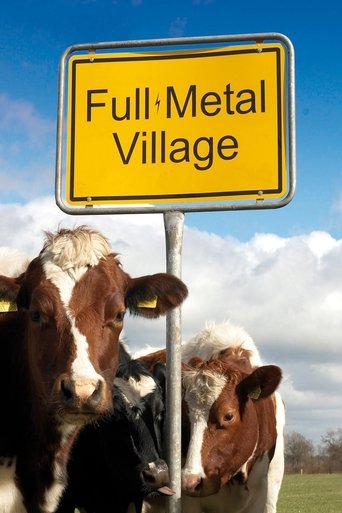
The film describes the microcosmos of the small village Wacken and shows the clash of the cultures, before and during the biggest heavy metal festival in Europe.
The story of Russian writer and Soviet dissident Aleksandr Solzhenitsyn (1918-2008) and his masterpiece, The Gulag Archipelago, published in Paris in 1973, which forever shook the very foundations of communist ideology.
President Mikhail Gorbachev recounts the end of the Cold War and the reduction of nuclear arms.
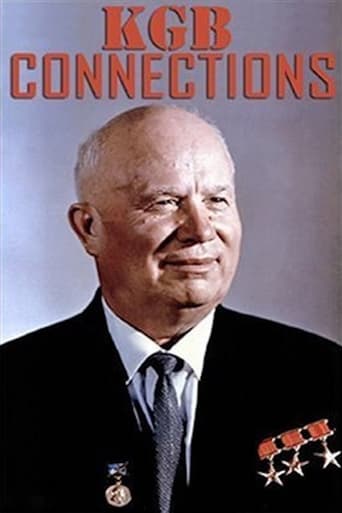
This 1982 film explains the KGB infiltration of America. Who they are, what they are doing, and how well they have infiltrated North America.
At the peak of Perestroika, in 1987, in the village of Gorki, where Lenin spent his last years, after a long construction, the last and most grandiose museum of the Leader was opened. Soon after the opening, the ideology changed, and the flow of pilgrims gradually dried up. Despite this, the museum still works and the management is looking for ways to attract visitors. Faithful to the Lenin keepers of the museum as they can resist the onset of commercialization. The film tells about the modern life of this amazing museum-reserve and its employees.
Lithuania, 1941, during World War II. Hundreds of thousands of texts on Jewish culture, stolen by the Germans, are gathered in Vilnius to be classified, either to be stored or to be destroyed. A group of Jewish scholars and writers, commissioned by the invaders to carry out the sorting operations, but reluctant to collaborate and determined to save their legacy, hide many books in the ghetto where they are confined. This is the epic story of the Paper Brigade.
A German Documentary about the “village of friendship” that was created by American Veteran George Mizo to help the Vietnamese kids suffering from the Vietnam War.
Documentary recounting the story of the Cuban Revolution and its impact on the young people of Cuba.
In the mid-1950s, lured by false promises of a better life, Inuit families were displaced by the Canadian government and left to their own devices in the Far North. In this icy desert realm, Martha Flaherty and her family lived through one of Canadian history’s most sombre and little-known episodes.
A double portrait of two dictators who were thousands of miles apart but were constantly fixated on each other.
The story of the unconditional, no-holds-barred tour of America by Soviet Premier Nikita Khrushchev, leader of World Communism and America's arch nemesis, during 13 sun-filled days in the fall of 1959.
Leon Trotsky is considered one of the most controversial revolutionary figures of his time. Was he a practical revolutionary or a naive idealist? On the practical side, he was the mastermind behind the Bolshevik seizure of power in 1917, and was totally ruthless during the ensuing Civil War. As an idealist, he was committed to the pursuit of international revolution, but created many political enemies. After Lenin's death, Trotsky lost in a power struggle with Stalin, and later was expelled from the Communist Party. Trotsky was exiled from the Soviet Union, eventually finding refuge in Mexico. In 1940, Stalin ordered his assassination, and Trotsky died after being struck in the head with an ice-pick. History records that Trotsky was a master theoretician, a skillful propagandist and a brilliant orator.
This film examines Trotsky, the revolutionary; venerated and reviled, loved, hated, feared. Archive material compiled from all over the world, citations and new shoots create an electrifying proximity to the historical person and to the man Leo Trotsky. Stages in his life and eventual flight are carefully examined, from St. Petersburg, to Mexico City. This is the riveting political biography of the Revolution's onetime hero.
Three children living in a displacement camp in northern Uganda compete in their country's national music and dance festival.
Documentary movie about testing of the largest nuclear weapon in history, the Tsar Bomba. Declassified and made available to the public in 2020.
How in 1959, during the heat of the Cold War, the government of the United States decided to create a secret military base located in the far north of Greenland: Camp Century, almost a real town with roads and houses, a nuclear plant to provide power and silos to house missiles aimed at the Soviet Union.
The story of what daily life was like in Poland under communism: private conversations, cruel interrogations, recruitment attempts, recorded and filmed with hidden devices; of how the secret services spied on every activity of ordinary citizens: nothing escaped the brutal system of control developed by the Soviets in the name of freedom.
In the Brazilian countryside, the village of Monteiros hosts a unique event every year. When a person’s prayers are granted, they offer the village’s dogs a feast. Between religious celebration and popular belief, Lazarus’ Hunger powerfully documents a community coming together.
Between 1930 and 1945, Eastern Europe experienced mass violence on an unprecedented scale. Hitler and Stalin exploited the vast region for their respective expansionist plans. It is estimated that around 14 million civilians were murdered—primarily Jews, Poles, Balts, Belarusians, and Ukrainians.