Traces the new Cold War between Russia and the West from the ban on American citizens adopting Russian children to the Kremlin’s anti-LGBTQ campaign, which positions the international marriage equality movement as a national threat.
Rent
Social & External
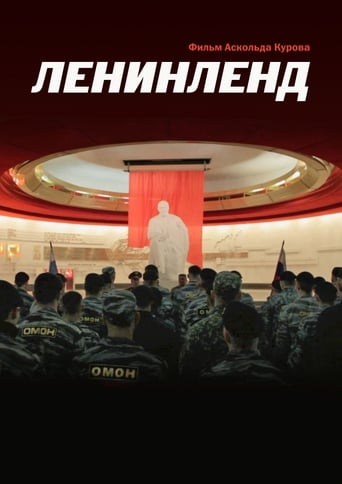
At the peak of Perestroika, in 1987, in the village of Gorki, where Lenin spent his last years, after a long construction, the last and most grandiose museum of the Leader was opened. Soon after the opening, the ideology changed, and the flow of pilgrims gradually dried up. Despite this, the museum still works and the management is looking for ways to attract visitors. Faithful to the Lenin keepers of the museum as they can resist the onset of commercialization. The film tells about the modern life of this amazing museum-reserve and its employees.
This poetic core in youngsters is also touched in Stanukina's less known Your very personal poetry (Свои, совсем особые стихи, 1982), a wonderful film about a poetry class. It is here that one recalls Kogan's admiration of Lyalya's emotional documentary skills. And it is here that one recalls Kosakovsky's depiction of Lyalya as a person of extraordinarily prosperous feelings, sensitive and energetic, childish and female, shrill and quiet. The young poets are marvellously sneaky, respectfully adoring and creatively playing with - maybe even deconstructing - "Aleksandr Sergeevich", Mr. Pushkin, Russia's exclusive trade mark of high culture and literature.
The documentary project The Term was conceived in May 2012. When the directing trio commenced mapping the Russian sociopolitical landscape, Vladimir Putin had just settled into the Kremlin for his third term. The original experimental format of “documentary bulletins,” which were published daily online, allowed for wide-ranging content; in the feature film version, however, the filmmakers focused solely on the members of various opposition groups. Nevertheless, the work’s neutral position remains and viewers have to interpret the objectively presented situations for themselves. The main characteristics of this strongly authentic movie include close contact with the protagonists, precise editing, and an effectively controlled release of information.
A look at the people affected by seven shootings which occurred during the same July weekend.
The free, almost naive view from the perspective of a child puts the "68ers" in a new, illuminating light in the anniversary year 2008. The film is a provocative reckoning with the ideological upbringing that seemed so progressive and yet was suffocated by the children's desire to finally grow up. With an ironic eye and a feuilletonistic style, author Richard David Precht and Cologne documentary film director André Schäfer trace a childhood in the West German provinces - and place the major events of those years in completely different, smaller and very private contexts.
A candid, fly-on-the-wall BBC television documentary portrait of Russian Nationalist politician, Vladimir Zhirinovsky. The film shows the leader on a cruise surrounded by two hundred supporters getting plenty of media attention in New York. We are left with the nagging question: to what extent is Zhirinovsky really dangerous? To take that further, to what extent are populist politicians truly dangerous?
Everyone knows the story of Paul Revere and his famous midnight ride to warn colonial forces of the British approach. But history books don't tell of the man who sent Revere on his mission: Joseph Warren, America's least remembered founding father. Uncover the forgotten history of Warren and stories of other unsung heroes in our fight for independence in The American Revolution.
When a child gets hold of a loaded handgun, someone often dies. Last year, 24,000 Americans lost their lives to handguns...and 3,600 of them were children. This profoundly disturbing documentary tells the stories of five handguns that killed five children--and how their deaths might have been prevented.
On May 8, 1989, Sports Illustrated ran an article about Ultimate frisbee… about a team with no name hailing from New York City that was about to change the sport forever. From its 1968 New Jersey birth to its unanimous 2015 recognition by the International Olympic Committee, FLATBALL circles the globe to showcase four decades of world-class Ultimate and goes even further: to a set of fields in the Middle East to understand and demystify the unique spirit of the game.
Not My Life comprehensively depicts the cruel and dehumanizing practices of human trafficking and modern slavery on a global scale. Filmed on five continents, in a dozen countries, Not My Life takes viewers into a world where millions of children are exploited through an astonishing array of practices including forced labor, sex tourism, sexual exploitation, and child soldiering.
The industrial noise of a factory in the Isle of Grain provides a percussive backbeat as a group of local children rap about their lives and play in the woods, sometimes wearing luminous tribal masks.
My Flesh and Blood is a 2003 documentary film by Jonathan Karsh chronicling a year in the life of the Tom family. The Tom family is notable as the mother, Susan, adopted eleven children, most of whom had serious disabilities or diseases. The film itself is notable for handling the sensitive subject matter in an unsentimental way that is more uplifting than one might expect.
Ted Hughes's 1993 novel The Iron Woman is the springboard for this multi-media project by Mikhail Karikis. The video section of the installation features seven-year-olds from Mayflower Primary School in East London discussing the novel's environmental themes.
In 2013, Dima Ilukhin, the cousin of the film’s director and a soldier in the Russian army, died on duty in the Republic of Dagestan in the North Caucasus. He was 21 years old. This incident marks the starting point for Abaturov’s reflection on the military. He films the training of new recruits in Siberia, as they bid farewell to their mothers and girlfriends, learn the mechanics of a Kalashnikov, or how to throw a hand grenade and administer first aid. While his parents try to cope with their loss, Dima’s former fellow recruits have to return to battle.
Children are preparing for a war, preparing to kill. For some, it’s just toys, but for others, it is broken fates. And everywhere they are the toys in the adults hands.
As his country is gripped by revolution and war, a Ukrainian victim of the Chornobyl nuclear disaster discovers a dark secret and must decide whether to risk his life and play his part in the revolution by revealing it.
Follows five autistic children as they work together to create and perform a live musical production.
Right outside of Moscow – home to the highest number of billionaires pr. capita – you’ll find the largest junkyard in the world: The Svalka. It’s a hard place run by the Russian mafia. And it's where Yula lives with her mother, her friends and many other people. Life is tough in the Svalka, but it’s also a place where beauty and humanity can arise from the most unlikely conditions. It is from this place that Yula dreams of escaping and changing her life, even if it seems impossible. Oscar-nominated director Hanna Polak followed Yula for 14 years, bringing us along on Yula's journey to achieve this dream.
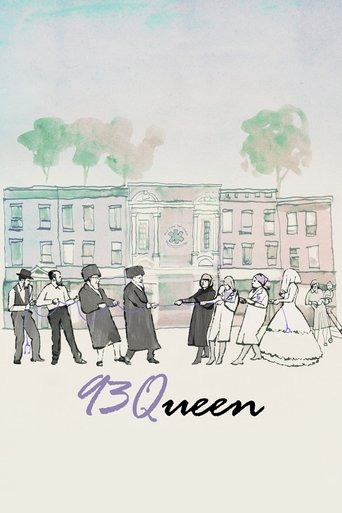
Set in the Hasidic enclave of Borough Park, Brooklyn, "93Queen" follows a group of tenacious Hasidic women who are smashing the patriarchy in their community by creating the first all-female volunteer ambulance corps in New York City. With unprecedented-and insider-access, "93Queen" offers up a unique portrayal of a group of religious women who are taking matters into their own hands to change their own community from within.
The “Kindertelefoon” (Child Helpline) in the Netherlands provides a listening ear. One girl talks about being home alone virtually all week; another’s sad because her parents are getting divorced. A boy in an asylum seekers’ center is worried about the future, while another boy doesn’t want to be gay and hopes these feelings will pass. Every day, the Kindertelefoon takes calls like these from children who want someone to talk to. But children also call to talk about their pets, to practice their audition for The Voice Kids or to make pranks. The recordings of these phone conversations are accompanied by images that quite literally give color to the conversations, and that beautifully reflect their tone—sometimes hilarious or naughty, but more often sad or heartrending.