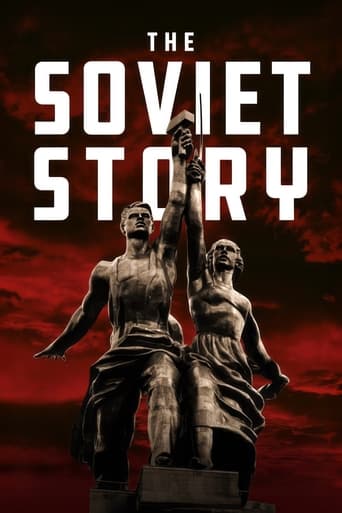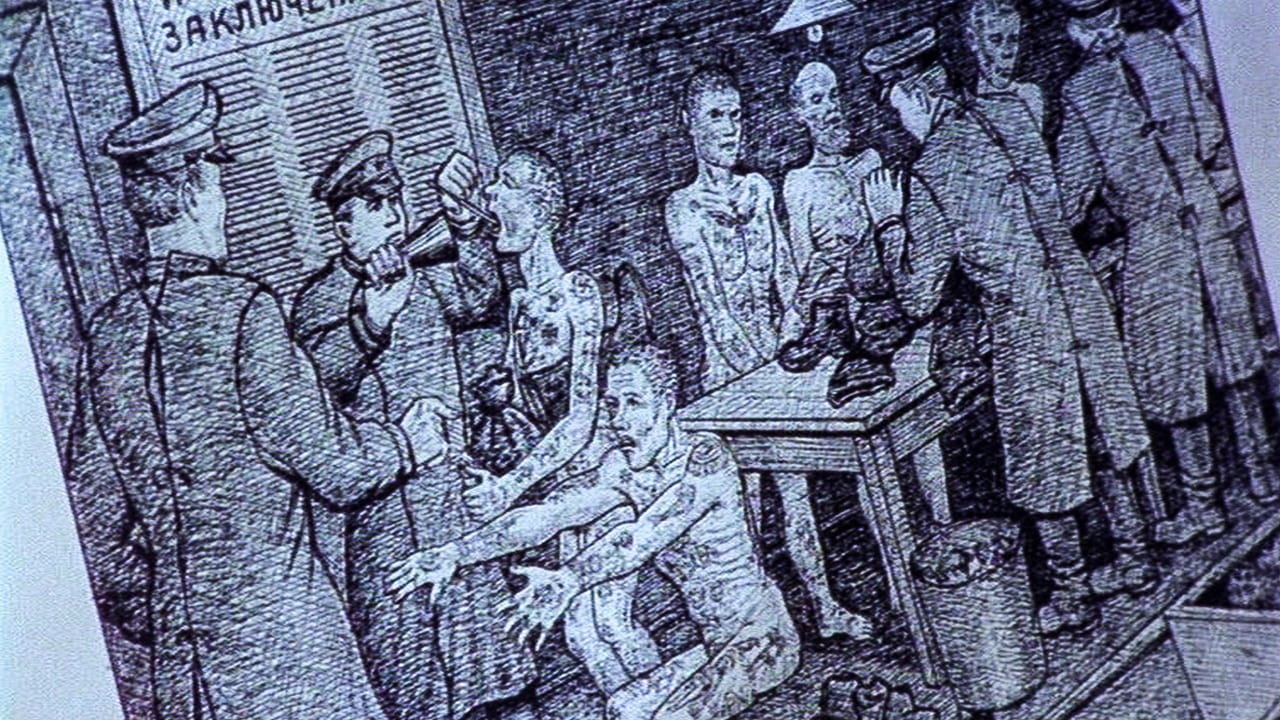
Documentary examining Stalin's Gulag. Between the October Revolution and Stalin's death in 1953, millions of people died in the camps. The film explores the Gulag legacy, hearing from victims and perpetrators of the system.
Social & External
Documentary movie about testing of the largest nuclear weapon in history, the Tsar Bomba. Declassified and made available to the public in 2020.
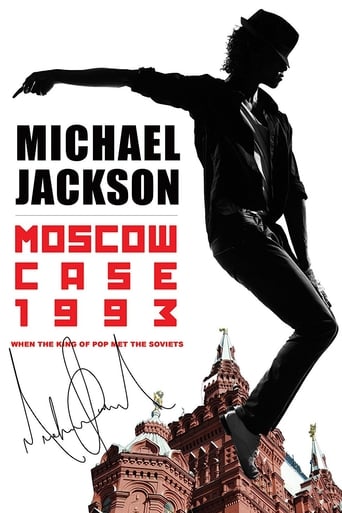
The Moscow Case is a 52 minute documentary with never-before-seen footage of Michael Jackson in Moscow during the "Dangerous" tour. This film tells the behind the scenes story of Jackson's ill fated concert in September 1993. It includes unique archival footage showing Michael close up and personal while meeting fans and playing with orphan children.
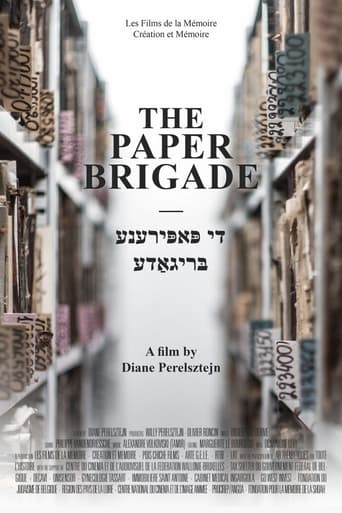
Lithuania, 1941, during World War II. Hundreds of thousands of texts on Jewish culture, stolen by the Germans, are gathered in Vilnius to be classified, either to be stored or to be destroyed. A group of Jewish scholars and writers, commissioned by the invaders to carry out the sorting operations, but reluctant to collaborate and determined to save their legacy, hide many books in the ghetto where they are confined. This is the epic story of the Paper Brigade.
Documentary recounting the story of the Cuban Revolution and its impact on the young people of Cuba.
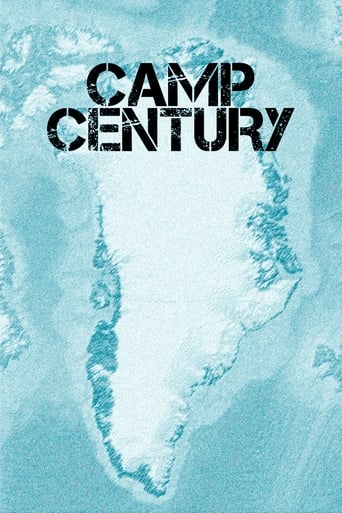
How in 1959, during the heat of the Cold War, the government of the United States decided to create a secret military base located in the far north of Greenland: Camp Century, almost a real town with roads and houses, a nuclear plant to provide power and silos to house missiles aimed at the Soviet Union.
Film cameras cruise the Soviet Union's mighty Volga River, providing a view of the Russian people along its 2300-mile length, including looks at the fishing industry, a rural village, a manufacturing town and the wedding of two factory workers.
A cameraman wanders around with a camera slung over his shoulder, documenting urban life with dazzling inventiveness.
A different history of the Cold War: how Estonians under Soviet tyranny began to feel the breeze of freedom when a group of anonymous dreamers successfully used improbable methods to capture the Finnish television signal, a window into Western popular culture, brave but harmless warriors who helped change the fate of an entire nation.
The story of Russian writer and Soviet dissident Aleksandr Solzhenitsyn (1918-2008) and his masterpiece, The Gulag Archipelago, published in Paris in 1973, which forever shook the very foundations of communist ideology.
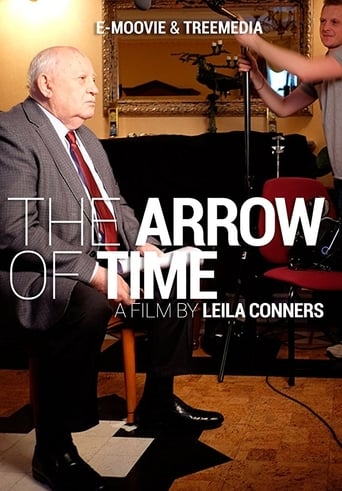
President Mikhail Gorbachev recounts the end of the Cold War and the reduction of nuclear arms.
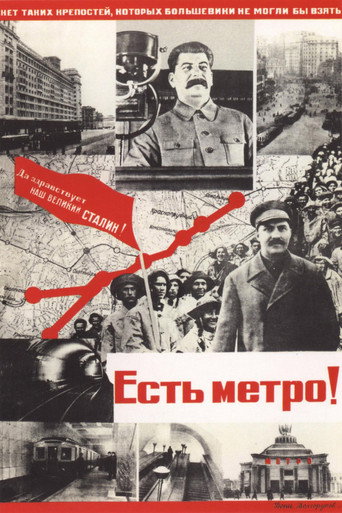
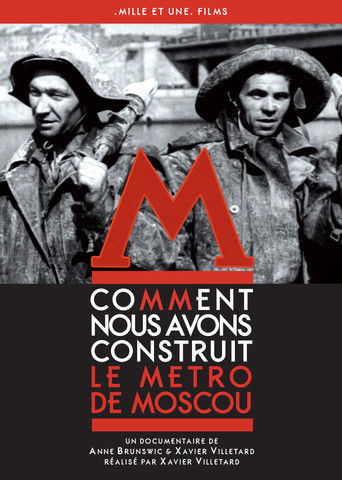
In the 1930’s, the workers of the underground, headed by brigades of writers, are in charge to write in real time "the history of the Moscow Metro". Based on their narratives, partially unpublished, the film recounts the first lines construction of the most beautifiul underground in the world, in the light of this "big literary Utopia", stoped by the purges of 1937-38.
The epic story of the Russian Civil War (1918-21): the White Terror, the counterrevolutionary uprisings, the guerrilla war, the Kolchak front, the Wrangel front and the Kronstadt rebellion. Chaos and violence, devastation and death.
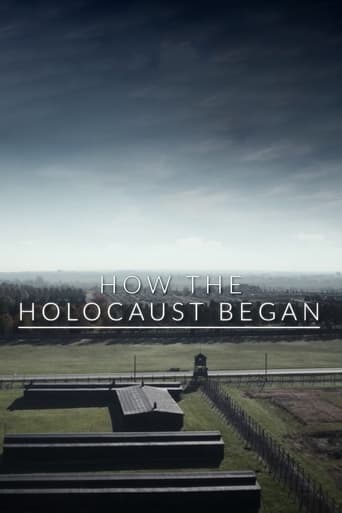
Historian James Bulgin reveals the origins of the Holocaust in the German invasion of the Soviet Union, exploring the mass murder, collaboration and experimentation that led to the Final Solution.
A documentary about Fidel Castro's visit to the USSR from April 28 to June 3, 1963 and how the Cuban leader traveled throughout the Soviet Union for 40 days, from Severodvinsk to Khiva in Uzbekistan.
Ilze Burkovska, a little girl who is obsessed with stories of World War II and will be a filmmaker in a distant future, lives in Latvia under the totalitarian boot of the Soviets and the ominous shadow of the many menaces and horrors of the Cold War.
How does art survive in a time of oppression? During the Soviet rule artists who stay true to their vision are executed, sent to mental hospitals or Gulags. Their plight inspires young Igor Savitsky. He pretends to buy state-approved art but instead daringly rescues 40,000 forbidden fellow artist's works and creates a museum in the desert of Uzbekistan, far from the watchful eyes of the KGB. Though a penniless artist himself, he cajoles the cash to pay for the art from the same authorities who are banning it. Savitsky amasses an eclectic mix of Russian Avant-Garde art. But his greatest discovery is an unknown school of artists who settle in Uzbekistan after the Russian revolution of 1917, encountering a unique Islamic culture, as exotic to them as Tahiti was for Gauguin. They develop a startlingly original style, fusing European modernism with centuries-old Eastern traditions.
Moscow, January 1948. In the bitter cold, a large crowd attends the State Funeral of the Yiddish actor and director Solomon Mikhoels. An official proclamation mourns the death of "a great People's Artist of the Soviet Union." What people are really mourning is the death of the most popular Jewish theater in the Soviet Union, and the man who kept it alive against all odds for over 20 years. No doubt many suspected the truth: he had just been assassinated by Stalin's secret police.
Tells the story of five people from the last generation of Soviet children who were brought up behind the Iron Curtain. Just coming of age when the USSR collapsed, they witnessed the world of their childhood crumble and change beyond recognition. Through the lives of these former schoolmates, this intimate film reveals how they have adjusted to their post-Soviet reality in today's Moscow.
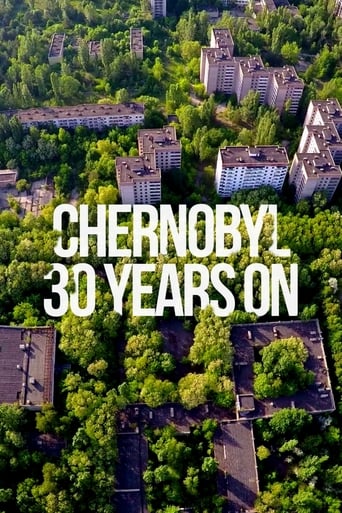
Thirty-six years after the Chernobyl nuclear reactor exploded in Soviet Ukraine, newly uncovered archival footage and recorded interviews with those who were present paint an emotional and gripping portrait of the extent and gravity of the disaster and the lengths to which the Soviet government went to cover up the incident, including the soldiers sent in to “liquidate” the damage. Chernobyl: The Lost Tapes is the full, unvarnished true story of what happened in one of the least understood tragedies of the twentieth century.
Part two of Leni Riefenstahl's monumental examination of the 1938 Olympic Games, the cameras leave the main stadium and venture into the many halls and fields deployed for such sports as fencing, polo, cycling, and the modern pentathlon, which was won by American Glenn Morris.
Filmmaker Alain Resnais documents the atrocities behind the walls of Hitler's concentration camps.
A woman narrates the thoughts of a world traveler, meditations on time and memory expressed in words and images from places as far-flung as Japan, Guinea-Bissau, Iceland, and San Francisco.
In Warsaw in 1980, the Communist Party sends disgruntled radio reporter Winkel to Gdańsk to dig up dirt on the shipyard strikers - particularly on Maciek Tomczyk, an independent labour union leader whose father was killed in the December 1970 protests. Posing as sympathetic, Winkel interviews the people surrounding Tomczyk, including his detained wife, Agnieszka.
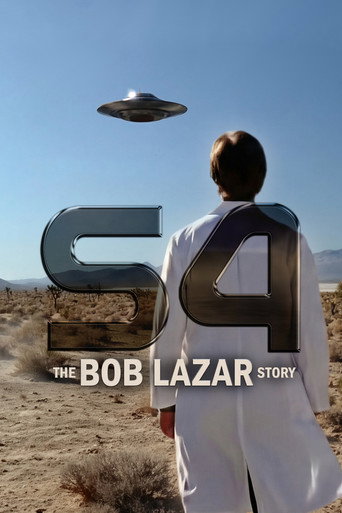
John Shepherd spent 30 years trying to contact extraterrestrials by broadcasting music millions of miles into space. After giving up the search, he makes a different connection here on earth.
A small band of multicultural convicts stages a daring escape from a WWII-era Siberian gulag, and embarks on a treacherous journey across five countries in a desperate race for freedom and survival.
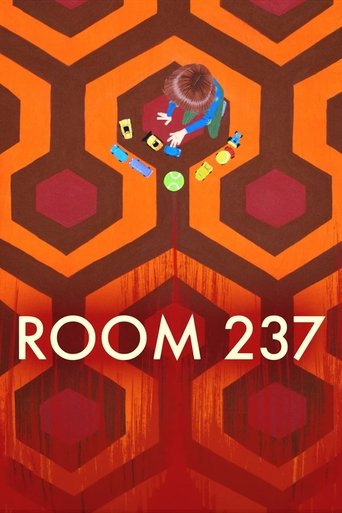
A subjective documentary that explores various theories about hidden meanings in Stanley Kubrick's classic film The Shining. Five very different points of view are illuminated through voice over, film clips, animation and dramatic reenactments.
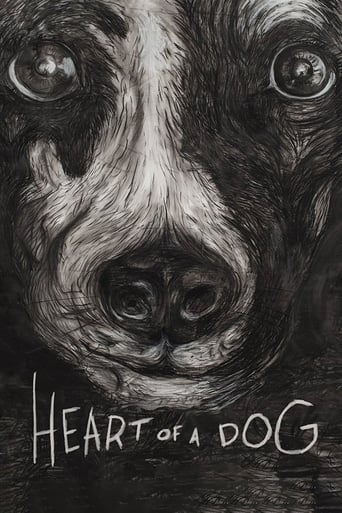
Lyrical and powerfully personal essay film that reflects on the deaths of her husband Lou Reed, her mother, her beloved dog, and such diverse subjects as family memories, surveillance, and Buddhist teachings.
Embark on an epic journey through time and faith with 'The Apocalypse of Saint John.' Join the Apostle John in a stunning visual narrative that unravels the visions of the End Times. Experience each vision like never before, with striking visual effects and epic scenes that immerse you in the apocalyptic narrative.
Director Claude Lanzmann spent 11 years on this sprawling documentary about the Holocaust, conducting his own interviews and refusing to use a single frame of archival footage. Dividing Holocaust witnesses into three categories – survivors, bystanders, and perpetrators – Lanzmann presents testimonies from survivors of the Chelmno concentration camp, an Auschwitz escapee, and witnesses of the Warsaw Ghetto Uprising, as well as a chilling report of gas chambers from an SS officer at Treblinka.
An intimate portrait of the small shops and shopkeepers of the Rue Daguerre in Paris, a picturesque street that has been the filmmaker’s home for more than 50 years.
The strange story of John McAfee, who went from millionaire software mogul to yogi, Kurtz-like jungle recluse to potential murderer, and most recently a prospective presidential candidate for the American Libertarian Party.
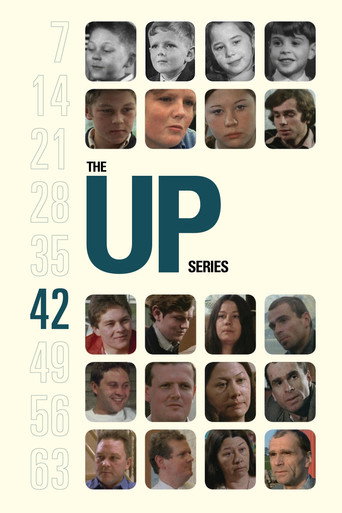
Director Michael Apted revisits the same group of British-born adults after a 7 year wait. The subjects are interviewed as to the changes that have occurred in their lives during the last seven years.
The film follows Kaspar Hauser, who lived the first seventeen years of his life chained in a tiny cellar with only a toy horse to occupy his time, devoid of all human contact except for a man who wears a black overcoat and top hat who feeds him.
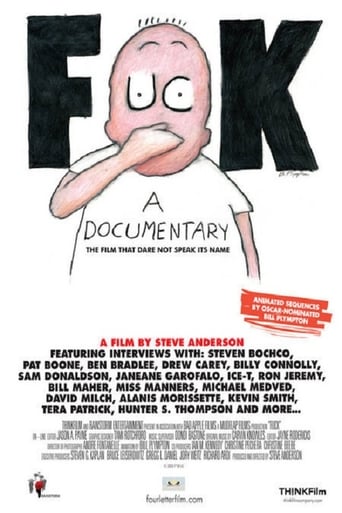
A documentary on the expletive's origin, why it offends some people so deeply, and what can be gained from its use.
As a visually radical memoir, CAMERAPERSON draws on the remarkable footage that filmmaker Kirsten Johnson has shot and reframes it in ways that illuminate moments and situations that have personally affected her. What emerges is an elegant meditation on the relationship between truth and the camera frame, as Johnson transforms scenes that have been presented on Festival screens as one kind of truth into another kind of story—one about personal journey, craft, and direct human connection.
Convinced that his subtenant is a spy and an enemy of the state, Ilija Čvorović falls into deep paranoia which leads to an absurd and destructive chain of events.
A dreamlike conversation with the past and the present, reimagining Latasha Harlins' story by excavating intimate memories shared by those who loved her.
An in-depth look at the creative process behind "Society of the Snow," featuring cast, crew, director J.A. Bayona and even real-life survivors.
A new documentary by filmmaker-photographer Raymond Depardon – where justice and psychiatry meet.