Social & External
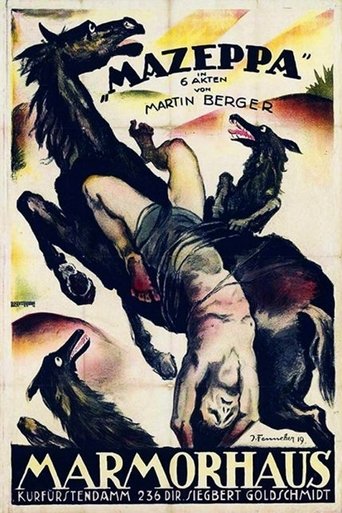
Prinzessin Dolgoruki
Stjenka Rasin
Fürst Dolgoruki
Fürst Prosorowsky
Filka
Wasska
Zar Alexey Michailowitsch
Jegorka
Borodin
Nikolka
Unknown Role
Choral Conductor, Don Cossacks
The film traces two families, one of which is Jewish, who preserved the images for decades but hadn’t brought them to light. 80 years after their creation, the son of the photographer finds the forgotten negatives and launches an investigation. With a team of researchers, archivists, and animators who use near-forensic precision to reconstruct locations and contexts, they trace the circumstances of those tragic days and the lives captured in each frame.
Prague, the beginning of the 17th century. Rozina falls in love with Italian glass worker Nikolo, but after returning home, she gets a message that will never come to Prague. She falls for the promise of an older man to marry her, but when Nikolo does return, the tragic fate of Rozina is sealed.
Set in puritanical Boston in the mid 1600s, the story of seamstress Hester Prynne, who is outcast after she becomes pregnant by a respected reverend. She refuses to divulge the name of the father, is "convicted" of adultery and forced to wear a scarlet "A" until an Indian attack unites the Puritans and leads to a reevaluation of their laws and morals.
In the 17th century a warrior woman fights for the independence of Angola. After witnessing the murder of her son and watching her people being humiliated by Portuguese colonizers, Njinga will become a Queen and struggle for their liberation embodying the motto: those who stay fight to win.
Tensions mount in an Andalusia mining town between local Spanish workers and their British employers.
This film, adapted from a work of fiction by author Tracy Chevalier, tells a story about the events surrounding the creation of the painting "Girl With A Pearl Earring" by 17th century Dutch master Johannes Vermeer. A young peasant maid working in the house of painter Johannes Vermeer becomes his talented assistant and the model for one of his most famous works.
Down-on-his-luck veteran Tsugumo Hanshirō enters the courtyard of the prosperous House of Iyi. Unemployed, and with no family, he hopes to find a place to commit seppuku—and a worthy second to deliver the coup de grâce in his suicide ritual. The senior counselor for the Iyi clan questions the ronin’s resolve and integrity, suspecting Hanshirō of seeking charity rather than an honorable end. What follows is a pair of interlocking stories which lay bare the difference between honor and respect, and promises to examine the legendary foundations of the Samurai code.
The film is based on a novel by Ivan Tavcar and was adapted for the screen by Andrej Hieng. It is set at the end of the 17th century in the area that is now Slovenia at a time of religious intolerance with Amandus, a Catholic priest, determined to persecute local Protestants.
It is 1680 – the time of dreamt snow after the Turkish invasion. In the deserted plains of Bácska a living soul cannot be found in a few-days’ walk. Three former prisoners returning from their Turkish captivity – Long-Legged, Lame and One-Eyed – appear among the crumbling walls of a huge abandoned church without a roof. They are looking for their long lost home. How to revive a disappeared civilization? What is the survivors’ personal duty? Without a roof, a collapse is inevitable. The Old Man – a master of ancient knowledge – and his daughter come and with sharing sowing seeds they try to save the community of dispersion. No spiritual leader, no aims. Driven by rapacity, One-Eyed kills the Old Man, rapes his daughter and while looking for the remaining seeds he kills Long-Legged with a sudden anger. At the end of the film, the survivors need to face with dramatic encounters and special temptations. Their redemption under the leadership of Lame’s young son is the pledge for the future.
The story of Auschwitz's twelfth Sonderkommando — one of the thirteen consecutive "Special Squads" of Jewish prisoners placed by the Nazis in the excruciating moral dilemma of assisting in the extermination of fellow Jews in exchange for a few more months of life.
Cutthroat pirate William Kidd captures Admiral Blayne's treasure ship and hides the bounty in a cave. Three years later, Kidd, posing as a respectable merchant captain, offers his services to the King of England. Seeking a social position, Kidd also negotiates for Blayne's title and lands, provided he can prove Blayne was associated with piracy. Launched upon his royal mission, Kidd is unaware that Blayne's son Adam is among the crew, determined to clear his father's name.
In 17th-century Tuscany, a church play is performed for the benefit of young aristocrat Cosimo. In the play, a grotesque old woman gives birth to a beautiful baby boy. The child's older sister is quick to exploit the situation, selling blessings from the baby, and even claiming she's the true mother by virgin birth. However, when she attempts to seduce the bishop's son, the Church exacts a terrible revenge.
Years have passed since the Three Musketeers, Aramis, Athos and Porthos, have fought together with their friend, D'Artagnan. But with the tyrannical King Louis using his power to wreak havoc in the kingdom while his twin brother, Philippe, remains imprisoned, the Musketeers reunite to abduct Louis and replace him with Philippe.
The film depicts the momentous and tragic history of the Poznan uprising of 1956. The memory of the director, who was a nine-year-old boy at the time, is the only canvass of the script. The main characters of the black-and-white film are two boys aged ten and twelve. From their perspective, the viewer follows the development of events. From the depths of the gates, through the rails of fences and cluttered backyards, through the eyes of the children we watch the street riots. The film, without action in the literal sense of the word, was made using a reportage technique that perfectly captures the spontaneity of the Poznan uprising. Among other things, the author of the picture depicts the adventures of a young worker Zenek, who becomes the unwitting leader of the protest, and five professors, who by chance find themselves in the very center of events.
Animals on a farm lead a revolution against the farmers to put their destiny in their own hands. However this revolution eats their own children and they cannot avoid corruption.
Famed swordsman and poet Cyrano de Bergerac is in love with his cousin Roxane. He has never expressed his love for her as he his large nose undermines his self-confidence. Then he finds a way to express his love to her, indirectly.
In 1672 Cuban revolutionaries launch an uprising against the Spanish who are occupying the country. Preserved by the Academy Film Archive in 2017.
A film about the historical uprising of the seamen in Kiel: During the Russian October Revolution of 1917, German and Russian soldiers start to solidarize with each other. By disarming the officers, machinist Henne Lonke and stoker Jens Kasten prevent the attack on a Russian freighter. When German admiralty gives out orders for operation "Nibelungen", which would lead the German fleet into a suicidal attack against England and quell the revolutionary spirit, seamen and soldiers from different political backgrounds unite in protest.
Kingdom of Joseon, ancient Korea. A usurper has conquered the throne. His ministers are being systematically eliminated by a mysterious assassin. An arrogant master swordsman is in charge of putting an end to the carnage.
A landscape gardener is hired by famous architect Le Nôtre to construct the grand gardens at the palace of Versailles. As the two work on the palace, they find themselves drawn to each other and are thrown into rivalries within the court of King Louis XIV.