The homeless, underground residents at a post-communist train station and their intimate confessions. A film not about misery, but the lust for life and color even at the depths of human despair.
Social & External
After the fall of the Berlin Wall, thousands of documents were hastily shredded by the dreaded GDR political police. 16,000 bags filled with six million pieces of paper were found. Thanks to the meticulous work of technology, the destinies of men and women who had been spied on and recorded without their knowledge could be reconstructed.
Ben Stewart, the bright young musician and philosopher who brought us the sleeper hit "Esoteric Agenda", unveils his new work, Kymatica!. Kymatica will venture into the realm of Cymatics and Shamanic practices. It will offer insight into the human psyche and discuss matters of spirituality, altered states of consciousness and much more! Not to be missed!
In Portugal, during the night of April 24-25, 1974, a peaceful uprising put an end to the last government of the Estado Novo, the authoritarian regime established in 1933 by dictator António de Oliveira Salazar (1889-1970), paving the way for full democracy: a chronicle of the Carnation Revolution.
Two journalists born in the mid '80s decide to take a look back at how their country changed in the last 30 years since the fall of communism. The end product is a documentary containing footage of political events and historical milestones significant to Romania accompanied by a narrator's voice walking the viewer through the events, and also interviews with Romanian politicians and other influential public figures sharing their thoughts and their different views on those events.
Starting in 1881 this film shows the personal battle between Lenin's Ulyanov family and the royal Romanovs that eventually led to the Russian revolution.
Explores the lives of Sara, Gigi and Giovanna, three Latino transvestites who for years have lived on the streets of Manhattan supporting their drug addictions through prostitution. They made their temporary home inside broken garbage trucks that the Sanitation Department keeps next to the salt deposits used in the winter to melt the snow. The three friends share the place known as "The Salt Mines".
A fearless horse bonds two men to each other and to the traditions that define their community.
We follow Roach, a 17-year-old ex-junkie and squeegee punk living on the streets of Toronto and Montreal. As part of the filmmaking process, he's been given a camera to document his world. The footage he gets is urgent, because there's a war against squeegee kids. This documentary is from the point of view of the kids themselves, in order to provide alternative voices. Roach's camera is positioned behind "enemy" lines: living in derelict buildings, squeegeeing for money, being hunted by police.
Alex Jones interviews Walter Burien, commodity trading adviser (CTA) of 15 years about the biggest game in town. There are over 85,000 federal and regional governmental institutions: school districts, water and power authorities, county and city governments – and they own over 70 percent of the stock market.
The epic story of the Russian Civil War (1918-21): the White Terror, the counterrevolutionary uprisings, the guerrilla war, the Kolchak front, the Wrangel front and the Kronstadt rebellion. Chaos and violence, devastation and death.
How did the end of the Soviet Union change the way of thinking, the way of behaviour of militant French Communists ? For the first time and during several months meetings of a Communist Party cell in one of Paris' industrial suburbs were filmed by André Van In. Set against these meetings, the militants are filmed discussing their commitments, their dreams, their mistakes. Beyond questions about power or the political machinery, they share their faith in militancy and their hopes for a fairer society.
A homeless musician finds meaning in his life when he starts a friendship with dozens of parrots.
This revealing portrait of Cuba follows the lives of Fidel Castro and three Cuban families affected by his policies over the last four decades.
The free, almost naive view from the perspective of a child puts the "68ers" in a new, illuminating light in the anniversary year 2008. The film is a provocative reckoning with the ideological upbringing that seemed so progressive and yet was suffocated by the children's desire to finally grow up. With an ironic eye and a feuilletonistic style, author Richard David Precht and Cologne documentary film director André Schäfer trace a childhood in the West German provinces - and place the major events of those years in completely different, smaller and very private contexts.
Poignant stories of homelessness on the West Coast of the US frame this cinematic portrait of a surging humanitarian crisis.
What if democracy fails citizens by not serving them all equally? What if inequality becomes the norm and the most vulnerable citizens are left behind with no money, no home, no rights, and no country of their own? In Hungary, the government has slashed social benefits and criminalized homelessness, but a group of activists, homeless and middle class, is confronting authorities to defend social justice and their right to be citizens. After the tragic death of two of its founding members, the group feels that Hungary is growing more hostile and their struggle is more important than ever. Despite all odds, their own community keeps them going—a mini-society with democracy and solidarity at its heart, an island of hope, belonging and dignity in a society gradually shifting the other way.
Four lucid grandmothers tell their story forgotten by history: the militancy and resistance of the young women of the leftist youth against the dictatorship of Marcos Pérez Jiménez.
This documentary about teenagers living on the streets in Seattle began as a magazine article. The film follows nine teenagers who discuss how they live by panhandling, prostitution, and petty theft.
Many times during his presidency, Lyndon B. Johnson said that ultimate victory in the Vietnam War depended upon the U.S. military winning the "hearts and minds" of the Vietnamese people. Filmmaker Peter Davis uses Johnson's phrase in an ironic context in this anti-war documentary, filmed and released while the Vietnam War was still under way, juxtaposing interviews with military figures like U.S. Army Chief of Staff William C. Westmoreland with shocking scenes of violence and brutality.
A small group of French students are studying Mao, trying to find out their position in the world and how to change the world to a Maoistic community using terrorism.
A documentary about the closure of General Motors' plant at Flint, Michigan, which resulted in the loss of 30,000 jobs. Details the attempts of filmmaker Michael Moore to get an interview with GM CEO Roger Smith.
Walt is a lonely convenience store clerk who has fallen in love with a Mexican migrant worker named Johnny. Though Walt has little in common with the object of his affections — including a shared language — his desire to possess Johnny prompts a sexual awakening that results in a tangled love triangle.
Oona, a recent graduate in anthropology, has returned to her dead mother’s seaside cottage in southern England to prepare it for sale. Her arrival disturbs Mani, a wary vagrant who has been squatting on the property.
An alcoholic man and his two young children barely survive in Taipei. They cross paths with a lonely grocery clerk who might help them make a better life.
A presentation of a case for a needed transition out of the current socioeconomic monetary paradigm which governs the entire world society. This subject matter will transcend the issues of cultural relativism and traditional ideology and move to relate the core, empirical 'life ground' attributes of human and social survival, extrapolating those immutable natural laws into a new sustainable social paradigm called a 'Resource-Based Economy'.
A cinematic portrait of the homeless population who live permanently in the underground tunnels of New York City.
Miso lives from day to day by housekeeping. Cigarettes and whiskey are the two things that get her through the day. As cigarette prices and rent start to rise, Miso decides to give up her house for cigarettes and whiskey, leading her to couch surf with old friends while reconsidering her place in life.
A subway enforcement officer working in the oppressively gray Budapest metro gets a chance at love — but first he needs to find out why passengers are jumping — or being pushed — to their deaths onto the tracks.
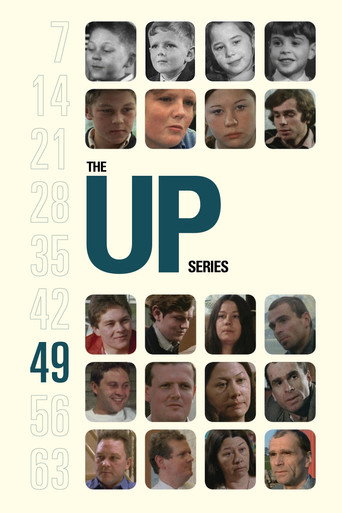
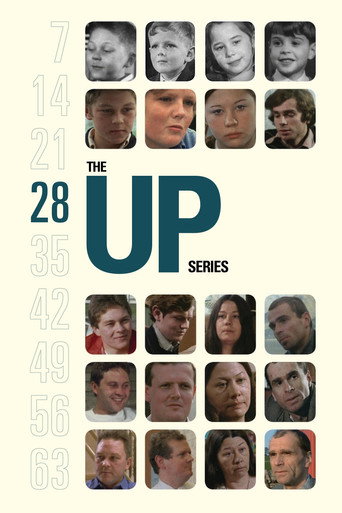
49 Up is the seventh film in a series of landmark documentaries that began 42 years ago when UK-based Granada's World in Action team, inspired by the Jesuit maxim "Give me the child until he is seven and I will give you the man," interviewed a diverse group of seven-year-old children from all over England, asking them about their lives and their dreams for the future. Michael Apted, a researcher for the original film, has returned to interview the "children" every seven years since, at ages 14, 21, 28, 35, 42 and now again at age 49.In this latest chapter, more life-changing decisions are revealed, more shocking announcements made and more of the original group take part than ever before, speaking out on a variety of subjects including love, marriage, career, class and prejudice.
Platon Ryabinin, a pianist, is traveling by train to a distant town of Griboedov to visit his father. He gets off to have lunch during a twenty minute stop at Zastupinsk railway station. He meets Vera, a waitress, after he refuses to pay her for the disgusting food he doesn't even touch and misses his train due to police investigation of the incident. His passport is then accidentally taken away from him by Andrei, Vera's fiancé, and his money is stolen as he waits for the next train to Griboedov. Vera learns that Platon is about to get sentenced and sent to prison in the Far East for a car accident he isn't guilty for. During the few days that Platon has to spend in Zastupinsk he and Vera develop feelings for each other...
Facing eviction in a city her family can no longer afford, a woman plunges into a desperate and increasingly dangerous all-night search to raise $25,000.
Jacques is the curmudgeonly owner of a gritty New York dive bar that serves as home to a motley assortment of professional drinkers. Jacques is determinedly drinking and smoking himself to death when he meets Lucas, a homeless young man who has already given up on life. Determined to keep his legacy alive, Jacques deems Lucas is a fitting heir and takes him under his wing.
Anbarasu, young and arrogant, and Nallasivam, damaged - physically but not spiritually - by life, are thrown together by circumstances, and find that they are in some ways bound together by fate.
Naples, Trajan's district. Initially it was intended for the inhabitants of the shantytowns on the seafront of Naples, who were homeless after the war. But it soon became a kind of ghetto. Alessandro and Pietro are two teenagers who film with an iPhone to tell their difficult neighborhood, their daily life, the friendship that binds them.
A slab of food descends down a vertical facility. The residents above eat heartily, leaving those below starving and desperate. A rebellion is imminent.
An acute case of Mondayitis in Warsaw. Interwoven stories of a few inhabitants of Warsaw, including one very unlucky Italian on a governmental mission and a charitable Polish American.
Garage owner Angelo and big-time film producer Alberto find themselves occupying neighbouring beds in a Rome hospital after suffering heart attacks. Alberto is a gregarious joker - and chain smoker - who has a strong effect on the impressionable Angelo. However, as one of the men's condition deteriorates, the other becomes more deeply involved in his personal life.
A cart-taxi driver goes to the city to make a living, but out of sympathy with other poverty-stricken people, he works for free and goes hungry himself.
Gentle and broken, a homeless man fights others on video for money but soon finds comfort in an unlikely friend and the lost diary of a young girl.