Odyssey of the fortune-teller Daniele von Arb who, aged sixteen, joined the revolutionary underground and made the headlines as a top Swiss terrorist.
Social & External
Himself
Herself
A behind-the-scenes look at the of how the Paris Opera is run under the direction of Stephane Lissner.
Zurich-born Hugo Koblet was the first international cycling star of the post-war period. He was a stylist on the bicycle and in life, and a huge heartthrob. Koblet had a meteoric rise and won the Giro d'Italia in 1950. Once he had reached the zenith of his career, Koblet was put under pressure by overly ambitious officials and ended up ruining his health with drugs. In 1954, he married a well-known model and they became a celebrity dream couple. After his athletic career ended, Koblet began to lose his footing. Threatened by bankruptcy, he crashed his Alfa into a tree.
An intimate portrayal of the everyday lives of Carthusian monks of the Grande Chartreuse, high in the French Alps (Chartreuse Mountains). The idea for the film was proposed to the monks in 1984, but the Carthusians said they wanted time to think about it. The Carthusians finally contacted Gröning 16 years later to say they were now willing to permit Gröning to shoot the movie, if he was still interested.
Switzerland is presently the only country in the world where suicide assistance is legal. Exit: The Right to Die profiles that nation's EXIT organization, which for over twenty years has provided volunteers who counsel and accompany the terminally-ill and severely handicapped towards a death of their choice.
Modern Amazons are fierce heroines. They are ready to fight for what is important to them. Without explaining, without compromising, always persisting. They fight for victory in the ring for acceptance, and too, for fellow sufferers and humanity.
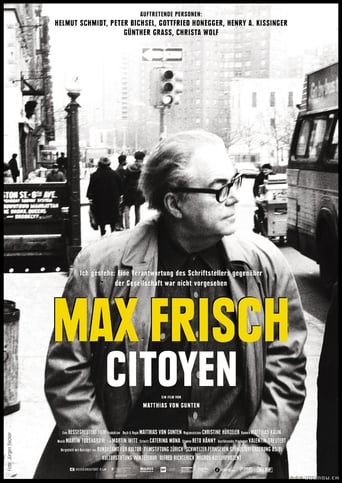
Max Frisch was the last big Swiss intellectual widely respected as a “voice” in its own right – a character hardly found today. The film retells Frisch’s story as a witness of the unfolding 20th century, wondering if such “voices” are needed at all, or if we could do without them.
Switzerland still carries out special flights, where passengers, dressed in diapers and helmets, are chained to their seats for 40 hours at worst. They are accompanied by police officers and immigration officials. The passengers are flown to their native countries, where they haven't set foot in in up to twenty years, and where their lives might be in danger. Children, wives and work are left behind in Switzerland. Near Geneva, in Frambois prison, live 25 illegal immigrants waiting for deportation. They are offered an opportunity to say goodbye to their families and return to their native countries on a regular flight, escorted by plain-clothes police officers. If they refuse this offer, the special flight is arranged fast and unexpectedly. The stories behind the locked cells are truly heartbreaking.
While managers of Swiss banks in the USA ruefully apologize for their tax evasions practices and customer data is disclosed to the American authorities, Rudolf Elmer, former auditor at bank Julius Bär, is indicted for violating the Swiss banking secrecy law on the Cayman Islands. Rudolf Elmer: from insider to critic.
Documentary account of a man’s life in the face of imminent death – Francisco Varela's story told affectionately and gently, touchingly and astutely. Varela spent his life building bridges: between Western science and Eastern wisdom, neurobiology and philosophy, abstract theory and practical life. This film seeks to deconstructs the prevailing division between science and art.
The real place where the penguin congress takes place is also the most fictional place on this planet where you can stand on your own two legs. Here, even the animals can talk. This land of dreams and nightmares is called Antarctica. In this desert of ice surrounded by a stormy sea, a few dozen human beings also live. Using sophisticated instruments, they observe the worrying changes affecting our world: the hole in the ozone layer, climate change, and so on.
The incredible story of how the mummified corpse of a 40-year-old man was discovered by a hunter in one of the most remote parts of the country. The dead man's detailed notes reveal that he actually committed suicide through self-imposed starvation only the summer before. Liechti's film is a stunning rapprochement of a fictional text, which itself is based upon a true event: a cinematic manifesto for life, challenged by the main character's radical renunciation of life itself.
The Salecine meeting place, founded near Maloja in 1971 by Zurich communist bookseller Theo Pinkus, quickly became a socio-cultural and political Mecca for the left-wing intelligentsia. The film provides an overview of the chronicle of this Alpine melting pot of ideas, and also shows the changes in the zeitgeist since 1968. It is also a gentle, sentimental (sometimes self-ironic) tribute to the men and women of three generations of Salecina, who, at 1800 above sea level, are creating utopias for a fairer world.
The story of three Turkish men. They all grew up in Switzerland and all got deported after various criminal offenses.
A documentary about healers from the Swiss canton of Appenzell.
At the far end of the Alaskan peninsula, for filmmaker Roman Droux a childhood dream comes true. He discovers together with the bear researcher David Bittner the universe of wild grizzlies. The two adventurists face bears at smelling-distance, experience the struggle for survival of a bear family and witness dramatic fighting scenes. Driven by a desire to explore the unknown the film tells a personal story of wilderness, framed in breathtaking pictures of unique creatures.
Dieter Roth was an artist who combined art and life in a unique way. He painted, drew, printed, wrote, filmed and made music. He created his own universe in which he turned all materials, no matter how banal or ephemeral, into art. The film "Dieter Roth" is conceived as an inner and outer journey, just as Dieter Roth lived, worked, taught, learned, loved and suffered while traveling. The starting point is his works, including videos and films in which he himself acts - friends and companions will also accompany this cinematic journey, above all his son Björn, who has worked with him for the last 20 years.
The first film about second-generation Swiss immigrants: A Turkish ice hockey player explains why, in Switzerland, he could only fall in love with an Italian. A young Italian woman explains why she prefers to rap in English. A hip-hop artist with Hispanic origins fights for his political rights and the director reminisces on how, despite his Arabic roots, he's been persecuted as a Jew. Babylon 2 reflects the rise of a new urban culture in Switzerland, which is instigated by the second generation of immigrants and the help of electronic media.
Mulhapar is a village in the wide expanses of the Punjab in Pakistan. A country associated with violence and intolerance. Beyond this sombre prejudice, the film plunges into the brimming life of a community of poor and rich people, Muslims and Christians, the young and the old, women and men. In Mulhapar, their family and individual destinies, as well as their stories and anecdotes are condensed into a vivid mosaic.
The history of cinematic sound, told by legendary sound designers and visionary filmmakers.
Documentary filmmaker Amy Berg investigates the life of 30-year pedophile Father Oliver O'Grady and exposes the corruption inside the Catholic Church that allowed him to abuse countless children. Victims' stories and a disturbing interview with O'Grady offer a view into the troubled mind of the spiritual leader who moved from parish to parish gaining trust ... all the while betraying so many.
Over seven decades, actor and activist George Takei journeyed from a World War II internment camp to the helm of the Starship Enterprise, and then to the daily news feeds of five million Facebook fans. Join George and his husband, Brad, on a wacky and profound trek for life, liberty, and love.
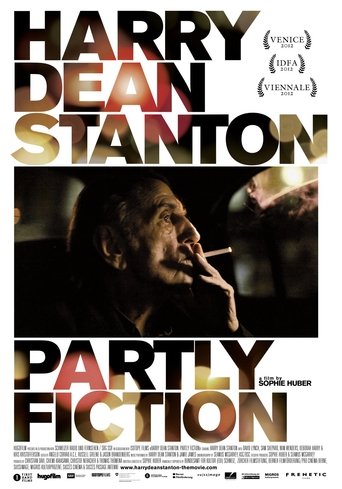
The life and career of an actor, artist, and icon. His own journey through his own camera.
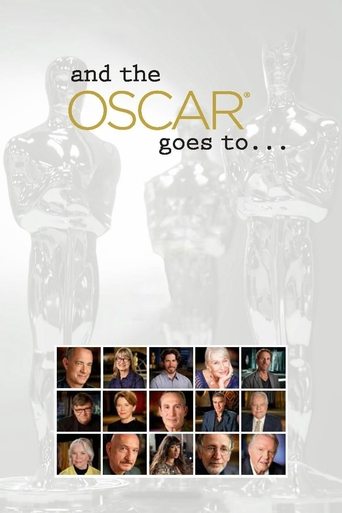
The story of the gold-plated statuette that became the film industry's most coveted prize, AND THE OSCAR GOES TO... traces the history of the Academy itself, which began in 1927 when Louis B. Mayer, then head of MGM, led other prominent members of the industry in forming this professional honorary organization. Two years later the Academy began bestowing awards, which were nicknamed "Oscar," and quickly came to represent the pinnacle of cinematic achievement.
Daniel Craig candidly reflects on his 15 year adventure as James Bond. Including never-before-seen archival footage from Casino Royale to the upcoming 25th film No Time To Die, Craig shares his personal memories in conversation with 007 producers, Michael G Wilson and Barbara Broccoli.
A documentary about how a dominant cultural and demographic institution both sustains their traditional activities and adapts to the digital revolution.
A visual montage portrait of our contemporary world dominated by globalized technology and violence.
A documentary that explores the downloading revolution; the kids that created it, the bands and the businesses that were affected by it, and its impact on the world at large.
Filmmaker Lawrence Shapiro discusses voice-over acting with the talented people behind the characters.
Various MGM stars from yesterday present their favorite musical moments from the studio's 50 year history.
A documentary chronicling Vogue editor-in-chief Anna Wintour's preparations for the 2007 fall-fashion issue.
The life of Mr. Spock, as well as that of Leonard Nimoy, the actor who played him for almost fifty years, written and directed by his son: Adam.
Filmmakers discuss the legacy of Alfred Hitchcock and the book “Hitchcock/Truffaut” (“Le cinéma selon Hitchcock”), written by François Truffaut and published in 1966.
Gene Kelly and Fred Astaire present more golden moments from the MGM film library, this time including comedy and drama as well as classic musical numbers.
A documentary chronicling Queen and Lambert's incredible journey since they first shared the stage together on "American Idol" in 2009.
Nine filmmakers each profile a young girl from a different part of the world to weave a global tapestry of youth in the 21st century.
Martin Scorsese's documentary intertwines footage from The Band's incredible farewell tour with probing backstage interviews and featured performances by Eric Clapton, Bob Dylan, Joni Mitchell, Van Morrison, and other rock legends.
A documentary highlighting the Soviet Union's legendary and enigmatic hockey training culture and world-dominating team through the eyes of the team's Captain Slava Fetisov, following his shift from hockey star and celebrated national hero to political enemy.
Documentary about the arena-packing Swedish DJ, chronicling his explosive rise to fame and surprising decision to retire from live performances in 2016.