Social & External
On 20 October 1973, the Sydney Opera House was officially opened by Queen Elizabeth II. From conception to completion, it had taken more than 15 years and over $100 million dollars. In the years since its completion, the Sydney Opera House has become one of the most identifiable of Australia’s icons - ranking with the Sydney Harbour Bridge, Uluru, the koala and kangaroo - and is considered by many to be among the world's great architectural masterpieces.
The history of the Warsaw Ghetto (1940-43) as seen from both sides of the wall, its legacy and its memory: new light on a tragic era of division, destruction and mass murder thanks to the testimony of survivors and the discovery of a ten-minute film shot by Polish amateur filmmaker Alfons Ziółkowski in 1941.
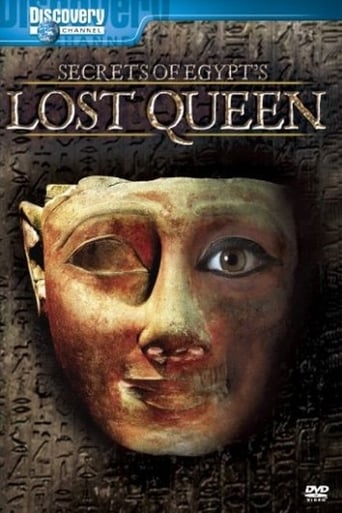
It is one of Egypt's enduring mysteries. What happened to Nefertiti and her husband, Akhenaten - the radical king, and likely father of King Tut? In a dark and mysterious tomb located in the Valley of the Kings, there is a small chamber with two mummies without sarcophagi or wrappings. At times, both have been identified as Queen Nefertiti by scholars, filmmakers and historians. But the evidence has been circumstantial at best.
Explorations in 21st Century American Architecture Series: Ray Kappe has long been a cult figure in the architectural scene in and around Los Angeles. In 1972, he founded the influential, avant garde Southern California Institute of Architecture (SCI-ARC), where many of the younger-generation architects have studied or taught.
No understanding of the modern movement in architecture is possible without knowledge of its master builder, Mies van der Rohe. Together with documentation of his life, this film shows all his major buildings, as well as rare film footage of Mies explaining his philosophy. Phyllis Lambert relates her choice of Mies as the architect for the Seagram building. Mies's achievements and continuing influence are debated by architects Robert A.M. Stern, Robert Venturi, and Philip Johnson, by former students and by architectural historians. Mies is seen in rare documentary footage.
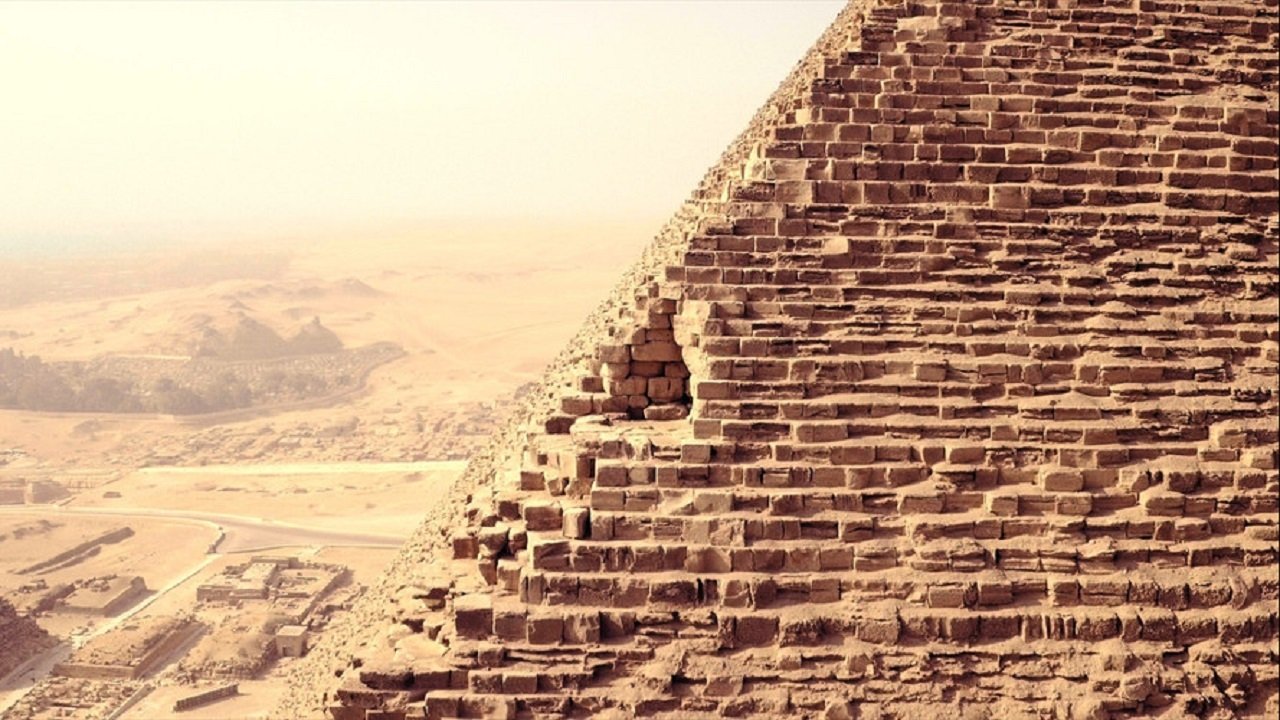
Stunning new archaeological evidence provides clues about the Egyptians who built the Great Pyramid of Giza--and how they did it. Join researchers as they delve into the logbook of a work crew and discover how the massive project transformed Egypt.
Of the Seven Wonders of the Ancient World, the Pyramid is the only one to survive. Many believe that even with our 21st-century technology, we could not build anything like it today. Based on the most up-to-date research and the latest archaeological discoveries, here is how the Pyramid came to be.
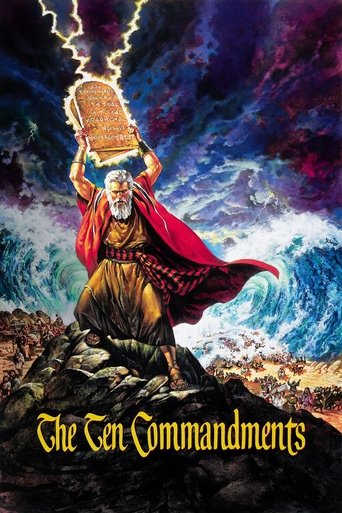
Escaping death, a Hebrew infant is raised in a royal household to become a prince. Upon discovery of his true heritage, Moses embarks on a personal quest to reclaim his destiny as the leader and liberator of the Hebrew people.
Egypt's Great Pyramid may be humanity's greatest achievement: a skyscraper of stone built without computers or complex machinery. This super-sized tomb has fascinated historians and archaeologists for centuries, but exactly how the ancient Egyptians finished the monument and fitted its two and a half million blocks in a quarter of a century has long remained an enigma. Today the secrets of the pyramid are finally being revealed thanks to a series of new findings. At the foot of the monument, archaeologists are uncovering the last surviving relic of the pharaoh Khufu, whose tomb it is: a huge ceremonial boat buried in flat-pack form for more than 4500 years. It's a clue that points to the important role that ships and water could have played in the pyramids' construction. This documentary follows investigations that reveal how strong the link between pyramids and boats is. It's a story of more than how Egypt built a pyramid: it's about how the pyramid helped build the modern world.
Secluded from view by nine-meter-high walls and composed of 980 buildings, the Forbidden City in Beijing is the largest imperial palace ever built in the world. Three majestic structures form its center and host the city's ceremonies, each of which is considered an architectural masterpiece. In 1406, construction of the Forbidden City was launched at the initiative of one of China's most powerful sovereigns and founder of the Ming dynasty: Yongle. Endowed with divine power, the construction has already resisted more than 200 earthquakes.
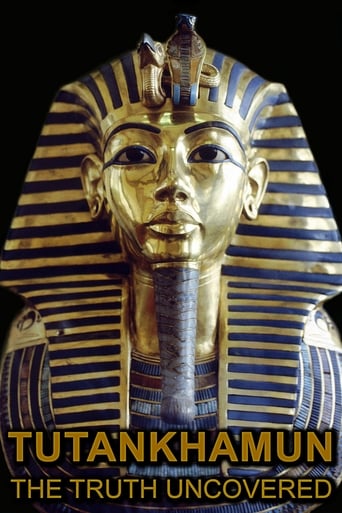
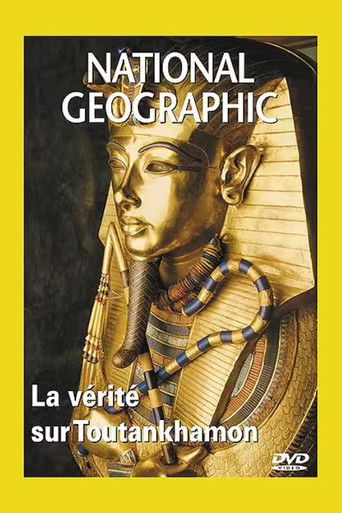
Almost 100 years after the discovery of King's Tut's Tomb, it is time to tell the story in a new light. Using 2D and 3D imagery to reconstruct the tomb, the mummy, the funerary objects and the topography of the famous valley of the Kings.
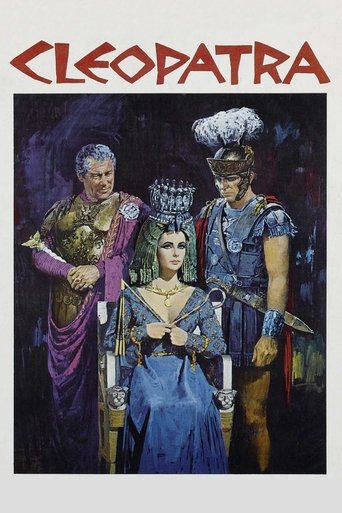
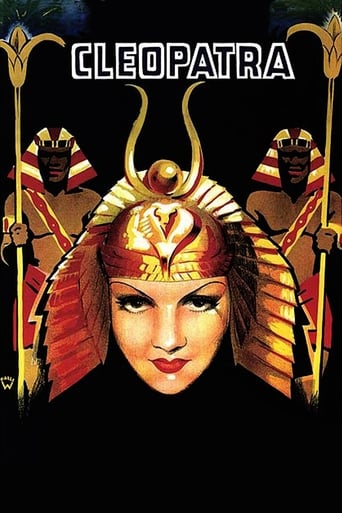
Determined to hold on to the throne, Cleopatra seduces the Roman emperor Julius Caesar. When Caesar is murdered, she redirects her attentions to his general, Marc Antony, who vows to take power—but Caesar’s successor has other plans.
Move over, King Tut: There's a new pharaoh on the scene. A team of top archaeologists and forensics experts revisits the story of Hatshepsut, the woman who snatched the throne dressed as a man and declared herself ruler. Despite her long and prosperous reign, her record was all but eradicated from Egyptian history in a mystery that has long puzzled scholars. But with the latest research effort captured in this program, history is about to change.
As Hercule Poirot enjoys a luxurious cruise down the Nile, a newlywed heiress is found murdered on board and every elegant passenger becomes a prime suspect.
A rejected husband. A beautiful stranger in peril. A dangerous liaison. For two couples enjoying a spectacular Egyptian adventure, treachery and deception cruise the Nile along with them.
This program presents the stories of the works of architecture regarded by the Greeks and Romans as the most extraordinary structures of antiquity: the Hanging Gardens of Babylon, The Statute Of Zeus, the Temple of Artemis, the Mausoleum of Halicarnassus, the Pharos of Alexandria and the Pyramids of Egypt and more.
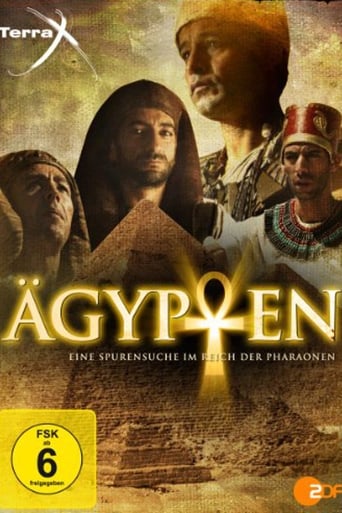
Around 3,000 BC, the first territorial state in history was created with the unification of Upper and Lower Egypt. The empire on the Nile was to exist for 3,000 years. The current section focuses on religion, temple economy and the cult of the dead and examines the reigns of Akhenaten and Ramses II. The culture of Ancient Egypt is characterized by religion, temple economy and the cult of the dead. Two pharaohs play an important role in this context: Akhenaten and Ramses II. When Akhenaten ascended the throne around 1,350 BC, religious customs in Egypt had hardly changed for almost 2,000 years. The influential priesthood was organized hierarchically and the rituals were set out in fixed rituals. The temples are not only the spiritual but also the economic centers of the country.
The aging Julius Caesar finds himself intrigued by the young Egyptian queen Cleopatra.
The history of cinematic sound, told by legendary sound designers and visionary filmmakers.
In this genre-bending tale, Errol Morris explores the mysterious death of a U.S. scientist entangled in a secret Cold War program known as MK-Ultra.
Egyptian archaeologists dig into history, discovering tombs and artifacts over 4,000 years old as they search for a buried pyramid in this documentary.
A documentary exploring the legacy of Star Trek: Deep Space Nine, the reasons it went from the black sheep of Star Trek to a beloved mainstay of the franchise, and a brainstorm with the original writers on what a theoretical eighth season of the show could look like.
In 1997, Louis Theroux made a documentary about the world of male porn performers in Los Angeles. 15 years later, he returns to find a business struggling with the deluge of free porn on the internet. Louis revisits some of the original programme's contributors as well as meeting the latest crop of porn performers dreaming of porn stardom.
A captured architect designs an ingenious plan to ensure the impregnability of the tomb of a self-absorbed Pharaoh, obsessed with the security of his next life.
Artists in LA discover the work of forgotten Polish sculptor Stanislav Szukalski, a mad genius whose true story unfolds chapter by astounding chapter.
A behind the scenes look into George Romero's groundbreaking horror classic Night of the Living Dead.
With the departure of the Bush Administration and the arrival of an “era of transparency,” opportunities are arising for the disclosure of new information that may shed more light on the events that took place before and after 9/11/2001. Loaded with powerful, new footage and in-depth interviews this documentary presents a wide array of evidence both known and unknown…until now.
The story of the gold-plated statuette that became the film industry's most coveted prize, AND THE OSCAR GOES TO... traces the history of the Academy itself, which began in 1927 when Louis B. Mayer, then head of MGM, led other prominent members of the industry in forming this professional honorary organization. Two years later the Academy began bestowing awards, which were nicknamed "Oscar," and quickly came to represent the pinnacle of cinematic achievement.
A compilation of over 30 years of private home movie footage shot by Lithuanian-American avant-garde director Jonas Mekas, assembled by Mekas "purely by chance", without concern for chronological order.
Roddy McDowall takes you, film by film, from production meetings to make-up sessions, then right onto the movie set to see the actual filming of the science fiction masterpiece. The most comprehensive history of Planet of the Apes ever created, this fascinating 127-minute documentary explores one of the most imaginative and influential series in movie history.
In 1973, a young gallery assistant goes on a wild adventure behind the scenes as he helps aging genius Salvador Dali prepare for a big show in New York.
Whitney Wolfe uses extraordinary grit and ingenuity to break into the male-dominated tech industry.
With commentary from Hollywood stars, outtakes from his movies and footage from his youth, this documentary looks at Stanley Kubrick's life and films. Director Jan Harlan, Kubrick's brother-in-law and sometime collaborator, interviews heavyweights like Jack Nicholson, Woody Allen and Sydney Pollack, who explain the influence of Kubrick classics like "Dr. Strangelove" and "2001: A Space Odyssey," and how he absorbed visual clues from disposable culture such as television commercials.
Viewers will get a look at Parker and Stone's thought process as they approach a new episode and the 24/7 grind they subject themselves to each time the show is in production. The documentary also includes in-depth interviews with Parker and Stone about their working partnership and reflections on highlights from their careers.
A documentary about the closure of General Motors' plant at Flint, Michigan, which resulted in the loss of 30,000 jobs. Details the attempts of filmmaker Michael Moore to get an interview with GM CEO Roger Smith.
Martin Scorsese’s portrait of writer and social commentator Fran Lebowitz, celebrated for her sharp wit and observations on modern life. Filmed at New York’s Waverly Inn and intercut with archival footage and interviews, the documentary captures Lebowitz’s distinctive worldview through her spontaneous monologues and public appearances.
Amber Heard and Nicole Kidman discuss their characters Mera and Atlanna.
A look behind the curtain of Washington politics following three "renegade" Republican Congressmen as they bring libertarian and conservative zeal to champion the President’s call to “drain the swamp.”