Social & External
Narrator (voice)
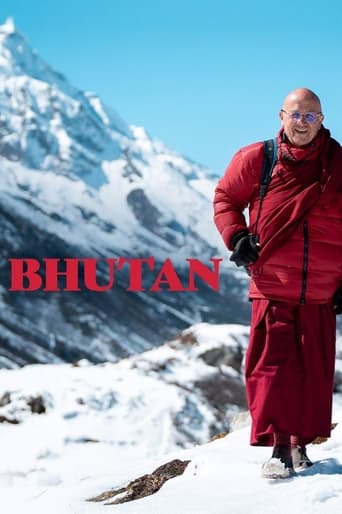
Buddhist monk and photographer Matthieu Picard as he returns to the Asian country in the Himalayas where he spent a decade after seven years away, revisiting breathtaking landscapes and experiencing local traditions.
The Hugo's Brain is a French documentary-drama about autism. The documentary crosses authentic autistic stories with a fiction story about the life of an autistic (Hugo), from childhood to adulthood, portraying his difficulties and his handicap.
At the risk of a 5-year prison term, Francesco Da Vinci struggles with his Virginia draft board to be recognized as a sincere conscientious objector to the Vietnam war.
A documentary of insect life in meadows and ponds, using incredible close-ups, slow motion, and time-lapse photography. It includes bees collecting nectar, ladybugs eating mites, snails mating, spiders wrapping their catch, a scarab beetle relentlessly pushing its ball of dung uphill, endless lines of caterpillars, an underwater spider creating an air bubble to live in, and a mosquito hatching.
A team of women from the Western and Arab world makes a bid to reach the North Pole. This unprecedented expedition navigates open leads of water, the specter of polar bears, and -40 degree temperatures in an extraordinary story of resilience and global citizenry.
First Descent is a 2005 documentary film about snowboarding and its beginning in the 1980s. The snowboarders featured in this movie (Shawn Farmer, Nick Perata, Terje Haakonsen, Hannah Teter and Shaun White with guest appearances from Travis Rice) represent three generations of snowboarders and the progress this young sport has made over the past two decades. Most of the movie was shot in Alaska.
Murilo Peres and Pedro Barros get a once-in-a-lifetime pass to roll on the fabled curves of some undisputed masterpieces of modern architecture. Oscar Niemeyer remains one of the most important architects in modern history. The Brazilian visionary, who died in 2012 aged 104, elevated modern architecture beyond the realms of function and created buildings that are works of art and express the highest attributes of humanity. His work with reinforced concrete in particular created new architectural forms and possibilities, eschewing the tyranny of angles to create waves and swooping arches of such soaring beauty that they represent nothing less than physical poetry.
Britney Spears has said that her conservatorship had become “an oppressive and controlling tool against her”. This New York Times investigation reveals much of how it worked, including an intense surveillance apparatus that monitored every move she made.
A documentary on the expletive's origin, why it offends some people so deeply, and what can be gained from its use.
After the Robb Elementary school shooting in Texas, local Uvalde Leader-News journalists are left to report on the fallout – and on one of their staff members. Reporter Kimberly Rubio rises to national prominence as an advocate for gun reform after her ten-year-old daughter, Lexi, is killed in the shooting. Through the journalists’ reporting, we witness the social fabric of this small Texas town unravel as Kimberly and other victims’ families search for accountability from law enforcement and local leaders. The documentary also shines a light on the critical role of community journalism, at a time when local newspapers are folding rapidly across the country.
When the cameras rolled, Doris Day wore a happy face, never hinting at the pain she endured in her personal life. This documentary brings viewers close to the real Doris Day through the eyes of her friends and family members and with the help of film footage, newsreels and photographs. What surfaces is a complex picture of an equally complicated woman who faced problems far more formidable than her cinematic image revealed.
Behind the scenes look at the D-Day special effects created in filming The Americanization of Emily (1964).
Brothers addicted to speed at any price. Documentary following the motorcycle road racing careers, and fate, of the Dunlop family.
The film shines a light onto federal chancellor Angela Merkel and her now ending 16-year-long tenure. An era, not an episode. And a vagarious relationship history between the chancellor and the Germans. Who has changed whom here?
Heinz Stücke left Germany in 1962 with a bike, a tent and a goal: to see everything in the world. Now for the first time in 50 years, he's come home.
Delve into the digestive system with this lighthearted and informative documentary that demystifies the role gut health plays in our overall well-being.
A short experimental documentary that interrogates how the modernization of parks and playgrounds in Long Branch (a neighbourhood in South Etobicoke in Toronto, Canada) both reflects and contributes to the overall rise in the cost of living in the area by exploring children's relationships to the community spaces around them. The film includes footage from four local parks and playgrounds, personal archival materials, interviews with five South Etobicoke locals, and an art-based workshop at a local junior middle school.
A documentary on Al Gore's campaign to make the issue of global warming a recognized problem worldwide.
While doing a series of reports on alternative energy sources, opportunistic reporter Kimberly Wells witnesses an accident at a nuclear power plant. Wells is determined to publicize the incident, but soon finds herself entangled in a sinister conspiracy to keep the full impact of the incident a secret.
A man confronts his past during an experiment that attempts to find a solution to the problems of a post-apocalyptic world caused by a world war.
Part two of Leni Riefenstahl's monumental examination of the 1938 Olympic Games, the cameras leave the main stadium and venture into the many halls and fields deployed for such sports as fencing, polo, cycling, and the modern pentathlon, which was won by American Glenn Morris.
The movie's plot is based on the true story of a group of young computer hackers from Hannover, Germany. In the late 1980s the orphaned Karl Koch invests his heritage in a flat and a home computer. At first he dials up to bulletin boards to discuss conspiracy theories inspired by his favorite novel, R.A. Wilson's "Illuminatus", but soon he and his friend David start breaking into government and military computers. Pepe, one of Karl's rather criminal acquaintances senses that there is money in computer cracking - he travels to east Berlin and tries to contact the KGB.
When seventeen-year-old Hannah stumbles upon a website about Thinspiration--an online community devoted to anorexia as a life choice--she becomes an obsessive follower of the site founder, ButterflyAna. By the time Hannah's family realizes what is happening and get Hannah the help she needs, the disease has fully taken hold and Hannah is refusing to eat. Will this family be able to exorcise the demon of anorexia from their lives?
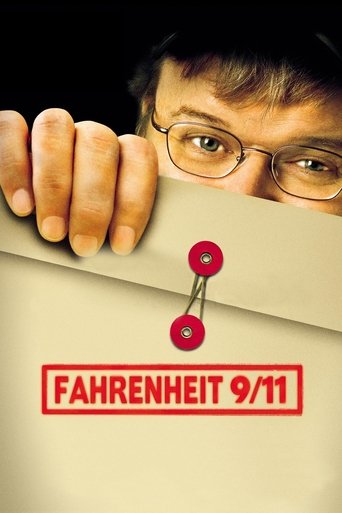
Michael Moore's view on how the Bush administration allegedly used the tragic events on 9/11 to push forward its agenda for unjust wars in Afghanistan and Iraq.
A woman narrates the thoughts of a world traveler, meditations on time and memory expressed in words and images from places as far-flung as Japan, Guinea-Bissau, Iceland, and San Francisco.
An exploration —manipulated and staged— of life in Las Hurdes, in the province of Cáceres, in Extremadura, Spain, as it was in 1932. Insalubrity, misery and lack of opportunities provoke the emigration of young people and the solitude of those who remain in the desolation of one of the poorest and least developed Spanish regions at that time.
This pioneering documentary film depicts the lives of the indigenous Inuit people of Canada's northern Quebec region. Although the production contains some fictional elements, it vividly shows how its resourceful subjects survive in such a harsh climate, revealing how they construct their igloo homes and find food by hunting and fishing. The film also captures the beautiful, if unforgiving, frozen landscape of the Great White North, far removed from conventional civilization.
We live in a world where the powerful deceive us. We know they lie. They know we know they lie. They do not care. We say we care, but we do nothing, and nothing ever changes. It is normal. Welcome to the post-truth world. How we got to where we are now…
Documentary exploring the human tendency to be dishonest. Inspired by the work of social scientist, Dan Ariely, the film interweaves personal stories, expert opinions, behavioral experiments, and archival footage to reveal how and why people lie.
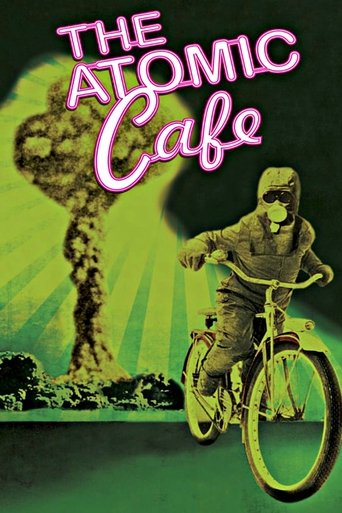
A disturbing collection of 1940s and 1950s United States government-issued propaganda films designed to reassure Americans that the atomic bomb was not a threat to their safety.
A behind-the-scenes documentary about the Clinton for President campaign, focusing on the adventures of spin doctors James Carville and George Stephanopoulos.
The story of the gold-plated statuette that became the film industry's most coveted prize, AND THE OSCAR GOES TO... traces the history of the Academy itself, which began in 1927 when Louis B. Mayer, then head of MGM, led other prominent members of the industry in forming this professional honorary organization. Two years later the Academy began bestowing awards, which were nicknamed "Oscar," and quickly came to represent the pinnacle of cinematic achievement.
The making of Matrix Revolutions, The (2003) is briefly touched on here in this documentary. Interviews with various cast and crew members inform us how they were affected by the deaths of Gloria Foster and Aaliyah, and also delve into the making of the visual effects that takes up a lot of screen time. Written by Rhyl Donnelly
A documentary focused on plastic pollution in the world's oceans.
This documentary traces the rise and crash of scammers who conned the EU carbon quota system and pocketed millions before turning on one another.
Featuring never-before-seen footage, this documentary delivers a startling new look at the Peoples Temple, headed by preacher Jim Jones who, in 1978, led more than 900 members to Guyana, where he orchestrated a mass suicide via tainted punch.
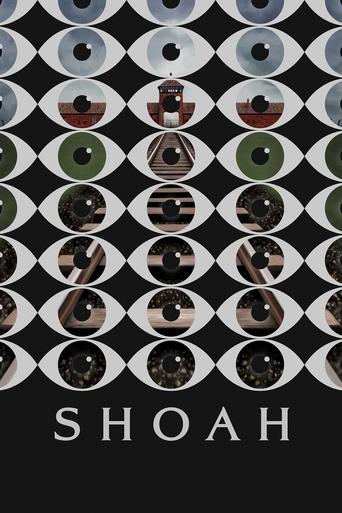
Director Claude Lanzmann spent 11 years on this sprawling documentary about the Holocaust, conducting his own interviews and refusing to use a single frame of archival footage. Dividing Holocaust witnesses into three categories – survivors, bystanders, and perpetrators – Lanzmann presents testimonies from survivors of the Chelmno concentration camp, an Auschwitz escapee, and witnesses of the Warsaw Ghetto Uprising, as well as a chilling report of gas chambers from an SS officer at Treblinka.