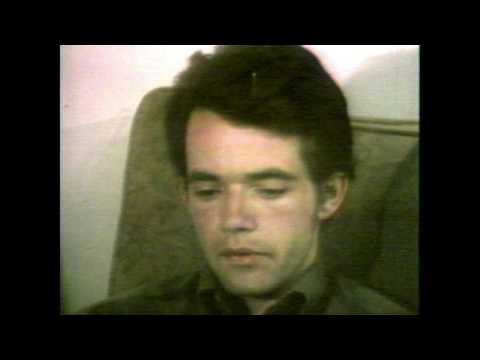
Drugs in the Tenderloin is a documentary shot guerilla style by Robert Zagone in 1966; It captures the Tenderloin as it transformed into a center for young queers and drug users.
Social & External
1994 at the Ambassador Hotel, 55 Mason Street in the Tenderloin district of San Francisco, California. From 1978 to 1996, the hotel was managed by Hank Wilson, a San Francisco LGBT activist who made the hotel a model for harm reduction housing. 134 run-down and exhausted rooms populated by homeless men and women, sometimes even children. All of them in urgent need of care, compassion and humanity. Nobly provided by voluntarily working professional health care and social workers staff, various benefactors, volunteers, neighbors, and community contributions.
Stop-motion animation on the arranging of marriages in 1950/60s set in the Eastern-Polish borderland. The script is based on a part of Mikołaj Smyk's diary, the director's grandfather. The biographical objects used in the animation, such as an authentic headscarf, Polish and Russian books, the copy of Mikołaj Smyk's diary and photographs help situate the story in its original environment.
'L'ultimo pugno di terra' (The Last Fistful of Land) is a 1966 documentary film directed by Fiorenzo Serra about the anguish and instability of the lower classes in a destitute Sardinia. Originally commissioned by the Sardinian regional government as a celebratory piece on the 'miraculous' effects of the 'Piano di Rinascita della Sardegna' (Sardinia's Rebirth Plan), the film instead shows an island still 'standing still in time', barely affected by the painful oxymoron of the inevitable changes taking place.
A roller-coaster ride through the history of American exploitation films, ranging from Roger Corman's sci-fi and horror monster movies, 1960s beach movies, H.G. Lewis' gore-fests, William Castle's schlocky theatrical gimmicks, to 1970s blaxploitation, pre-"Deep Throat" sex tease films, Russ Meyer's bosom-heavy masterpieces, etc, etc. Over 25 interviews of the greatest purveyors of weird films of all kind from 1940 to 1975. Illustrated with dozens of films clips, trailers, extra footage, etc. This documentary as a shorter companion piece focusing on exploitation king David F. Friedman.
Completely topless. Completely uninhibited. The craze that began in San Francisco is now exploding across the USA and Europe.
Germán Cipriano Gómez Valdés Castillo, a young radio announcer from Cuidad Juárez, succeeds in drawing attention to the pachuco movement through his character Tin Tan, laying the groundwork for a new form of binational and mass linguistic expression: Spanglish. He soon became a leading figure in theater and film on the American Continent. Singled out by critics as a destroyer of the language, he quickly won the approval of the public. His ability to improvise revolutionized the film industry. His talent as an actor, singer, dancer and comedian contributed to the Golden Age of Mexican Cinema. From El Hijo Desobediente to Capitán Mantarraya, from Cuidad Juárez to Havana, from mambo to rock, the legacy of Tin Tan makes him one of the great icons of Mexico today. This film tells his story as it has never been told before.
Spain, 1968. An analysis of the political and social situation of the country, suffocated by the boot of General Franco's tyrannical regime. (Filmed clandestinely in Madrid and Barcelona during the spring of 1968.)
The Bridge is a controversial documentary that shows people jumping to their death from the Golden Gate Bridge in San Francisco - the world's most popular suicide destination. Interviews with the victims' loved ones describe their lives and mental health.
A film documenting Steve-O's 5 day long PCP trip.
Experimental movie, where a man comes home and experiences LSD. His kaleidoscopic visions follow, with readings inspired by the Tibethan Book of the Dead.
In 1966 a group of determined young men defied the New Zealand government and launched a pirate radio station aboard a ship in the Hauraki Gulf.
Fresh Fruit for Rotting Eyeballs features a brief history of the Dead Kennedys' early years up to their first UK tour, never before seen live performances, interviews with Klaus Fluoride and East Bay Ray, comments by music journalists, and insights from the key people involved with the recording of the DK's first album. Jello Biafra's 1979 run for mayor is also highlighted.
Ben Rogers was a bright schoolboy from a loving, middle class family. He played in the orchestra, loved cricket and enjoyed the annual family holiday. But his future promise was halted when he started taking drugs in his teens. Early drinking led to cannabis, harder drugs, and then the revelation to his family, at the age of 21, that he was addicted to heroin. Over the next 13 years Ben and his family battled with his addiction, going through detox, rehab and attempts at 'cold turkey', but his health gradually declined. Whilst attempting another detox aged 34, he died from a brain haemorrhage. But during the last two years of his life, Ben filmed an unflinching video diary showing his final desperate attempts to come off heroin. It's a portrayal of his descent; intimate, raw, and at times difficult to watch, he talks to his glove puppet as he injects into a vein in his groin.
The career of French comic author René Goscinny was a living blend of cultures and an expression of the great importance this artist attached to the production and dissemination of sophisticated popular culture. Goscinny left behind an extremely extensive body of work: "Asterix", "Lucky Luke", "Isnogud", "Little Nick" and many more.
This short film is a series of vignettes of life in Saint-Henri, a Montreal working-class district, on the first day of school. From dawn to midnight, we take in the neighbourhood’s pulse: a mother fussing over children, a father's enforced idleness, teenage boys clowning, young lovers dallying - the unposed quality of daily life.
13 August 1961: the GDR closes the sector borders in Berlin. The city is divided overnight. Escape to the West becomes more dangerous every day. But on September 14, 1962, exactly one year, one month and one day after the Wall was built, a group of 29 people from the GDR managed to escape spectacularly through a 135-meter tunnel to the West. For more than 4 months, students from West Berlin, including 2 Italians, dug this tunnel. When the tunnel builders ran out of money after only a few meters of digging, they came up with the idea of marketing the escape tunnel. They sell the film rights to the story exclusively to NBC, an American television station.
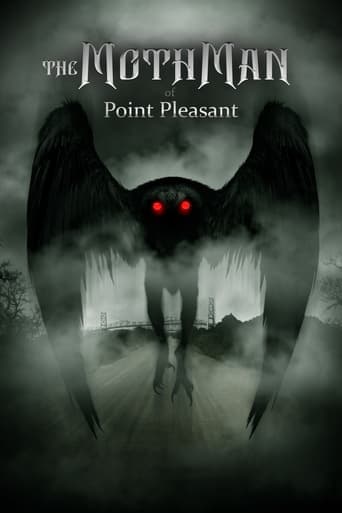
Learn the terrifying, true story about thirteen months that changed history! In November of 1966 a car full of kids encountered a creature unlike anything they'd ever seen before. In the weeks and months to follow, the monster – now known as The Mothman – was sighted again and again on country roads and around the state of West Virginia.
A documentary that explores the myth behind the truth. Different people around the globe reinterpret the legend of Che Guevara at will: from the rebel living in Hong Kong fighting Chinese domination, to the German neonazi preaching revolution and the Castro-hating Cuban. Their testimonies prove that the Argentinian revolutionary's historical impact reverberates still. But like with all legends, each sees what he will, in often contradictory perspectives.
Showcasing three short films by American writer James Baldwin, wherein he muses about race, sexuality and civil rights, among other topics, in Istanbul, Paris and Great Britain.
Harvey Milk was an outspoken human rights activist and one of the first openly gay U.S. politicians elected to public office; even after his assassination in 1978, he continues to inspire disenfranchised people around the world.