Social & External
The true, harrowing story of a young Jewish girl who, with her family and their friends, is forced into hiding in an attic in Nazi-occupied Amsterdam.
As the resistance group takes more risks during its operations, Johan discovers there is a traitor among them. Meanwhile, the British are preparing a rescue operation that ultimately went horribly wrong on the morning of March 3, 1945.
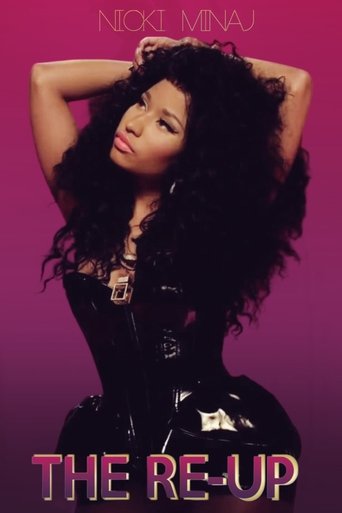
A backstage and on-stage look at Nicki Minaj's career during the Pink Friday Tour, festivals, and more.
UNESCO Memory of the World: Explore the Bibliotheca Philosophica Hermetica’s new home with 25,000+ rare books on alchemy, hermetica & mysticism at the Embassy of the Free Mind museum, set in Amsterdam’s historic canal mansion, the House with the Heads.
Cheering crowds and much jubilation greet the launch of the Accrington to Oswaldtwistle electric tram service.
In 1917, French artist Marcel Duchamp declared everyday objects as art. A provocative act that sparked a heated, still topical discussion around the question: what is art? Since then, that question has been asked time and time again. To the artist and to the viewer. If everything is possible and everything is allowed, how do you remember what art is? Director Ditteke Mensink spent two years at De Ateliers: the breeding ground for top talent in the visual arts. Her stay ended in a harsh confrontation with herself, the young artists and modern visual arts.
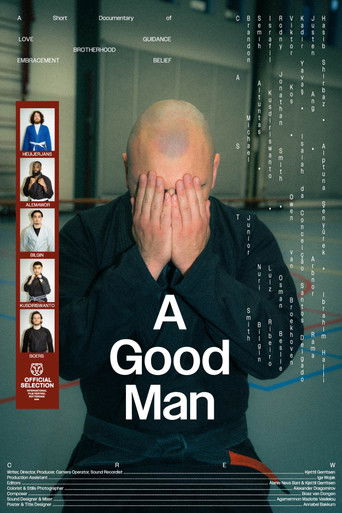
We get up, go to work, eat and go to bed. Is our life about daily rituals or is there a deeper, more inscrutable meaning of life? Kjeld lives surrounded by nature in his small house and soon becomes a father. He seeks satisfaction in the simplicity of life in nature. Anna is a young artist looking for answers in her poetry and music. A philosophical documentary essay in which the search for the core of life is central. How should we live if there are no answers anywhere?
Kim and Bob have been inseparable since childhood. Does puberty end their friendship?
The city from the unique perspective of the many wild animals and plants that inhabit it. Seen through the eyes of the adventurous urban cat, Abatutu.
Stories about young Ukrainian dancers and their hasty flight to the Netherlands. You see their new life as refugees. The former conservatory in The Hague is a shelter for them where they collect their lives and find refuge in their profession: dance. The formation of a new ballet company, The United Ukrainian Ballet, is an important foothold in winning back their lives. They find comfort in each other and close friendships develop. In addition, there is the great love for ballet, for the dancers the best way to express themselves.
After a $30K film project went south, Isaiah had to make a risky decision to flip the idea upside down, and turn the train-wreck of a film into his own disaster-piece.
Rebellious City is a documentary about the Provo movement and the city of Amsterdam in the sixties.
The dutchified Hungarian Joszef Katús returns, after a months-long absence, to Amsterdam on 29 April 1966. The arrival of the Provos changed a great deal in the Dutch capital. The film follows Katús, mostly roaming the streets, in a loose documentary style. The events are set against the backdrop of four national occasions - The Queen's Birthday, Labour Day, Liberation Day and Remembrance Day.
This fascinating record of Edwardian Nottingham was filmed from the driver's platform of a tram on a single journey through the city centre between its two main stations. The sequence follows the same route as today's Nottingham Express Transit tramway, taking the viewer along Listergate and Wheelergate into Old Market Square before turning right into Long Row and on into Queen Street.
When Germany invades Holland in 1940, a British intelligence officer and two Dutch diamond merchants go to Amsterdam to persuade the Dutch diamond merchants to evacuate their diamond supplies to England.
What if your house is no longer a home, but a bureaucratic nightmare? The residents of the Van der Pekbuurt in Amsterdam are fighting for a fair and sustainable renovation of their beloved working-class neighborhood. The houses are creaking and creaking, mold is rampant and it is almost impossible for the residents to get anything done when maintenance is in arrears. Cost savings are given priority, which is why the renovation plans are increasingly being stripped down. Will the Van der Pekkers succeed in enforcing a fair and sustainable renovation?
Frans Bromet follows scoot drivers of different ages about their lives. He talks to them about what has changed since they got a mobility scooter, about how their living space has increased, about the limitations of the vehicle and about what is and is no longer possible in private.
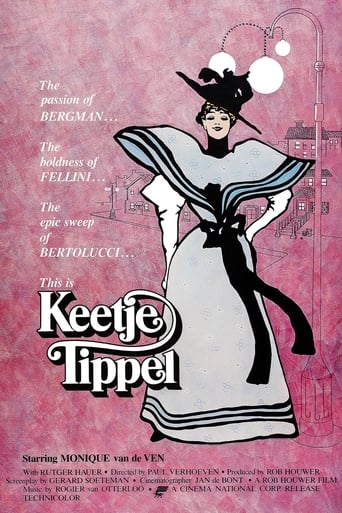
In the late 19th-century, the Tippel family moves to rural Stavoren in search of greener pastures. However, their dreams are quickly shattered, as teenage Katie is terrorized by a male-dominated society who only see her as an object. Her situation worsens when, following her father's sacking and her elder sister's descent into alcoholism, her mother decides that, rather than starving, Katie becomes a prostitute.
The Platoschool was founded in Amsterdam in 1983, a primary school for parents who wanted more than just math and language for their children. The founders of the Platoschool had great ideals, ideals that the parents of documentary maker Yara Hannema fell in love with. The children would grow into special people with a high level of consciousness, but the teachers ran wild in their strictness and discipline. There was beating and abuse of authority. The school was discredited and had to close its doors in 2002.
A journalist in Rotterdam has to show the city to an important foreign relation. He shows her the Rotterdam port.