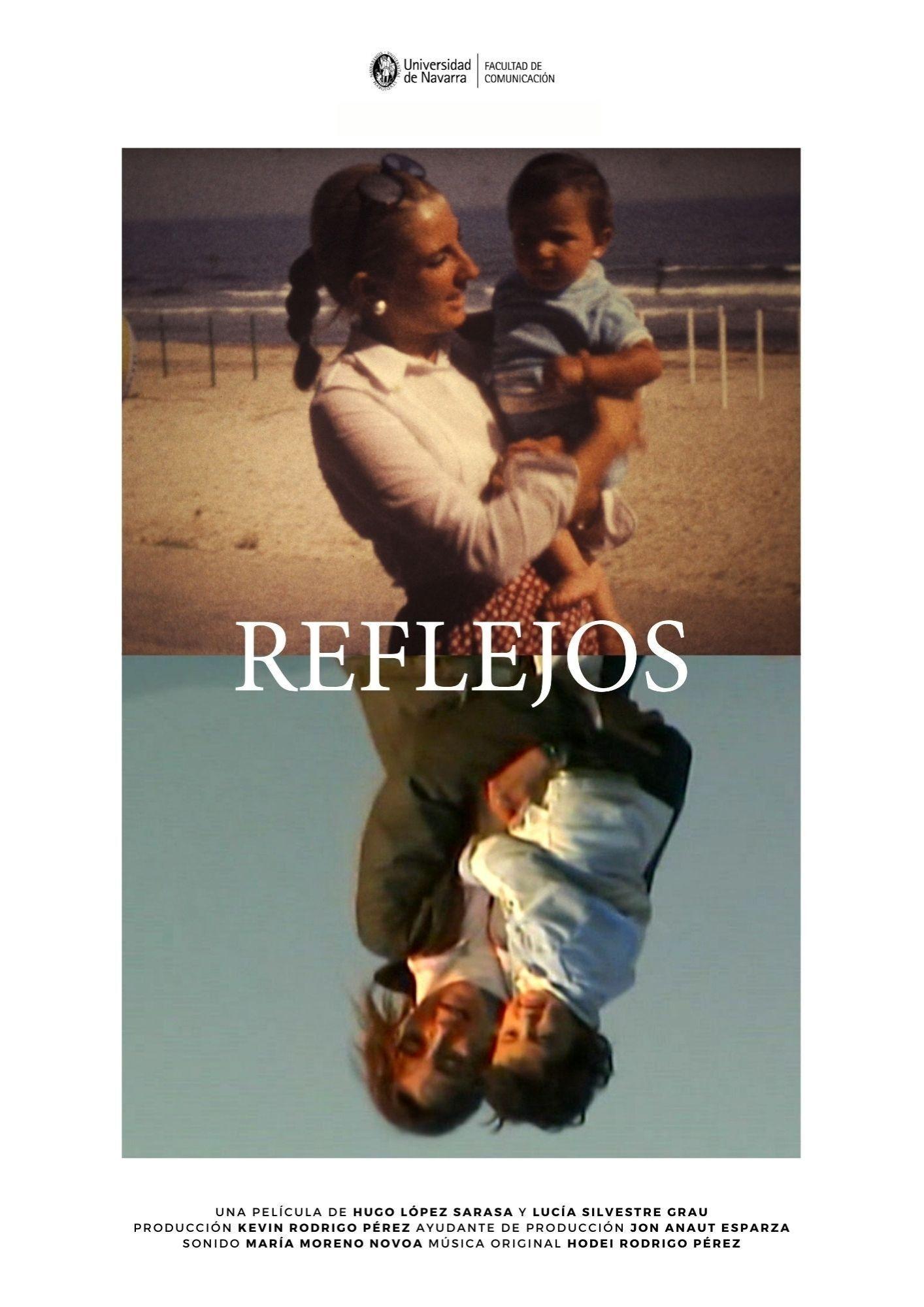
90's era home videos of a Mexican father starting a new life in the United States
Social & External
In 1900, the eyes of the whole world are on Paris. The World's Fair welcomed 50 million amazed visitors, and the city celebrated itself in a glamorous era. This period went down in history as the "Belle Époque." Elaborately restored and colorized historical photographs bring to life the exciting life in Paris between the end of the 19th century and the beginning of World War I in 1914. Bicycles, cars, airplanes, moving pictures, newly founded film studios, revolutionary composers and painters, avant-garde ballet performances, fashion houses, summer resorts on the Atlantic coast – life was intoxicating. People celebrate in the variety shows, cabarets, and revue theaters of Paris. Moulin Rouge, Folies Bergères, Bal Tabarin—in Paris, the nights are long and life is too short to sleep through. It is a dance on the volcano, given the political developments in the world.
Honduran immigrants living in Mexico, teenage siblings Rocío and Ale must take over care of their two younger siblings after their mother is sentenced to prison on dubious grounds. Tensions grow between the pair as the decision must be made on whether to stay together in Mexico or split the family up to cross into the US to work.
A street in downtown Warsaw transforms into a kaleidoscopic portrait of Polish society. Behind the viewfinder is an Indian immigrant, who seeks to overcome the boundaries between himself and an anxiety-ridden country.
Guy Debord's analysis of a consumer society.
Twenty-five films from twenty-five European countries by twenty-five European directors.
Pati, a young film producer, is fighting to carve out a professional career in the film industry. It is May 2019 when her laptop is stolen during a business trip in Madrid. Two months after, an anonymous Hacker accesses all the stored data in the stolen device and finds three very private photos of Pati. He threatens that if he doesn’t receive $2,400 he will mass-mail the pictures to all her work contacts in order to ruin her professional reputation. The shame, anger and distress caused by the ineffectiveness of the legal forces lead Pati to set out on her own investigation to stop the Hacker and regain control and power over her privacy.



For three decades now, Qatar, this small desert kingdom, has not stopped being talked about; because of its financial power and the secrecy that surrounds it, the royal family that runs it fascinates as much as it frightens.
In interviews, various actors and directors discuss their careers and their involvement in the making of what has come to be known as "cult" films. Included are such well-known genre figures as Russ Meyer, Curtis Harrington, Cameron Mitchell and James Karen.
Atlantic Ocean, off the coast of Iceland, July 9, 2016. The surprising discovery of a canister —containing four reels of The Village Detective (Деревенский детектив), a 1969 Soviet film—, caught in the nets of an Icelandic trawler, is the first step in a fascinating journey through the artistic life of film and stage actor Mikhail Ivanovich Zharov (1899-1981), icon and star of an entire era of Russian cinema.
Between 1990 and 1993, at a time when rap was not yet on the radio in France, Olivier Cachin hosted a musical TV show on M6 called "RapLine". The show exclusively devoted to rap and other alternative music. This cult show presented all the facets of these emerging movements through interviews, lives and clips made especially for the show, around fifty clips were produced by RapLine. Another sequence of the show consisted of broadcasting new US rap clips subtitled in French.
A look at the state of the global environment including visionary and practical solutions for restoring the planet's ecosystems. Featuring ongoing dialogues of experts from all over the world, including former Soviet Prime Minister Mikhail Gorbachev, renowned scientist Stephen Hawking, former head of the CIA R. James Woolse
In THE COLOR OF FEAR, eight American men participated in emotionally charged discussions of racism. In this sequel, we hear and see more from those discussions, in which the men talk about about how racism has affected their lives in the United States. We also learn more about the relationships between them, and about their reactions during some of the most intense moments of that discussion.
For five years, Stephen McCoy documented street life in Boston. This is what he captured.
The findings are disturbing. More than half of 12-13 year-old boys and girls visit porn sites every month. With just a few clicks, they can access them via cell phones or computers. Between them, these porn platforms account for more than 5 billion visits per month.
Drawing on VHS tapes of a programme hosted by her mother on Bulgaria’s national television, the filmmaker gives a pop-style and in-depth chronicle of the gentle – even “over-gentle” – 1989 revolution.
The little-known story of Ukrainian children torn from their homes in the crush between the Nazi and Soviet fronts in World War II. Spending their childhood as refugees in Europe, these inspiring individuals later immigrated to the United States, creating new homes and communities through their grit, faith and deep belief in the importance of preserving culture.
Per Persson left Sweden 40 years ago. In Pakistan he fell in love and became the father of two daughters. Trouble starts when the girls grow up and the family decides to emigrate to Sweden. When they end up living in a caravan outside Hässleholm, all their expectations are dashed.
Andrew Graham-Dixon explores the ancient Christian practice of preserving holy relics and the largely forgotten art form that went with it, the reliquary. Fragments of bone or fabric placed inside a bejewelled shrine, a sculpted golden head or even a life-sized silver hand were, and still are, objects of religious devotion believed to have the power to work miracles. The documentary features interviews with art historian Sister Wendy Beckett and Neil MacGregor, director of the British Museum.