A lost chapter in black British film: extraordinary rushes from a documentary showcasing talented members of the black community.
Social & External
Unknown Role
Israeli filmmaker Amos Gitaï offers a look impressionist long history of armed conflict in their nation.
Is it possible to travel twice to the same memory? The filmmaker built a cabin on an isolated riverbank, just opposite his childhood island, which had disappeared under the water after the construction of a dam. The goal was to go back to that place, which had become invisible. Only the trees of the island where he’d played stood firm in the middle of the water, like the masts of a broken toy boat, so the air was the only space left, the only vestige of the past to be conquered. This film is a diary of a castaway in memories: four months of a Walden experience in a lost paradise with two hens, a small vegetable garden and a clock that stopped forever at 11.36 and 23 seconds.
During the course of a series of voyages, the pocket cameras of Pippo Delbono capture unique moments, ordinary and extraordinary meetings. From a hotel room in Paris to another in Budapest, from Istanbul to Bucharest, the journeys weave a fabric of the contemporary world. Its testimonials – some famous, others anonymous – say or dance their vision of the universe.
In the spring of 1970 Charles Bukowski took his first plane trip for a poetry reading at Bellevue Community College in Washington state. That he was videotaped by two students apparently was later forgotten, but the tapes were recently rediscovered and have been released by Black Sparrow press. "Bukowski at Bellevue" gives us a fascinating glimpse of the man before he had to be concerned with how celebrity and financial security were affecting him. (It is said that this was only his fourth public reading.) This is Bukowski, then about 50, taken straight. No games, no irony, no self-consciousness--just an ordinary-looking guy, maybe hung over, sitting before a small group of students reading his work with gusto, humor and sensitivity. A man who clearly had lived the marginal life he wrote about with passion and at times a lyrical, even mystical beauty.
Poet John Betjeman is shown visiting locations including Vauxhall Park, Aldersgate Street station, Camden Town and Hatfield, where he recites a handful of his poems.
A biography of the poet W. B. Yeats and his contribution to the Irish independence movement as a Protestant nationalist.
Follows the young people of Selma, Alabama's RATCo (Random Acts of Theatre Company) as they journey to New York City to share their story of hope, resilience, and overcoming.
Chuck Close, an astounding portrait of one of the world's leading contemporary painters, was one of two parting gifts (her second is a film on Louise Bourgeois) from Marion Cajori, a filmmaker who died recently, and before her time. With editing completed by filmmaker Ken Kobland, Chuck Close lives the life and work of a man who has reinvented portraiture. Close photographs his subjects, blows up the image to gigantic proportions, divides it into a detailed grid and then uses a complex set of colors and patterning to reconstruct each face.
A short look at the world of artist Arthur Lismer.
Bob Ross brought joy to millions as the world's most famous art instructor. But a battle for his business empire cast a shadow over his happy trees.
Jean Sénac, born in Béni Saf in Algeria in 1926 and died in Algiers in 1973, is today considered one of the great French writers and poets and the only one of his reputation to have accompanied the Algerian revolution before November 1954. part of all the debates and got involved, very early and with immense enthusiasm, in a work of commitment which ended badly. His poetry, his sexual preferences and his political lyricism work against him: rejected as much by the Pieds Noirs as by the FLN activists then by the power in place in Algiers, Jean Sénac was assassinated in 1973 at his home in Algiers, in circumstances never clarified.
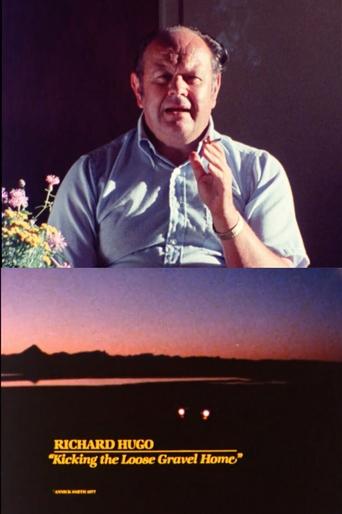
Filmed on location in Montana and Washington State, this 1976 biography of poet and teacher Richard Hugo features readings of some of his most famous poems as well as interviews with his family and friends.
Smoky little clubs, late nights, late nights of conversation over a glass of beer and a guitar. The lyricist Géza Bereményi and the composer-performer Tamás Cseh are the creators of the most topical and accurate songs of the 70s and 80s, expressing the mood of the "30s and 40s" of that time - a mood that was their own destiny. This stunning recording from 1980 includes songs like Tangó, Álomfejtés, Szabó Kálmán tegnap este..., A 100. éjszaka, A legjobb viccek, Születtem Magyarországon, A dédapa dala, Egy bogár, Krakkói vonat, Az ócska cipő, Filmdal.
Edeltraut Hertel - a midwife caught between two worlds. She has been working as a midwife in a small village near Chemnitz for almost 20 years, supporting expectant mothers before, during and after the birth of their offspring. However, working as a midwife brings with it social problems such as a decline in birth rates and migration from the provinces. Competition for babies between birthing centers has become fierce, particularly in financial terms. Obstetrics in Tanzania, Africa, Edeltraud's second place of work, is completely different. Here, the midwife not only delivers babies, she also trains successors, carries out educational and development work and struggles with the country's cultural and social problems.
Stresses recognition and treatment of drug abuse emergencies, accurate identification of symptoms, and immediate clinical procedures. Presents scenes of actual cases in the emergency room and adjoining physician's offices of Beth Israel Medical Center in New York City. Viewers observe emergency treatment of patients in the major classes of drugs commonly abused, opiates, depressants, stimulants, and hallucinogens. The film demonstrates to health professionals that successful management of drug overdoses can save most lives and avert additional organic and psychiatric complications.
Five gay Black men who are HIV-positive discuss how they are battling the double stigmas surrounding their infection and homosexuality.