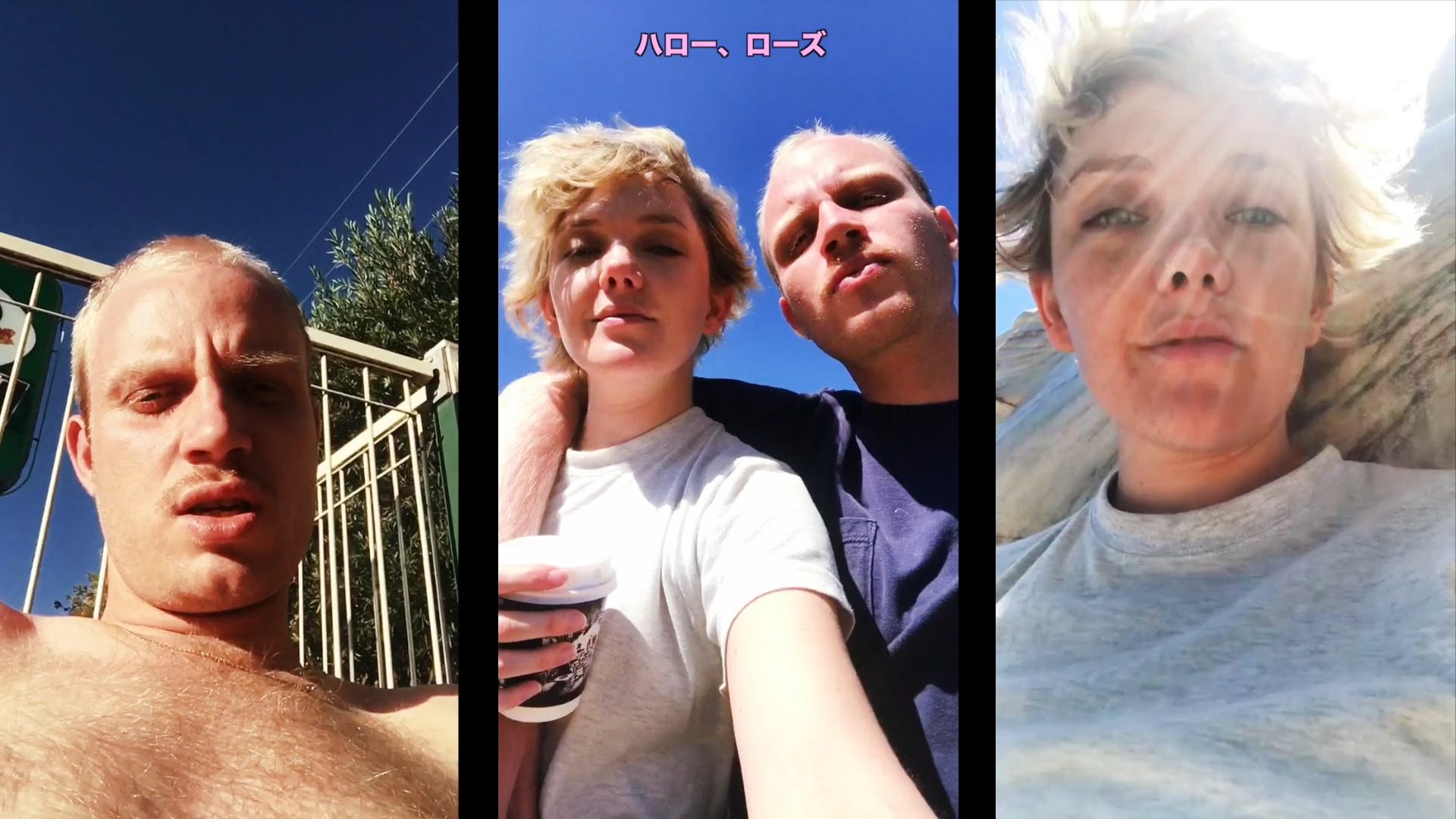
Video installation by UMMMI.
Social & External
Portrait of Andy Goldsworthy, an artist whose specialty is ephemeral sculptures made from elements of nature.
Commissioned for the Irish representation at the 55th Venice Biennale in 2013, The Enclave is an immersive, six-screen video art installation by Irish contemporary artist Richard Mosse. Partly inspired by Joseph Conrad’s modernist literary masterpiece Heart of Darkness, the visceral and moving work was filmed in the Democratic Republic of Congo using 16mm colour infra-red film, which captures otherwise invisible parts of the spectrum. The resulting imagery in Mosse’s work is hallucinatory and dream-like with the usual greens of jungle and forest replaced by shimmering violet. The Enclave depicts a complicated, strife-ridden place in a way that reflects its complexity, using a strategy of beauty and transfixion to combat the wider invisibility of a conflict that has claimed so many.
Past and present life in the anarchistic "free city" of Christiania, in Copenhagen, Denmark. In Sandra of the Tuliphouse or How to Live in Free State, Christiania is approached at face-value, as a self-described laboratory of freedom, an environment that provides an almost unparalleled opportunity to unravel a very particular history of markedly contrasting power relations and vivid social forces. Borrowing from the usually disparate practices of cultural geography and fictional narrative, the project is constructed as a visual, spatial, and aural investigation of the site. The situation at Christiania in 2001 is compared with its distant past as a military base, its more recent utopian regeneration, and its possible future.
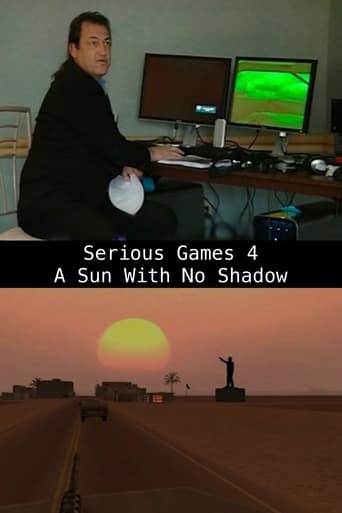
An exploration of how the U.S. military employs video game technology to train troops for war. In A Sun With No Shadow, Farocki calls attention to the subtle differences between the simulations for combat training and PTSD. With the former, the sun can be programmed to cast shadows in the virtual combat zones, while the latter, less expensive technology does not offer this feature.
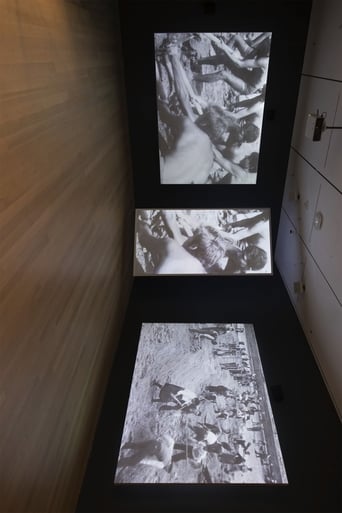
This three-channel video installation by James Benning shows three scenes from David Wark Griffith’s The Birth of a Nation (1915). The two-minute-long screen arrangement of imperceptibly moving images alludes to the beginning of racism. The three screens each show a solider in the American Civil War, black slaves picking cotton in the field, and imposing KKK.
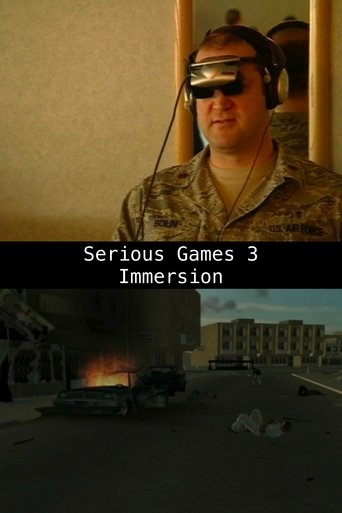
An exploration of how the U.S. military employs video game technology to train troops for war. In Immersion, Farocki presents footage of a role-playing exercise in which military psychologists demonstrate how to use the PTSD program on their colleagues, who describe traumatic wartime experiences. On a second channel, their descriptions play out as virtual renderings.
Brazilian short film, directed by Julia Murat.
Three-channel video (black and white and color, three-channel sound) commissioned by the Museum of Modern Art, New York, for the entrance to exhibition "Toward a Concrete Utopia: Architecture in Yugoslavia, 1948–1980".
By becoming aware of an idea that is new to us, we talk about it all the time. And beyond that, all the subjects that we approach, we approach them through this new prism. We are going as far as proselytism - essentially to convince ourselves. We repeat the same words, slightly reformulated, until we are convinced. It is a way of swallowing our conditioning to this idea, while hinting that we are already sure. In politics or in love. We repeat ourselves. We repeat ourselves. We repeat ourselves.
The decision to move to Holland doesn't sound like a wise idea. Why move to a country that could be flooded at any moment? For the last 25 years, the political climate has shifted. The public debate on migration has become harsher, more heated, and polarized. What would have been considered right-wing xenophobia back then, is now considered mainstream. Populists simplify complex realities into good and evil, victims and perpetrators: ‘us’ versus ‘them’. Their rhetoric often consists of dehumanizing words and metaphors. One of these is ‘water’. In reality, water is not an immediate threat to the average Dutch person; but it is a huge threat to the thousands trying to reach the Netherlands. People trying to survive the Mediterranean Sea in rubber boats. Trying to survive winter on the Aegean coast in primitive tents. To them, water really is deadly.
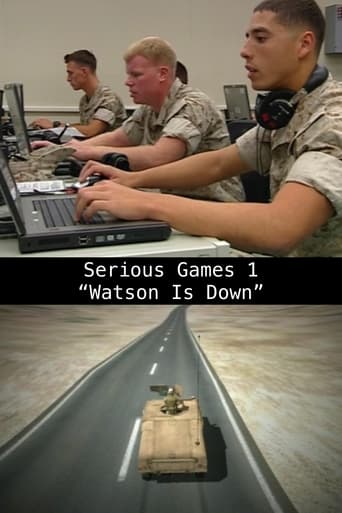
An exploration of how the U.S. military employs video game technology to train troops for war. Filmed at the United States Marine Corps Air Ground Combat Center, Watson is Down pairs footage of soldiers at computers engaging in combat-simulation training with scenes from the video games.
Ilya Kabakov is considered one of the most important contemporary artists worldwide. Born and raised in the Ukraine in the period between Stalin and Gorbatschow he left the country in the 80s. In his Installations and his numerous paintings Kabakov creates a world of its own, which leaves the heaviness of socialist and post-socialist life far behind. The film links Ilya Kabakovs artistic spaces with insights into Russian everyday life, which itself sometimes appears like an installation by the artist.
Based on an installation by Alberto vev
Wang’s work investigates the ways in which sound and listening can play pivotal roles in shaping social space. For Music While We Work, Wang assembled a group of retired workers from a Taiwanese sugar refinery in the small industrial town of her childhood. She and her collaborator, the political activist and composer Chen Bo-Wei (Taiwanese, born 1971), led a series of recording workshops for the retirees and their spouses. They then returned to the factory, where Wang asked them to “paint a world composed by their listening.”
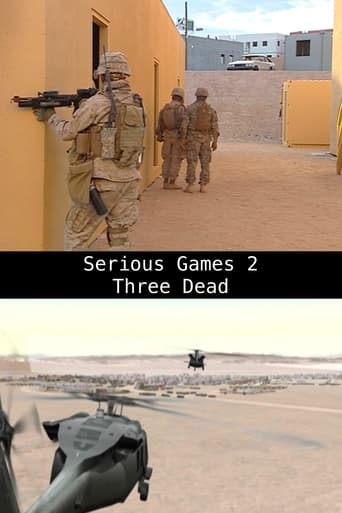
An exploration of how the U.S. military employs video game technology to train troops for war. Three Dead depicts a military exercise within a mock Iraqi town built on the outskirts of Twentynine Palms, California, blurring the line between computer simulation and reality.
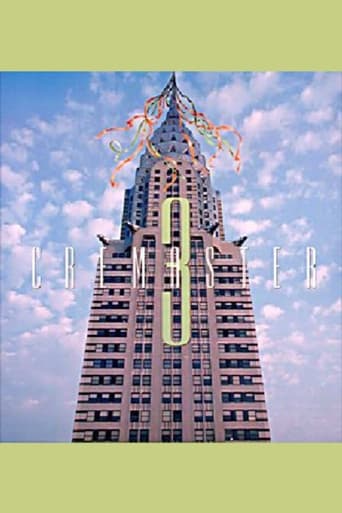
CREMASTER 3 (2002) is set in New York City and narrates the construction of the Chrysler Building, which is in itself a character - host to inner, antagonistic forces at play for access to the process of (spiritual) transcendence. These factions find form in the struggle between Hiram Abiff or the Architect ...
Following in the great tradition of his classic "How To" animated shorts of the 1940's, Goofy makes his return to the big screen in "How to Hook Up Your Home Theater". When Goofy is desperate to watch the Big Game, he heads to his local electronics store to tackle every consumer's nightmare - selecting the perfect home theater system and worse, trying to hook it all up.
Each pixel is separated like an exploded screen, set in a chaotic way into the space. The video has a whole movement in the room, as one three dimensional image. The experience resembles the brain, working with electromagnetic waves and low voltage information.
Bass takes over the upstairs Kanter-McCormick Gallery at the Art Center, expanding the territory of her gothic world in a new work The Latest Sun is Sinking Fast, an immersive, multi-channel installation incorporating 16mm film/video, sound, architecture, and featuring performances by Sarah Stambaugh, Bryan Saner, and Matthew Goulish. The solo exhibition features a spatial narrative installation that delves, through movement, texture, sound, and gesture, into the psychology of a recurring figure in Bass' previous films; while also introducing two new characters, blending the past into the present. Bass has designed the installation by altering the gallery, leading the viewer through a evocative memory of place, embedding us in a timeless society of lost souls in a haunted landscape. -Allison Peters Quinn, Exhibition Director, Hyde Park Art Center
A prestigious Stockholm museum's chief art curator finds himself in times of both professional and personal crisis as he attempts to set up a controversial new exhibit.
Impersonal and beautiful images of Akerman's life in New York are combined with letters from her loving but manipulative mother, read by Akerman herself.
A close look at the assassin's lifestyle in the film.
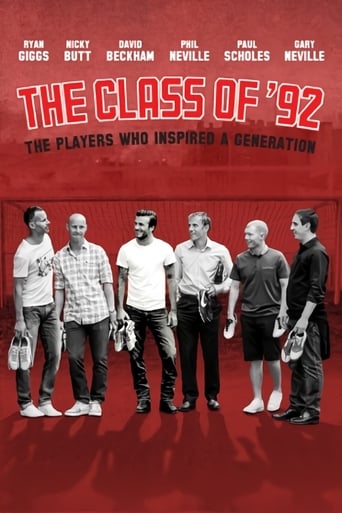
A detailing of the rise to prominence and global sporting superstardom of six supremely talented young Manchester United football players (David Beckham, Nicky Butt, Ryan Giggs, Paul Scholes, Phil and Gary Neville). The film covers the period 1992-1999, culminating in Manchester United's European Cup triumph.
A look at the work and surprising success of a four-year-old girl whose paintings have been compared to the likes of Picasso and has raked in hundreds of thousands of dollars.
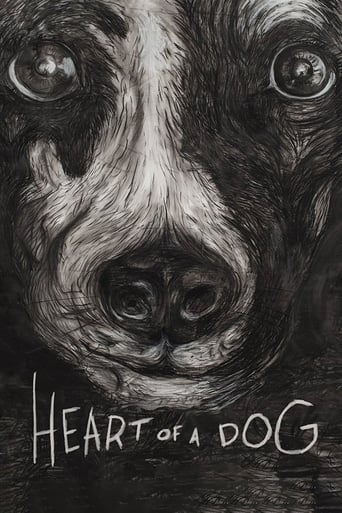
Lyrical and powerfully personal essay film that reflects on the deaths of her husband Lou Reed, her mother, her beloved dog, and such diverse subjects as family memories, surveillance, and Buddhist teachings.
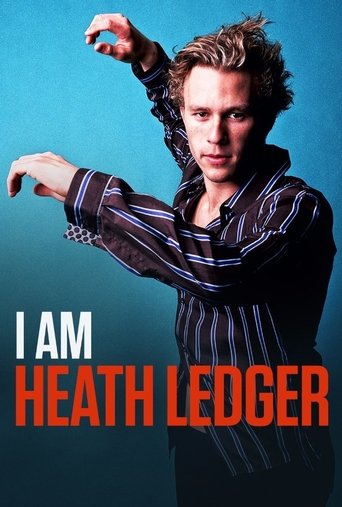
The life and career of an actor, artist, and icon. His own journey through his own camera.
Behind-the-scenes documentary about how Lionel Messi succeeded in lifting the World Cup – the only trophy to have eluded him in an incredible career.
This character-driven film considers the evolving sex trafficking landscape as seen by the main players: the exploited, the pimps, the johns that fuel the business, and the cops who fight to stop it.
On a winter's day, a woman stretches near a window then sits in a bathtub of water. She's happy. Her lover is nearby; there are close ups of her face, her pregnant belly, and his hands caressing her. She gives birth: we see the crowning of the baby's head, then the birth itself; we watch a pair of hands tie off and cut the umbilical cord. With the help of the attending hands, the mother expels the placenta. The infant, a baby girl, nurses. We return from time to time to the bath scene. By the end, dad's excited; mother and daughter rest. Preserved by the Academy Film Archive in 2013.
A non-narrated documentary following the lovesome lives of four infants from birth to their first birthday. The babies featured are two from rural areas: Ponijao from Opuwo, Namibia, and Bayar from Bayanchandmani, Mongolia, as well as two from urban areas: Mari from Tokyo, Japan, and Hattie from San Francisco, USA.
A documentary that explores the downloading revolution; the kids that created it, the bands and the businesses that were affected by it, and its impact on the world at large.
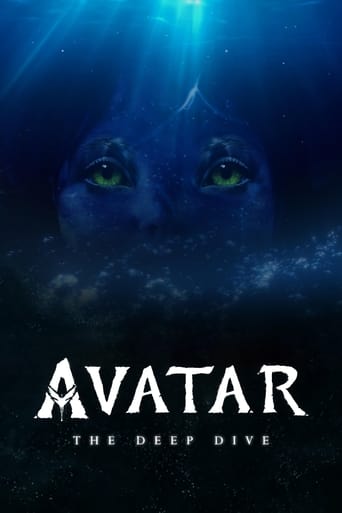
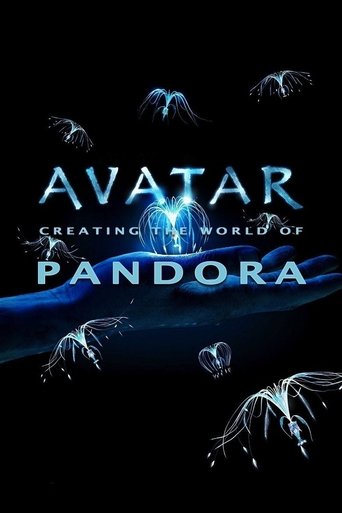
The Making-of James Cameron's Avatar. It shows interesting parts of the work on the set.
Capturing life on the Italian island of Lampedusa, a frontline in the European migrant crisis.
A candid look at rehearsal footage in support of a focus on pre-viz.
Documentary filmmaker Frederick Wiseman takes us inside Northeast High School as a fly on the wall to observe the teachers and how they interact with the students.
Iverson is the ultimate legacy of NBA legend Allen Iverson, who rose from a childhood of crushing poverty in Hampton, Virginia, to become an 11-time NBA All-Star and universally recognized icon of his sport. Off the court, his audacious rejection of conservative NBA convention and unapologetic embrace of hip hop culture sent shockwaves throughout the league and influenced an entire generation. Told largely in Iverson's own words, the film charts the career highs and lows of one of the most distinctive and accomplished figures the sport of basketball has ever seen.
A depiction of the Wrangelkiez neighbourhood in Berlin. The people portrayed tell their life stories. One woman came to the neighbourhood a decade ago to work in Berlin’s still unfinished Brandenburger Airport, one man reminisces his childhood on a Tobacco farm in Kentucky, another speaks of an exceptional day in an otherwise monotonous workplace. These portraits are interwoven with the story of Elpi, a Greek woman who is waiting for the long overdue visit of an old important friend. The outcome of this mixture is a film which captures the lives and perspectives of some of Wrangelkiez’s most commanding citizens, while at the same time evoking the loss that change and time passing means for places and for people.
An intimate portrait of the small shops and shopkeepers of the Rue Daguerre in Paris, a picturesque street that has been the filmmaker’s home for more than 50 years.
Shot over three years on the borders between Iraq, Kurdistan, Syria and Lebanon, the film depicts the everyday struggles of people attempting to rebuild their lives amongst the devastating effects of civil wars, dictatorships, foreign invasions, and the deadly presence of ISIS.
Francesco Totti retraces his entire life while watching it on the silver screen together with the audience. Images and emotions flow among key moments of his career, scenes from his personal life and memories he has never shared before.