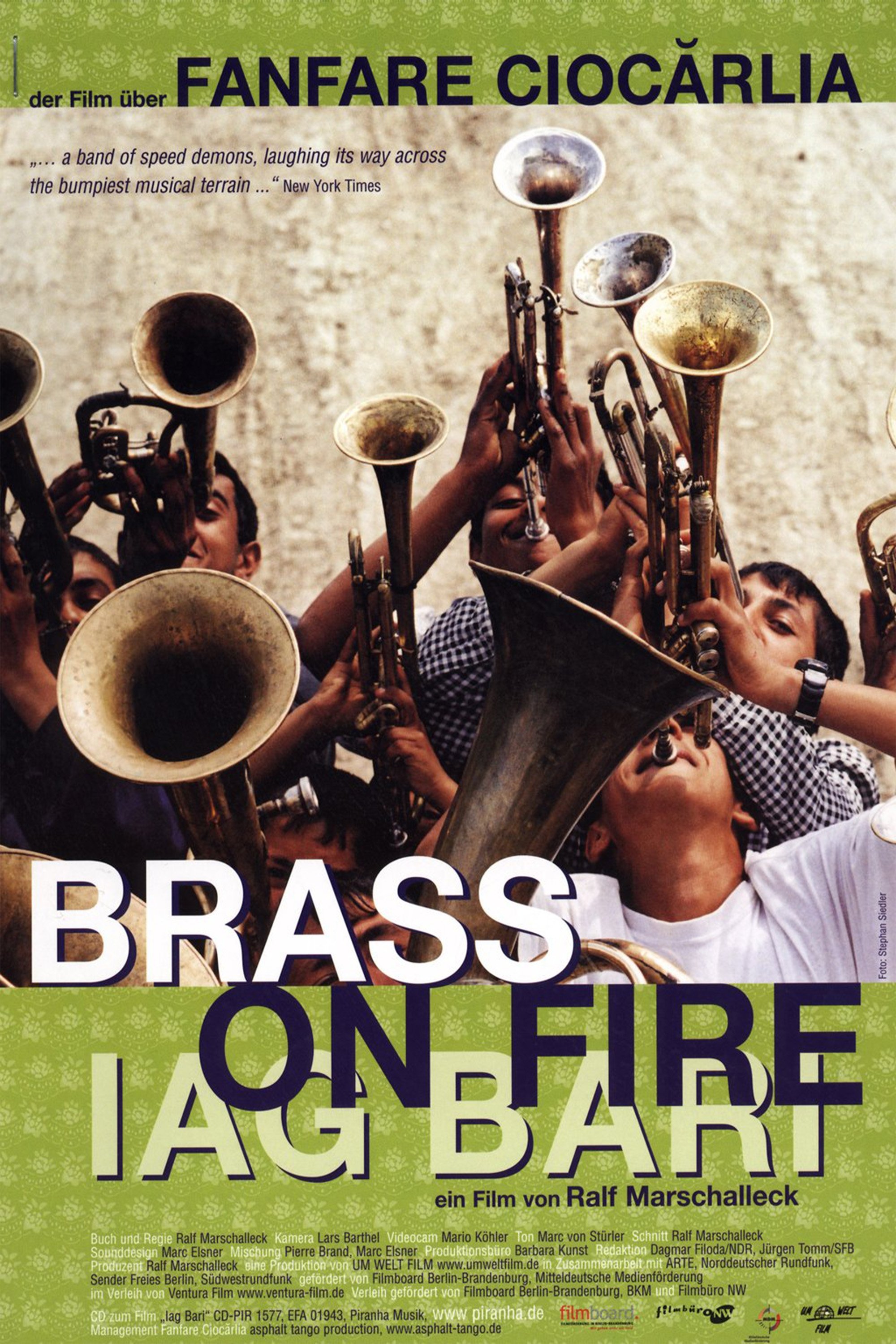
When Henry Ernst toured Romania in 1996, he came across a wedding band who called themselves Fanfare Ciocarlia. This is the story of that meeting, and how Ernst introduced the band to the world.
Social & External
self
A documentary that exposes the shocking truths behind industrial food production and food wastage, focusing on fishing, livestock and crop farming. A must-see for anyone interested in the true cost of the food on their plate.
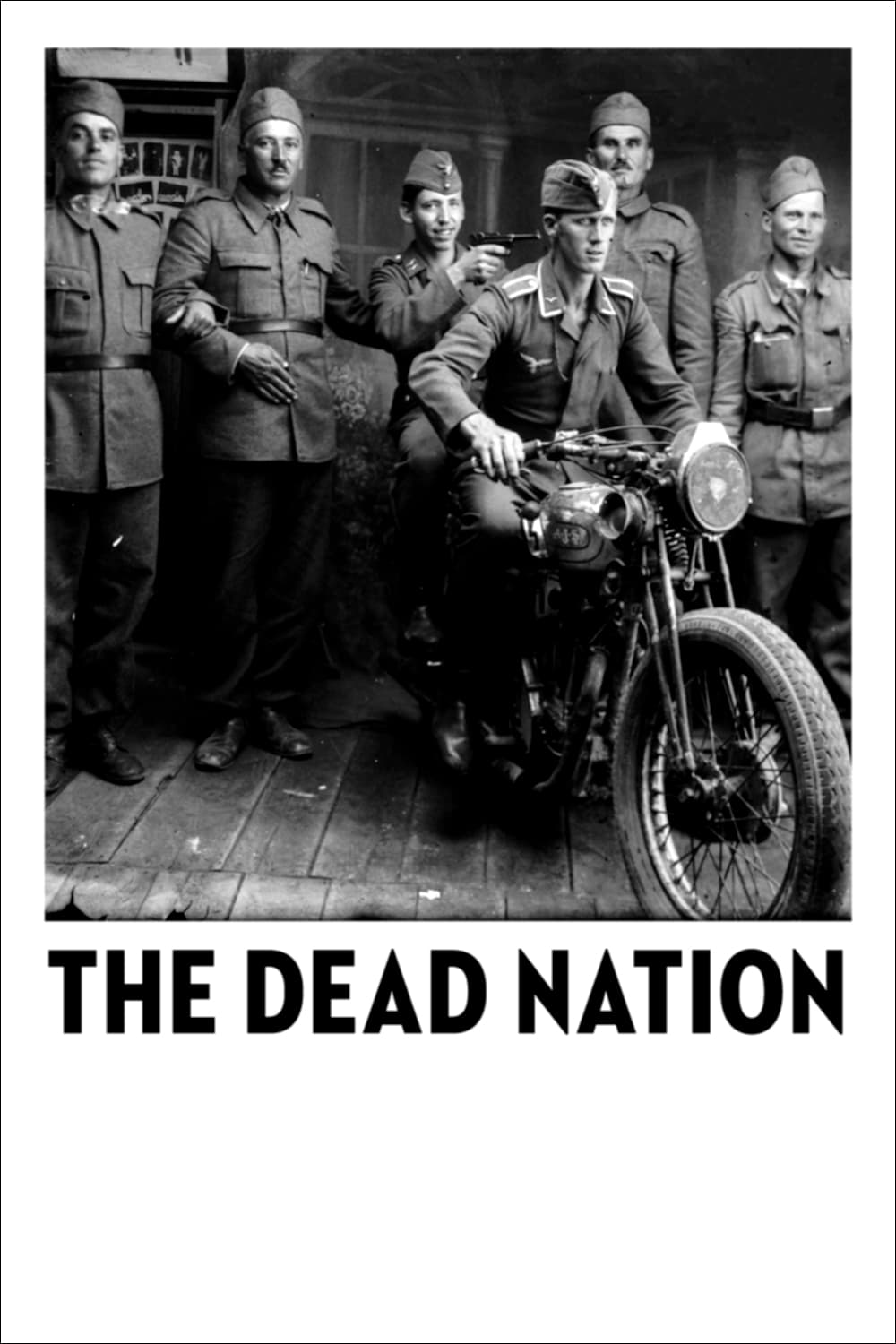
A documentary-essay which shows Costică Axinte's stunning collection of pictures depicting a Romanian small town in the thirties and forties. The narration, composed mostly from excerpts taken from the diary of a Jewish doctor from the same era, tells the rising of the antisemitism and eventually a harrowing depiction of the Romanian Holocaust.
Recorded over 10 years, România Sălbatică shows the colorful beauty of Romanian nature accompanied with wildlife.
This mountain region that reaches across several countries in Eastern Europe is the home to gold diggers, wizards, cow herders and old Hassids.
After the collapse of the Communist regime in 1989, over 100,000 children were discovered living in Romanian orphanages. Follow Nori Vito, one of those orphans, as she journeys from her adopted American home to Romania and Greece to find the family she lost almost 30 years ago.
A film about the artist Daniel Spoerri. It's actually a film about a thought by Daniel Spoerri: a film almost without Daniel Spoerri, it's actually mostly acted out by a child - to say no less than that everything somehow goes on in life, even if you die in between.
In 1947, Yugoslav President Josip Broz Tito visited, for the first time, Romania. Its communist regime gave him, as present, a painting from a great Romanian artist Ion Andeescu: 'The Leafless Forest'. In the 60s, a young art critic, Radu Bogdan, decided to elaborate a monograph dedicated to the great painter, including reproduction of the painting given to Tito. After countless problems, he obtained the permission to photograph the painting. The moment they took the painting off the wall, they found - a microphone. Somebody was spying on Tito...
The three-hour-long documentary covers 25 years in the life of Nicolae Ceaușescu and was made using 1,000 hours of original footage from the National Archives of Romania.

"This wonderful age in life where every thought strives toward an ideal, toward work, toward the future." Sahia Studios propaganda flick about how adults and their "those darn kids" attitudes affect adolescents.
A documentary about World War II, also known as the "Holy War" while Romania was an ally to Nazi Germany. The propagandistic nature of the film is evident through its overt anti-semitism and ultra-nationalist tone.
In Iasi, Romania, from June 28 to July 6, 1941, nearly 15 000 Jews were murdered in the course of a horrifying pogrom. At the time, the programmed extermination of European Jews had not yet began. After the war, the successive communist governments did all they could to ensure the Iasi pogrom would be forgotten. It was not until November of 2004 that Romania recognized for the first time its direct responsibility in the pogrom. All that remains of this massacre are about a hundred photographs taken as souvenirs by german and romanian soldiers, and a few remaining survivors.
Untamed Romania provides insight into the stunning natural wonders of Romania, with the Carpathian Mountains, the Danube Delta, and Transylvania as its major areas of interest.
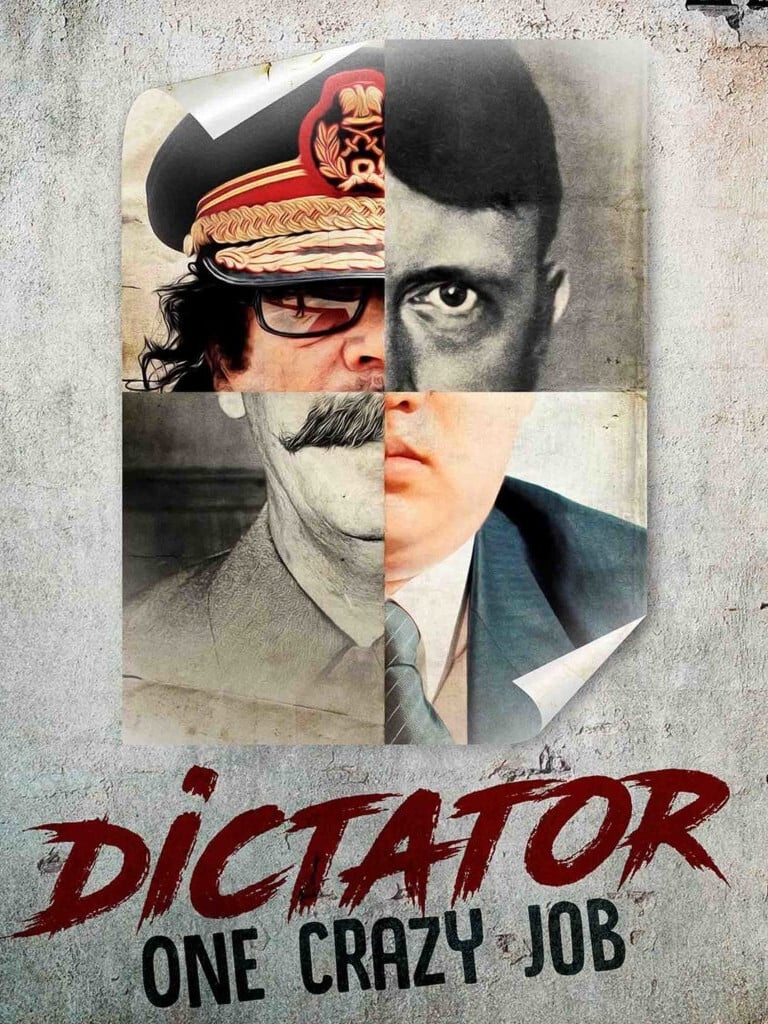
They’ve become the human face of inhuman barbarity. Leaders like Hitler, Idi Amin Dada, Stalin, Kim Jong Il, Saddam Hussein, Nicolae Ceausescu, Bokassa, Muammar Kadhafi, Khomeini, Mussolini and Franco governed their countries completely cut off from reality. These paranoid leaders were driven to abuse their power by the pathology of power itself. Dictators are driven by a relentless, thought-out determination to impose themselves as infallible, all-knowing and all-powerful beings. But they are also men ruled by their caprices, uncontrollable impulses, and reckless fits of frenzy, which paradoxically render them as human as anyone else. The abuses they committed were clearly atrocious, yet some of them were as outlandish as the characters portrayed in the film The Dictator. They sunk to depths worthy of Kafka: so incredibly absurd, they are outrageously funny.
Several decades after the collapse of the communist system, nostalgia for the former regime has reached unimaginable proportions in almost all former communist European countries. The documentary Nostalgia for Dictatorship does not limit itself to presenting this genuine syndrome of "longing for dictatorship", but, in parallel with the opinions and motivations of ordinary citizens living in the former communist space, it advances explanations by researchers from various fields, sociologists, psychologists, political scientists, ethologists, etc., regarding the intimate motivations of such a paradoxical feeling.
The fascinating portrait of Ion Bârlàdeanu. The touching and inspiring story of a man who literally lived in the gutter for 20 years - and in the meantime managed to create paintings and collages which are now exhibited alongside works by Andy Warhol or Marcel Duchamp.
A look at the Jewish community in Rădăuți, Romania, from 1974 to 1976.
Romania is on the last place in Europe in terms of highway kilometers, but on the first place in the number of deaths in road accidents. Entrepreneur Stefan Mandachi builds 1 meter of highway on his private property.
A look at what happened after Borat: Cultural Learnings of America for Make Benefit Glorious Nation of Kazakhstan was filmed in the Romanian village of Glod. It follows the life of one girl who longs to escape the poverty as foreign lawyers arrive with the promise of suing 20th Century Fox for millions of dollars.
For over a hundred years, Mărculești was a vibrant Jewish agricultural and mercantile community in Bessarabia (now present-day Moldova). In July 1941, the village was the site of an unimaginable atrocity. Seventy-three years later, few speak honestly or completely about what happened. ABSENT is a cinematic portrait of the ghost village of Mărculești, its current inhabitants, and their very complex relationship to their own history. Filmed entirely on location, the film documents one of Europe's poorest, most remote, and least-visited places.