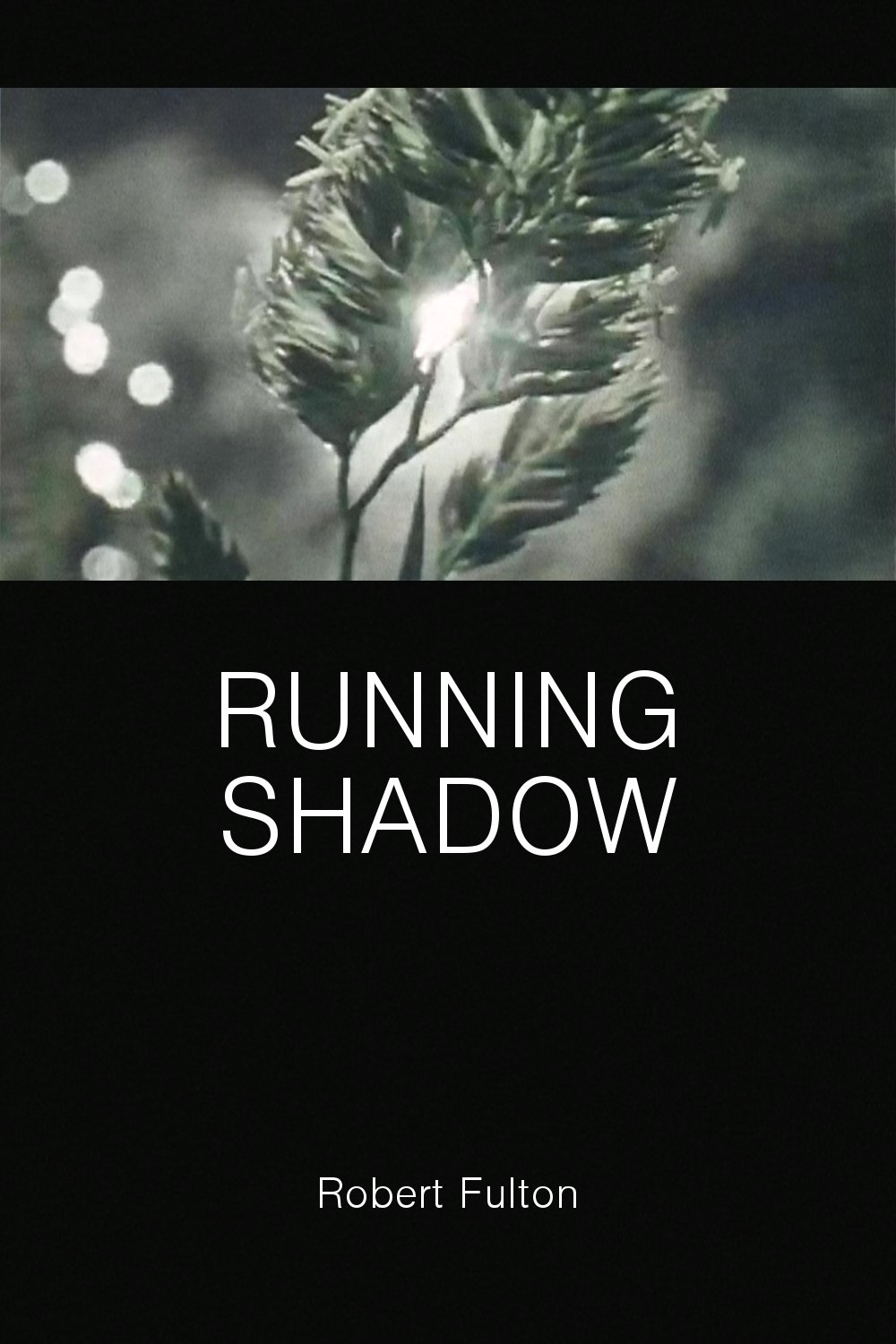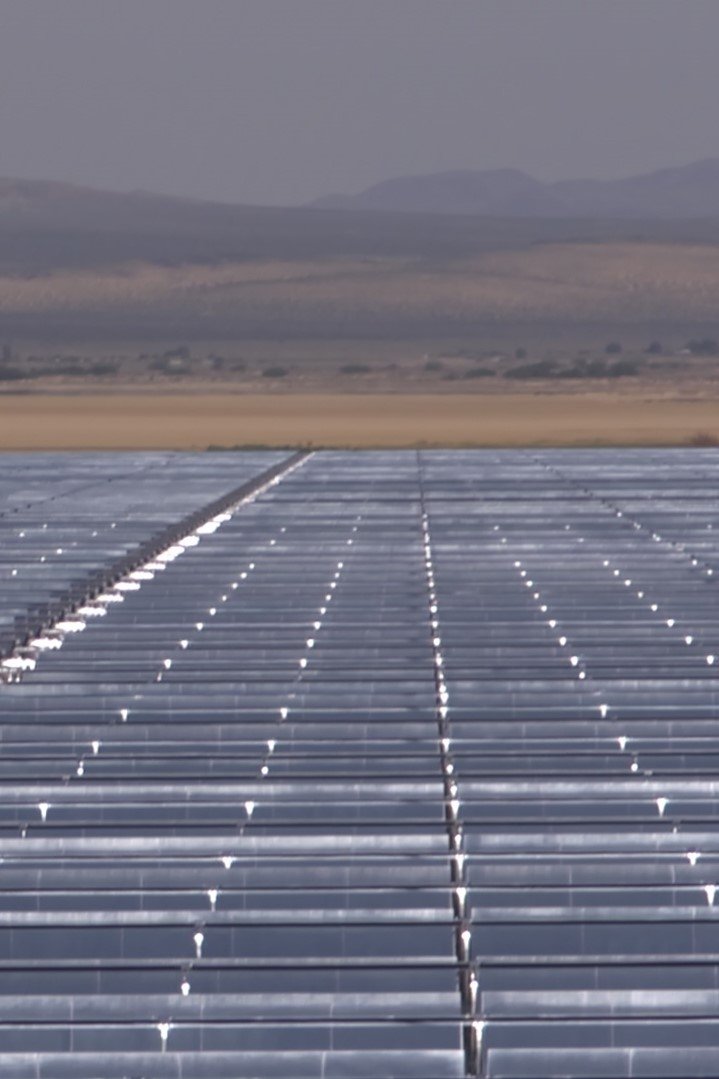
This film was made with the help of a diary, video tapes and a roll of film found in the Lahemaa forest. The owner has been reported missing
Social & External
Arthur Lipsett's first film is an avant-garde blend of photography and sound. It looks behind the business-as-usual face we put on life and shows anxieties we want to forget. It is made of dozens of pictures that seem familiar, with fragments of speech heard in passing and, between times, a voice saying, "Very nice, very nice." The film was nominated for an Oscar for Best Live Action Short Film.
Experimental short film about car wreckage and automobile safety.
In his book "1984", George Orwell saw the television of the future as a control instrument in the hands of Big Brother. Right at the start of the much-anticipated Orwellian year, Paik and Co. were keen to demonstrate satellite TV's ability to serve positive ends-- Namely, the intercontinental exchange of culture, combining both highbrow and entertainment elements. A live broadcast shared between WNET TV in New York and the Centre Pompidou in Paris, linked up with broadcasters in Germany and South Korea, reached a worldwide audience of over 10 or even 25 million (including the later repeat transmissions).
From a small cabin in the mountains of New York, Nina Breeder and Massimilian Breeder begin a journey across the United States. California is just the initial destination, but just as the edge of the surrounding landscape expands, so does their ultimate destination. A contemplation of nature and time along a raw journey in the American landscape.
The film juxtaposes/compares two museums: The Museum of Art, Ein Harod, Israel, which Samuel Bickels (1909-1975) built there in 1948, and The Menil Collection in Houston, Texas, built by Renzo Piano (b. 1937) 1986 . The method of natural lighting in Bickelsās construction was the direct model for Piano, who adopted for his construction at the request of its patroness Dominique de Menil.
This experimental nature documentary by Minna Rainio and Mark Roberts depicts climate change and the wave of extinction from the point of view of our near future. Actually, it depicts the age we live in now, or rather its fateful consequences.
Experimental filmmaker Pip Chodorov traces the course of experimental film in America, taking the very personal point of view of someone who grew up as part of the experimental film community.
"This tape is an exploration of my latent heterosexuality with porn star / performance artist Annie Sprinkle as instructor and sage. After assuaging my fears that I can have sex with a woman & still maintain my gay identity, Annie warms me up with some playful, sensual wrestling. She then instructs in the use of a tampon while relating men's need to make war with their inability to menstruate. For the rest of the tape, she guides me through the specifics of sexual exploration, positions of coital congress as well as post- coital ritual."
A playful, free, and personal film in the form of a letter, a film interwoven with a thousand stories knit together with different textures, a book of images where a filmmaker shows the images and the stories he wants to share.
An unnamed passer-by is forced to trace a circular route inside an abandoned tram station, facing loss and time. The broken walls act as a channel, transmitting fragmentary, blurred and analogical memories.Ā
At a morgue, forensic pathologists conduct autopsies of the corpses assigned. "S. Brakhage, entering, WITH HIS CAMERA, one of the forbidden, terrific locations of our culture, the autopsy room. It is a place wherein, inversely, life is cherished, for it exists to affirm that no one of us may die without our knowing exactly why. All of us, in the person of the coroner, must see that, for ourselves, with our own eyes. It is a room full of appalling particular intimacies, the last ditch of individuation. Here our vague nightmare of mortality acquires the names and faces of OTHERS. This last is a process that requires a WITNESS; and what 'idea' may finally have inserted itself into the sensible world we can still scarcely guess, for the CAMERA would seem the perfect Eidetic Witness, staring with perfect compassion where we can scarcely bear to glance." ā Hollis Frampton
Spectator is one of the early masterpieces by Zwartjes. The film explicitly shows one of Frans Zwartjesā main themes: the relationship between husband and wife. It is a relationship that is strongly marked by power and domination, sexual attraction and repulsion. It manifests itself in humiliation and abuse (such Pentimento), but also in cool eroticism or natural physicality. Zwartjesā goal is not to explain or designate this relationship. Rather it is the subject that Zwartjes uses to describe his world. In an article on Zwartjes, filmmaker and student George Schouten compares Zwartjes to the Italian writer Alberto Moravia. For both, sex is their way of dealing with reality. It is the subject by which they define their world. And for Zwartjes, it is also the subject with which he can display and develop his cinematic talent. (eyefilm.nl)
We live with stories. And it's hard for us to give up on these stories, which provide us our identity, a way of understanding ourselves. Reflections from three successive generations are dusted off and presented as remaining fragments. An attempt to archive thoughts on familial history, narrative traditions, human perception and "the story" from known and unknown sources. "There is history behind it and the history becomes the story and the story becomes the pattern and the pattern becomes rigidity."
The moving camera shapes the screen image with great purposefulness, using the frame of a window as fulcrum upon which to wheel about the exterior scene. The zoom lens rips, pulling depth planes apart and slapping them together, contracting and expanding in concurrence with camera movements to impart a terrific apparent-motion to the complex of the object-forms pictured on the horizontal-vertical screen, its axis steadied by the audience's sense of gravity. The camera's movements in being transferred to objects tend also to be greatly magnified (instead of the camera the adjacent building turns). About four years of studying the window-complex preceded the afternoon of actual shooting (a true instance of cinematic action-painting). The film exists as it came out of the camera barring one mechanically necessary mid-reel splice
Working at the limits of what can easily be expressed, filmmaker Peter Mettler takes on the elusive subject of time, and once again turns his camera to filming the unfilmable. From the particle accelerator in Switzerland, where scientists seek to probe regions of time we cannot see, to lava flows in Hawaii which have overwhelmed all but one home on the south side of Big Island; from the disintegration of inner-city Detroit, to a Hindu funeral rite near the place of Buddha's enlightenment, Mettler explores our perception of time. He dares to dream the movie of the future while also immersing us in the wonder of the everyday. THE END OF TIME, at once personal, rigorous and visionary, Peter Mettler has crafted a film as compelling and magnificent as its subject.
A young man in a tram is asking a bit too much from a stranger.
The second entry in Velu Viswanadhan's series of experimental documentaries. This film traces the Ganges river upstream.
A collection of Jim Henson's commercials, industrial reels, short films and some related talk show appearances. Includes Henson's Oscar nominated short, "Time Piece," in its entirety. Part of the Jim Henson Legacy's "Muppets, Music & Magic" program that debuted at the Brooklyn Academy of Music in 2004.
A very personal look at the history of cinema directed, written and edited by Jean-Luc Godard in his Swiss residence in Rolle for ten years (1988-98); a monumental collage, constructed from film fragments, texts and quotations, photos and paintings, music and sound, and diverse readings; a critical, beautiful and melancholic vision of cinematographic art.
In support of experiences that are essentially common, but to which language does not easily adhere, the video passes through places that are both themselves, and stand-ins for others. The title is taken from Aleister Crowleyās 1918 translation of the "Tao Te Ching."
A thrilling journey through legends, belief and folklore, this film goes behind the scenes with the British Library as they search to tell that story through objects in their collection, in an ambitious new exhibition: Harry Potter: A History Of Magic. J.K. Rowling, who is lending unseen manuscripts, drawings and drafts from her private archives (which will sit alongside treasures from the British Library, as well as original drafts and drawings from Jim Kay) talks about some of the personal items she has lent to the exhibition and gives new insight into her writing, looking at some of the objects from the exhibition that have fired her imagination.
A portrait of the day-to-day operations of the National Gallery of London, that reveals the role of the employees and the experiences of the Gallery's visitors. The film portrays the role of the curators and conservators; the education, scientific, and conservation departments; and the audience of all kinds of people who come to experience it.
James Cameron and Simcha Jacobovici go on an adventure to find the lost city of Atlantis by using Greek philosopher Plato as a virtual treasure map.
Director Michael Apted revisits the same group of British-born adults after a 7 year wait. The subjects are interviewed as to the changes that have occurred in their lives during the last seven years.
In this genre-bending tale, Errol Morris explores the mysterious death of a U.S. scientist entangled in a secret Cold War program known as MK-Ultra.
A candid look at rehearsal footage in support of a focus on pre-viz.
Centres on Canadian animator Ryan Larkin, who in later years lived on skid row in Montreal following a history of drug and alcohol abuse.
A purely observational non-fiction film that takes viewers into the ethically murky world of end-of-life decision making in a public hospital.
In 1917, two children take a photograph, which is soon believed by some to be the first scientific evidence of the existence of fairies. Based on the true story of the Cottingley Fairies.
Documentary filmmaker Frederick Wiseman takes us inside Northeast High School as a fly on the wall to observe the teachers and how they interact with the students.
In 1997, Louis Theroux made a documentary about the world of male porn performers in Los Angeles. 15 years later, he returns to find a business struggling with the deluge of free porn on the internet. Louis revisits some of the original programme's contributors as well as meeting the latest crop of porn performers dreaming of porn stardom.
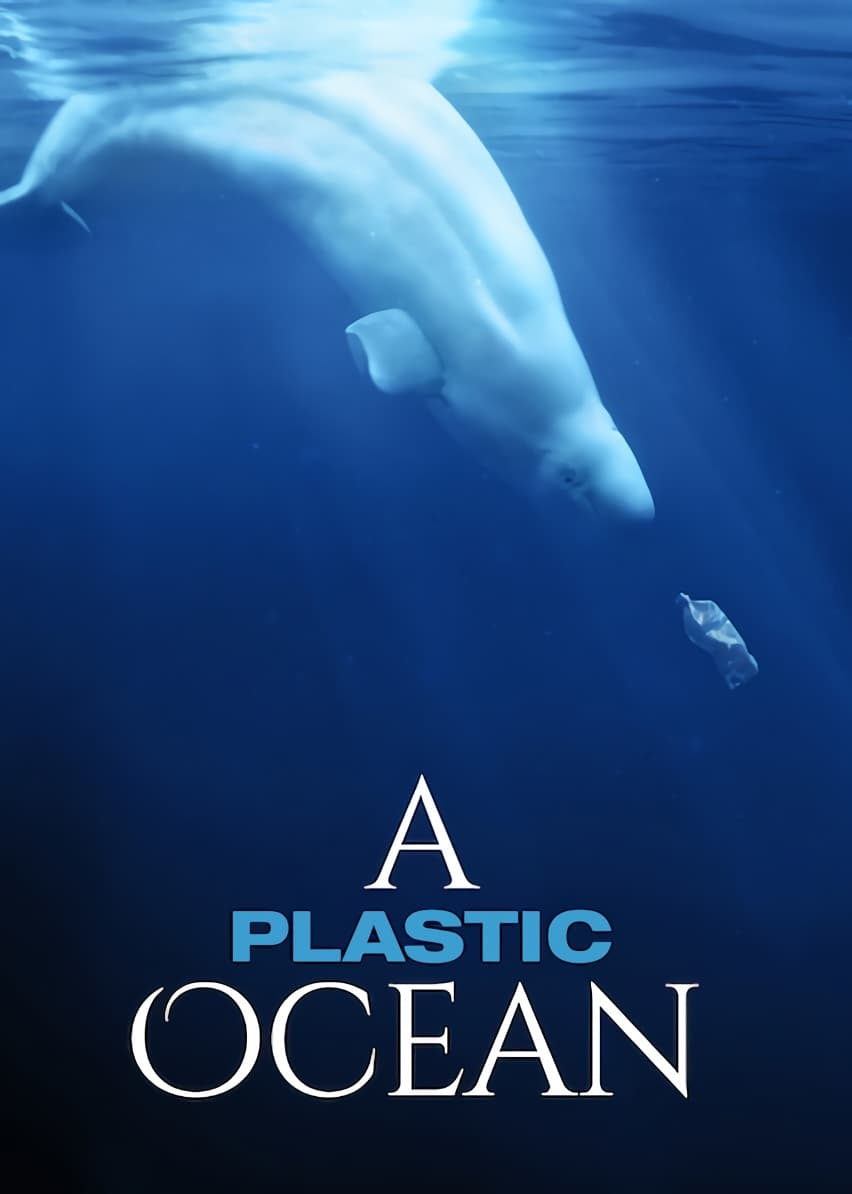
A documentary focused on plastic pollution in the world's oceans.
A documentary on the expletive's origin, why it offends some people so deeply, and what can be gained from its use.
The Making-of James Cameron's Avatar. It shows interesting parts of the work on the set.
Carefully picked scenes of nature and civilization are viewed at high speed using time-lapse cinematography in an effort to demonstrate the history of various regions.
A deep dive into the making of the Paranormal Activity films with first time ever interviews with cast and crew, never-before-seen footage from the movies, and a preview of the seventh installment in the franchise.
Using the book 'Fragments', which collects Marilyn Monroe's poems, notes and letters, and with participation from the Arthur Miller and Truman Capote estates who have contributed more material, each of the actresses will embody the legend at various stages in her life.
In October of 1994 three student filmmakers disappeared in the woods near Burkittsville, Maryland, while shooting a documentary. A year later their footage was found.
When Juan Catalan is arrested for a murder he insists he didn't commit, he builds his case for innocence around unexpected raw footage.
Making of featurette for Sherlock Holmes (2009).