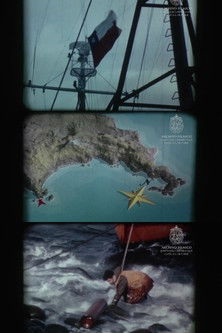
A walk through the landscapes of the province of Barcelona, Spain, as well as a testimony of the daily life and customs of its inhabitants.
Social & External
Patte and Randa Starr are fun specialists. After growing up in an abusive household set above their father's candy store, they spent their lives fighting to find joy and freedom. Now in their 70s, these sisters do exactly as they please: they live together near the beach, they always have a movie on, and the candy drawer is fully stocked.
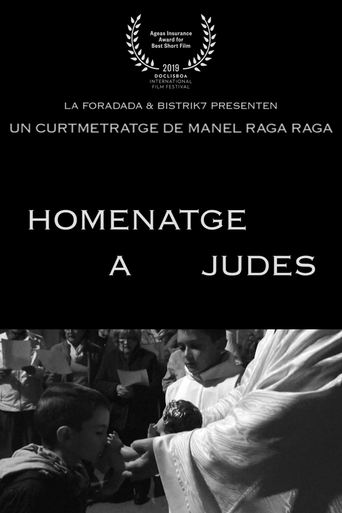
In 2012, Stephen Vaughan and Kay Ferreter are invited to address the congregation at St. Joseph's Redemptorists Church in Dundalk, Ireland for the Solemn Novena Festival. In a powerful speech, the pair describe their experiences being gay and lesbian in Ireland, feeling excluded by Catholic doctrine, and the importance of a more inclusive church.
Working men and women leave through the main gate of the Lumière factory in Lyon, France. Filmed on 22 March 1895, it is often referred to as the first real motion picture ever made, although Louis Le Prince's 1888 Roundhay Garden Scene pre-dated it by seven years. Three separate versions of this film exist, which differ from one another in numerous ways. The first version features a carriage drawn by one horse, while in the second version the carriage is drawn by two horses, and there is no carriage at all in the third version. The clothing style is also different between the three versions, demonstrating the different seasons in which each was filmed. This film was made in the 35 mm format with an aspect ratio of 1.33:1, and at a speed of 16 frames per second. At that rate, the 17 meters of film length provided a duration of 46 seconds, holding a total of 800 frames.
Filmmaker Alain Resnais documents the atrocities behind the walls of Hitler's concentration camps.
Good Morning in Singapore.
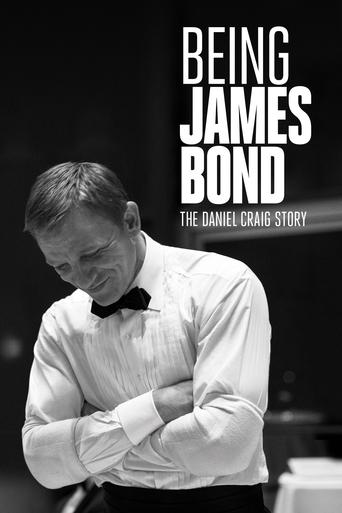
Daniel Craig candidly reflects on his 15 year adventure as James Bond. Including never-before-seen archival footage from Casino Royale to the upcoming 25th film No Time To Die, Craig shares his personal memories in conversation with 007 producers, Michael G Wilson and Barbara Broccoli.
In 1968 Herz Frank made Without Legends (Bez leģendām) at the Kuibishev studios, together with Aloizs Brenčs and Aleksandr Sazhin. The film is based on the memoirs of Hero of Socialist Labor Professor Ivan Vasilyevich Komzin, former head of construction of the V. I. Lenin Volga Hydroelectric Power Station; Hero of Socialist Labor excavator operator V. Klementyev; Honored excavator operator Viktor Vasilyevich Starikov; and writer Konstantin Kirillovich Lapin. Documentary filmmakers from Kuibyshev were making a film about the excavator operator and Hero of Socialist Labor, Boris Yegorovich Kovalenko. However, the material turned out to be too ambiguous to create a film about a model Soviet working man. They turned for advice to the Riga-based documentary filmmaker Herz Frank. He shot additional footage and edited the collected material in such a way that it became a story without legends—about an ordinary person.
An exploration of the movie "The strange case of Angelica" and an understanding Manoel de Oliveira's cinema.
Filmed at the October 1968 meeting in Hawaii of several hundred police chiefs of the International Association of Chiefs of Police as they watch demonstrations of gruesome anti-riot weapons, sing patriotic songs, and defend their policies in front of the camera. Although filmed with the permission of the chiefs, the view is unsympathetic, sometimes funny, and more often frightening.
A historic underground gay document. Shocking. Intimate. Taboo. A behind-the-scenes look at the performance art of a millennial artist who travels the world performing in public spaces using the medium of piss, video and the internet to break social norms.
In the town of Xoco, the spirit of an old villager awakens in search of its lost home. Along its journey, the ghost discovers that the town still celebrates its most important festivities, but also learns that the construction of a new commercial complex called Mítikah will threaten the existence of both the traditions and the town itself.
Super-8 footage captured while filming Bergman Island. In voice-over, filmmaker Mia Hansen-Løve offers intimate reflections on her creative process on the island of Fårö and her relationship with Bergman and Swedish cinema.
A retrospective look at the five Dirty Harry films (1971-88), starring Clint Eastwood.
A walk through the landscapes of the province of Salamanca, Spain, as well as a testimony of the daily life and customs of its inhabitants.
After a "diplomatic mission" into a neighboring town Kell returns to his town to see that his not so bright team of idiots have screwed up everything.
Saying No is an early 1980s educational film produced by Crommie & Crommie that, true to the title, presents a process for young women to successfully decline advances from the opposite sex.
The filmmaker's father and uncle, Norm and Stan, are third generation Japanese Americans. They are "all American" guys who love bowling, cards and pinball. Placed in the Amache internment camp as children during World War II, they don't think the experience affected them that much. But in the course of navigating the maze of her father's and uncle's pursuits while simultaneously trying to inquire about their past, the filmmaker is able to find connections between their lives now and the history that was left behind.
Uncensored documentary about rap duo City Girls and their rise to fame.
From the unique vantage point of 200 miles above Earth's surface, we see how natural forces - volcanoes, earthquakes and hurricanes - affect our world, and how a powerful new force - humankind - has begun to alter the face of the planet. From Amazon rain forests to Serengeti grasslands, Blue Planet inspires a new appreciation of life on Earth, our only home.
This large format film explores the last great wilderness on earth. It takes you to the coldest, driest, windiest continent, Antarctica. The film explores the life in Antarctica, both for the animals that live their and the scientist that work there.
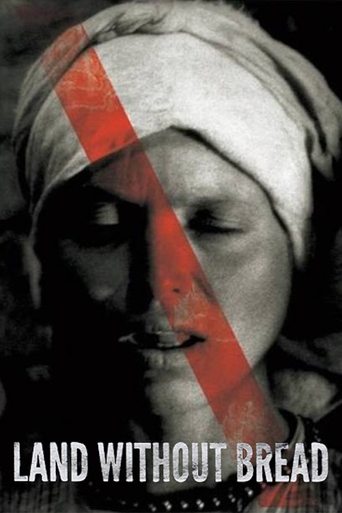
An exploration —manipulated and staged— of life in Las Hurdes, in the province of Cáceres, in Extremadura, Spain, as it was in 1932. Insalubrity, misery and lack of opportunities provoke the emigration of young people and the solitude of those who remain in the desolation of one of the poorest and least developed Spanish regions at that time.
Following the tragic death of her teenage son, Manuela travels from Madrid to Barcelona in an attempt to contact the long-estranged father the boy never knew. She reunites with an old friend, an outspoken transgender sex worker, and befriends a troubled actress and a pregnant, HIV-positive nun.
A woman narrates the thoughts of a world traveler, meditations on time and memory expressed in words and images from places as far-flung as Japan, Guinea-Bissau, Iceland, and San Francisco.
A day in the city of Berlin, which experienced an industrial boom in the 1920s, and still provides an insight into the living and working conditions at that time. Germany had just recovered a little from the worst consequences of the First World War, the great economic crisis was still a few years away and Hitler was not yet an issue at the time.
A strait-laced French student moves into an apartment in Barcelona with a cast of six other characters from all over Europe. Together, they speak the international language of love and friendship.
His teachers, coaches, childhood friends and Barça teammates, together with journalists, writers and prominent figures from the history of football, come together in a restaurant to analyze and pick apart Messi's personality both on and off the field, and to look back at some of the most significant moments in his life. Viewed from Álex de la Iglesia's unique perspective, Messi recreates the player's childhood and teenage years, from his very first steps, with a football always at his feet, through to the decision to leave Rosario for Barcelona, the separation from his family, and the role played in his career by individuals such as Ronaldinho, Rijkaard, Rexach and Guardiola.
An intimate portrait of the small shops and shopkeepers of the Rue Daguerre in Paris, a picturesque street that has been the filmmaker’s home for more than 50 years.
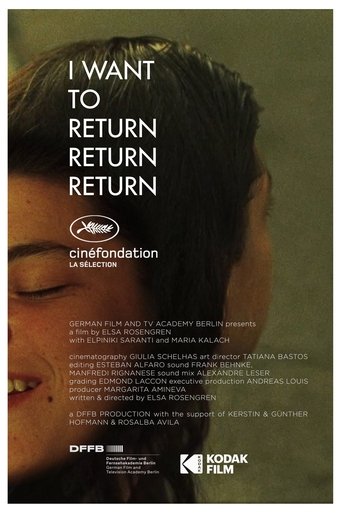
A depiction of the Wrangelkiez neighbourhood in Berlin. The people portrayed tell their life stories. One woman came to the neighbourhood a decade ago to work in Berlin’s still unfinished Brandenburger Airport, one man reminisces his childhood on a Tobacco farm in Kentucky, another speaks of an exceptional day in an otherwise monotonous workplace. These portraits are interwoven with the story of Elpi, a Greek woman who is waiting for the long overdue visit of an old important friend. The outcome of this mixture is a film which captures the lives and perspectives of some of Wrangelkiez’s most commanding citizens, while at the same time evoking the loss that change and time passing means for places and for people.
Following a newspaper ad, ordinary women tell part of their life stories to director Eduardo Coutinho, which are then re-enacted by actresses, blurring the barriers between truth, fiction and interpretation.
A compilation of over 30 years of private home movie footage shot by Lithuanian-American avant-garde director Jonas Mekas, assembled by Mekas "purely by chance", without concern for chronological order.
A photo montage of Cubans filmed by Agnès Varda during her visit to Cuba in 1963, four years after Fidel Castro came to power. This black & white documentary explores their socialist culture and society while making use of 1500 pictures (out of 4000!) the filmmaker took while on the island.
Angelic and demonic serpentine dance from dawn of cinema. Hand-colored frame by frame. Lumière no. 765 or 765.1 (colorized, different dancer?).
Naples, Trajan's district. Initially it was intended for the inhabitants of the shantytowns on the seafront of Naples, who were homeless after the war. But it soon became a kind of ghetto. Alessandro and Pietro are two teenagers who film with an iPhone to tell their difficult neighborhood, their daily life, the friendship that binds them.
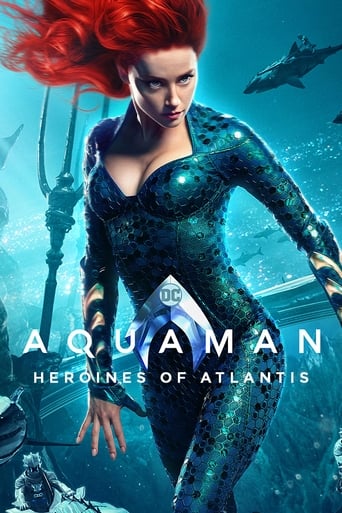
Amber Heard and Nicole Kidman discuss their characters Mera and Atlanna.
A woman recalls her childhood growing up in the North of Spain, focusing on her relationship with her father.
Filmmaking icon Agnès Varda, the award-winning director regarded by many as the grandmother of the French new wave, turns the camera on herself with this unique autobiographical documentary. Composed of film excerpts and elaborate dramatic re-creations, Varda's self-portrait recounts the highs and lows of her professional career, the many friendships that affected her life and her longtime marriage to cinematic giant Jacques Demy.
Barcelona, Spain, 1921. A tough cop from Madrid arrives in the city to locate, under the suspicious scrutiny of corrupt local police officers, a significant amount of military weaponry stolen from a train, allegedly by revolutionary anarchists.
Documentary by Mateo Gutiérrez about the life of his father, Héctor "Toba" Gutiérrez Ruiz (1934-1976), which includes interviews with people who witnessed moments in the life of the former president of the House of Representatives, assassinated by the Uruguayan dictatorship
What does being a woman really mean? How do women live the status society reserves for them? A group of women, beautiful or not, young or not, gifted with motherly instinct or not, answer before Agnès Varda's camera.
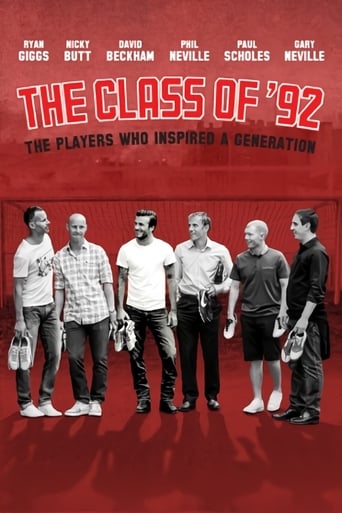
A detailing of the rise to prominence and global sporting superstardom of six supremely talented young Manchester United football players (David Beckham, Nicky Butt, Ryan Giggs, Paul Scholes, Phil and Gary Neville). The film covers the period 1992-1999, culminating in Manchester United's European Cup triumph.