Social & External
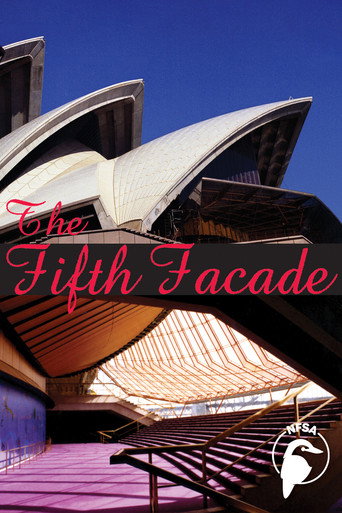
On 20 October 1973, the Sydney Opera House was officially opened by Queen Elizabeth II. From conception to completion, it had taken more than 15 years and over $100 million dollars. In the years since its completion, the Sydney Opera House has become one of the most identifiable of Australia’s icons - ranking with the Sydney Harbour Bridge, Uluru, the koala and kangaroo - and is considered by many to be among the world's great architectural masterpieces.
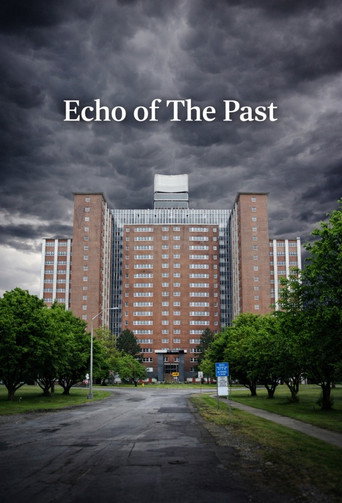
A historical documentary documenting the rise, function, and abandonment of a 17 story building that once housed The Rochester Psychiatric Center. This film tells the story of the building through historical footage, interviews of former staff and patients who recount their memories of the behemoth facility while also exploring the abandoned building as it is today.
Based on the latest technological and scientific advances, this documentary explores the palace's architectural past to resurrect Louis XIV's vanished Versailles. Versailles was an ongoing building site at the time of Louis XIV and continued to be transformed by its successive occupants later on. The Versailles we know today only vaguely resembles the Versailles of the Sun King. Most of its original features and apartments no longer exist. Thanks to the digitisation of thousands of plans, a team of scientists takes us back in time to explore this forgotten past in a new way, through a large-scale reconstruction project to bring back the Versailles of Louis XIV as he designed it, according to his requirements and dreams.
One of the most significant cases in European archaeology is the grave of the shaman woman of Bad Dürrenberg, a key finding of the last hunter-gatherer groups. From a time when there were no written records, this site was first researched by the Nazis, who saw a physically strong male warrior from an ‘original Aryan race’ in the buried person. It was, in fact, the most powerful woman of her time. The latest research shows that she was dark-skinned, had physical deformities, and was a spiritual leader. The documentary – using high-end CGI and motion capture – compares the researchers of the Nazi era, who misrepresented and instrumentalised their findings, to today’s researchers, who meticulously compile findings and evidence, and use cross- disciplinary methods to examine and evaluate them. It also substantiates the theory of the powerful roles women played in prehistoric times. The story of this woman, buried with a baby in her arms, still fascinates us 9,000 years after her death.
For the first time in history, women are designing our world. They are the rising stars in architecture-previously an all-male galaxy--and they are literally and figuratively changing the landscape. MAKING SPACE captures the compelling stories and outstanding designs of Annabelle Selldorf (NY), Farshid Moussavi (London), Odile Decq (Paris), Marianne McKenna (Toronto), and Kathryn Gustafson (Seattle & London). Without script or narration, each woman tells her own story, enhanced by the insights of commentators including Pulitzer Prize-winning architecture critic Paul Goldberger; MoMA's Peter Reed and Paola Antonelli; and others. Meryl Streep makes a special guest appearance.
In the very core of Salt Lake City, two special downtown blocks serve as a mirror. Just a handful of acres of land hold more than 150 years of the Utah story. On planners' maps, they're known as Salt Lake City Blocks 75 and 76. But to generations who have worked, lived, and played along their streets, Blocks 75 and 76 are a world unto themselves.
As a teenager in 1950 Brooklyn, all Saul wanted to do was hang out with his friends and go to the beach. Instead, he got roped into a dangerous new job, and Saul got in a little over his head.
Everyone knows the view of Via della Conciliazione with St. Peter's Basilica framed behind it. The most famous postcard of Rome, the background used by correspondents all over the world. Few know that this street hasn't always been there, and in fact shouldn't have been from the premises.
Considered the finest example of Byzantine architecture in the world, Hagia Sophia was constructed on a scale unprecedented in human history. Built in the amazingly short time of five years, it bears witness to an amazing scientific knowledge and a rich cultural heritage from the past.
Rule of Stone is a documentary film that exposes the power of architecture and the role it has played – aesthetically, ideologically and strategically – in the creation of modern Jerusalem after the 1967 war.
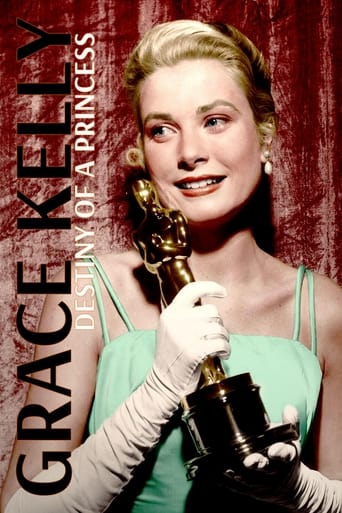
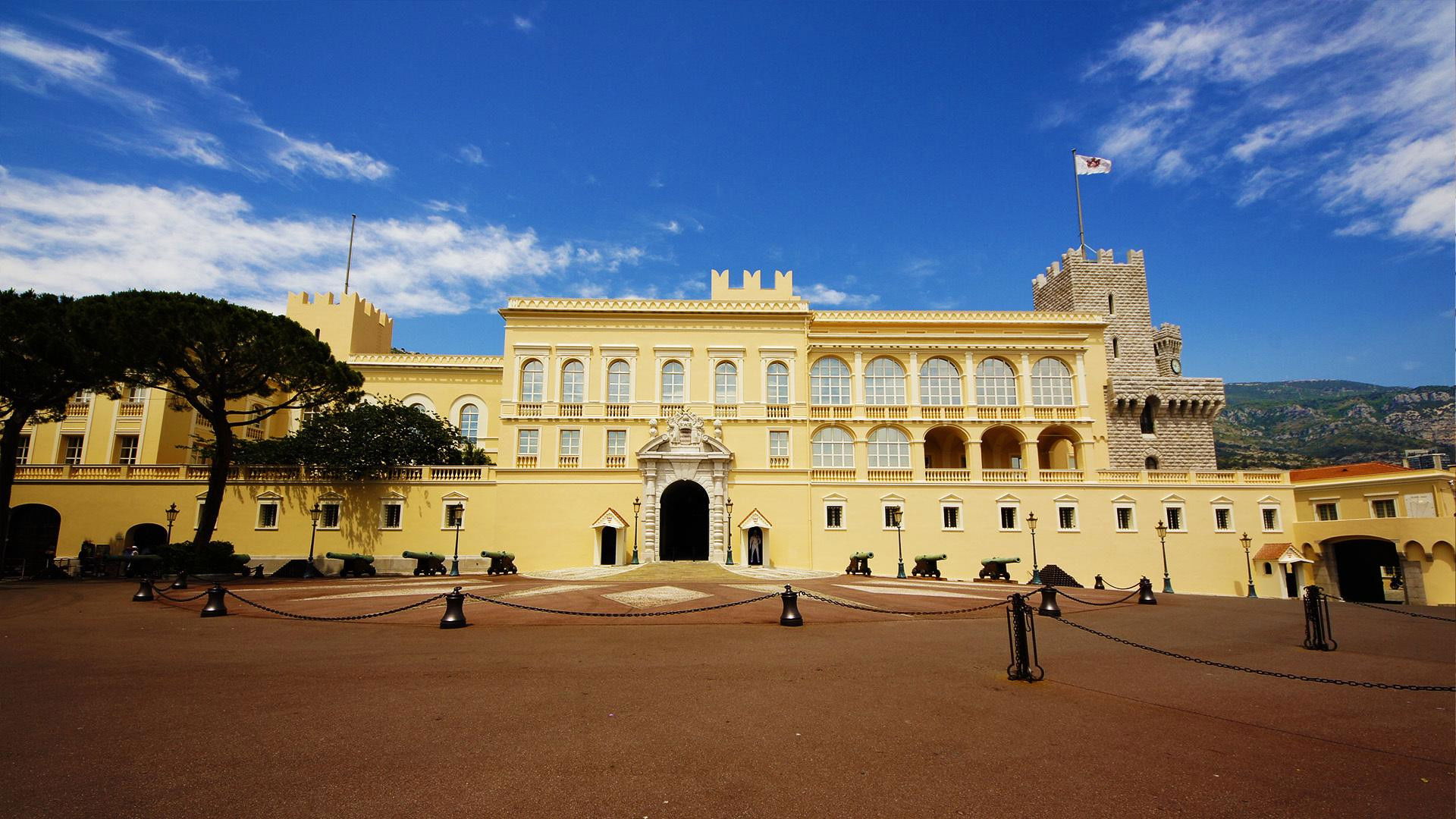
In 1956, actress and Hollywood star Grace Kelly (1929-82), then at the height of her film career, unexpectedly dropped everything to marry Prince Rainier III of Monaco. Jinx, an American journalist and friend of the future princess, accompanied her on her journey to the wedding and covered the sensational event.
GOFF explores the life of architect Bruce Goff, one of the most innovative yet forgotten American architects of the 20th century, and the path that lead to the destruction and restoration of his memory and dwellings.
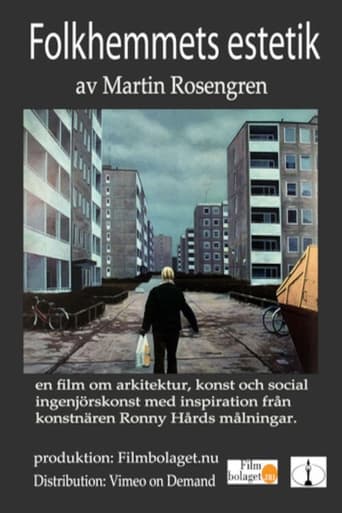
Documentary about the architecture of the Swedish housing boom in the 1960s and how it's viewed today.
Explorations in 21st Century American Architecture Series: Ray Kappe has long been a cult figure in the architectural scene in and around Los Angeles. In 1972, he founded the influential, avant garde Southern California Institute of Architecture (SCI-ARC), where many of the younger-generation architects have studied or taught.
No understanding of the modern movement in architecture is possible without knowledge of its master builder, Mies van der Rohe. Together with documentation of his life, this film shows all his major buildings, as well as rare film footage of Mies explaining his philosophy. Phyllis Lambert relates her choice of Mies as the architect for the Seagram building. Mies's achievements and continuing influence are debated by architects Robert A.M. Stern, Robert Venturi, and Philip Johnson, by former students and by architectural historians. Mies is seen in rare documentary footage.
Secluded from view by nine-meter-high walls and composed of 980 buildings, the Forbidden City in Beijing is the largest imperial palace ever built in the world. Three majestic structures form its center and host the city's ceremonies, each of which is considered an architectural masterpiece. In 1406, construction of the Forbidden City was launched at the initiative of one of China's most powerful sovereigns and founder of the Ming dynasty: Yongle. Endowed with divine power, the construction has already resisted more than 200 earthquakes.
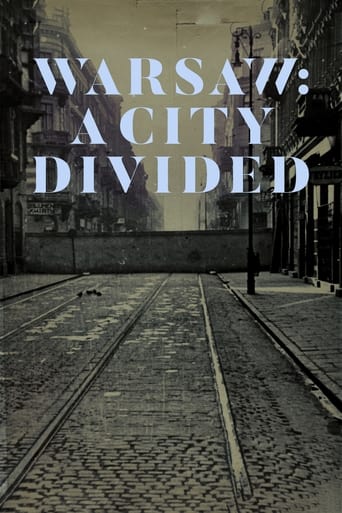
The history of the Warsaw Ghetto (1940-43) as seen from both sides of the wall, its legacy and its memory: new light on a tragic era of division, destruction and mass murder thanks to the testimony of survivors and the discovery of a ten-minute film shot by Polish amateur filmmaker Alfons Ziółkowski in 1941.
"Clean Lines, Open Spaces: A View of Mid-Century Modern Architecture" focuses on the construction boom in the United States after World War II. Sometimes considered cold and unattractive, mid-century modern designs were a by-product of post-war optimism and reflected a nation's dedication to building a new future. This new architecture used modern materials such as reinforced concrete, glass and steel and was defined by clean lines, simple shapes and unornamented facades.
The war zone of a dystopian multiplayer shooting game is used to embark some urban explorers on a winter walk, avoiding the combats whenever possible, as peaceful observers, inhabitants of a digital world, which is a detailed replica of Midtown Manhattan.
A smaller scale Eiffel Tower and the Champs-Elysées can be found just outside Shanghai; a copy of St. Peter’s in Rome can be found in Yamoussoukro, in the Ivory Coast: a journey over three continents to see the architecture of imitation, the uncanny world of the fake.