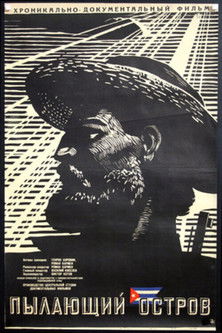
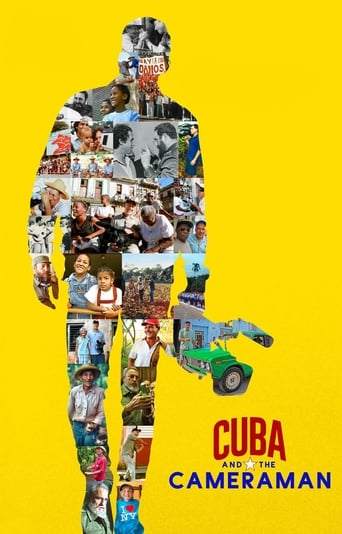
A documentary about Fidel Castro's visit to the USSR from April 28 to June 3, 1963 and how the Cuban leader traveled throughout the Soviet Union for 40 days, from Severodvinsk to Khiva in Uzbekistan.
Social & External
The story of what daily life was like in Poland under communism: private conversations, cruel interrogations, recruitment attempts, recorded and filmed with hidden devices; of how the secret services spied on every activity of ordinary citizens: nothing escaped the brutal system of control developed by the Soviets in the name of freedom.
How in 1959, during the heat of the Cold War, the government of the United States decided to create a secret military base located in the far north of Greenland: Camp Century, almost a real town with roads and houses, a nuclear plant to provide power and silos to house missiles aimed at the Soviet Union.
Portrait of a Russian village near Kaliningrad and its multiethnic inhabitants.
The story of Russian writer and Soviet dissident Aleksandr Solzhenitsyn (1918-2008) and his masterpiece, The Gulag Archipelago, published in Paris in 1973, which forever shook the very foundations of communist ideology.
The disintegration of the Soviet Union and the failure of Communism has been symbolically documented by many tv reportages of removals of monumental public sculptures, but the citizens of Vilnius in Lithuania did the unexpected!
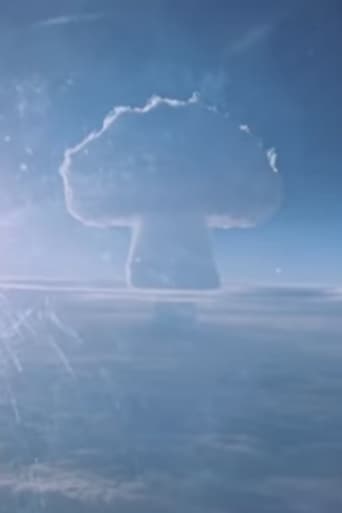
Documentary movie about testing of the largest nuclear weapon in history, the Tsar Bomba. Declassified and made available to the public in 2020.
The epic story of the Russian Civil War (1918-21): the White Terror, the counterrevolutionary uprisings, the guerrilla war, the Kolchak front, the Wrangel front and the Kronstadt rebellion. Chaos and violence, devastation and death.
A double portrait of two dictators who were thousands of miles apart but were constantly fixated on each other.
January 1953: On the eve of his death Stalin finds himself yet another imaginary enemy: Jewish doctors. He organizes the most violent anti-Semitic campaign ever launched in the USSR, by fabricating the "Doctors' Plot," whereby doctors are charged with conspiring to murder the highest dignitaries of the Soviet Regime. Still unknown and untold, this conspiracy underlines the climax of a political scheme successfully masterminded by Stalin to turn the Jews into the new enemies of the people. It reveals his extreme paranoia and his compulsion to manipulate those around him. The children and friends of the main victims recount for the first time their experience and their distress related to these nightmarish events.
Historian James Bulgin reveals the origins of the Holocaust in the German invasion of the Soviet Union, exploring the mass murder, collaboration and experimentation that led to the Final Solution.
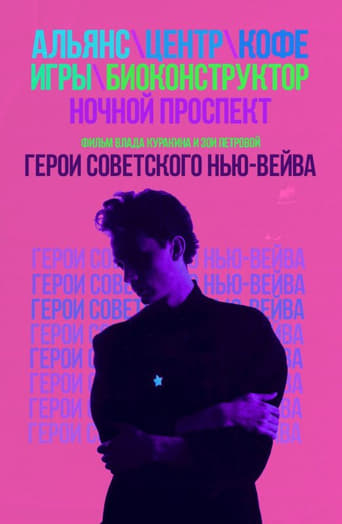
The film tells about the birth of a new wave in the USSR under a strict political regime and about the era of "perestroika", when musicians received freedom of expression.
The story of the unconditional, no-holds-barred tour of America by Soviet Premier Nikita Khrushchev, leader of World Communism and America's arch nemesis, during 13 sun-filled days in the fall of 1959.
A cameraman wanders around with a camera slung over his shoulder, documenting urban life with dazzling inventiveness.
Oliver Stone spends three days filming with Fidel Castro in Cuba, discussing an array of subjects with the president such as his rise to power, fellow revolutionary Che Guevara, the Cuban Missile crisis, and the present state of the country.
Film cameras cruise the Soviet Union's mighty Volga River, providing a view of the Russian people along its 2300-mile length, including looks at the fishing industry, a rural village, a manufacturing town and the wedding of two factory workers.
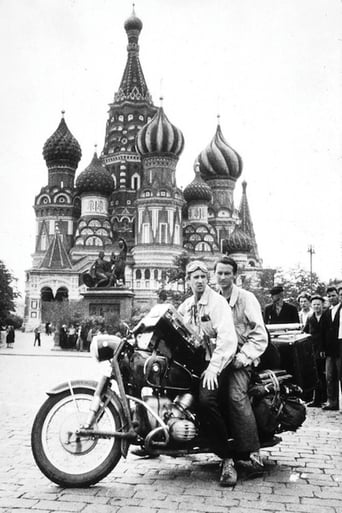
Albert Maysles' visual diary of the faces and places encountered along a cross country motorscooter ride through the Soviet Union in the late 1950s.
Documentary recounting the story of the Cuban Revolution and its impact on the young people of Cuba.
Documentary examining Stalin's Gulag. Between the October Revolution and Stalin's death in 1953, millions of people died in the camps. The film explores the Gulag legacy, hearing from victims and perpetrators of the system.
In the 1930’s, the workers of the underground, headed by brigades of writers, are in charge to write in real time "the history of the Moscow Metro". Based on their narratives, partially unpublished, the film recounts the first lines construction of the most beautifiul underground in the world, in the light of this "big literary Utopia", stoped by the purges of 1937-38.
A different history of the Cold War: how Estonians under Soviet tyranny began to feel the breeze of freedom when a group of anonymous dreamers successfully used improbable methods to capture the Finnish television signal, a window into Western popular culture, brave but harmless warriors who helped change the fate of an entire nation.