History, work, sex, cinema, death and my older brother. An essay on what swimming pools mean in culture and the collective memories we have about them. Inspired by Ed Ruscha's swimming pool photographs.
Social & External
Narrador
Limpia piscinas
Madre
Story of Annette Kellerman, the international swimming vaudeville and silent screen star whose life story inspired the MGM classic Million Dollar Mermaid starring Esther Williams, which featured lavish Busby Berkeley scenes.
An experimental documentary about dead turtles, crab swarms, decaying tennis courts, and microscopic histories. The filmmakers shot their explorations into the abandoned golf courses, factories, and resorts of Sarasota, Florida and spoke to local youths who are using them for new and strange purposes. What would the Surrealists and Situationists think of a suburban, subtropical tourist town? What goes on in a storage unit in the dead of night? What is the afterlife of a decommissioned train car? What ghosts haunt a ruined hotel? What is the life cycle of a city? When will waters wash it all away?
Four filmmakers working in the region of Galicia (in the northwest of Spain) follow and portray on the screen Galician artists working in disciplines of different nature. The result is four pieces around the creative process of these artists. Lois Patiño film their parents working on their paintings in their studio in Vigo, Jaione Camborda films dancer Janet Novás rehearsing for one of her pieces, Xisela Franco follows film director Margarita Ledo revisiting the location of her latest film Nation and Alfonso Zarauza reflects on the relationship between actress-director by putting together the work of Melania Cruz in two of their collaborations.
Twenty-five films from twenty-five European countries by twenty-five European directors.
A provocative and poetic exploration of how the British people have seen their own land through more than a century of cinema. A hallucinated journey of immense beauty and brutality. A kaleidoscopic essay on how magic and madness have linked human beings to nature since the beginning of time.
An experimental portrait of Fernando Fernán Gómez, one of the most renowned Spanish artists of all time.
In 1829 the naturalist Alexander von Humboldt attempted a russian-siberian expedition. Humboldt travelled to obtain a clear view of nature, people and life in this immense country. 2019 naturalists and humanists attempted a transdisciplinary expedition on the trails of Humboldt. To capture the events various cameras were taken along. A non-chronological narration.
In this deeply personal video diary, a young researcher tries to make sense of her fascination for the film "The Pain of Others" by Penny Lane. A deep dive into the discomforting world of YouTube and online conspiracies, that challenges traditional notions of what documentary cinema is, or should be.
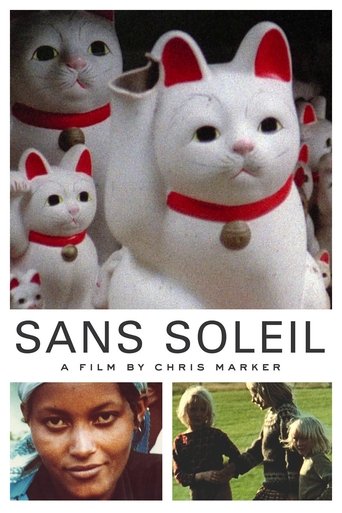
Ten years after the death of iconic French filmmaker, Chris Marker. A filmmaker, hoping to rediscover that unique sensibility against the uncertainty of the new century, returns to the places synonymous with those incomparable and unforgettable films-- From the cat cemetery of Sans Soleil, to the mausoleum of The Last Bolshevik; The caves of Level Five to the rooftops of The Case of the Grinning Cat. A biographical portrait of one of the 20th century's greatest and most misunderstood filmmakers.
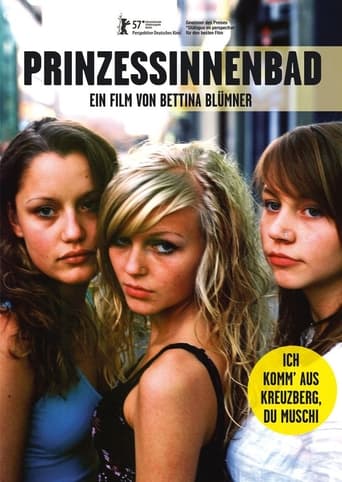
A film about three teenagers - Klara, Mina and Tanutscha - from the Berlin district of Kreuzberg. The trio have known each other since Kindergarten and have plenty in common. The three 15-year-olds are the best of friends; they are spending the summer at Prinzenbad, a large open-air swimming pool at the heart of the district where they live. They're feeling pretty grown up, and are convinced they've now left their childhood behind.
"The prevailing stigmatization of the 'villero' universe is fed back by the images. In order to dismantle this stigmatization, other images must be presented or we need to reveal what the existing ones seek to cover up. The slum is usually represented from a limited and deceitful visual panorama. This representation has an intention. Cinema and television are two image-producing devices that strengthen the stereotypes that we have about the people who inhabit these spaces. And what happens in the field of painting? Do clichés reign there too? This visual essay seeks to confront various works by national painters and sculptors, belonging to the Palais collection, with the kinetic images of current cinema and television, to reflect on both the differences and the similarities in the meanings and discourses that both regimes of images can produce." César González
Every image in The Fall of Communism as Seen in Gay Pornography comes from gay erotic videos produced in Eastern Europe since the introduction of capitalism. The video provides a glimpse of young men responding to the pressures of an unfamiliar world, one in which money, power and sex are now connected.
A portrait of a dilapidated Olympic-sized pool in Accra, Ghana.
In this Sportscope short, children from preschool age through age 14 are shown diving from various heights into a swimming pool. Lissa Bengston, of the Royal Academy of Physical Education in Stockholm, Sweden, supervises the children's activities.
40,000 years in the making: Kogonada's video essay created for The Connected Series.
The Post(?) Feminist Dissonance Project uses a quote by Kathleen Hanna as a prompt, a voicemail box as an interviewing device, found footage as a tool, and text as a character. it is a study in the cacophony of the inner life tuned against the perception of reality. i made this piece to see if i was alone, and i discovered that for better or for worse, i am not. this is above all about the process, not the resolution.
For just forty days, filmmaker and writer Mark Cousins embarks on a peculiar journey in order to explore topics as the passion for cinema and certain aspects related to making films as style, ideas, emotions and practicalities; an ambitious exploration of the universal language of cinema by analyzing pieces of work that cross every artistic and cultural boundaries.
To My Motherland is an experimental personal essay film that blends personal photographs and home videos to explore the complexities of immigration, language, and returning to the motherland.
1940. On the border between Latvia and the USSR, a woman is killed in front of her house as she tried to protect her son from the liberating attack of the Soviets. Almost 80 years later, the archive photo bearing witness to this news item and representing a collateral victim of the European Union’s founding conflict forms the starting point for a journey undertaken by Davis Sīmanis. He navigates from one side to the other of this border, which today represents another separation, one that is geographical but also cultural: between Europe and Russia.