Social & External
Unknown Role
"Yasmina" filmed in 1961 in the middle of the Algerian war tells the story of a little Algerian girl with her hen and her family whose father was killed in a bombing by the French colonial army of occupation. The family, after a long journey, heads towards the refugee camps on the Tunisian border. Produced by the Cinema Service of the Provisional Government of the Algerian Republic (GPRA) in the midst of the war of independence, these films were intended to re-inform the population and international public opinion on the abuses committed by the French colonial army: torture, arrests and arbitrary executions, napalm bombings, fires in douars, entire villages wiped off the map, etc. which the French media described as a "pacification" campaign. The latter censoring or reorienting any images that could harm the colonial narrative.
A stubborn director who wants to rediscover the Algiers of his childhood comes up against the “Hollywood” fantasies of his characters, non-professionals all hoping to be able to become “someone else”, at least for the duration of a film… Mise en abyme for a journey into megalomania…
Two deaf and dumb children. She is the daughter of an American Oil engineer. He is the son of an Algerian farmer. They meet and manage to communicate, transcending all the cultural barriers that separate them.
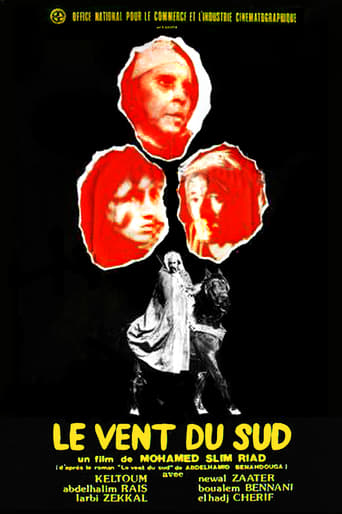
Néfissa, a student in Algiers, returns to her village in the south in the summer. Her father wants her to marry the mayor but she wants to continue her studies. Confronting her father and the opinion of the villagers who do not understand her, she decides to flee to Algiers. The shepherd Rabah discovering her wounded and lost in the mountains, has her treated by her mother. In contact with Nefissa, Rabat becomes aware of his exploited condition and discovers the possibilities offered to him by the cooperatives of the agrarian revolution. The two young people will go through the decisive stage together which will allow them to escape obscurantism and exploitation. Based on the novel "Le vent du sud" by Abdelhamid Benahouga
Selim Mechoubine, a young man of 28, is the eldest of a large family. In the cramped accommodation he shares with his parents, brothers and sisters... he occupies the kitchen, the refuge of his dreams and his many fantasies. Selim, the court clerk where divorcing couples parade..., wants to get married. His mother finds him “the rare pearl”. But now, the bride's family demands that the couple have their own home... Selim's misadventure begins; he finds himself confronted with the problems of the housing crisis which forces him to begin a long quest, procedures, requests to find the sine qua non condition for his marriage.
An Algerian music composer and his friends live a thrilling story, full of twists and turns.
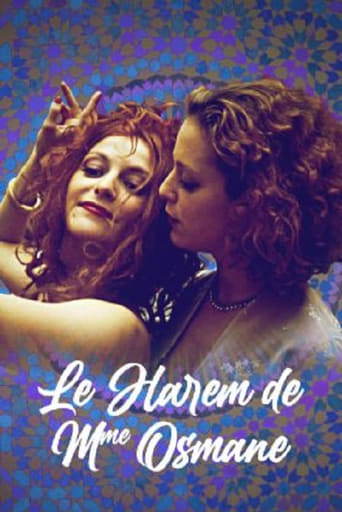
In Algiers in 1993, while the civil war is starting, Mrs Osmane's tenants have to endure her bad temper. Her husband left her and the fear to lose her respectability haunt her. The former member of the Resistance during the Independence War persists in controlling the slightest moves of the households rather than struggle against her own frustrations. Learning her daughter is in love, the possibility of finding herself alone will push her to the limit: The symbolical Mrs Osmane "harem" is about to collapse.
“Poussières de Juillet”, produced in 1967 by Hachemi El-Chérif, is taken from a poem by Kateb Yacine. "We made a film on the return of the ashes of Emir Abdelkader, to Algeria. It was the opportunity to make a film on the ancestors with M'hamed Issiakhem. He designed glass plates on the basis of my texts. Then we had actors collaborate. It was a film which cost us a total of 300 dinars, proof that we could do work for television without too much money. We won two first international prizes at the Belgrade festival. We left the original of the film with the Egyptians in Alexandria and they lost it. We kept a copy but over time I wonder what happened to it, because there is no not even had a screening, they say it still exists, but I don't know in what state." Kateb Yacine, July 28, 1986, interview with Arlette Casas.
The Second World War. French authorities ban political parties and unions. In Algeria, the leaders of political and trade union organizations were arrested and interned in "surveillance" camps with more than 2,000 French and foreigners: communist activists, trade unionists, brigadists, Spanish republicans and other opponents of the Vichy regime. The Djenien Bourezg camp is one of these camps, located in southern Algeria and is one of the most formidable. An old activist for the Algerian national cause returns to the scene. He blows away the ashes that cover this part of history. And through it, we discover the hard fight of the camp inmates for respect and human dignity, under a fascist command.
In a single static shot a man is threatened with death at another's gunpoint.
Djamila, a young Algerian woman living with her brother Hadi and her uncle Mustafa in the Casbah district of Algiers under the French occupation of Algeria, sees the full extent of injustice, tyranny and cruelty on his compatriots by French soldiers. Jamila's nationalist spirit will be strengthened when French forces invade her university to arrest her classmate Amina who commits suicide by ingesting poison. Shortly after the prominent Algerian guerrilla leader Youssef takes refuge with her, she realizes that her uncle Mustafa is part of this network of anti-colonial rebel fighters. Her uncle linked her to the National Liberation Front (FLN). A series of events illustrate Jamila's participation in resistance operations against the occupier before she was finally captured and tortured. Finally, despite the efforts of her French lawyer, Jamila is sentenced to death...
A French teacher in a small Algerian village during the Algerian War forms an unexpected bond with a dissident who is ordered to be turned in to the authorities.
A woman has a close bond with her beloved Algeriann grandfather, who protected her from a toxic home life as a child; his death triggers a deep identity crisis as tensions between her extended family members escalate, revealing new depths of resentment and bitterness.
This excellent feature-length documentary - the story of the imperialist colonization of Africa - is a film about death. Its most shocking sequences derive from the captured French film archives in Algeria containing - unbelievably - masses of French-shot documentary footage of their tortures, massacres and executions of Algerians. The real death of children, passers-by, resistance fighters, one after the other, becomes unbearable. Rather than be blatant propaganda, the film convinces entirely by its visual evidence, constituting an object lesson for revolutionary cinema.
Set in the 1800s among the Berbers of North Africa, this 1997 Algerian feature concerns a noble widow who receives a customary purse of gold coins from the enemy tribe that murdered her husband; the gift puts her in conflict with her kinsmen, who want the money to buy back land taken by the enemy in cahoots with French colonials.
At the outbreak of the Second World War, two friends, Mokrane and Menach, abruptly interrupt their studies and return to their remote native Kabylian village of Tagsa. While waiting to be drafted into the French Army they have time to woo. Mokrane falls for beautiful Aazi and soon marries her only to find out that she can bear no child. Menach, on his part, is stongly attracted to Davda, but the latter is already married to a rich merchant...Happiness does not seem to be in store for the two former students...
Rabie is a kid from Sétif in 1980, trying to collect money to buy a wheelchair for his paralyzid sister Sassia, so she can get out of the house.
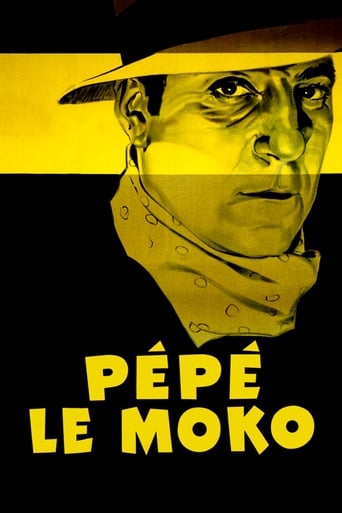
Pépé le Moko, one of France's most wanted criminals, hides out in the Casbah section of Algiers. He knows police will be waiting for him if he tries to leave the city. When Pépé meets Gaby, a gorgeous woman from Paris who is lost in the Casbah, he falls for her.
Fous de Musique by Jean-Charles Carlus (1957) is a musical comedy featuring Rouiched, Mahieddine Bentir and the famous Bendaoud orchestra. Shot during the Algerian War, the film was not released until after independence and was probably shown in Paris in cinemas intended for immigrant workers around 1967. Sources: Archives Numériques du Cinéma Algérien
"Gerboise bleue", the first French atomic test carried out on February 13, 1960 in the Algerian Sahara, is the starting point of France's nuclear power. These are powerful radioactive aerial shots carried out in areas belonging to the French army. Underground tests will follow, even after the independence of Algeria. From 1960 to 1978, 30,000 people were exposed in the Sahara. The French army was recognized recognized nine irradiations. No complaint against the army or the Atomic Energy Commission has resulted. Three requests for a commission of inquiry were rejected by the National Defense Commission. For the first time, the last survivors bear witness to their fight for the recognition of their illnesses, and revealed to themselves in what conditions the shootings took place. The director goes to the zero point of "Gerboise Bleue", forbidden access for 47 years by the Algerian authorities
Middleton prepares for its bicentennial, and Grey House is to be the party venue. Good witch Cassie is remodeling it as B&B. her first and only guest, Nick Chasen, claims to be a distant relative. He produces papers to prove he's the heir of the builder, colonial era captain Hamblin, while the Grey lady was his mistress and stole it. Police chief and lover Jake Russell goes all the way to motivate her to fight and disprove the claim before she's effectively disowned. Brandon is dared to pass a rascals-initiation by local brat Steve and Duke. George's gardening skills lead to romance.
The chilling and relentless Jigsaw killer returns to terrorize the city once again. When a gruesome murder victim emerges with unmistakable traces of Jigsaw's sinister methods, Detective Eric Matthews is thrust into a high-stakes investigation. To his surprise, apprehending Jigsaw seems almost too easy, but what he doesn't realize is that being caught is merely another piece of Jigsaw's intricate puzzle.
As a deadly battle rages over Jigsaw's brutal legacy, a group of Jigsaw survivors gathers to seek the support of self-help guru and fellow survivor Bobby Dagen, a man whose own dark secrets unleash a new wave of terror.
China's deadliest special forces operative settles into a quiet life on the sea. When sadistic mercenaries begin targeting nearby civilians, he must leave his newfound peace behind and return to his duties as a soldier and protector.
Pierre Lachenay is a well-known publisher and lecturer, married to Franca and father of Sabine. He starts a love affair with air hostess Nicole, which Pierre is hiding, but he cannot stay away from her.
This is yet another telling of the adventures of Tom Sawyer and Huckleberry Finn as the two try to clear their friend Jim of murder charges.
A series of bizarre murders. Psychometer Rinko cooperates with detectives in the investigation. The investigation is a difficult one, and the only clues are Rinko's visions when she is in ecstasy, and the crazy smile of a creepy man that appears vaguely.
A doomsday pepper is surprised to find a mysterious box appear in his living room with no trace as to how it could've gotten there.
A tramp tries to earn money by playing the violin, but he’s soon facing off against the jealous competition.
A community is under siege as three Belmont Highschool coed students go missing with no trace of their whereabouts. The pressure is on the police to capture the culprits responsible. Scouring the school hallways in search of clues, undercover female detective Maggie Rawdon (Jessica Sonnerborn) enters Belmont High as a transfer student in an attempt to solve the hideous disappearance of the students. Maggie makes a few new friends, and gets invited to a private rave in the country. Just as the group begins to suspect that they've taken a wrong turn, however, the trap is sprung and Maggie finds out firsthand what fate has befallen the missing girls.
The execution was scheduled and the last meal consumed. The coolness of the poisons entering the blood system slowed the heart rate and sent him on the way to Judgement. He had paid for his crime with years on Death Row waiting for this moment and now he would pay for them again as the judgment continued..
A boy walks through an abandoned building and films the interior. Suddenly his camera disappears.
A woman suffers a nervous breakdown and an oppressive mother before being freed by the love of a man she meets on a cruise.
This animated comic goes back in time to explore the events that spurred the transformation of mild-mannered John Kramer into the monstrous Jigsaw.
Static images of an old country house are combined with voices of the past to evocative effect. Haunting and nostalgic, 'Return' conveys the life that exists in old, abandoned places.
Eyüp decides to cross mount Ararat looking for his aunt in Yerevan after following a madman's words. His aunt has also been expecting someone to come from behind this mount for many years. Eyüp cannot be sure about the woman he finds behind the blue door, whether it is his aunt or not because they can't understand each other.
During the American Civil War, a Southerner is about to be hanged from a bridge for sabotage when something unexpected happens.
A group of friends try to defeat an evil king, and meet some quirky characters along the way.