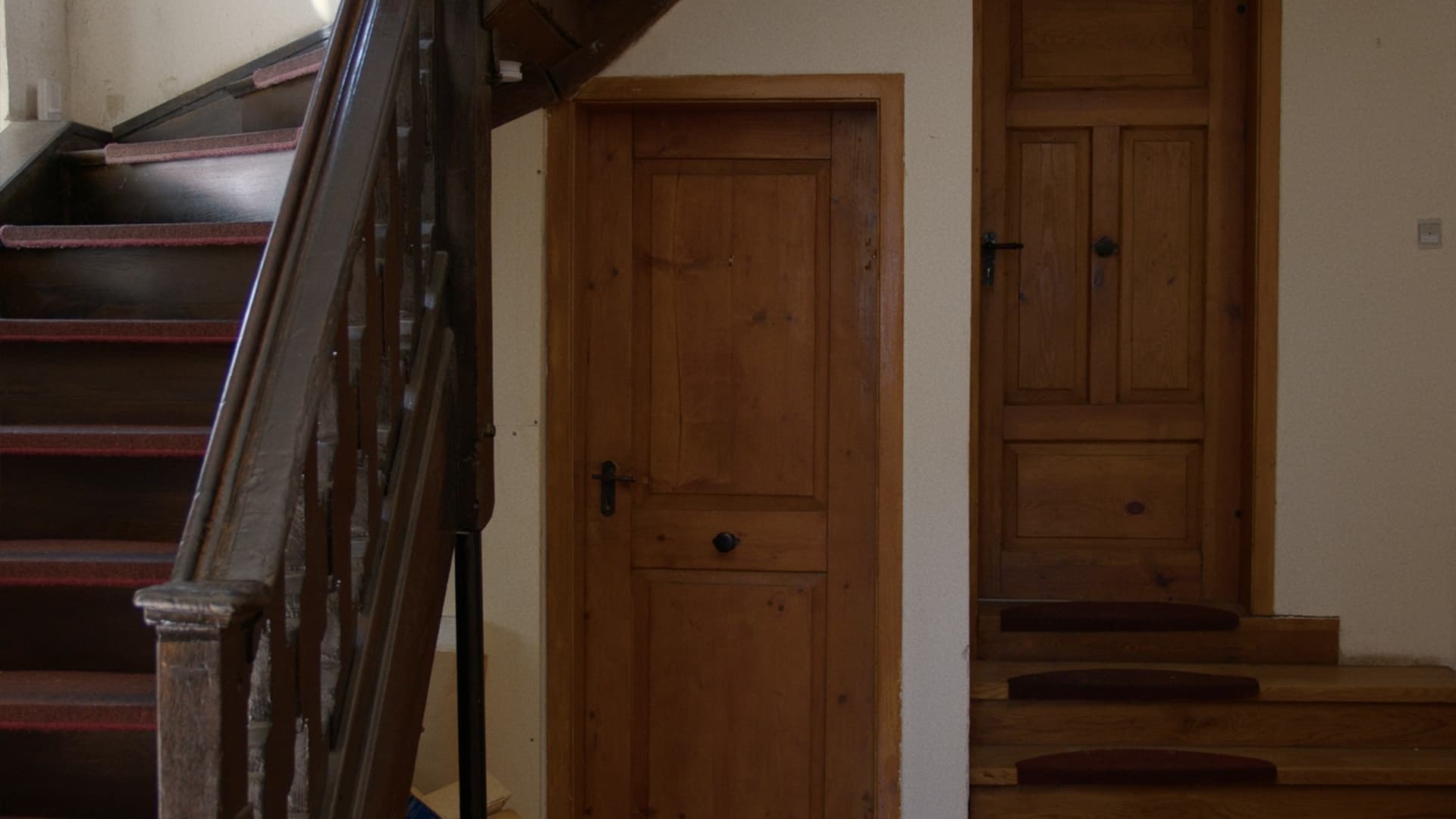

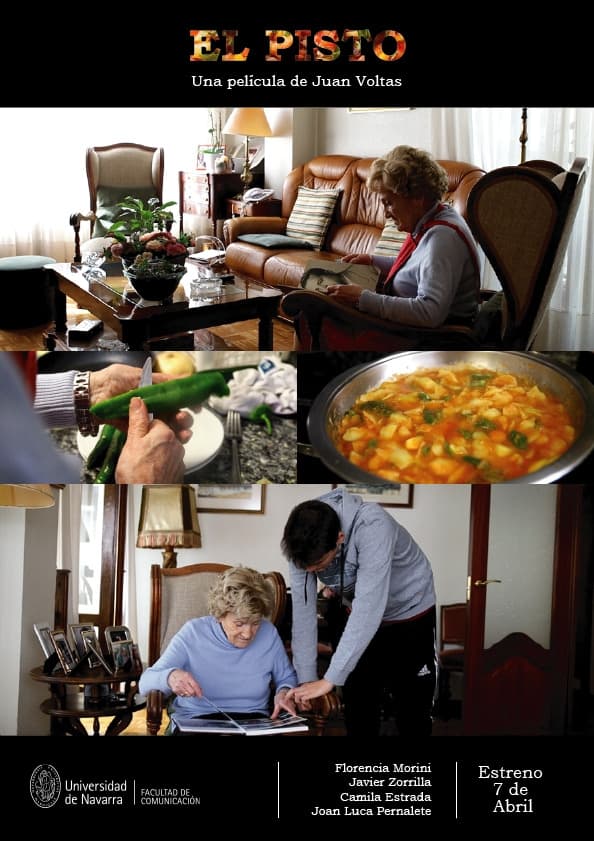
The life of a couple is observed through the home they have left behind.
Social & External
Working men and women leave through the main gate of the Lumière factory in Lyon, France. Filmed on 22 March 1895, it is often referred to as the first real motion picture ever made, although Louis Le Prince's 1888 Roundhay Garden Scene pre-dated it by seven years. Three separate versions of this film exist, which differ from one another in numerous ways. The first version features a carriage drawn by one horse, while in the second version the carriage is drawn by two horses, and there is no carriage at all in the third version. The clothing style is also different between the three versions, demonstrating the different seasons in which each was filmed. This film was made in the 35 mm format with an aspect ratio of 1.33:1, and at a speed of 16 frames per second. At that rate, the 17 meters of film length provided a duration of 46 seconds, holding a total of 800 frames.
ERGO is enabling kids all around the world to turn the Earth into a giant telescope. By placing 'pixels' that detect cosmic rays in classrooms around the world, ERGO is turning the surface of the Earth into a giant, rotating telescope.
In 1963 Aerojet-General built a rocket manufacturing plant in the middle of the Everglades. They were hoping to build rockets for the Apollo moon mission. The rockets were built and tested in a 150 ft. deep silo, the deepest hole ever dug in Florida.
David Lynch, Mädchen Amick, Kyle MacLachlan and John Wentworth reminisce about "Twin Peaks" while seated at a diner counter.
Journalist Dermi Azevedo has never stopped fighting for human rights and now, three decades after the end of the military dictatorship in Brazil, he's witnessing the return of those same practices.
A young woman of the Tarahumara, well-known for their extraordinary long distance running abilities, wins ultramarathons seemingly out of nowhere despite running in sandals.
In this comedic docufiction, Javier (Javier Raphael) is a young man who has always wanted to be a football coach like his idol “El Chelís” (José Luis Sánchez Solá), but has never done anything to fulfill his dream. Now, guided by a nosy narrator (Jorge Pietrasanta), he will look for some of the most unorthodox amateur football coaches in Mexico, and for his beloved "Chelís", so that each one can give him lessons until he is fully trained to manage a match and thus become a true "Mexican football coach".
Documentary on the work of French caricaturist Jean Ignace Isidore Gérard, better known by his pseudonym Grandville (1803-1847). Based on a text by Dotremont, the film takes us on an imaginary journey to the planet of the "Real People", whose habits and customs we learn about. A satire on the arts and society.
Apiyemiyekî? addresses the genocide of the Waimiri-Atroari people in 1970s, when during the Brazilian dictatorship indigenous lands in the mid-west were invaded for the construction of the national road BR-174 and the installation of a mining company. Illustrations about the period, created by the indigenous population, including children, reveal a traumatic history, referring us to the present day.
The Sykora family are only four people out of millions of Venezuelans that have recently escaped their collapsing country. They land in the Czech Republic, the country where Grandpa Jan was born, but also a place utterly strange to them. In a matter of months their savings have almost gone and job seeking becomes a nightmare. Again, the dream of just having a normal life starts to vanish. Will the family manage not to crumble along the way?
The Kitades run a butcher shop in Kaizuka City outside Osaka, raising and slaughtering cattle to sell the meat in their store. The seventh generation of their family's business, they are descendants of the buraku people, a social minority held over from the caste system abolished in the 19th century that is still subject to discrimination. As the Kitades are forced to make the difficult decision to shut down their slaughterhouse, the question posed by the film is whether doing this will also result in the deconstruction of the prejudices imposed on them. Though primarily documenting the process of their work with meticulous detail, Aya Hanabusa also touches on the Kitades' participation in the buraku liberation movement. Hanabusa's heartfelt portrait expands from the story of an old-fashioned family business competing with corporate supermarkets, toward a subtle and sophisticated critique of social exclusion and the persistence of ancient prejudices.
Jim Carrey exhibits his talent as a painter and reflects on the value and power of art.
Look around. Everything you see and touch can taste like vanilla.
Part of Chris Marker’s Bestiaire (Petit Bestiaire) collection, An Owl Is an Owl Is an Owl is a short video meditation on the gaze and movement of owls—sometimes still, sometimes in flight—observed with the quiet, rhythmic attention typical of Marker’s later video work.