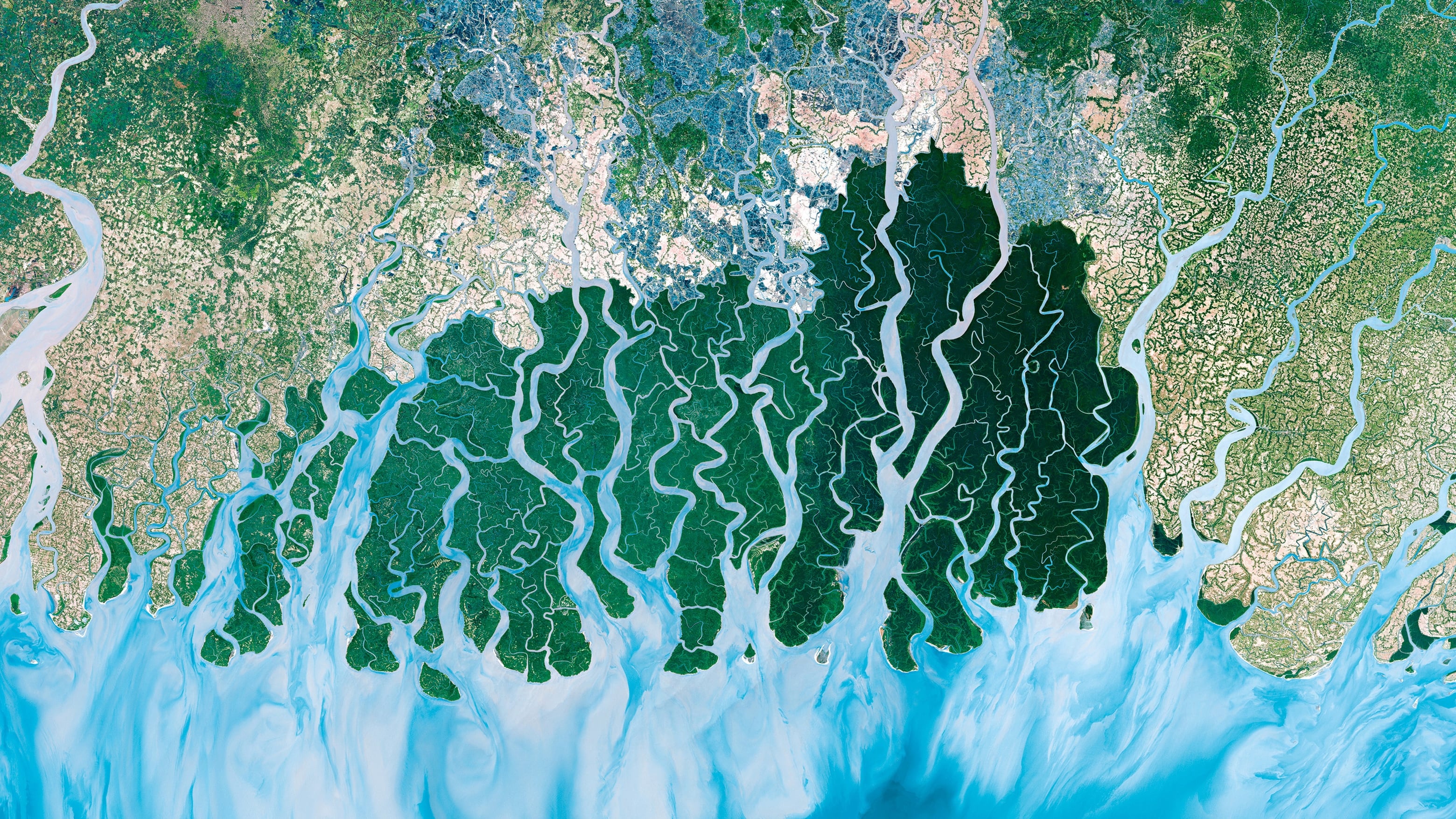
Cameras in space tell stories of life on our planet from a brand new perspective, revealing new discoveries, incredible colours and patterns, and just how fast it is changing.
Social & External
The people behind it
Chiwetel Ejiofor
Self - Narrator
Laurent Lafitte
Voix Française
From the planets to the stars and out to the edge of the unknown, history and science collide in a wondrous yet deadly adventure through space and time.
This spectacular five-part series, presented by Tony Robinson, investigates the history of natural disasters, from the planet's beginnings to the present, putting a new perspective on our existence – that we are the product of catastrophe. Using the latest CGI effects and featuring scientific experts, the series reveals how the evolution of life on Earth has been shaped by lethal catastrophes that have caused mass extinctions, almost to the point of wiping out life altogether.
It's "Mr. Wizard" for a different decade. Bill Nye is the Science Guy, a host who's hooked on experimenting and explaining. Picking one topic per show (like the human heart or electricity), Nye gets creative with teaching kids and adults alike the nuances of science.
Since the Big Bang 13.8 billion years ago, light has sculpted the cosmos. It traverses the void, interacts with matter, and dances with shadows. It multiplies and proliferates, offering the world ever more complex and luminous structures. If it could speak, what would it tell us?
A fresh look at humankind’s relationship to the planet’s wildest places and most fascinating species. Using advanced filming techniques, this series will provide visuals as stunning as the best natural history programs. Distinguishing itself from nearly all other nature films, however, the series turns the cameras around, showing the world as it really is—with humans in the picture.
Famed astrophysicist Neil deGrasse Tyson provides clarity for the vision of the cosmos as he voyages across the universe with never-before-told stories that delve into the scientific concepts of the laws of gravity and the origins of space and time.
An unprecedented look at the decade-long odyssey to land a man on the moon. This documentary pulls back the curtain on the familiar narrative of the moonshot, revealing a fascinating stew of scientific innovation, political calculation, media spectacle, visionary impulses and personal drama.
In each episode, geologist Dr. Iain Stewart explains the effects and importance of a specific force of nature, such as wind or volcanism. He also examines the various ways in which it shapes planet earth itself and influences life on it, often in conjunction with other natural forces, and sometimes with lifeforms, as in the 'apocalyptically' grave case of global warming.
The joy of a very British hobby, brought to you by Peter Snow and his team, revealing the hidden histories, engineering marvels and true pleasures of plane spotting... live!
Documentary series tracing mankind's exploration of our solar system.
Suzi Perry meets six top photographers who will oversee their own masterclass in the art of taking beautiful pictures.
This nature series’ new technology lifts night’s veil to reveal the hidden lives of the world’s creatures, from lions on the hunt to bats on the wing.
Biologist Liz Bonnin and geologist Martin Pepper set out on a global expedition to answer the most thought-provoking questions in earth science today. Throughout history, such geologic events as volcanic eruptions, tsunamis, tectonic plate motion, earthquakes, and asteroid impacts have continually reshaped Earth's surface, spreading chaos across the planet. By performing experiments, making observations in the field, and consulting expert scientists, the eight-part series works to uncover Earth's immeasurable capacity to create and destroy.
The ultimate guide to the Solar System, told by the dedicated people who sent spacecraft to explore the sun, the planets and much more.
The human story of space exploration using unique, unexpected archive, present-day footage and first-hand testimony from around the world. This series will connect the past with the present and examine what the consequences are for the future of humankind as we once again head into space.
Professor Brian Cox explores the dramatic lives of the eight majestic planets/worlds that make up our solar system.
Filmed across six continents, this docuseries uses cutting-edge camera technology to capture animals' nocturnal lives, revealing new behaviours filmed in full color like never before.
Witness the remarkable story of our universe over billions of years and its inextricable link to life on Earth in this sweeping documentary series.
Voyage across the solar system with Professor Brian Cox and explore the new discoveries, natural wonders and strange mysteries on the diverse worlds that orbit the sun.
Horizon tells amazing science stories, unravels mysteries and reveals worlds you've never seen before.
Carl Sagan covers a wide range of scientific subjects, including the origin of life and a perspective of our place in the universe.
Motoring programme featuring reviews of and reports about cars of all types.
David Attenborough celebrates the amazing variety of the natural world in this epic documentary series, filmed over four years across 64 different countries.
Will Smith whose curiosity and wonder is positively infectious—is guided by National Geographic Explorers traveling to different corners of the world to get up close and personal with the weirdest, most unusual, dangerous and thrilling spectacles of the planet.
A users' guide to the cosmos, from the Big Bang to galaxies, stars, planets and moons: where did it all come from and how does it all fit together? A primer for anyone who has ever looked up at the night sky and wondered.
Natural World is a nature documentary television series broadcast annually on BBC Two and regarded by the BBC as its flagship natural history brand. It is currently the longest-running series in its genre on British television, with more than 400 episodes broadcast since its inception in 1983. Natural World is produced by the BBC Natural History Unit in Bristol, but individual programmes can be in-house productions, collaborative productions with other broadcasters or films made and distributed by independent production companies and purchased by the BBC. Natural World programmes are often broadcast as PBS Nature episodes in the USA. Since 2008, most Natural World programmes have been shot and broadcast in high definition.
David Attenborough presents a documentary series exploring how animals meet the challenges of surviving in the most iconic habitats on earth.
Award-winning actor and nervous explorer Eugene Levy steps out of his comfort zone for a whirlwind tour of the world's most beautiful and intriguing destinations.
Millions of years ago, incredible forces ripped apart the Earth’s crust creating seven extraordinary continents. This documentary series reveals how each distinct continent has shaped the unique animal life found there.
There is nowhere more powerful and unforgiving yet more beautiful and compelling than the ocean. Join us and explore the greatest yet least known parts of our planet.
This immersive series follows the world's most magnificent creatures, capturing never-before-seen moments from the heartwarming to the outrageous.
TV's most-watched history series brings to life the compelling stories from our past that inform our understanding of the world today.
Consistently stunning documentaries transport viewers to far-flung locations ranging from the torrid African plains to the chilly splendours of icy Antarctica. The show's primary focus is on animals and ecosystems around the world. A comic book based on the show, meant to be used an as educational tool for kids, was briefly distributed to museums and schools at no cost in the mid-2000s.