In a refugee camp in the Sahara desert lives a deaf boy who wants to learn to write. Welcome to the silent world of Kori and his best friend the camel Caramelo.
Social & External
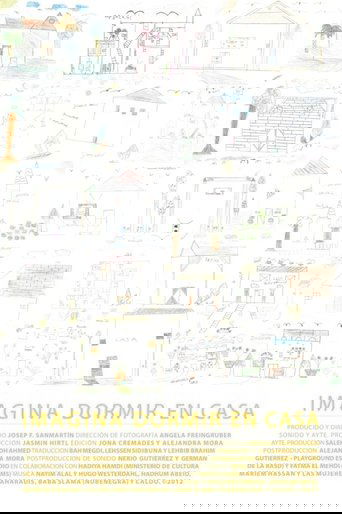
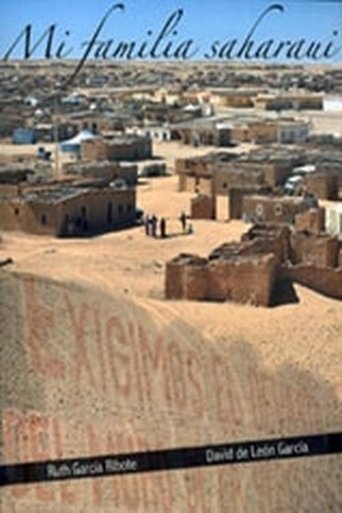
My Sahrawi family' is a report - documentary that reflects the bonds of unity between Sahrawi families and Spanish families who every summer welcome minors from refugee camps into their homes.
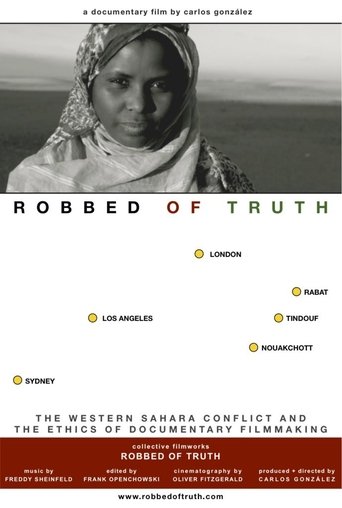
This is the true story of Fetim Salam, a Saharawi refugee falsely portrayed as a slave in the Australian documentary 'Stolen'. Australian filmmakers, Violeta Ayala and Daniel Fallshaw, travel to the Saharawi refugee camps in Tindouf, Algeria in 2007 and claim to discover 20,000 slaves in the camps run by the independence movement Polisario Front. Refugees are outraged for being portrayed as slaves, and humanitarian aid workers are incredulous about these allegations as they know the camps intimately. Filmmaker Carlos Gonzalez retraces their steps in search of the truth and finds a web of lies, misinformation and Moroccan operatives reshaping the truth.
Education Center for disabled children located in the Sahrawi refugee camps in Algeria. Despite the precarious conditions in which this population lives since 40 years ago, the Polisario Front as the representative of the Sahrawi people has promoted inclusion as a way to avoid marginalization and discrimination of one of the most vulnerable populations within these territories: children with special needs. "Castro" is the man who devotes his life to this beautiful project fighting all odds: physical, psychic, social, economic, and even the incomprehensions of his own society. The Sahrawis are living (resisting) in one of the harshest deserts on Earth but Castro has the magic formula to achieve the inclusion of these wonderful beings in his society and in the rest of the world: MUSAWAT, EQUALITY.
The Sahrawi people have lived in exile for almost half a century in the driest desert of the African continent. There, where basic resources such as water are scarce, there is a film school. As the world looks the other way, a group of young filmmakers carries out a battle against oblivion.
"Legna: speak the Saharawi verse" is an audiovisual poetry story that traces the essential elements of the Saharawi culture, chaining the verses recited in a rigorous and evocative way in Hasania and Spanish by the poets and poetesses themselves. Poems that sing and evoke the essence of Bedouin material culture linked to the movement from Saquia el Hamra to Rio de Oro. A magical journey from the Draa River in the north to Agüenit and Leyuad on the southern border with Mauritania, from the coast with the white beaches of Bojador up to the vague boundaries of the Badia. A Saharawi national territory marked by the trace of the recent history of revolution, war, resistance (intifada) and waiting. Territory, history, culture, basted from poetry full of life, love and nostalgia.
In the stunning and starkly beautiful landscape of Western Sahara, Walter Bencini recounts his journey to meet the Saharawi people, uprooted from their lands for decades and confined to desert tent camps named after the Moroccan cities where they once lived. It's the solidarity journey of a group of people from Valdarno, delivering the money and medicines raised through various initiatives directly into the hands of the beneficiaries.
25 minutes in the Sahara, is a snapshot of the 34 years of division in which resistance and justice for the Sahrawi community has played out. 1500 seconds of images and voices are heard from exile; voices that are not silent under occupation; that speak as immigrants and that hold their own as an international human platform. 1500 seconds to open and not close your eyes to the reality of these men and women, part of our History. A present of robbed freedoms, properties exploited and forgotten by those who hold the key to the globalisation of toture and repression. A bid, at the end of division, to grant the Right to a Future in the Present, from the West and democratic action in the name of the Sahara.
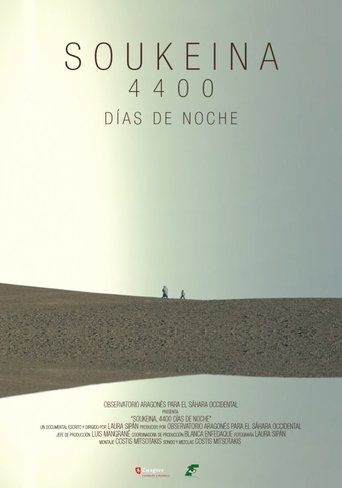
Siya, Dumaha, Mata and Aziz are Saharawi refugees that live in camps in Tindouf (Algeria). They show us the daily extreme harshness of an exile that lasts for 40 years. We can discover the unknown reality of torture, mines and maimed people, child malnutrition or mental illnesses that plague the Saharawi people, who are condemned to live away from their homeland.
Reality documentary that chronicles the Saharawi refugees living in camps in the Tindouf Hammada, Algeria, Sahara desert. Through an informative overview of the events that led them to this situation and the statements of four of its people we understand their past, we discover their present and get to know their future
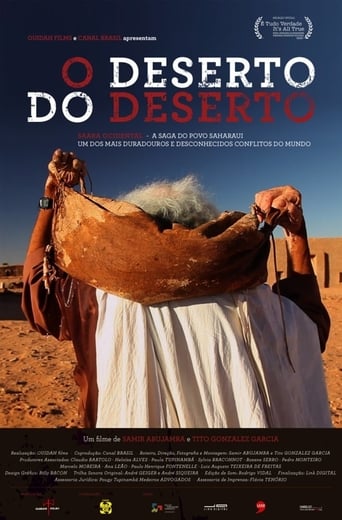
Forty years after its people were promised freedom by departing Spanish rulers, Western Sahara remains Africa's last colony. This film chronicles the everyday violence experienced by Sahrawis living under Moroccan occupation and voices the aspirations of a desert people for whom the era of colonialist never ended.
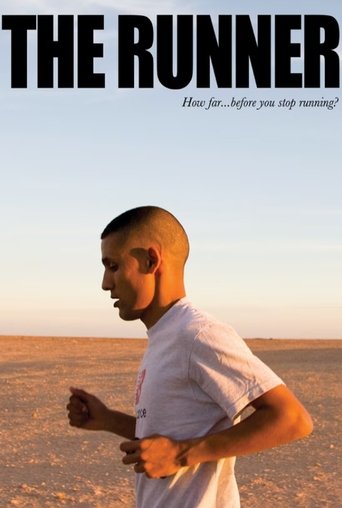
This film offers a picture of the tense situation in which the Sahrawi people have lived for more than 30 years. The yearly celebration of a marathon in the Sahrawi refugee camps serves as the central focus of the story.
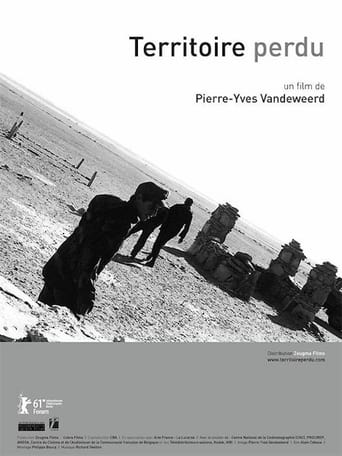
Straddling a 2,400-kilometer-long wall constructed by the Moroccan army, the Western Sahara is today divided into two sections — one occupied by Morocco, the other under the control of the Sahrawi National Liberation Movement’s Polisario Front. Drawing from stories of flight, exile, interminable waiting and the arrested, persecuted lives on both sides of that wall, this film bears witness to the Sahrawi people, their land, their entrapment in other people’s dreams. In an esthetic that sublimates the real, Lost Land resonates like a score that juxtaposes sonorous landscapes, black-and-white portraits and nomadic poetics.
Testimonies of a people enlisted on the path of independence. Records taken at refugee camps in Tindouf (Sahara Desert in southern Algeria) and Bir Lehlu (region liberated by the Polisario Front)
Documentary about the arduous early years of the Sahrawi cause (1977)
Trapped between the violence of the Moroccan regime and the indifference of the international community, the Saharaui People fight peacefully in order to recover their land and sovereignty. The DNGO Mundubat looks into the dramatic consequences this conflict has brought to the civilian population both in the refugee camps and occupied territories of the Western Sahara.
Tebraa is the song of the women of the Sahara desert. Songs of love or lamentation that they sing when they are alone. This collective documentary made by a group of Andalusian women tells the life and injustices that Sahrawi women experience in the adverse conditions of exile and in the occupied territories of Western Sahara.
Spanish actor Pepe Viyuela embarks on a personal journey on the trail of his grandfather Gervasio, a soldier in the Republican Army during the Spanish Civil War.
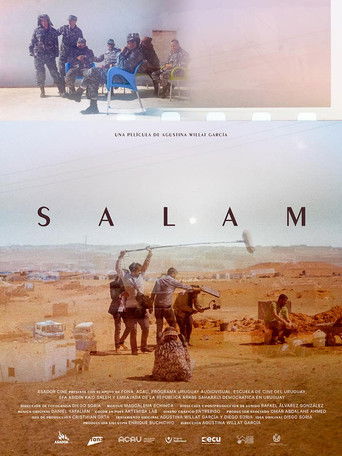
The film, shot in the Saharawi refugee population camps, tells the story of a group of students from a film school who, for their final year project, decide to shoot on the Wall of Shame erected and mined by Morocco, in the middle of the current war that is being waged after the breaking of the ceasefire by the Alawite regime in November 2020.
Young Mohamed Dih, who in Seville, returns to his birthplace – a refugee camp in Western Sahara. Time flows differently here: the times of the day are marked by calls to prayer and the seasons – by the rainfall. When a torrential downpour destroys his family’s home, the protagonist stays in the camp for longer to help to rebuild it.
The political upheaval in North Africa is responsibility of the Western powers —especially of the United States and France— due to the exercise of a foreign policy based on practical and economic interests instead of ethical and theoretical principles, essential for their international politic strategies, which have generated a great instability that causes chaos and violence, as occurs in Western Sahara, the last African colony according to the UN, a region on the brink of war.