The interactive roadmovie follows the trail of a convicted war criminal with ties to Switzerland. On a journey through contemporary Rwanda, the viewer decides how deeply he wants to immerse himself in the story.
Social & External
Mariam, Asiya, and Anissa were 11, 7, and 5 years old when they were raped. The attackers were their paternal uncle, a neighborhood youth, and the nanny's son. They have no memory of the event. To protect them, their bodies developed traumatic amnesia. Years later, the memories returned, and they decided to file a complaint.
A Bunch of Questions with No Answers (2025) is a 23-hour film by artists Alex Reynolds and Robert M. Ochshorn. Compiled entirely from questions posed by journalists at U.S. State Department press briefings between October 3, 2023, and the end of the Biden administration, the work removes the officials’ answers, leaving only the unresolved demands for clarity and accountability.
Though both the historical and modern-day persecution of Armenians and other Christians is relatively uncovered in the mainstream media and not on the radar of many average Americans, it is a subject that has gotten far more attention in recent years.
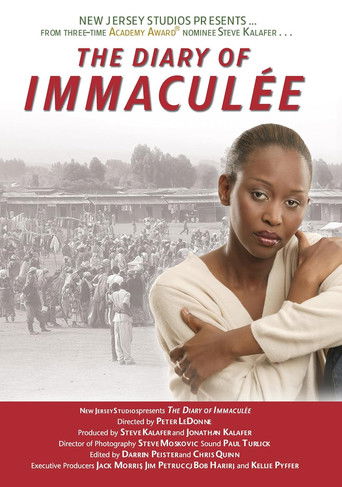
Peter LeDonne and Steve Kalafer chronicle the extraordinary life of Immaculée Ilibagiza, a young African woman who escaped genocide in Rwanda and ultimately found refuge in the United States. Seeking shelter with an Episcopalian minister, Immaculée hid from her attackers inside a bathroom for three long months but stayed centered through prayer and faith.
The Philippines remains the only nation without legalized divorce. Through the perspectives of a controversial priest, a women's rights advocate, and a child of a separated couple, this documentary explores whether the legalization of divorce in the country would be for better or worse.
An epic documentary of rise and fall of Ustasha regime in Croatia.
The story of 600 men who protected and rescued civilians during the Rwandan genocide before helping to liberate their country in 1994.
While serving with the African Union, former Marine Capt. Brian Steidle documents the brutal ethnic cleansing occuring in Darfur. Determined that the Western public should know about the atrocities he is witnessing, Steidle contacts New York Times reporter Nicholas Kristof, who publishes some of Steidle's photographic evidence.
Linguist-philologist Mark Janse discovers speakers of the Cappadocian language – previously assumed extinct, linguists worldwide are exhilarated at the discovery, but Janse realizes the rediscovered language is doomed to die anyway.
The aftermath of the Rwandan genocide: A student theatre troupe tours Rwanda with a comedy about the genocide, a gang of killers gets rough justice at the local genocide court, and a prosecutor investigates a priest for the murder of five Tutsi children. Meanwhile, in neighbouring Tanzania, two of the genocide's leaders face the United Nations tribunal in snappy suits, defended by a panoply of French lawyers.
Included in this groundbreaking work are interviews with active farm attackers and serving police officers who confirm corrupt police are complicit in the mass‐slaughter of South Africa’s whites. Their truths are horrifying—a man and woman branded with hot irons and left to die. A husband killed in front of his wife and children. An elderly woman raped, another with half her face blown off from a shotgun. And they all share a common thread: revenge. This is a disturbing documentary—it wrought both an emotional and physical toll on all involved. What’s more, Katie was detained at the airport in South Africa on the orders of the African National Congress (ANC) for her work on this project because Plaasmoorde is the story—the truth—they don’t want you to see. We owe it to the victims—to our fellow man—to listen and to open our eyes to the truth.
Join filmmaking duo Chris Hegedus and Nick Doob as their cameras follow Franken to book signings, campaign rallies and the launch of Air America Radio, documenting his transformation from irreverent funnyman to political pundit.
A documentary chronicling the adolescent years of Elie Wiesel and the history of his sufferings. Eliezer was fifteen when Fascism brutally altered his life forever. Fifty years later, he returns to Sighetu Marmatiei, the town where he was born, to walk the painful road of remembrance - but is it possible to speak of the unspeakable? Or does Auschwitz lie beyond the capacity of any human language - the place where words and stories run out?
A history of racialism in Rwanda, from the European colonization to the 1994 genocide.
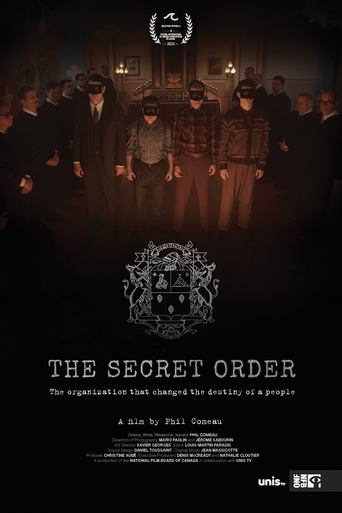
Phil Comeau shines a spotlight on the Ordre de Jacques-Cartier, a powerful secret society that operated from 1926 to 1965, infiltrating every sector of Canadian society and forging the fate of French-language communities. Through never-before-heard testimony from former members of the Order, along with historically accurate dramatic reconstructions, this film paints a gripping portrait of the social and political struggles of Canadian francophone-minority communities.
One Meter of Democracy (2010) challenged the endurance of viewers, as well as the courage of the artist. In a quasi-democratic process, He Yunchang invited approximately 20 friends to vote in a secret ballot on whether he should have a surgeon cut a one metre incision the length of his body, from collar bone to knee, without anaesthesia. The vote was carried by a narrow majority, with several abstaining. The performance was documented in video and photographs that reveal the emotional cost of witnessing this gruelling event. This work, sometimes also known as ‘Asking the Tiger for its Skin’ was also staged on a symbolic date: 10 October 2010 was the 99th anniversary of the Wuchang uprising and the Xinhai Revolution which led to the fall of the Qing Dynasty and the establishment of the Republic of China. The final image shows the group with sombre, shocked faces.
A homeless man living in a encampment in Minneapolis tells his perspective on the ongoing crisis of homelessness.
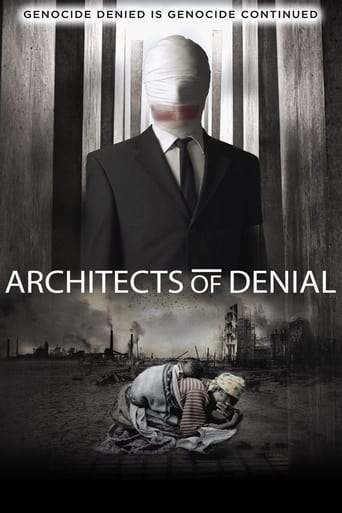
More than one million Armenians perished between 1915 and 1916 in massacres or brutal deportation programs. Turkey still denies it ever happened. Laurence Jourdan examines massacres of Armenians in the decades leading up to the mass murder, and the geopolitical situation both before and after the genocide. Contemporaneous reports and documents written by Western diplomats stationed in the Ottoman Empire describe the methods used and the deportation routes. These accounts are mixed with personal stories from the living survivors and archive footage from Ottoman authorities.
Can a government aligned with a pro-Turkish vector force the abandonment of Ararat, a symbol of the Armenian people? Could their efforts succeed over time in leading to the forgetfulness of national values such as the Armenian language, Christianity, the historical homeland, and the Genocide? These questions are raised in the documentary The Promised Mountain, dedicated to the 110th anniversary of the Armenian Genocide.