A 38 minute documentary that investigates why antisemitism exploded in Bay Area High Schools after Hamas attacked Israel on October 7. This comes after years of anti-Asian hate and anti-white hate.
Social & External
Self
In 1937, tens of thousands of Haitians and Dominicans of Haitian descent were exterminated by the Dominican army, on the basis of anti-black racism. Fast-forward to 2013, the Dominican Republic's Supreme Court stripped the citizenship of anyone with Haitian parents, retroactive to 1929, rendering more than 200,000 people stateless. Elena, the young protagonist of the film, and her family stand to lose their legal residency in the Dominican Republic if they don't manage to get their documents in time. Negotiating a mountain of opaque bureaucratic processes and a racist, hostile society around, Elena becomes the face of the struggle to remain in a country built on the labor of her father and forefathers.
What would your family reminiscences about dad sound like if he had been an early supporter of Hitler’s, a leader of the notorious SA and the Third Reich’s minister in charge of Slovakia, including its Final Solution? Executed as a war criminal in 1947, Hanns Ludin left behind a grieving widow and six young children, the youngest of whom became a filmmaker. It's a fascinating, maddening, sometimes even humorous look at what the director calls "a typical German story." (Film Forum)
An American story. Traces the career of Joe Louis (1914-1981) within the context of American racial consciousness: his difficulty getting big fights early in his career, the pride of African-Americans in his prowess, the shift of White sentiment toward Louis as Hitler came to power, Louis's patriotism during World War II, and the hounding of Louis by the IRS for the following 15 years. In his last years, he's a casino greeter, a drug user, and the occasional object of scorn for young Turks like Muhammad Ali. Appreciative comment comes from boxing scholars, Louis's son Joe Jr., friends, and icons like Maya Angelou, Dick Gregory, and Bill Cosby.
The film looks at men and women of color in the U.S. Merchant Marine from 1938-1975. Through chronicling the lives of these men and women who, with a median age of 82, are beset with a host of life-threatening illnesses, the movie tells how they navigated issues of racism, disparities in the workplace, gender and familial relations.
When indie comic character Pepe the Frog becomes an unwitting icon of hate, his creator, artist Matt Furie, fights to bring Pepe back from the darkness and navigate America's cultural divide.
In 1971, after being rejected by Hollywood, Bruce Lee returned to his parents’ homeland of Hong Kong to complete four iconic films. Charting his struggles between two worlds, this portrait explores questions of identity and representation through the use of rare archival footage, interviews with loved ones and Bruce’s own writings.
Exploring the fallout of MIT Media Lab researcher Joy Buolamwini's startling discovery that facial recognition does not see dark-skinned faces accurately, and her journey to push for the first-ever legislation in the U.S. to govern against bias in the algorithms that impact us all.
A film about small Ontario town's struggle to restore a desecrated African-Canadian cemetery and the resulting turmoil over it.
This documentary features candid studio conversations with people of diverse backgrounds from the Erika Lust community. They share personal experiences with self-pleasure, exploring why they masturbate, how their views have evolved, and what they were taught growing up.
Recy Taylor, a 24-year-old black mother and sharecropper, was gang raped by six white boys in 1944 Alabama. Common in Jim Crow South, few women spoke up in fear for their lives. Not Recy Taylor, who bravely identified her rapists. The NAACP sent its chief rape investigator Rosa Parks, who rallied support and triggered an unprecedented outcry for justice. The film exposes a legacy of physical abuse of black women and reveals Rosa Parks’ intimate role in Recy Taylor’s story.
A documentary that follows the recording process over three days and nights of "(I'll Love You) Till the End of the World" by Nick Cave and the Bad Seeds. A new version of the documentary appeared in 2005, and on the 2019 Criterion release of Wim Wenders' film UNTIL THE END OF THE WORLD.
The film features a conversation between Lucas and Francis Ford Coppola, producer of THX 1138. They discuss Lucas' vision for the film, including his ideas about science fiction in general and in particular his concept of the "used future" which would famously feature in his film Star Wars. Intercut with this discussion is footage shot prior to the start of production of THX 1138 showing several of its actors having their heads shaved, a requirement for appearing in the film. In several cases the actors are shown being shaved in a public location. For example, Maggie McOmie is shaved outside the Palace of Fine Arts in San Francisco, while Robert Duvall watches a sporting event as his hair is cut off. Another actor, Marshall Efron, who would later play an insane man in the film, cut off his own hair and was filmed doing so in a bathtub.
Journalist Émilie Tran Nguyen invites the viewer to follow her in her quest and discover, at the same time as her, the historical origins of this anti-Asian racism. Told in the first person, alternating archive images, interviews with historians, sociologists and field sequences, this film traces the making of prejudices in the French imagination and pop culture, to twist the neck of stereotypes, deconstruct and act.
Can a tree be racist? A few years ago, debate on this issue reached as far as Fox News. The focus was a row of tamarisk trees along a huge golf course in Palm Springs, which screened off the neighborhood of Crossley Tract. This is a historically Black neighborhood, named after its founder Lawrence Crossley, who was one of the first Black residents to settle in the largely white tourist paradise, established on indigenous land over a century ago.
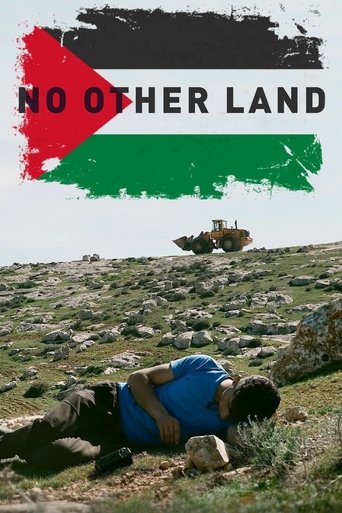
This film made by a Palestinian-Israeli collective shows the destruction of the occupied West Bank's Masafer Yatta by Israeli soldiers and the alliance which develops between the Palestinian activist Basel and Israeli journalist Yuval.
Greek-Nigerian NBA superstar Giannis Antetokounmpo returns to Nigeria for the first time.
A documentary about the making of, and legacy of, the Forbidden Planet movie.
In the fifties, when the future Democratic Republic of Congo was still a Belgian colony, an entire generation of musicians fused traditional African tunes with Afro-Cuban music to create the electrifying Congolese rumba, a style that conquered the entire continent thanks to an infectious rhythm, captivating guitar sounds and smooth vocals.
By combining actual footage with reenactments, this film offers both a documentary and fictional account of the life of Adolf Hitler, from his childhood in Vienna, through the rise of the Third Reich, to his final act of suicide in the waning days of WWII. The film also provides considerable, and often shocking, detail of the atrocities enacted by the Nazi regime under Hitler's command.
People are interviewed in Dresden, Ontario, to sample local attitudes towards racial discrimination against black people that brought this town into the news. After a round-up of the opinions of individual citizens, white and black, commentator Gordon Burwash joins two discussion panels, presenting opposite points of view. The rights and wrongs of the quarrel are left for the audience to decide.