Social & External
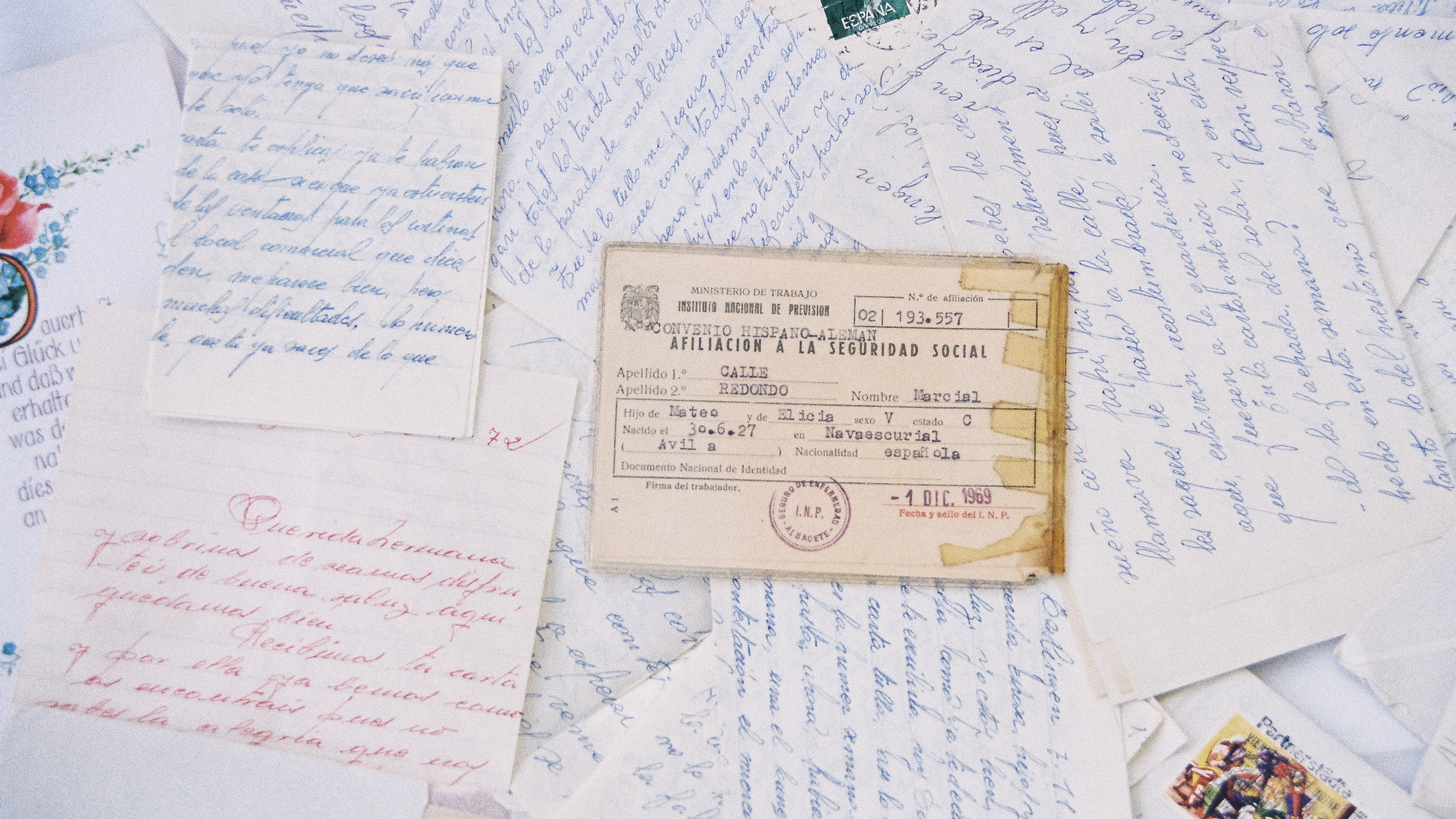
Marcial de la Calle Redondo
María de los Llanos Zalve Tendero
Elicia Marín de la Calle (voz)
The nephew of a Republican exiled during the Spanish Civil War is pushed to discover the fate of his uncle by a forgotten letter. Meanwhile, a researcher tries to discover what happened to another deportee after reading the novel "El impostor" by Javier Cercas. When the two coincide, they discover that the lives of their two ancestors are intertwined and end up unearthing the story of František Suchý and his son, who risked their lives and defied the Nazi regime from the Prague crematorium to save the ashes of more than 2,000 victims.
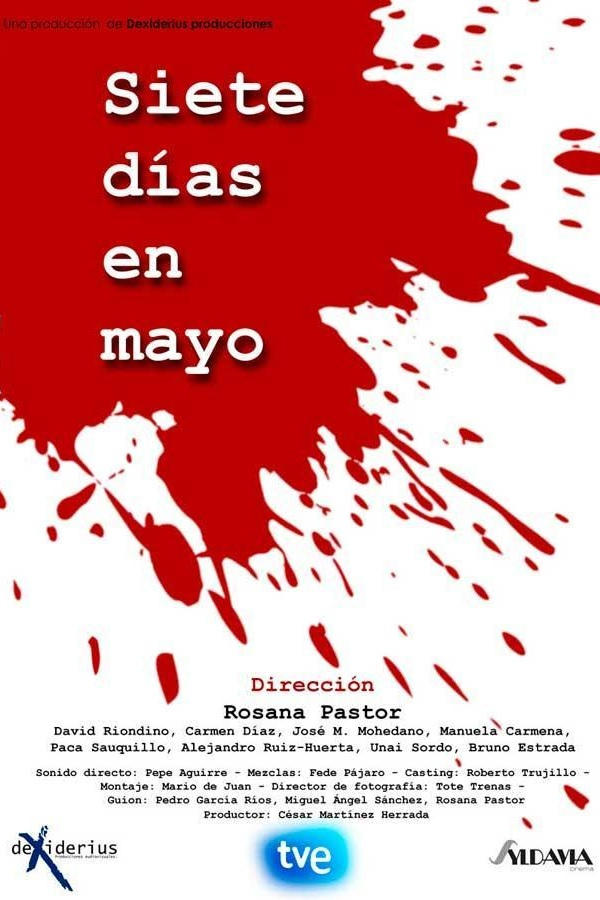
David Riondino, an Italian film director, is coming to Spain to document the Atocha massacre of 1977, to make a film on its 50th anniversary. He will be helped by Alejandra, a young documentary filmmaker who urges him to contextualise the past with the current rise of the far right. By investigating the Atocha attack, David will recover a part of that recent past and at the same time will witness a reality that encourages reflection on some burning issues such as the advance of the far right, problems of access to housing and job insecurity.
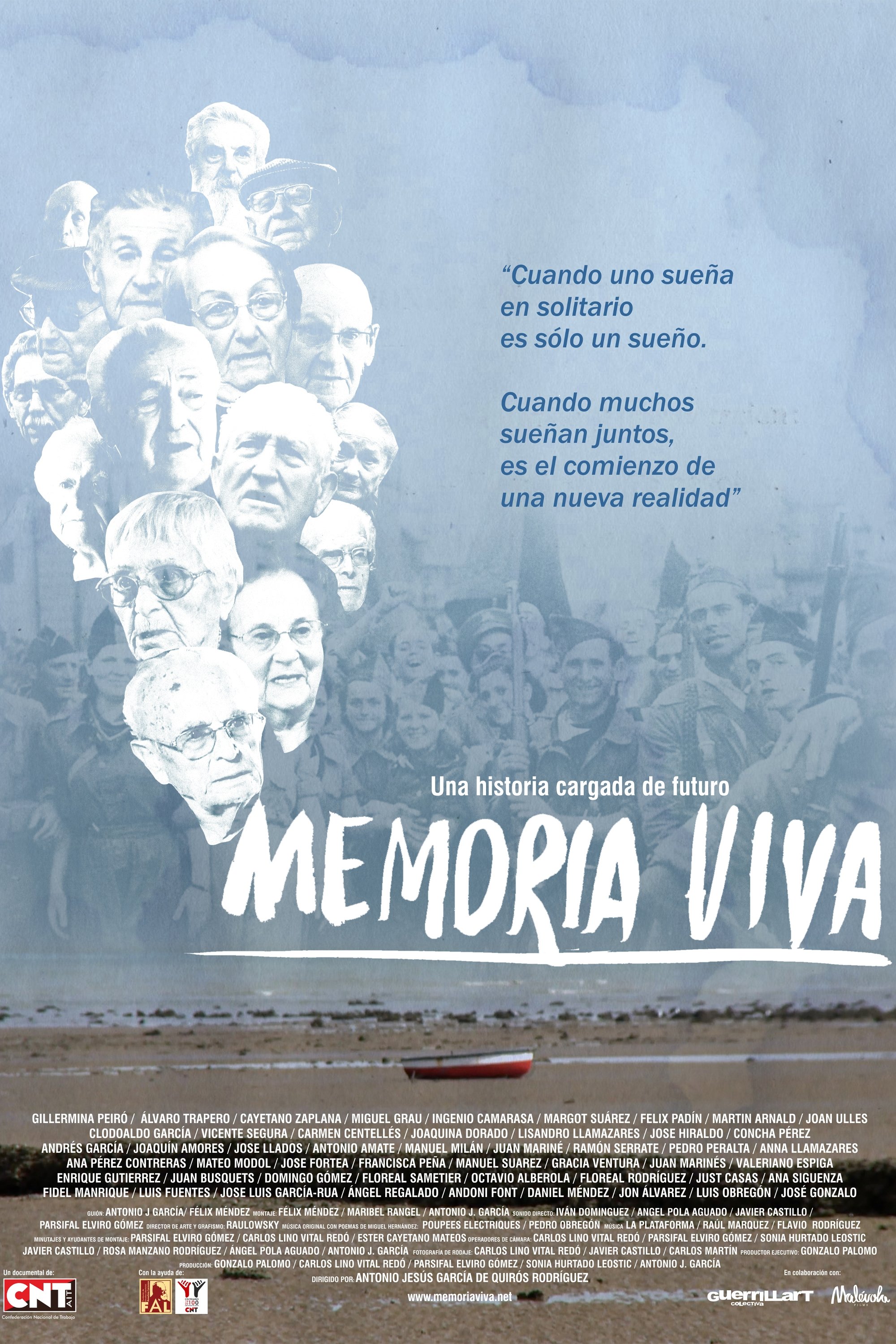
The Living Memory Project began back in 2009 on the 70th anniversary of the end of the Spanish Civil War with the recording of the event, organized in Paris to the Spanish Exiles and the victims of the Nazi extermination camp of Mauthausen. Our goal thereafter focused on collecting the greatest possible number of testimonies related to the history of Spanish anarcho-syndicalism. As part of the celebrations of 100 years of CNT we set up the project, the union decided to fund it and we set off . We travelled 12,000 km visiting three countries relying on the logistical support of CNT and selfless work of their members as well as partners Malicious Films GuerrillART. This is the result: 80 hours worth of records, 300 hours worth of testimony in timing and transcription meant for reference purposes at the Anselmo Lorenzo Foundation and 0 actors. Written by Antonio J. García de Quirós Rodríguez
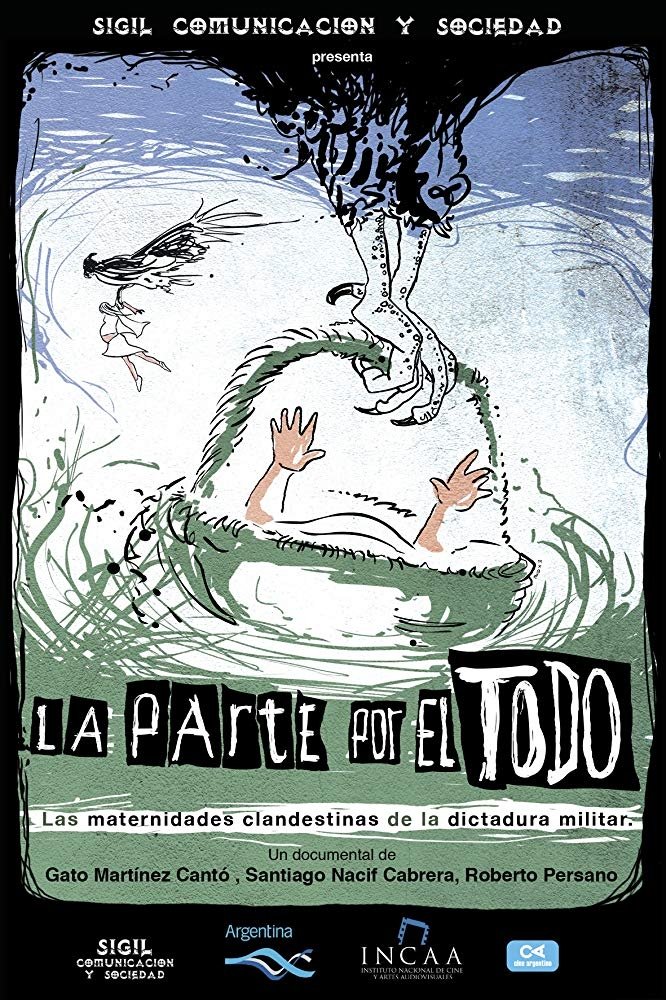
During the last argentine military dictatorship, the Army developed a systematic plan for the abduction of children, with maternity wards inside the clandestine detention centers. This film proposes itself as a trip to the truth "to bring to light the places where lots of babies saw the light for the first time"; Three restored children show the part for the whole :how a genocide was orchestrated,a scheme which planned the deprivation of identity of babies born in captivity, children of illegally kidnapped and detained women.
An experimental home documentary where you step inside the director's lens. A journey through his childhood via his own early recordings, exploring the origins of his craft and how that child’s gaze is still there, captured in time.
This documentary updates the life experiences of victims of ETA terrorist activity, twenty years after the multi-award-winning documentary Sin libertad (Without Freedom, 2001). With an experimental intent, it seeks to link the present and the future through five young journalism students in their twenties who have not experienced ETA terrorism and are responsible for interviewing the victims.
Sometimes we get hooked on a place, a moment, or a person who’s gone. This film is about coming back, waiting, and asking yourself if you truly want something to happen—or if you're just in love with the memory of it.
In the winter of 1968, in a small village in the mountains, the story follows three children who embark on a daring quest to evade the ominous Monster of Many Noses, a formidable figure deeply ingrained in Catalan folklore. This sinister character is known for hunting down children who have spun too many lies on the final day of the year. But the children are not the only ones gripped by fear; the film also explores how lies from the past can have a haunting presence. The film follows a proven formula of taking a deeply rooted legend from Catalan folklore and transforming it into a universal story. The Monster of Many Noses is a captivating exploration of history, myth, and the human condition.

A young college artist tries to sketch his next piece, vainly. Frustrated, decides to get out from his house and get some fresh air. But then, a shadow springs forth from one of his rejected ideas, determined to reach him. Short silent film inspired by Nosferatu (1922) and The Gabinet of Dr. Caligari (1920).

Luca, a young photographer, arrives in a village in Asturias to work on an artistic project. There, he stays with Xuan, an experienced cheesemaker who is marked by a past full of rumors and prejudice. Through Luca’s camera and Xuan’s craft, the two discover unexpected connections in an intimate encounter between two seemingly opposite worlds.
In 1945, beneath the oppressive shadow of the Francoist dictatorship, Juan, a university teacher assistant, meets Manuel during a chance encounter at night in a park. With their initial reservations, a complex love story unfolds between them, shaped by the turbulent political climate and the misunderstanding of those around them.
Casandra, a young woman with schizophrenia, moves into her deceased grandfather's apartment. There, her symptoms reappear stronger than ever. But is it her illness or is there something more? This country hides painful secrets... and she's locked up with one of them.
After 40 years working in the mine at Tierra del Fuego, Toto doesn’t qualify for the social security that would allow him to retire. So his son Jorge attempts to build a gold harvesting machine to bring them a better future.
A woman narrates the thoughts of a world traveler, meditations on time and memory expressed in words and images from places as far-flung as Japan, Guinea-Bissau, Iceland, and San Francisco.
Embark on an epic journey through time and faith with 'The Apocalypse of Saint John.' Join the Apostle John in a stunning visual narrative that unravels the visions of the End Times. Experience each vision like never before, with striking visual effects and epic scenes that immerse you in the apocalyptic narrative.
Director Michael Apted revisits the same group of British-born adults after a 7 year wait. The subjects are interviewed as to the changes that have occurred in their lives during the last seven years.
A documentary about how a dominant cultural and demographic institution both sustains their traditional activities and adapts to the digital revolution.
A behind the scenes look into George Romero's groundbreaking horror classic Night of the Living Dead.
A compilation of over 30 years of private home movie footage shot by Lithuanian-American avant-garde director Jonas Mekas, assembled by Mekas "purely by chance", without concern for chronological order.
This film tells the story of three defeats: Berlusconi’s political and human defeat in his “twilight”, the one of Ciccio Mirra, Berlusconi’s unconditional supporter, deeply rooted in an ancient culture that dies hard, and the director’s artistic defeat in an Italy that recognised itself in this “Berlusconian culture” for a long time, and probably still does.
Naples, Trajan's district. Initially it was intended for the inhabitants of the shantytowns on the seafront of Naples, who were homeless after the war. But it soon became a kind of ghetto. Alessandro and Pietro are two teenagers who film with an iPhone to tell their difficult neighborhood, their daily life, the friendship that binds them.
The film follows adventurer Jeff Johnson as he retraces the epic 1968 journey of his heroes Yvon Chouinard and Doug Tompkins to Patagonia.
Lasting for roughly 50 seconds, it shows the goodbyes of many passersby - first Europeans, then Palestinian Arabs, then Palestinian Jews - as a train leaves Jerusalem.
After another 7 year wait, director Michael Apted revisits the same group of British-born children from Seven Up! and 7 Plus Seven. The subjects are interviewed as to the changes that have occurred in their lives during the last seven years.
When a cross-section of seven-year-olds were interviewed for 7 Up in 1964 it was immediately evident that their social backgrounds influenced their attitudes towards life. While the upper class children were confident and self-assured, those from middle and working class backgrounds were resigned to a challenging life of hard work. This premise was put to the test every seven years when the same group were interviewed about the progression of their lives. 49 years in the making, the changes that occurred to the original 14 make for fascinating television and are in many ways the stories of all our lives. From success and disappointment, marriage and childbirth, to poverty and illness, nearly every facet of life has been captured on film. Now, at the age of 56, the group are once more brought together and, with the benefit of hindsight, assess whether their lives have been ruled by circumstance or self-determination.
Shot over three years on the borders between Iraq, Kurdistan, Syria and Lebanon, the film depicts the everyday struggles of people attempting to rebuild their lives amongst the devastating effects of civil wars, dictatorships, foreign invasions, and the deadly presence of ISIS.
The story of a hitman for the drug cartels in Ciudad Juarez, Mexico.
Time-lapse photography showing the one month-long demolition of the Star Theatre in New York.
A depiction of the Wrangelkiez neighbourhood in Berlin. The people portrayed tell their life stories. One woman came to the neighbourhood a decade ago to work in Berlin’s still unfinished Brandenburger Airport, one man reminisces his childhood on a Tobacco farm in Kentucky, another speaks of an exceptional day in an otherwise monotonous workplace. These portraits are interwoven with the story of Elpi, a Greek woman who is waiting for the long overdue visit of an old important friend. The outcome of this mixture is a film which captures the lives and perspectives of some of Wrangelkiez’s most commanding citizens, while at the same time evoking the loss that change and time passing means for places and for people.
A purely observational non-fiction film that takes viewers into the ethically murky world of end-of-life decision making in a public hospital.
After a 7 year wait, director Michael Apted revisits the same group of British-born children from Seven Up! The subjects are interviewed as to the changes that have occurred in their lives during the last seven years.
Filmed over 3 years in Homs, accompanying 2 outstanding young men from the time they were only dreaming of freedom to the time when they are forced to change course. Basset, the 19yo national football team goalkeeper, who became an outspoken demonstration leader in the city, then an icon revolution singer, till he becomes a fighter... a militia leader. Ossama, his 24yo friend, renowned citizen journalist, cynical pacifist... as his views are forced to change, until he is detained by army secret service. It is the story of a city, of which the world have heard a lot, but never really got closer than news, never really had the chance to experience how a war erupted. a modern times epic of youth in war time.