Social & External
The people behind it
Henry, a newly resurrected cyborg who must save his wife/creator from the clutches of a psychotic tyrant with telekinetic powers, AKAN, and his army of mercenaries. Fighting alongside Henry is Jimmy, who is Henry's only hope to make it through the day. Hardcore Henry takes place over the course of one day, in Moscow, Russia.
This Is Not Me is an intimate, haunting exploration of identity, longing, and the truths we try to hide. A raw, dreamlike film built from five striking monologues. Each character reveals the parts of themselves they’d rather keep hidden, blurring the line between confession and performance.
TAMAN HUTAN Chapter Four: The Wound Response focuses on the rubber craze of the 20th century through both archival documentation of wages and an interview with Cek Anuan on his grandfather Rasimin who worked with English naturalist Henry Nicholas Ridley. Focusing on the Singapore Botanic Gardens as the site of interaction between colonists and labourers, the film reveals the wounds of those erased from colonial records but who remain inscribed within nature itself.
Proximities focuses on the trope of the Malay Boy found in the works of Singaporean artist Cheong Soo Pieng (b. 1917-1983). It attempts to locate the Malay male in art history while unpacking underlying systems of power that have shaped and naturalised the understanding of difference.
The Garden is an experimental work that describes the inner worlds of two sisters manifested through their connection with the garden outside their home. While mourning the passing of their close relative, the sisters encounter a man in the garden, evoking a sense of mortality in one and awakening the sensuality in another. The film was directed by Ong Ann Meng (better known as Meng Ong), who went on to win numerous awards for his short films at the Singapore International Film Festival between 1991 and 1993. His first feature, Miss Wonton (2001), won the FIPRESCI Prize at the Locarno International Film Festival.
state. is an exploration of liminal spaces, physical and emotional, from the perspective of a teenager. Unravelling through a desktop screen, the film navigates between different states: physical and digital, reality and whimsicality, and childhood and adulthood.
The gaze in autocorrelation.
Colourful lines and geometric figures move and change to the notes of a disjointed Wilhelmus [Dutch national anthem]. As the film progresses the disjointed music finds its way back to the original and flowing performance of the national anthem. The colours and figures move simultaneously into the shape and the tricolour of the Dutch flag.
The author's erotic imagination is mixed between desire and magazine clippings, and the trade of collage becomes a ship that travels from outer space to the city itself.
You and AI at the end of the world.
Falling Frames is the first fragment of a series in which Langkamp explores the framing and visualization of three-dimensional perspective through the two-dimensional medium of video, both technically as well as conceptually. To record the work, a special device was built that's attached to a tall industrial crane, which contains a stack of wooden picture frames that can be released from a height of ten to fifteen meters. The camera is placed right in the center of the action and captures the frames' movement while they fall down. The slow motion recording of 240 still frames per second allows us to experience every millimeter of movement to the very detail. While the frames get smaller and smaller in perspective as they move further away from our view, they are immediately followed by the next frame and the next one, until they've all reached the floor and found a place to rest.
Capturing life through the lens of a dream, Albert explores the evocation of the subconscious mind through the vivid visualism and dynamism of images.
A comfortable rhythm composed of light and shadow. Director Ogino-style absolute movie which freely manipulates geometric figures.
Weird Weird Movie Kids Do Not Watch The Movie is the second collaborative feature film between Rouzbeh Rashidi and Maximilian Le Cain. This hypnotic, visually and sonically immersive exploration of a haunted space unfolds in two parts. In the first, a woman (Eadaoin O’Donoghue) dissolves her identity into the ghostly resonances she finds in the rooms and corridors of a sprawling, atmospheric seaside basement property. In the second, a man (Rashidi), existing in a parallel dimension of the same space, pursues a bizarre and perverse amorous obsession.
Before the freeze, there was beautiful garden. "Before the Freeze" is a short psychological thriller with experimental elements, about an overstressed, newly-single mother, her daughter, their dog, and what happens one afternoon when a friend comes over. "Before the Freeze" is Tenley E. Raj's debut film. Written, directed, shot, and edited and by Tenley E. Raj.
A Short Film focusing on the urge to escape from the rabbit hole of depression
In his contribution to the On Art and Artists interview series, Nathaniel Dorsky (b.1943) begins by discussing his childhood love of the John Ford film Stagecoach and its influence upon his decision to make films while attending Antioch College. Describing the affinity he developed for work operating at the intersection of film materiality and personal language, Dorsky explains how he developed his philosophy of the “devotional film” and the “microcosmic viewer.” Dorsky likens his practice to Buddhist sculpture, referring to himself as a “Japanese poet continuing aspects of the ethos of the Marxist revolution.” In the interview, the artist describes his use of the screen as an “altarpiece for the image” and emphasizes his use of editing to create works which “harmoniously coalesce.” Interview conducted by Jeffrey Skoller in May 2000, edited in 2014.
Stop-motion experimental short where two men communicate with one another, talk on the telephone, smoke cigarettes, and contort themselves. Produced 1987 and released in 1988 on the VHS compilation Fat of the Land, released via Factory Records video imprint IKON. "Here is the first tape of a new British cinema which should be seen by everyone who loves film. The official British cinema is truly dead, alive only in admens bought dreams. This is the way to go."- Derek Jarman
Filmed on location in Vignaccio, Grosseto, Italy.
Capturing Avatar is a feature length behind-the-scenes documentary about the making of Avatar. It uses footage from the film's development, as well as stock footage from as far back as the production of Titanic in 1995. Also included are numerous interviews with cast, artists, and other crew members. The documentary was released as a bonus feature on the extended collector's edition of Avatar.
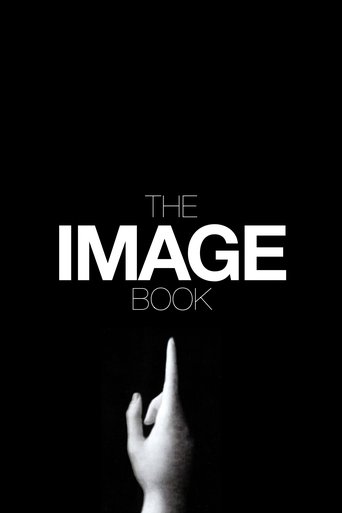
In Le Livre d’Image, Jean-Luc Godard recycles existing images (films, documentaries, paintings, television archives, etc.), quotes excerpts from books, uses fragments of music. The driving force is poetic rhyme, the association or opposition of ideas, the aesthetic spark through editing, the keystone. The author performs the work of a sculptor. The hand, for this, is essential. He praises it at the start. “There are the five fingers. The five senses. The five parts of the world (…). The true condition of man is to think with his hands. Jean-Luc Godard composes a dazzling syncopation of sequences, the surge of which evokes the violence of the flows of our contemporary screens, taken to a level of incandescence rarely achieved. Crowned at Cannes, the last Godard is a shock film, with twilight beauty.
A look behind the lens of Christopher Nolan's space epic.
This special explores the return of Obi-Wan Kenobi and Anakin Skywalker to the screen, as well as Ewan McGregor and Hayden Christensen to their classic roles. Director Deborah Chow leads the cast and crew as they create new heroes and villains that live alongside new incarnations of beloved Star Wars characters, and an epic story that dramatically bridges the saga films.
Filmmaking icon Agnès Varda, the award-winning director regarded by many as the grandmother of the French new wave, turns the camera on herself with this unique autobiographical documentary. Composed of film excerpts and elaborate dramatic re-creations, Varda's self-portrait recounts the highs and lows of her professional career, the many friendships that affected her life and her longtime marriage to cinematic giant Jacques Demy.
Charlotte Gainsbourg agrees to play a witch condemned to be burned at the stake in the first film directed by Béatrice Dalle. But the chaotic production, technical problems, and psychotic breakdowns gradually plunge the shoot into a chaos of pure light.
An atmospheric essay, which is an alternative version of Count Dracula, a film directed by Jess Franco in 1970; a ghostly narration between fiction and reality.
Witness the never-before-seen footage and true story behind the John Wick phenomenon – from independent film to billion-dollar franchise.
Takes us to locations all around the US and shows us the heavy toll that modern technology is having on humans and the earth. The visual tone poem contains neither dialogue nor a vocalized narration: its tone is set by the juxtaposition of images and the exceptional music by Philip Glass.
The film goes behind the scenes of the 1999 sci-fi movie The Matrix.
A nameless drifter navigates a barren landscape punctuated by satellite dishes, radio towers and droning airplanes. Stopping periodically in anonymous hotel rooms, she makes attempts to connect to an unidentified second party.
In this documentary, wealthy entrepreneur Bryan Johnson puts his body and fortune on the line to defy aging and extend his life beyond all known limits.
As a visually radical memoir, CAMERAPERSON draws on the remarkable footage that filmmaker Kirsten Johnson has shot and reframes it in ways that illuminate moments and situations that have personally affected her. What emerges is an elegant meditation on the relationship between truth and the camera frame, as Johnson transforms scenes that have been presented on Festival screens as one kind of truth into another kind of story—one about personal journey, craft, and direct human connection.
Told through performances, TV interviews, home movies, family photographs, private letters and unpublished memoirs, the film reveals the essence of an extraordinary woman who rose from humble beginnings in New York City to become a glamorous international superstar and one of the greatest artists of all time.
Short film made with the help of the Sundance Film Institute and serving as a proof-of-concept for the subsequent feature film.
The earliest surviving motion-picture film, and believed to be one of the very first moving images ever created, was shot by Louis Aimé Augustin Le Prince using the LPCCP Type-1 MkII single-lens camera. It was taken on paper-based photographic film in the garden of Oakwood Grange, the Whitley family house in Roundhay, Leeds, West Riding of Yorkshire (UK), on 14 October 1888. The film shows Adolphe Le Prince (Le Prince’s son), Mrs. Sarah Whitley (Le Prince’s mother-in-law), Joseph Whitley, and Miss Harriet Hartley walking around in circles, laughing to themselves, and staying within the area framed by the camera. Roundhay Garden Scene is often associated with a recording speed of around 12 frames per second and runs for about 2 to 3 seconds.
The film is a panorama shot-scene lasting just under a minute. The panorama film, as coined by Lumière, is a moving-camera shot--usually accomplished by placing the camera on a moving transport, such as a boat or train.
Victor Frankenstein is a promising young doctor who, devastated by the death of his mother during childbirth, becomes obsessed with bringing the dead back to life. His experiments lead to the creation of a monster, which Frankenstein has put together with the remains of corpses. It's not long before Frankenstein regrets his actions.
Bruce Conner's landmark experimental film consisting entirely of found footage edited to a new score.
An inside look at the years of effort and craft that went into the final installment of the Duffer Brothers' generation-defining series.