A short documentary profiling the restoration and anniversary exhibition of the titular 4-4-0 steam locomotive, undertaken in honor of the Centennial of the start of the American Civil War in 1961.
Social & External
Take a breathtaking train a ride through Nothern Quebec and Labrador on Canada’s first First Nations-owned railway. Come for the celebration of the power of independence, the crucial importance of aboriginal owned businesses and stay for the beauty of the northern landscape.
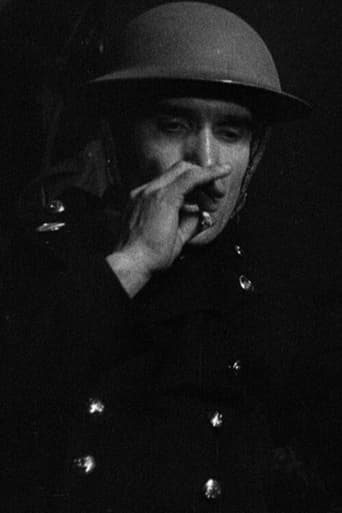
The story of how newspapers were distributed during the Blitz, stressing the importance of an accurate and objective press on the home front.
"CIVIL WAR SURVEILLANCE POEMS (Part 1)" is the first installment in a five-part project of experimental and hybrid-form short films contemplating a second American civil war via lyrical nonfiction, mixing call-in radio, twenty years of verité footage from the filmmaker's archive, and robots. Conceptually speculating from sixteen years in the future (and a protracted civil war), the project is partly nostalgic political travelogue, partly a quest to mine the archive for what went wrong, and part prewar surveillance records, the project deconstructs and builds to a clashing ideology, culminating in an installation of sound sculpture, four-walled video and artifacts.
How the Monuments Came Down is a timely and searing look at the history of white supremacy and Black resistance in Richmond. The feature-length film-brought to life by history-makers, descendants, scholars, and activists-reveals how monuments to Confederate leaders stood for more than a century, and why they fell.
Fleeing the 1980 Civil War in El Salvador, Dora Rodriguez, among a group of twenty-five asylum seekers, were abandoned by their guide and left to fend for themselves in the relentless Sonoran desert of Arizona.
A group of people are standing along the platform of a railway station in La Ciotat, waiting for a train. One is seen coming, at some distance, and eventually stops at the platform. Doors of the railway-cars open and attendants help passengers off and on. Popular legend has it that, when this film was shown, the first-night audience fled the café in terror, fearing being run over by the "approaching" train. This legend has since been identified as promotional embellishment, though there is evidence to suggest that people were astounded at the capabilities of the Lumières' cinématographe.
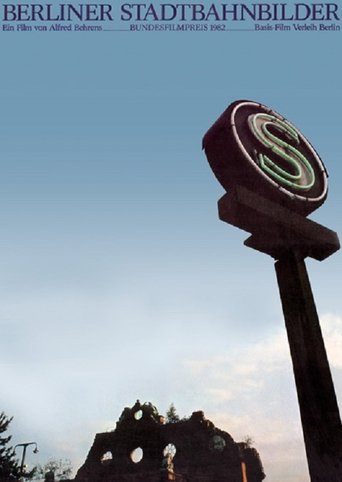
A day in the city of Berlin, which experienced an industrial boom in the 1920s, and still provides an insight into the living and working conditions at that time. Germany had just recovered a little from the worst consequences of the First World War, the great economic crisis was still a few years away and Hitler was not yet an issue at the time.
A journalist chats on the unusual excursions possible from nodal stations on Europe's train networks. Douglas Browne, journalist and traveller, takes us about Europe re-telling his experiences of many countries (Italy, Switzerland, Germany, Spain) and letting us into the secret of making the journey over land and see an exciting part of a holiday or business trip.
A documentary about the hard work of railwaymen transporting coke from Tarnowskie Góry to Szczecin Iron works.
A light and somewhat satirical look at the problems and pleasures of Continental holiday travel. A passenger on the Hook Continental Express from Liverpool St. imagines the possible destinations of his fellow passengers.
It is El Salvador, 1989, three years before the end of a brutal civil war that took 75,000 lives. Maria Serrano, wife, mother, and guerrilla leader is on the front lines of the battle for her people and her country. With unprecedented access to FMLN guerrilla camps, the filmmakers dramatically chronicle Maria's daily life in the war.
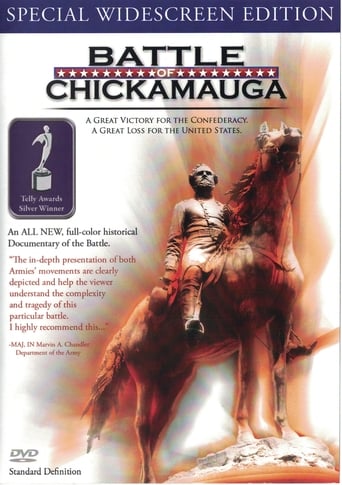
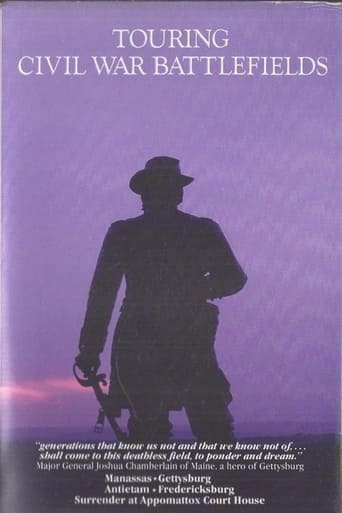
See the actual battlefields as they were and as they are today. No battlefields have greater appeal than the meticulously preserved meadows and forests where four heroic encounters of the Civil War were decided. Relive the story behind each conflict as thousands reenact the battles.
Using historically-accurate, battle-filled re-enactments and interviews with expert historians and noted authors, this two-part documentary series brings to vivid life the captivating true stories behind Britain's bloody civil wars.
For the past ten years, Jürgen Henn has filmed over-height trucks crashing into the 11foot8 train bridge affectionately nicknamed the "Can Opener." In that time, millions have viewed the crashes online. Regional, national, and international news organizations have dined out on the story and the goofy crash reels. But why do motorists continue to crash despite the many warnings, sensors, and signs? And what is it about these crashes that holds our attention? In this piece, we look for the humanity in human error.
An examination of how President Abraham Lincoln used contemporary telecommunications to his maximum advantage in the American Civil War.
"The End of the Line - Rochester's Subway" tells the little-known story of the rail line that operated in a former section of the Erie Canal from 1927 until its abandonment in 1956. Produced in 1994 by filmmakers Fredrick Armstrong and James P. Harte, the forty-five minute documentary recounts the tale of an American city's bumpy ride through the Twentieth Century, from the perspective of a little engine that could, but didn't. The film has since been rereleased (2005) and now contains the main feature with special portions that were added as part of the rereleased version. These include a look at the only surviving subway car from the lines and a Phantom tun through the tunnels in their abandoned state, among others, for a total of 90 minutes of unique and well preserved historical information.
Documentary filmmakers offer a fascinating look at one of the most spectacular engineering feats of the 19th Century as the story of the Transcontinental Railroad comes to life in a film that's sure to appeal to historians and railroad enthusiasts alike. As legions of tireless workers toiled for six years to realize the vision of shady entrepreneurs and imaginative engineers, the remarkable railway dream slowly became a reality. But not everyone was so pleased with the remarkable achievement. Despite the devastating effect that the tremendous transportation breakthrough would have on the Native American population, the lasting impact of the Transcontinental Railroad on the politics and culture of a rapidly expanding country would forever mark it as an invaluable component of the American success story.
After the last train at night and before the first in the morning, 800 people are hard at work behind the scenes making London's Underground fit to travel on. Including brushing dust from ventilation ducts, ‘fluffers’ cleaning up rubbish, routine rail replacement and fixing a broken rail discovered at 3.30am.
After 52 years of armed conflict the FARC guerrillas are about to hand over their arms in exchange for political participation and social inclusion of the poor. Ernesto is one of them. The much celebrated Colombian peace agreement throws Ernesto and the polarised society around him into chaos in which everyone is afraid of the future and their own survival.
A travelogue, this film provides a guided tour of pre-World War II Utah and of course does not pretend to cinematic greatness. Recommended viewing for those in search of introductory Utah history. Also valuable for persons seeking insight into the state as it would have looked during this time period. Especially informative for those desiring a window into the past for a view of how Utah was in the days of their pre-World War II progenitors living in the state. Those whose Utah ancestors were involved in mining, railroading, sugar beets, and other featured industries; featured towns, sights, recreational attractions, and industries may find this otherwise banal travelogue a quite valuable addition to their family history.