Social & External
Unknown Role
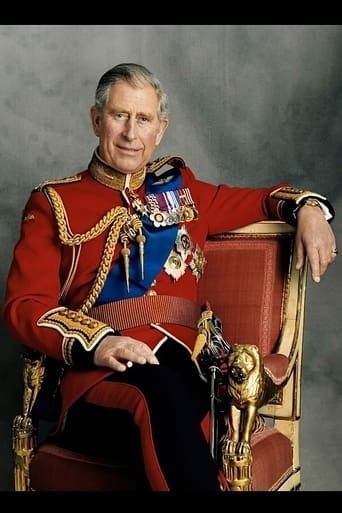
In 1977, Prince Charles was inducted as honorary chief of the Blood Indians on their reserve in southwestern Alberta. The ceremony, conducted in the great Circle of the Sun Dance, commemorated the centennial anniversary of the original signing of Treaty 7 by Queen Victoria.
Filmed in Cordoba, Granada, Seville, and Toledo, this documentary retraces the 800-year period in medieval Spain when Muslims, Christians, and Jews forged a common cultural identity that frequently transcended their religious differences, revealing what made this rare and fruitful collaboration possible, and what ultimately tore it apart.
The story of Prince Philip's mother, who fled revolution in Greece, was experimented on by Sigmund Freud, hid Jews from the Nazis, gave all her possessions away, and founded her own religious order.
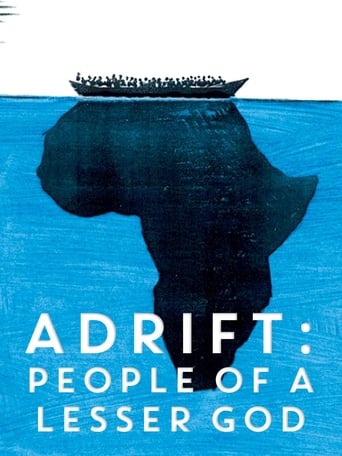
ADRIFT- People of a Lesser God is the story of an incredible odyssey made by several-times Pulitzer Prize-nominated undercover reporter Dominique C. Mollard. In this gripping story, Mollard sails with 38 African migrants, among them a five-month-old baby, out of West Africa on a quest to reach the golden shores of Europe. All aboard are packed together like sardines in a leaky fishing canoe as they set off under full moon on their harrowing journey. ADRIFT-People of a Lesser God captures the struggle of these desperate migrants as they brave their way across the cold Atlantic, risking their lives in search for a better future. —Ziad H. Hamzeh
In Garcia Lorca's mother tongue, death is a woman: "la muerte". Daniel slips into the role of "death as a female" and speaks before a video camera on the life and death of the famous Spanish poet. Then the story begins.
Alexander Armstrong looks back on the coronation for the 65th anniversary, and introduces some of the best quality colour footage of the event that survives to this day. Trevor McDonald, Len Goodman, Michael Crawford and Alison Steadman share their memories of the festivities, while royal insiders including Prince Michael of Kent recall being directly involved in the historic moment.
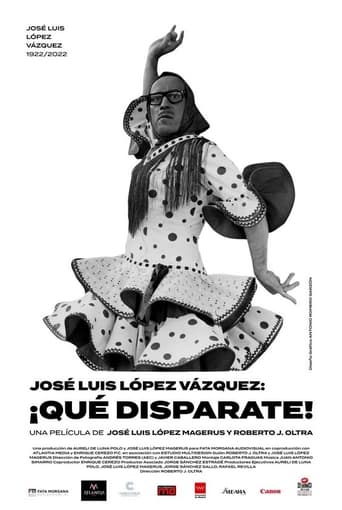
José Luis López Vázquez, an essential artist in the history of Spanish cinema, manages to find a late love that changes his life, after having a successful professional life for years, but a rather neglected personal life.
The documentary Felipe González approaches some of the most important facets and stages of the Andalusian politician's life, before becoming President of the Government of Spain: his early years, his high school studies at the school of the Claretian Fathers in Seville, his years in the Catholic Action University Youth and the Catholic Workers' Youth, his entry into the Spanish Socialist Workers' Party (PSOE).
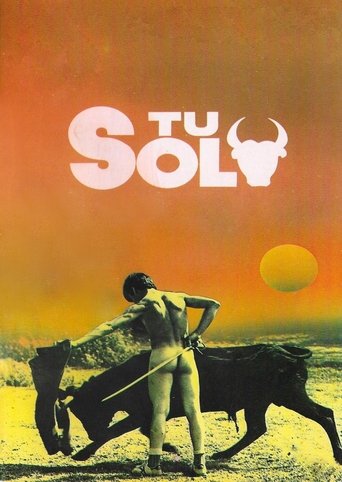
In their spare time, after their studies or their work, children and adolescents between the ages of eight and sixteen meet at the School of Bullfighting in Madrid to learn the Art of Cúchares: Torear. In their stomachs there is no hunger as in the past, their dreams do not lie in having a farmhouse and being famous. Their only dreams are to be in front of a bull, animal with which death goes, fact of which they are fully aware, as their teachers continually remind them. These, retired bullfighters, some by age, others by force and all with their bodies full of scars produced by the horns of a bull. The nude bullfighting scene is fascinating without being exploitive, and it serves as an analogy for the vulnerability these young bullfighters have when in the ring with the bulls.
7 female riders, 1 van, 15 days, 4,300km, 416 GB of raw material… culminating in one video, divided into four chapters. The film documents the adventure of the trip, portraying the girls, their lifestyle and their passion for longboard.
Luis Bunuel, the father of cinematic Surrealism, made his film debut with 'Un Chien Andalou' in 1929 working closely with Salvador Dali. Considered one of the finest and controversial filmmakers with, 'L’Age d’Or' (1930), attacking the church and the middle classes. He won many awards including Best Director at Cannes for 'Los Olvidados' (1950), and the coveted Palme d’Or for 'Viridiana' (1961), which had been banned in his native Spain. His career moved to France with 'The Diary of a Chambermaid' with major stars such as Jeanne Moreau and Catherine Deneuve.
Tito del Amo, a passionate 72-year-old researcher, takes the final step to unravel the enigma about the alleged Spanish origin of the American cartoonist Walt Disney, making the same journey that his supposed mother made to give him up for adoption in Chicago. A journey that begins in Mojácar, Almería, Spain, and ends in New York. An exciting adventure, like Alicia's through the looking glass, to discover what is truth and what is not, with an unexpected result.
A beautifully crafted documentary that takes you behind the scenes of our 2017 calendar shoots in Spain. Shot on location in Spain in glorious colour and full 4k definition, available as a download only. The Warwick Rowers are back for 2017 to raise money for charity.
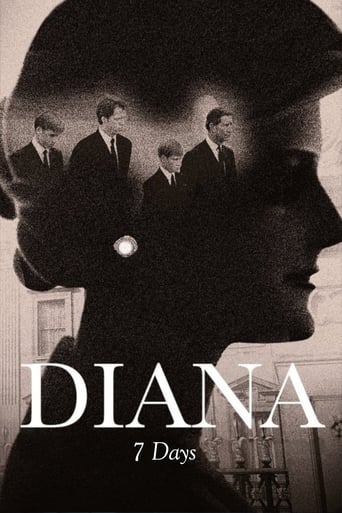
In August 1997, the tragic death of Diana, Princess of Wales, stunned her family and catapulted the British public into one of the most extraordinary weeks in modern history. What was it about Diana that resulted in such an outpouring of grief? And what does that week reveal about Britain's relationship with the monarchy, then and now?
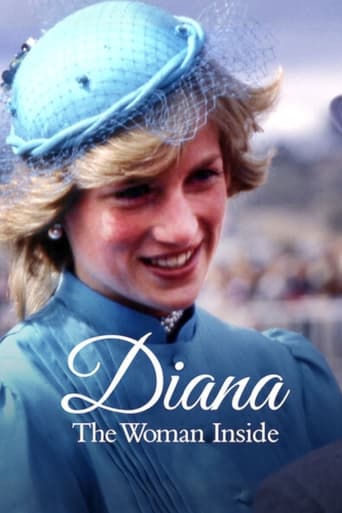
Diana The Woman Inside highlights Diana as a woman and mother, rather than just a tragic icon.
An exploration —manipulated and staged— of life in Las Hurdes, in the province of Cáceres, in Extremadura, Spain, as it was in 1932. Insalubrity, misery and lack of opportunities provoke the emigration of young people and the solitude of those who remain in the desolation of one of the poorest and least developed Spanish regions at that time.
The word "resolver" in the context of seeking solutions is a word-expression widely used in Venezuela. This documentary follows the lives of several characters during one day. We see how they feel, work, talk or do such different things that show the reality (or realities) of a country so diverse and, at the same time, so unknown to the world.
On the border, the line as principle of property and belonging reaches an extreme dimension where it physically defines the sphere of its relations. Those who transgress it reconstruct these imaginary lines on a daily basis, redefining the traditional geography and occupying the non-spaces where others live in a temporary form of existence. These others, the non-citizens, are phantasmtic, exchangeable parts of a flexible market. Made invisible, they are permanently controlled persons. Under the pretext of a greater civilian security, they are kept clear from the public spaces reserved for the citizens with rights and pushed into non-public spaces, which are run by state and military surveillance, multinational operations servicing a European market and non-governmental organisations.
What we tend to identify with the acting profession has little to do with what is really this profession. Thirty-six Spanish actors reflect on their work and contrasted their experiences. As thread, the contrast between the voices of veterans and images of young theater students , for whom everything is still possible. Among the many actors are interviewed Javier Bardem, Antonio Banderas, Victoria Abril, Carmen Maura, Fernando Fernán Gómez, José Luis López Vázquez, José Coronado, Emma Suarez, Alberto San Juan, Ariadna Gil, Ana Belén, Pilar Lopez de Ayala and many other.
A serious crisis has shaken Spain since the referendum on self-determination and the proclamation of the independence of Catalonia by the government of Carles Puigdemont, bold actions firmly fought by the Spanish government by applying the constitutional article that allows it to place a region under guardianship. While Spain is on the verge of implosion, Europe is holding its breath.