A reflection on the dictatorship of Augusto Pinochet captured in its economic and social causalities. Originally shot for a TV youth program but canceled before broadcast.
Social & External
A documentary on the rise and fall of Project Cybersyn, an attempt at a computer-managed centralized economy undertaken in Chile during the presidency of Salvador Allende.
The third installment in Dan Přibáň's series of travel documentaries describes the author's journey with his friends across South America in vehicles that are often notorious but cult in their own way. The charming dynamics of the group on screen are further enhanced by the high-quality craftsmanship.
The story of the Yugoslavian football team who became youth world champions in Chile, 1987.
Swiss television documentary on the first years of the dictatorship, filmed (in color) in 1977 by a team led by director André Gazut and journalist Claude Smadja. Strongly critical of authoritarianism and the failures of the economic model that was beginning to be adopted, the report shows different aspects of the ideological and technical implementation of the military government. From the purge in universities to the precariousness of the Minimum Employment Program, from the revenge of employers in the countryside to the lamentable composition of the constitutional commission, the show is full of conversations with personalities close to the regime (Jaime Guzmán, Maximilianio Errázuriz, Manuel Valdés, Ruy Barbosa, Arturo Fontaine Aldunate, among others) which is interspersed with testimonies from residents and farmers, victims of violence and poverty.
Filmmaker Barbet Schroeder shows the Ugandan dictator meeting his Cabinet, reviewing his troops, explaining his ideology.
The lifestyle, self-styling and political opinions of Chechen dictator Ramsan Kadyrov are examined in this documentary.
A short documentary about the making of "The Great Dictator."
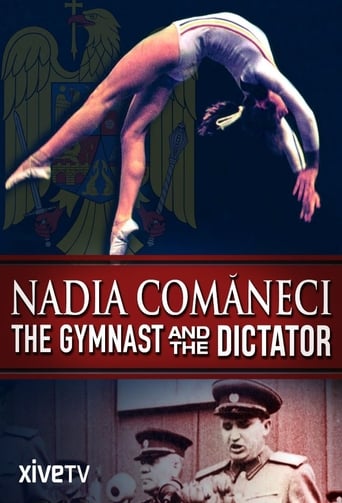
A documentary portrait of legendary Perfect Ten gymnast Nadia Comaneci after becoming an icon in the 1976 Olympics, during her Romanian period, and her challenging years under the dictatorship of Nicolae Ceausescu.
It follows Chilean writer Antonio Skármeta as he celebrates the end of the autocrats. Cheerful farewell rituals accompany others facing political persecution on their way to fly home.
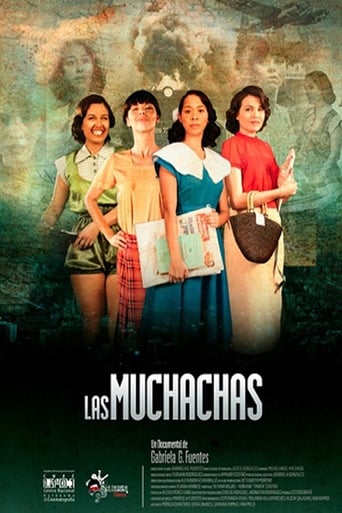
Four lucid grandmothers tell their story forgotten by history: the militancy and resistance of the young women of the leftist youth against the dictatorship of Marcos Pérez Jiménez.
"Everybody should have a home. If you punish a nation, this is so abstract, it's very mean to use your power to put another country in your control... Instead of punishment, maybe we should have love." Eliane from Chile, Milad from Iran, and Georgia from Greece, three migrants in the UK and their thoughts on love, home, family, and Shakespeare's Romeo and Juliet.
Bruno Muel's documentary on the coup in Chile in 1973. Muel, who was part of the famed Medvedkine group, along with Chris Marker and Jean-Luc Godard, among others, captured one of the most powerful portraits of the early days of Dictatorship. Profound solidarity with the socialist cause, Muel and his team showed great courage to mix the official registration of images with those triumphant, clandestine, of the nascent opposition.
Examines the career and literary output of Pablo Neruda, who makes his home at Isla Negra on the coast of Chile. Includes views of Mr. Neruda reading many of his poems in the locales which inspired them.
Rüdiger was a child, Aki two months old and Kurt, the deputy of the pedophile leader of the sect. In 1961 they came to Chile together with 500 other German sect members and for over 40 years they lived secluded from the rest of the world. The film tells about the attempt to survive as a collective after decades of crimes such as torture and murder and shows different ways in which the individual copes with the history of the community.
Portugal managed to get through all of World War II without firing a single shot. Caught in a vise between the Axis and the Allies, Antonio Salazar, the country’s strongman, used every trick in the book to get his country through unscathed. In this war of nerves in which anything went, the Portuguese dictator took brilliant advantage of the only weapon available to maintain his country’s independence: neutrality.
An interview with the president of Chile conducted by Roberto Rossellini in 1971, but broadcast only after his death.
An exploration —manipulated and staged— of life in Las Hurdes, in the province of Cáceres, in Extremadura, Spain, as it was in 1932. Insalubrity, misery and lack of opportunities provoke the emigration of young people and the solitude of those who remain in the desolation of one of the poorest and least developed Spanish regions at that time.
The movie is a fictionalized account of a disgruntled cop who has been wrongly implicated in a torture video that went viral. It begins on his last night of duty, as he is about to leave for abroad for better job prospects.
A boy is left alone in a Jewish neighborhood in the year of 1970, where both world cup and dictatorship happen in Brazil.
A young woman's desperate search for her abducted boyfriend draws her into the infamous Colonia Dignidad, a sect nobody ever escaped from.
Eduardo Coutinho was filming a movie with the same name in the Northeast of Brazil, in 1964, when there came the military coup. He had to interrupt the project, and came back to it in 1981, looking for the same places and people, showing what had ocurred since then, and trying to gather a family whose patriarch, a political leader fighting for rights of country people, had been murdered.
In the 1970s, 19-year-old María lives with her mother in Buenos Aires, giving classes to illiterate adults in the slums. Abducted by the Argentine dictatorship army for alleged subversion, Maria is submitted to torture in the underground of Garage Olimpo, as his mother searches desperately for her.
A cautionary tale for these times of democracy in crisis—the personal and political fuse to explore one of the most dramatic periods in Brazilian history. With unprecedented access to Presidents Dilma Rousseff and Lula da Silva, we witness their rise and fall and the tragically polarized nation that remains.
In 1988, Chilean military dictator Augusto Pinochet, due to international pressure, is forced to call a plebiscite on his presidency. The country will vote ‘Yes’ or ‘No’ to Pinochet extending his rule for another eight years. Opposition leaders for the ‘No’ vote persuade a brash young advertising executive, René Saavedra, to spearhead their campaign. Against all odds, with scant resources and while under scrutiny by the despot’s minions, Saavedra and his team devise an audacious plan to win the election and set Chile free.
After the coup d'État of the Democratic government of Allende, the embassy of Italy in Santiago played a major role in helping the opposers of the regime, and extradited many of them to Italy.
Chile, 1976. Carmen heads off to her beach house. When the family priest asks her to take care of a young man he is sheltering in secret, Carmen steps onto unexplored territories, away from the quiet life she is used to.
A man is obsessed with John Travolta's disco dancing character from "Saturday Night Fever".
Documentary by Mateo Gutiérrez about the life of his father, Héctor "Toba" Gutiérrez Ruiz (1934-1976), which includes interviews with people who witnessed moments in the life of the former president of the House of Representatives, assassinated by the Uruguayan dictatorship
A visual montage portrait of our contemporary world dominated by globalized technology and violence.
From a prolific career in film and television, Anton Yelchin left an indelible legacy as an actor. Through his journals and other writings, his photography, the original music he wrote, and interviews with his family, friends, and colleagues, this film looks not just at Anton's impressive career, but at a broader portrait of the man.
Serial killer Dennis Nilsen narrates his life and horrific crimes via a series of chilling audiotapes recorded from his jail cell.
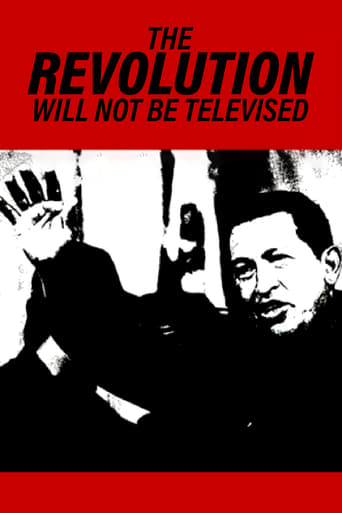
Hugo Chavez was a colourful, unpredictable folk hero who was beloved by his nation’s working class. He was elected president of Venezuela in 1998, and proved to be a tough, quixotic opponent to the power structure that wanted to depose him. When he was forcibly removed from office on 11 April 2002, two independent filmmakers were inside the presidential palace.
A documentary consisting of a series of travelogue vignettes providing glimpses into cultural practices throughout the world intended to shock or surprise, including an insect banquet and a memorable look at a practicing South Pacific cargo cult.
An exploration of technologically developing nations and the effect the transition to Western-style modernization has had on them.
A documentary on the expletive's origin, why it offends some people so deeply, and what can be gained from its use.
The Night of the Pencils was a series of kidnappings and forced disappearances, followed by the torture, rape, and murder of a number of young students during the last Argentine dictatorship (known as the National Reorganization Process). The kidnappings took place over the course of several days beginning on September 16, 1976.