A deep dive documentary into the history of the Old Jewish Cemetery of Prague.
Social & External
Narrator
Commentator-comic Bill Maher plays devil's advocate with religion as he talks to believers about their faith. Traveling around the world, Maher examines the tenets of Christianity, Judaism and Islam and raises questions about homosexuality, proof of Christ's existence, Jewish Sabbath laws, violent Muslim extremists.
A Jewish boy separated from his family in the early days of WWII poses as a German orphan and is taken into the heart of the Nazi world as a 'war hero' and eventually becomes a Hitler Youth.
In the class-obsessed and religiously divided UK of the early 1920s, two determined young runners train for the 1924 Paris Olympics. Eric Liddell, a devout Christian born to Scottish missionaries in China, sees running as part of his worship of God's glory and refuses to train or compete on the Sabbath. Harold Abrahams overcomes anti-Semitism and class bias, but neglects his beloved sweetheart in his single-minded quest.
In Paris in full German occupation in 1942, a Jewish child Isaac escapes a raid organized by the SS. He then took refuge in the Great Mosque of Paris. The imam decides to protect him by passing him off as a Muslim, as well as the other Jewish children that he manages to free with the help of the resistance networks. The French militia and the Gestapo have suspicions... This fiction film is based on the true story of the rector of the Paris mosque, Si Kaddour Benghabrit, who saved several Jews from deportation during the Second World War.
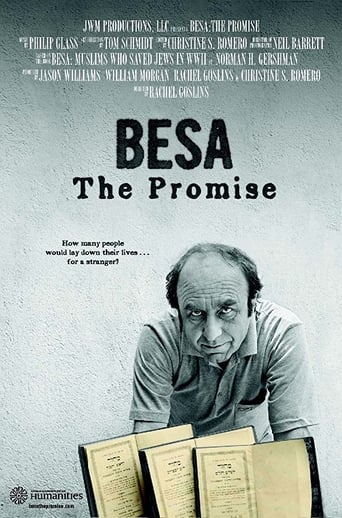
A documentary exploring how Albanians, including many Muslims, helped and sheltered Jewish refugees during WWII at their own risk, and trying to help the son of an Albanian baker that housed a Jewish family for a year return some Hebrew books that the family had to leave behind.
In ancient Judea, a Jewish aristocrat opposing Roman occupation of his homeland reunites with his childhood friend, now a Roman commander — setting in motion a saga of betrayal, adventure, tragedy, revenge, and faith.
A dramatization of the controversial trial concerning the right for Neo-Nazis to march in the predominantly Jewish community of Skokie, Illinois.
Based on a true story, during World War II, four Jewish brothers escape their Nazi-occupied homeland of West Belarus in Poland and join the Soviet partisans to combat the Nazis. The brothers begin the rescue of roughly 1,200 Jews still trapped in the ghettos of Poland.
In nineteenth-century Łódź, Poland, three friends want to make a lot of money by building and investing in a textile factory. An exceptional portrait of rapid industrial expansion is shown through the eyes of one Polish town.
The true story of how businessman Oskar Schindler saved over a thousand Jewish lives from the Nazis while they worked as slaves in his factory during World War II.
The first film in Miklós Jancsó's documentary series Message of Stones.
The true, harrowing story of a young Jewish girl who, with her family and their friends, is forced into hiding in an attic in Nazi-occupied Amsterdam.
Nazi historical drama about Duke Karl Alexander of Württemberg and his treasurer Süß Oppenheimer.
The Polish city of Łódź was under Nazi occupation for nearly the entirety of WWII. The segregation of the Jewish population into the ghetto, and the subsequent horrors are vividly chronicled via newsreels and photographs. The narration is taken almost entirely from journals and diaries of those who lived–and died–through the course of the occupation, with the number of different narrators diminishing as the film progresses, symbolic of the death of each narrator.
The first part tells the story of Moses leading the Jews from Egypt to the Promised Land, his receipt of the tablets and the worship of the golden calf. The second part shows the efficacy of the commandments in modern life through a story set in San Francisco. Two brothers, rivals for the love of Mary, also come into conflict when John discovers Dan used shoddy materials to construct a cathedral.
An inspiring documentary film that details the life mission of Col. Ilan Ramon, the first and only Astronaut from Israel, who blasted off on the Shuttle Columbia. He carries with him a cherished artifact, a miniature Torah scroll, that had survived the Holocaust. From the "Depths of hell to the heights of space," his simple gesture would serve to honor the hope of a nation and to fulfill a promise made to generations past and future.
In a small east-european ghetto, the Jewish family is celebrating Easter. The fraternal dissonance between the Sigoulim brothers pretty accurately mirrors the strife between the two powers, one surrounding Samuel, a devoted rabbi, and the other around Moïse, a talented money lender. Moïse becomes the king of petrol and ships to London with his niece Lia. Conflict continues and leads to the violent strike by oilworkers...
A documentary that invites the viewer to immerse themselves in a intimate and thoughtful walk through Poblenou Cemetery in Barcelona, better know as "El Santet", to see what is happening at its surrounding areas and, especially, inside: work, buildings, people watching over those who are no longer here, cemetery workers... A trip through a space that is closer than we think.
Drama set in the Second World War, focused on Jean Moulin, hero, martyr and symbol of the French resistance and the patriotism during the dark years of Nazi occupation.
A documentary about a pet cemetery in California, and the people who have pets buried there.
When Allied forces liberated the Nazi concentration camps in 1944-45, their terrible discoveries were recorded by army and newsreel cameramen, revealing for the first time the full horror of what had happened. Making use of British, Soviet and American footage, the Ministry of Information’s Sidney Bernstein (later founder of Granada Television) aimed to create a documentary that would provide lasting, undeniable evidence of the Nazis’ unspeakable crimes. He commissioned a wealth of British talent, including editor Stewart McAllister, writer and future cabinet minister Richard Crossman – and, as treatment advisor, his friend Alfred Hitchcock. Yet, despite initial support from the British and US Governments, the film was shelved, and only now, 70 years on, has it been restored and completed by Imperial War Museums under its original title "German Concentration Camps Factual Survey".
Produced and presented as evidence at the Nuremberg war crimes trial of Hermann Göring and twenty other Nazi leaders, this film consists primarily of dead and surviving prisoners and of facilities used to kill and torture during the World War II.
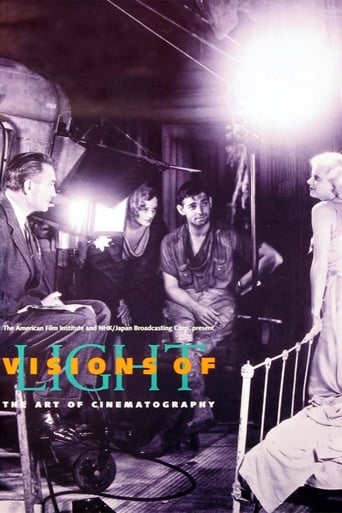
Cameramen and women discuss the craft and art of cinematography and of the "DP" (the director of photography), illustrating their points with clips from 100 films, from Birth of a Nation to Do the Right Thing. Themes: the DP tells people where to look; changes in movies (the arrival of sound, color, and wide screens) required creative responses from DPs; and, these artisans constantly invent new equipment and try new things, with wonderful results. The narration takes us through the identifiable studio styles of the 30s, the emergence of noir, the New York look, and the impact of Europeans. Citizen Kane, The Conformist, and Gordon Willis get special attention.
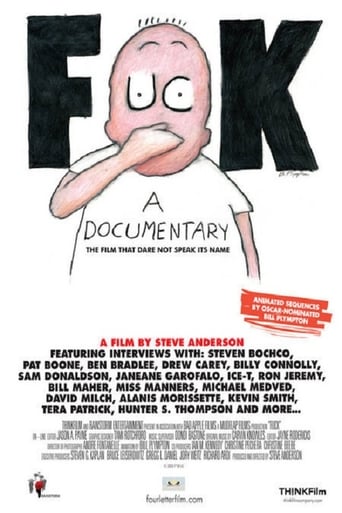
A documentary on the expletive's origin, why it offends some people so deeply, and what can be gained from its use.
Oskar Gröning, known as the "Accountant of Auschwitz," was charged with the murder of 300,000 Jews. When he took the stand in 2015, at the age of 94, his trial made headlines worldwide.
Set both in Latin America and the United States, the film explores the historic and current relationship of Washington with countries such as Venezuela, Bolivia and Chile. Pilger says that the film "...tells a universal story... analysing and revealing, through vivid testimony, the story of great power behind its venerable myths. It allows us to understand the true nature of the so-called "war on terror". According to Pilger, the film’s message is that the greed and power of empire is not invincible and that people power is always the "seed beneath the snow".
Through deeply personal interviews with her siblings and an examination of the photographs, letters, and belongings left behind, Mariska assembles a new portrait of her mother Jayne Mansfield, an extraordinary and complex woman.
JB Smoove and Martin Starr host a celebration of 20 years of "Spider-Man" movies, from the Sam Raimi trilogy to Marc Webb's movies and the trio from Jon Watts.
A compilation of over 30 years of private home movie footage shot by Lithuanian-American avant-garde director Jonas Mekas, assembled by Mekas "purely by chance", without concern for chronological order.
Oliver Stone charts the history of the United States from the Second World War to the present.
A woman’s Holocaust memoir takes the world by storm, but a fallout with her publisher-turned-detective reveals her story as an audacious deception created to hide a darker truth.
From the heights of her modeling fame to her tragic death, this documentary reveals Anna Nicole Smith through the eyes of the people closest to her.
Former United States Secretary of Defense, Donald Rumsfeld, discusses his career in Washington D.C. from his days as a congressman in the early 1960s to planning the invasion of Iraq in 2003.
Five Jewish Hungarians, now US citizens, tell their stories: before March 1944, when Nazis began to exterminate Hungarian Jews, months in concentration camps, and visiting childhood homes more than 50 years later. An historian, a Sonderkommando, a doctor who experimented on Auschwitz prisoners, and US soldiers who were part of the liberation in April 1945.
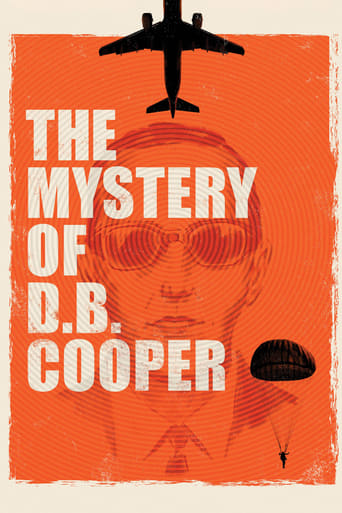
This documentary brings to life the stories of four people believed by their family and friends to be “DB Cooper,” a man who hijacked a 727 flying out of Seattle and jumped from the plane over the wilds of Washington State with a parachute and $200,000, never to be heard from again.
The history of cinematic sound, told by legendary sound designers and visionary filmmakers.
A visual montage portrait of our contemporary world dominated by globalized technology and violence.
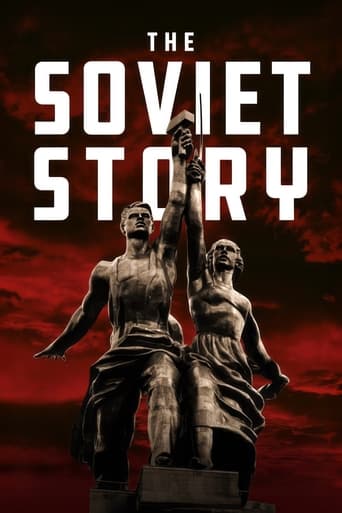
“The Soviet Story” is a story of an Allied power, which helped the Nazis to fight Jews and which slaughtered its own people on an industrial scale. Assisted by the West, this power triumphed on May 9th, 1945. Its crimes were made taboo, and the complete story of Europe’s most murderous regime has never been told. Until now...
An on-the-scene documentary following the events of September 11, 2001 from an insider's view, through the lens of two French filmmakers who simply set out to make a movie about a rookie NYC fireman and ended up filming the tragic event that changed our lives forever.