A series of looks into extraordinary natural disasters and their impact on the people around them.
Social & External
Dr Xand van Tulleken and Raksha Dave tell the dramatic story of the Boxing Day Tsunami, which killed more than 250,000 people.
Natural and man-made catastrophes retold by eyewitnesses and dramatic reconstructions.
Following the biggest archaeological excavation in Pompeii for a generation. Exciting discoveries and fresco-inspired animations tell the story of life in Pompeii AD 79.
Japan has a long history of natural disasters. BOSAI explores how to overcome them and save lives with the power of science.
The definitive story of the deadly 2004 tsunami as it travels from country to country, with unseen archive video and untold stories of survival.
The untold human stories behind some of the world’s greatest disasters.
A minute-by-minute account of the December 2004 tsunami, which destroyed towns and villages across the Indian Ocean, killing 230,000.
After a terrible earthquake in Nepal, locals and tourists join forces to face destruction in this gripping docuseries.
Deadly Disasters explores some of the most terrifying and destructive natural disasters to ever strike the planet, uncovering fascinating new details and packed with jaw-dropping footage.
Storm chasers, survivors and first responders recount their harrowing experiences with volcanoes, tornadoes, hurricanes and earthquakes.
A century after the Great Kanto Earthquake, previously unknown details have been extracted from newly 8K remastered and colorized footage, vividly demonstrating how Tokyo citizens faced the disaster.
The catastrophic floods of New York, Bangkok and New-Orleans have shed light on the extreme vulnerability of more than 130 coastal cities faced with the violence of the sea. The mega-cities are threatened by a series of unusual phenomena: a surprising subsidence of soils, an unexplained rising of the level of the sea in some parts of the world, an increase in the frequency of extreme climatic events and exponential urbanization. Considering that science is capable of anticipating dangers and of suggesting protections, why do such disasters occur so often? Can they be avoided?
No two volcanoes are alike; each one has its own distinctive landscape, climate, and geological context. Just as unique are the people we meet along the way who help us comprehend how greatly our planet – and our lives – have been shaped by volcanic phenomena. For the scientific aspect of each episode, we explore the very diverse range of questions raised by volcanic phenomena in such varied fields as earth sciences, climatology, biodiversity, oceanography, geography, agronomics, and archaeology. The cultural part of the show delves into mythology, religion, philosophy, folk and artistic traditions, cooking, and ways of life.
An earthquake directly beneath the Tokyo metropolitan area is said to occur with a 70% probability within 30 years. Staged in a news center of a TV station where a huge amount of damage information and images are gathered.
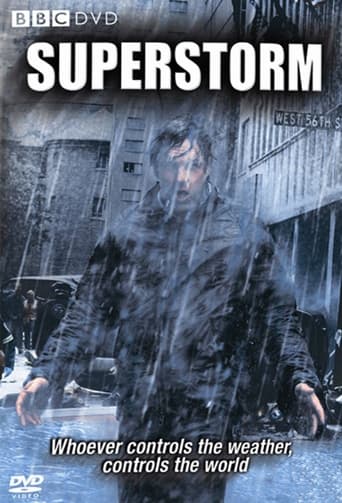
Superstorm is a three-part British docudrama miniseries written and directed by Julian Simpson, about a group of scientists that try to divert and weaken hurricanes using cloud seeding. Superstorm originally aired on BBC One for a period of three weeks, totaling three 59 minute episodes, from 15 April 2007 to 29 April 2007. Each episode was followed by a half-hour documentary on BBC Two on extreme weather monitoring and forecasting, called The Science of Superstorms. The series was also aired on the Discovery Channel in the U.S. and Canada during the summer of 2007. Superstorm is a co-production of BBC Worldwide, Discovery Channel and ProSieben, in association with M6 and NHK. Ailsa Orr and Michael Mosley, who made also Supervolcano, are the executive producers for BBC, while Jack E. Smith is the executive producer for Discovery Channel. The miniseries was released on DVD in the United Kingdom on 2 July 2007.
When a natural disaster strikes Seoul, a team of medical doctors and emergency personnel struggle to deal with its aftermath.
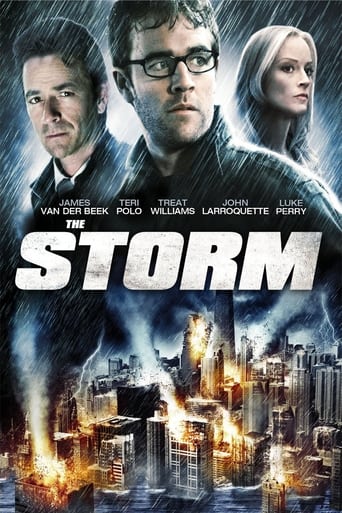
The Storm is a 2009 American science fiction disaster miniseries directed by Bradford May. Based on a previous teleplay by Matthew Chernov and David Rosiak, it was written by David Abramowitz and Dennis A. Pratt and revolves around a weather creation system developed by the Atmospheric Research Institute that threatens life on Earth when deployed by the military. However, while scientist Dr. Jonathan Kirk, Danni Wilson, and detectives Devon Williams and Stilman attempt to save the world, the former is hunted by hitmen. The first part of the film was broadcast on the NBC network July 26, 2009. The second part was broadcast on August 2, 2009.
When a big storm arrives that can flood the lower parts of the Netherlands and Belgium, prime minister Hans Kreuger has to make a decision; can we evacuate four million people? Going for the evacuation of civilians, hospitals and prisons will take at least 4 days.
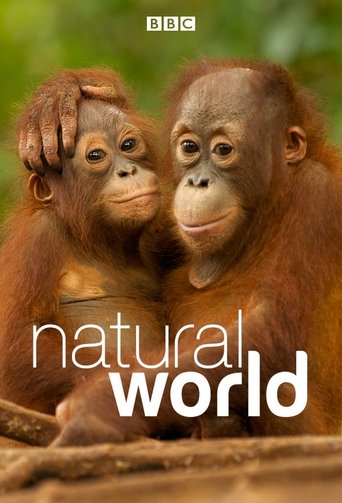
Natural World is a nature documentary television series broadcast annually on BBC Two and regarded by the BBC as its flagship natural history brand. It is currently the longest-running series in its genre on British television, with more than 400 episodes broadcast since its inception in 1983. Natural World is produced by the BBC Natural History Unit in Bristol, but individual programmes can be in-house productions, collaborative productions with other broadcasters or films made and distributed by independent production companies and purchased by the BBC. Natural World programmes are often broadcast as PBS Nature episodes in the USA. Since 2008, most Natural World programmes have been shot and broadcast in high definition.
Motoring programme featuring reviews of and reports about cars of all types.
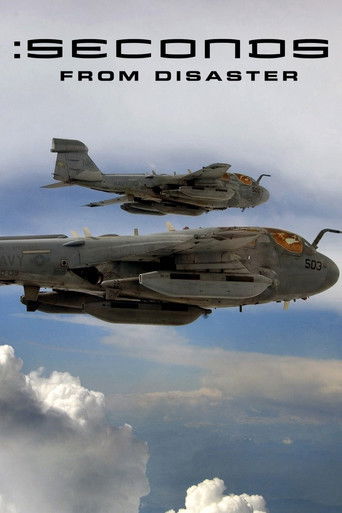
Seconds from Disaster is a US/UK-produced documentary television programme that investigates historically relevant man-made and natural disasters of the 20th century. Each episode aims to explain a single incidental by analyzing the causes and circumstances that ultimately effected the disaster. The program uses re-enactments, interviews, testimonies, and CGI to analyze the sequence of events second-by-second for the audience. Narrators for the show are Ashton Smith, Richard Vaughan and Peter Guinness.
Some of the most amazing, eye-opening and downright scary paranormal videos from around the world are featured as a panel of experts break down the footage and analyze what exactly the eyewitnesses captured.
Explore the surprising things we know (and don’t know) about why people are the way they are through expert interviews, rare footage from historical experiments, and brand-new, ground-breaking demonstrations of human nature at work.
Infographics and archival footage deliver bite-size history lessons on scientific breakthroughs, social movements and world-changing discoveries.
MegaStructures is a documentary television series appearing on the National Geographic Channel in the United States and the United Kingdom, Channel 5 in the United Kingdom, France 5 in France, and 7mate in Australia. Each episode is an educational look of varying depth into the construction, operation, and staffing of various structures or construction projects, but not ordinary construction products. Generally containing interviews with designers and project managers, it presents the problems of construction and the methodology or techniques used to overcome obstacles. In some cases this involved the development of new materials or products that are now in general use within the construction industry. MegaStructures focuses on constructions that are extreme; in the sense that they are the biggest, tallest, longest, or deepest in the world. Alternatively, a project may appear if it had an element of novelty or are a world first. This type of project is known as a Megaproject.
This immersive series follows the world's most magnificent creatures, capturing never-before-seen moments from the heartwarming to the outrageous.
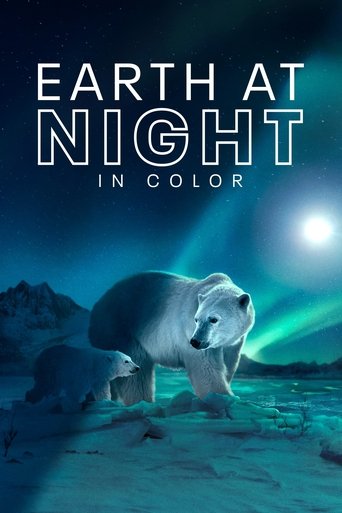
Filmed across six continents, this docuseries uses cutting-edge camera technology to capture animals' nocturnal lives, revealing new behaviours filmed in full color like never before.
Since it began in 1983, Frontline has been airing public-affairs documentaries that explore a wide scope of the complex human experience. Frontline's goal is to extend the impact of the documentary beyond its initial broadcast by serving as a catalyst for change.
Experience the wonders of our world like never before in this epic series from Jon Favreau and the producers of Planet Earth. Travel back 66 million years to when majestic dinosaurs and extraordinary creatures roamed the lands, seas, and skies.
Dash cams capture footage from urban and rural police forces while on the job. A live look inside the everyday calls of police officers across the nation.
Profiles of some of the men who choose to live off the grid in the unspoiled wilderness, where dangers like mudslides, falling trees and bears are all part of everyday life.
Witness the remarkable story of our universe over billions of years and its inextricable link to life on Earth in this sweeping documentary series.
A series of standalone documentaries powered by the unparalleled journalism and insight of The New York Times, bringing viewers close to the essential stories of our time.
A tense, filmic and high-octane drama-documentary series that brings to life the stories of people who have lived through paranormal experiences that defy explanation. Using a mixture of intimate first-hand testimony and grittily realistic drama, the audience is transported into a world turned upside down by extraordinary and terrifying events.
Shot from land and air, in trees and cliff-blinds, on ice floes and underwater, this documentary tells the powerful stories of many of the planet's species and their movements, while revealing new scientific insights with breathtaking high-definition clarity and emotional impact. The beauty of these stories is underscored by a new focus into these species; fragile existence and their life-and-death quest for survival in an ever-changing world.
David Attenborough presents a documentary series exploring how animals meet the challenges of surviving in the most iconic habitats on earth.
This compelling series investigates the motives and m.o. of female murderers. While males are often driven by anger, impulse and destruction, women usually have more complex, long-term reasons to kill.