Social & External
Unknown Role
A core group of architects embraced the West Coast from Vancouver to LA with its particular geography and values and left behind a legacy of inspired dwellings. Today, architects celebrate the influence established by their predecessors.
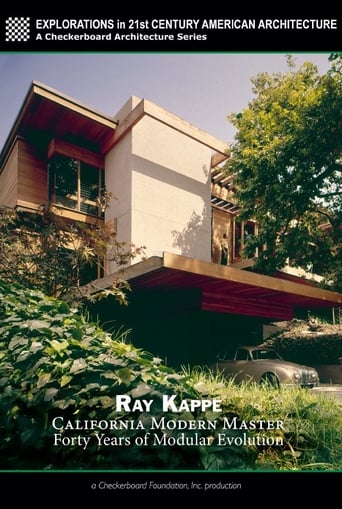
Explorations in 21st Century American Architecture Series: Ray Kappe has long been a cult figure in the architectural scene in and around Los Angeles. In 1972, he founded the influential, avant garde Southern California Institute of Architecture (SCI-ARC), where many of the younger-generation architects have studied or taught.
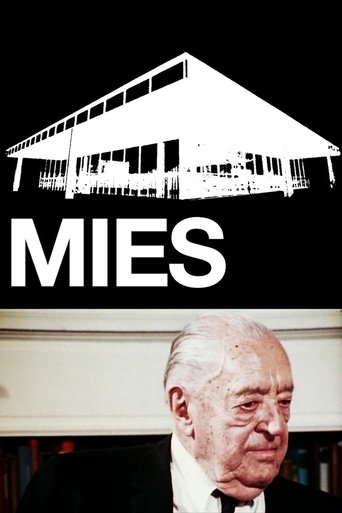
No understanding of the modern movement in architecture is possible without knowledge of its master builder, Mies van der Rohe. Together with documentation of his life, this film shows all his major buildings, as well as rare film footage of Mies explaining his philosophy. Phyllis Lambert relates her choice of Mies as the architect for the Seagram building. Mies's achievements and continuing influence are debated by architects Robert A.M. Stern, Robert Venturi, and Philip Johnson, by former students and by architectural historians. Mies is seen in rare documentary footage.
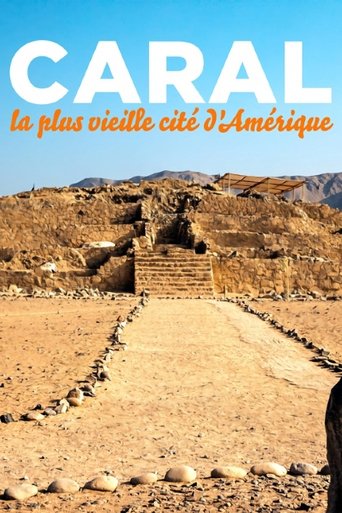
The Sacred City of Caral or Caral-Supe is the capital of the Norte Chico Civilization of Supe located in the Supe Valley, 200 km (124 miles) north of Lima. The Sacred City of Caral is the earliest known civilization in the Americas, it dates to the Late Archaic period. Radiocarbon analysis performed by the Caral-Supe Special Archaeological Project (PEACS) dates its development between 3000 to 1800 B.C.. It is believed that this civilization started by the merging of small villages based on trade of agricultural and fishing products. Its importance rests on the success of techniques of domestication of cotton, beans, potatoes, chilis, squash among other products. Success in agriculture was due to the development of water canals, reservoirs and terraces. They used guano, bird excrement, and anchovies as fertilizer.
Tokyo, the largest city in the world, wants to create a new urban culture. It is returning to the urban traditions and building techniques of the small town. The aim is to create a new balance between megacity and small-scale garden city. Tokyo's architects are the driving force. They want to create a new urban culture with revolutionary ideas.
Ireland’s great houses, towers and castles, including Yeats’ Tower House, Bunratty Castle, Butler Castle and Castletown House.
For the first time in history, women are designing our world. They are the rising stars in architecture-previously an all-male galaxy--and they are literally and figuratively changing the landscape. MAKING SPACE captures the compelling stories and outstanding designs of Annabelle Selldorf (NY), Farshid Moussavi (London), Odile Decq (Paris), Marianne McKenna (Toronto), and Kathryn Gustafson (Seattle & London). Without script or narration, each woman tells her own story, enhanced by the insights of commentators including Pulitzer Prize-winning architecture critic Paul Goldberger; MoMA's Peter Reed and Paola Antonelli; and others. Meryl Streep makes a special guest appearance.
"What we were trying to do was the ultimate form of architecture, which was predicting how society would use space, land and time." Curtis Schreier, ANT FARM Space, Land and Time: Underground Adventures with Ant Farm is the first film to consider the work of the renegade 1970s art/architecture collective Ant Farm, best known for its iconic land-art piece Cadillac Ranch. Radical architects, video pioneers, and mordantly funny cultural commentators, the Ant Farmers created a body of deeply subversive multidisciplinary work that questioned the boundaries of architecture and everything else in the process. Incorporating breathtaking archival video, new footage shot over ten years and animation based on zany period sketches, this film is about the joy of creation in a time when there were no limits. —Beth Federici
Rule of Stone is a documentary film that exposes the power of architecture and the role it has played – aesthetically, ideologically and strategically – in the creation of modern Jerusalem after the 1967 war.
"Chair Times" charts a course through an ocean of chairs. In the focus are 125 objects from the Collection of the Vitra Design Museum. Arranged according to their year of production, they illustrate development from 1807 to the very latest designs straight off the 3D printer, forming a timeline to modern seating design. The film features many people whose vocations involve design and who are experts in the field, such as designers Hella Jongerius, Antonio Citterio and Ronan Bouroullec, architects and collectors Arthur Rüegg and Ruggero Tropeano, architect David Chipperfield, Director Emeritus of MAK Vienna/Los Angeles Peter Noever, Mateo Kries, Director of the Vitra Design Museum, Vitra Design Museum curators Amelie Klein, Jochen Eisenbrand and collection curator Serge Mauduit. And your guide through the history of chairs is Rolf Fehlbaum, Chairman Emeritus of Vitra.
As a teenager in 1950 Brooklyn, all Saul wanted to do was hang out with his friends and go to the beach. Instead, he got roped into a dangerous new job, and Saul got in a little over his head.
Southern California’s Coachella Valley, including the communities of Palm Springs, Palm Desert, Desert Hot Springs, boasts hundreds of extraordinary midcentury modern homes, public buildings and commercial structures. Modern designers such as William F. Cody, Albert Frey, William Krisel, John Lautner, Richard Neutra, R.M. Schindler, Donald Wexler, E. Stewart Williams left their collective mark on this desert paradise. Desert Utopia: Mid-Century Architecture in Palm Springs traces the history of modern architecture in Palm Springs from the first bold forays into modernist design to the preservation challenges facing the region today. Director Jake Gorst’s film features rare archival images and footage as well as interviews with historians, homeowners and the architects who helped create this mecca of modernism.
A portrait of Frank Lloyd Wright (1867-1959), a genius of modern architecture, whose life passed between glory, scandal and tragedy.
What started as a simple tomb became over a 2,000 years history the universal seat of Christendom and is today one of the most visited museum in the world with invaluable collections of Arts, Manuscripts, Maps. Using spectacular 3D modelisation and CGI to give viewers as never before a true understanding of the history of this architectural masterpiece and its extensions, the film will also use animation to tell relevant historical events. This heritage site reveals new untold secrets with the help of historians deciphering the Vatican’s rich archives and manuscripts collection and following the restorations at work (newly discovered frescoes by Raphael) and recent excavations. A story where Religion, Politics, Arts and Science meet to assert religious authority and serve as a spiritual benchmark.