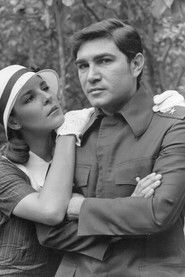
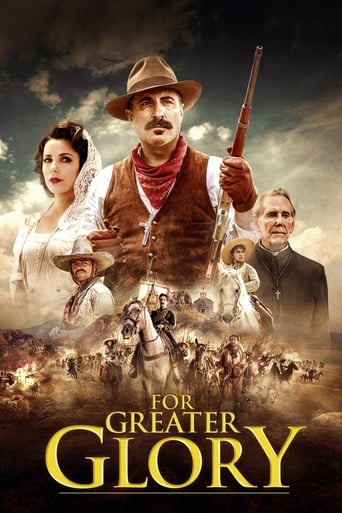
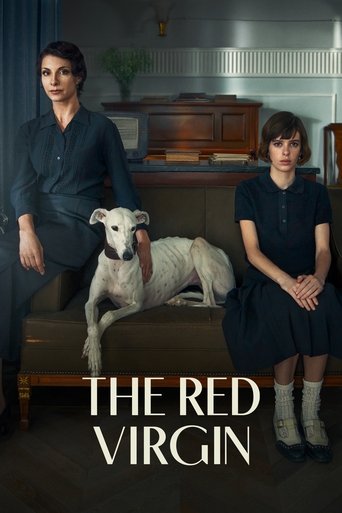
The struggle of two men, Osuna and Funes, hungry for power and wealth in a small town in Venezuela, during the dictatorship of Juan Vicente Gómez.
Social & External
María Fernanda Osuña
Mrs. Ginette
Juliette
Ricardo Osuña
Tomás Fúnes
Gonzalito
Marie
Picure
Martín
1st Gringo
Julio
Trujillo
Avispa
Carrera
Freites
Fausto
Mrs. Freitas
Unknown Role
Intertwined stories of people fighting for love, survival and the truth during quarantine.
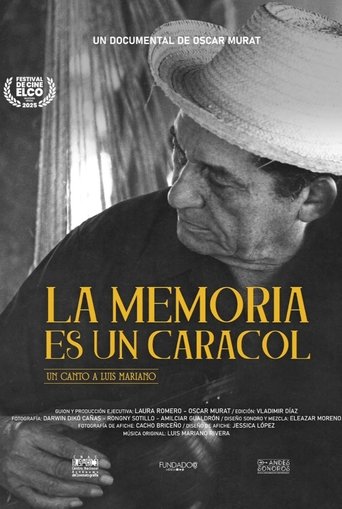
Documentary about the life of Luis Mariano Rivera.
Documentary about the life of Simón Bolívar, directed by Antonio Bacé.
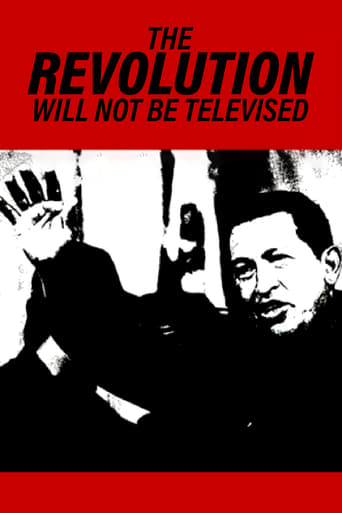
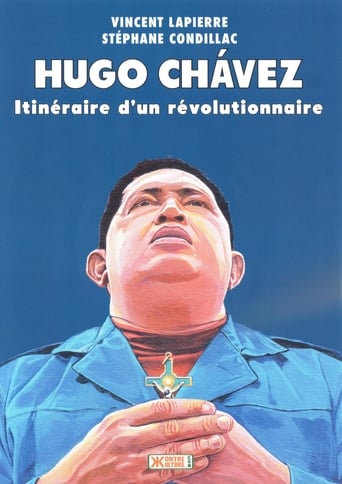
Hugo Chavez was a colourful, unpredictable folk hero who was beloved by his nation’s working class. He was elected president of Venezuela in 1998, and proved to be a tough, quixotic opponent to the power structure that wanted to depose him. When he was forcibly removed from office on 11 April 2002, two independent filmmakers were inside the presidential palace.
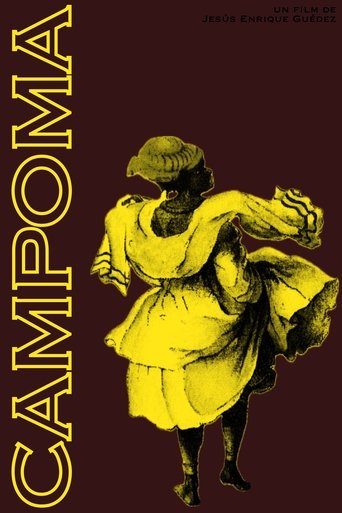
Short that tells the history of Campoma, a small Venezuelan town founded by black slaves.
In 1969, the Renovación Universitaria movement and the subsequent raid on the Central University of Venezuela by the government of Rafael Caldera, triggered a strong wave of protest in the Institutes of Higher Education in Venezuela. This documentary collects part of the events that took place in the city of Mérida, Mérida State, where the University of the Andes is located.
Imagen de Caracas was an experimental film spectacle, directed by Jacobo Borges and Mario Robles in 1968 for the 400 anniversary of the foundation of Caracas. It needed more than 48768 meters of film and 5000 actors.
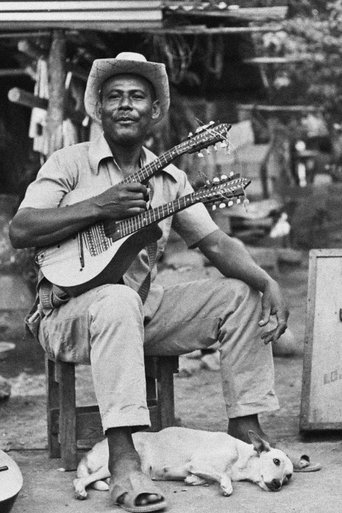
Cruz Quinal, "the mandolin king," lives near Cumana in a mountain valley surrounded by sugarcane fields. Perpetuating 16th century Spanish traditions of guitar-making, Cruz fashions such musical instruments as cuatros, marimba, escarpandola, and his own creation, a mandolin with two fretboards. He is an accomplished musician as well. In this moving portrait, Cruz compares himself to a decaying colonial church across the street: revered yet neglected, the village altar stands, paint peeling, under the open sky.
Trade union leader Manuel Taborda, a pioneer of workers' organisations in the oil industry, recounts his experiences and those of his colleagues from 1920 to 1936, with an emphasis on the struggles against foreign companies and the government.
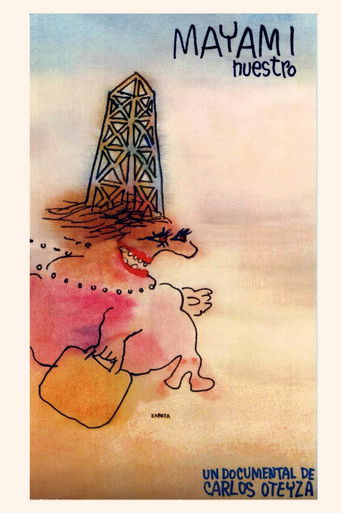
Mayami Nuestro goes beyond the slogan "tá barato, dame dos" (“it’s cheap, give me two”) to force a rethinking of Venezuela’s relationship with oil and national identity. Produced at the height of the oil boom, this 34-minute documentary examines Venezuelan lifestyles in the 1970s and early 1980s, questioning the consumerist fantasies fueled by petro-wealth. Through interviews with merchants, bankers, U.S. academics, and the testimonies of Venezuelans themselves, the film maps the era’s version of the “American Dream” as lived—and projected—abroad. Winner of national and international awards and directed by Carlos Oteyza, Mayami nuestro offers a sharp, historically grounded critique and an open invitation for new generations to reflect on the legacy of oil and its cultural consequences.
After studying at university and excelling in soccer, a young Saudi is torn between the traditions of his father and the freedom he experiences in the U.S.
A balladic story situated in a Slovak mountain region before the 2nd World War. A young man returns to his native village after many years. There he meets Zuna, a mysterious girl of the forest, who opens his eyes to the charming nature to perceive hidden corners of the world and of his own soul.
After an unprecedented disaster shakes Japan, Lyra remembers Rey, the fascinating stranger she had followed across the country.
Scout Finch, 6, and her older brother Jem live in sleepy Maycomb, Alabama, spending much of their time with their friend Dill and spying on their reclusive and mysterious neighbor, Boo Radley. When Atticus, their widowed father and a respected lawyer, defends a black man named Tom Robinson against fabricated rape charges, the trial and tangent events expose the children to evils of racism and stereotyping.
In Warsaw in 1980, the Communist Party sends disgruntled radio reporter Winkel to Gdańsk to dig up dirt on the shipyard strikers - particularly on Maciek Tomczyk, an independent labour union leader whose father was killed in the December 1970 protests. Posing as sympathetic, Winkel interviews the people surrounding Tomczyk, including his detained wife, Agnieszka.
When seventeen-year-old Hannah stumbles upon a website about Thinspiration--an online community devoted to anorexia as a life choice--she becomes an obsessive follower of the site founder, ButterflyAna. By the time Hannah's family realizes what is happening and get Hannah the help she needs, the disease has fully taken hold and Hannah is refusing to eat. Will this family be able to exorcise the demon of anorexia from their lives?
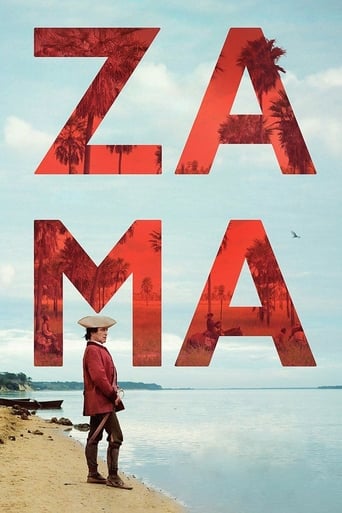
In a remote South American colony in the late 18th century, officer Zama of the Spanish crown waits in vain for a transfer to a more prestigious location. He suffers small humiliations and petty politicking as he increasingly succumbs to lust and paranoia.
In a small Turkish town, two young tuberculous poets try to survive while publishing their poems. As they both fall in love, their life would never be the same.
In 1887, at a time when duels are in vogue in Paris, Clément Lacaze and Marie-Rose Astié meet. He's a charismatic master of arms; she's a feminist, far ahead of her time. Clément gets caught in a spiral of violence and decides to initiate Marie-Rose in the art of dueling. The two must work together to save face. How far will they go to defend their honor?
In the polarized and violent Medellín (Colombia's 'City of Eternal Spring') of the 1970s, doctor Héctor Abad Gómez is concerned about both his children and children from less favored classes. After a devastating loss in the family, Héctor gives himself to the greater cause of public health programs for the poor in Medellín to the consternation of the city's authorities.
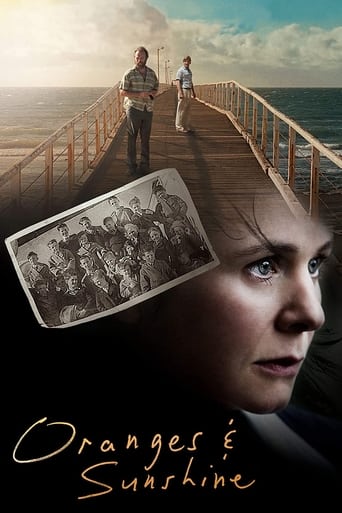
The story of Margaret Humphreys, a social worker from Nottingham, who uncovers one of the most significant social scandals in recent times – the forced migration of children from the United Kingdom to Australia and other Commonwealth countries. Almost singlehandedly, Margaret reunited thousands of families, brought authorities to account and worldwide attention to an extraordinary miscarriage of justice.
The film is dedicated to the first steps of mankind on the path of space exploration and direct the fate of the first cosmonaut Yuri Gagarin. The main motif - the fight for the right to be first: the competition in the first cosmonaut, competition in missile technology, the confrontation of superpowers - the USSR and the USA. In the first group of astronauts were selected from three thousand fighter pilots across the country. In twenty of the legendary got the best of the best. Which of them will fly first, no one knew. In this way, had to contend not only with the pull of the earth ...
Set in communist Poland of the 80s the movie depicts early career of cardio surgeon Zbigniew Religa.
In the 1890s, Father Adolf Daens goes to Aalst, a textile town where child labor is rife, pay and working conditions are horrible, the poor have no vote, and the Catholic church backs the petite bourgeoisie in oppressing workers. He writes a few columns for the Catholic paper, and soon workers are listening and the powerful are in an uproar. He's expelled from the Catholic party, so he starts the Christian Democrats and is elected to Parliament. After Rome disciplines him, he must choose between two callings, as priest and as champion of workers. In subplots, a courageous young woman falls in love with a socialist and survives a shop foreman's rape; children die; prelates play billiards.
In 16th-century Russia in the grip of chaos, Ivan the Terrible strongly believes he is vested with a holy mission. Believing he can understand and interpret the signs, he sees the Last Judgment approaching. He establishes absolute power, cruelly destroying anyone who gets in his way. During this reign of terror, Philip, the superior of the monastery on the Solovetsky Islands, a great scholar and Ivan's close friend, dares to oppose the sovereign's mystical tyranny. What follows is a clash between two completely opposite visions of the world, smashing morality and justice, God and men. A grand-scale film with excellent leading roles by Mamonov and Yankovsky. An allegory of Stalinist Russia
The last years of Bettino Craxi, one of the most important and controversial italian leader of the 1980's.
Set in 1881, a year before the start of British colonial rule, it is based on the true story of the Abd el-Rasuls, an Upper-Egyptian clan that had been robbing a cache of mummies they have discovered at tomb DB320 near the village of Kurna, and selling the artifacts on the black market. After a conflict within the clan, one of its members made a crucial decision when the Antiquities Service arrived.
The story of the descent into madness of Mussolini's secret first wife, Ida Dasler, who was seduced by his passion and vigor but blind to the fascist dictator's many flaws.
The 1978 kidnapping and assassination of former Italian Prime Minister Aldo Moro by Red Brigades terrorists.
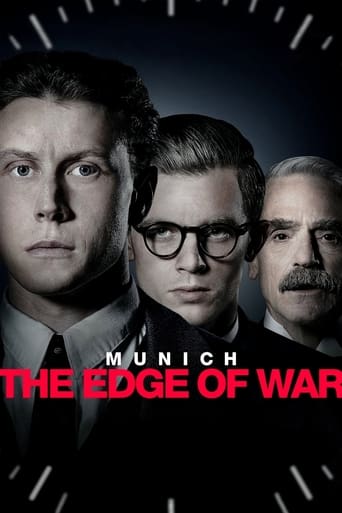
At the tense 1938 Munich Conference, former friends who now work for opposing governments become reluctant spies racing to expose a Nazi secret.
The story follows a family of refugees from the early twentieth century through to the Civil War. Through movements, separations, and reunions, personal lives intersect with Greece’s major historical transformations. Space and time are in constant flux, while the characters remain trapped in an unending search for a homeland.
The story of the great Indian rocket scientist, Shri Nambi Narayanan's life, a true patriot, who was turned into a villain in the blink of an eye after being falsely accused of treason.
Desperate to help her son, Rabiye Kurnaz, a housewife and loving mother from Bremen, goes to the police, notifies authorities and almost despairs at their impotence and in the end, against all the odds, something truly remarkable happens.
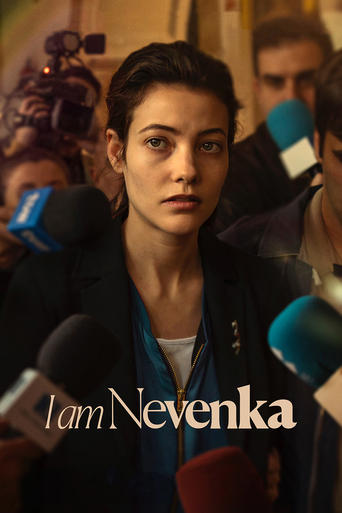
In the year 2000, Nevenka Fernández, 24 years old, Councilor for Finance in the Ponferrada City Council, suffered relentless persecution, both sentimental and professional, by the mayor, a man accustomed to doing his will politically and personally. She never decides to report, although she knows that she will have to pay a very high price: her environment does not support her, the society of Ponferrada turns its back on her and the media subjects her to a public trial. A story inspired by real events that turns its protagonist into a pioneer by taking an influential and popular politician to court for sexual and workplace harassment for the first time.